
三农

Search documents
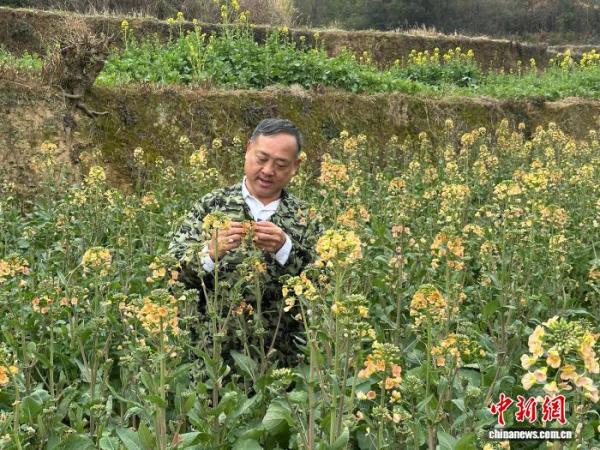
全国人大代表沈昌健:泥土里育“金种” 田埂上传“农声”
Zhong Guo Xin Wen Wang· 2026-02-25 08:46
Core Viewpoint - The article highlights the efforts of Shen Changjian, a representative of the National People's Congress and a farmer-scientist, in promoting hybrid rapeseed cultivation in Hunan Province, emphasizing the impact of climate fluctuations on agricultural practices and the importance of high-quality seed varieties for improving farmers' incomes [1][3]. Group 1: Agricultural Innovation - Shen Changjian has dedicated decades to researching and cultivating hybrid rapeseed varieties, earning the title of "Rapeseed King" [3]. - The hybrid rapeseed variety "Shenza You 1" was registered in 2020, and "Shenza You 2" is expected to be registered by 2025, indicating progress in breeding efforts [3]. - The current hybrid rapeseed has been planted on over 50,000 acres in Hunan, with yields increasing from over 100 jin (approximately 50 kg) to over 400 jin (approximately 200 kg) per acre, resulting in an average income increase of over 800 yuan per acre [3][5]. Group 2: Farmer Engagement and Support - Shen Changjian has visited over 120 farmers and collected more than 60 suggestions regarding agricultural issues, with a focus on challenges such as grain sales and the need for comprehensive utilization of straw [3]. - He has set up an office in the county to facilitate communication with farmers, featuring a technical room where farmers can discuss their challenges and needs [5]. - The article emphasizes the importance of large-scale farmers in grain production, with 886 large-scale farming households managing 130,000 acres, and the need for improved agricultural infrastructure and access to quality seeds [5].

“新春第一会”在延续中创新
Xin Lang Cai Jing· 2026-02-24 22:23
Core Viewpoint - The "New Spring First Meeting" held across various provinces emphasizes the theme of high-quality development, aligning with the strategic goals of the 14th Five-Year Plan, and showcases a commitment to sustainable growth and innovation in response to regional needs [1][8]. Group 1: Continuity and Focus - Many provinces have maintained a consistent theme over the years, demonstrating a commitment to deepening their focus on high-quality development, which reflects a scientific approach to addressing primary contradictions in their economic strategies [2]. - Fujian has held its "New Spring First Meeting" for six consecutive years, focusing on the private economy, which contributed 77.4% to the province's economic growth in 2025, indicating a strong commitment to supporting private enterprises [2]. - Hubei's second consecutive meeting focused on strategic pivot construction, signaling a commitment to becoming a significant strategic support point in central China [2]. Group 2: Innovative Adjustments - Some provinces introduced new themes in their meetings, indicating a responsive approach to changing development stages. For instance, Guangdong emphasized the collaborative development of manufacturing and services, reflecting a strategic adaptation to global industrial changes [3]. - Hunan shifted its focus from attracting investment to strengthening the private economy, indicating a deeper commitment to enhancing the business environment and fostering economic growth [3]. Group 3: Regional Positioning - Several provinces are aligning their development plans with national strategies. Shandong emphasized its role in the national context, aiming to contribute to the overall development while enhancing its own capabilities [7]. - Hainan's meeting focused on high-level safety and the construction of a free trade port, highlighting the integration of quality development with safety measures [7]. - Liaoning's meeting stressed a problem-oriented approach to revitalization, aiming to address specific challenges in its development strategy [7]. Group 4: Overall Direction - The meetings collectively reflect a commitment to high-quality development, with a focus on practical and scientific policy-making that aligns with national objectives, ensuring a cohesive approach to regional growth [8].
江西:持续释放重“三农”、抓“三农”、强“三农”的鲜明信号 引导全省上下重农、兴农、富农
Di Yi Cai Jing· 2026-02-24 07:14
Core Viewpoint - The Jiangxi Provincial Party Committee emphasizes the importance of agricultural and rural development, signaling a strong commitment to prioritize "three rural issues" (agriculture, rural areas, and farmers) as a foundation for the province's development in the 14th Five-Year Plan period [1] Group 1 - The meeting was held on February 24, the first working day after the Spring Festival, indicating the urgency and priority given to rural work [1] - The provincial leadership aims to guide the entire province to focus on agriculture, promote rural prosperity, and ensure stability in rural areas [1] - The emphasis on "three rural issues" is intended to lay a solid foundation for the start of the 14th Five-Year Plan [1]
奔赴“春天的约定”,在希望的田野上描摹“三农”壮美画卷
Xin Lang Cai Jing· 2026-02-06 08:35
Core Viewpoint - The central document outlines a clear roadmap for agricultural and rural development in China, emphasizing the modernization of agriculture, improvement of rural living conditions, and enhancement of farmers' livelihoods as key objectives for the new journey ahead [1][2]. Group 1: Agricultural Production and Food Security - The document sets a target to stabilize grain production at approximately 1.4 trillion jin (around 700 million tons) and emphasizes the implementation of a new round of actions to increase grain production capacity by 100 billion jin [2][3]. - It highlights the importance of maintaining arable land and promoting integrated practices for high-yield crops, thereby ensuring food security and enhancing agricultural productivity [2][3]. Group 2: Farmers' Income and Economic Development - A dedicated section focuses on promoting stable income growth for farmers, with a strong emphasis on developing local industries to create job opportunities [3][4]. - The document encourages the integration of technology, green practices, and quality agriculture to enhance the value of agricultural products, as well as the development of rural e-commerce and small enterprises [3][4]. Group 3: Rural Living Conditions and Community Development - New requirements for building livable and workable beautiful villages are outlined, aiming to transform rural areas into attractive destinations for tourism and entrepreneurship [4]. - The document stresses the need for tailored approaches that respect local conditions and farmers' wishes, avoiding one-size-fits-all policies, and addressing critical issues in education, healthcare, and elder care to improve the quality of life in rural areas [4].
【好评中国】奔赴“春天的约定”,在希望的田野上描摹“三农”壮美画卷
Xin Lang Cai Jing· 2026-02-06 08:35
Core Viewpoint - The central document outlines a clear roadmap for the "Three Rural Issues" (agriculture, rural areas, and farmers) work, emphasizing the modernization of agriculture, improvement of rural living conditions, and enhancement of farmers' livelihoods as key objectives for the new journey ahead [1][2]. Group 1: Agricultural Modernization - The document sets a target to stabilize grain production at approximately 1.4 trillion jin (around 700 million tons) and emphasizes the implementation of a new round of actions to increase grain production capacity by 100 billion jin [2][3]. - It highlights the importance of maintaining the red line of arable land and promoting the integration of high-quality seeds, farming techniques, and machinery to enhance agricultural productivity [2]. Group 2: Farmers' Income Growth - A dedicated section in the document focuses on actively promoting stable income growth for farmers, emphasizing the development of local industries to create job opportunities [3]. - It calls for the establishment of a grain income guarantee mechanism and the promotion of deep processing of agricultural products to increase their added value [3]. Group 3: Rural Development and Quality of Life - The document introduces new requirements for building beautiful and livable rural areas, aiming to transform villages into popular tourist destinations and entrepreneurial hubs for young people [4]. - It stresses the need for tailored policies that respect farmers' wishes and avoid a one-size-fits-all approach, ensuring that rural development addresses specific local needs [4].
中国经济信心说丨奔向中国式现代化,“三农”这篇文章大有前景
Yang Shi Xin Wen· 2026-02-06 03:14
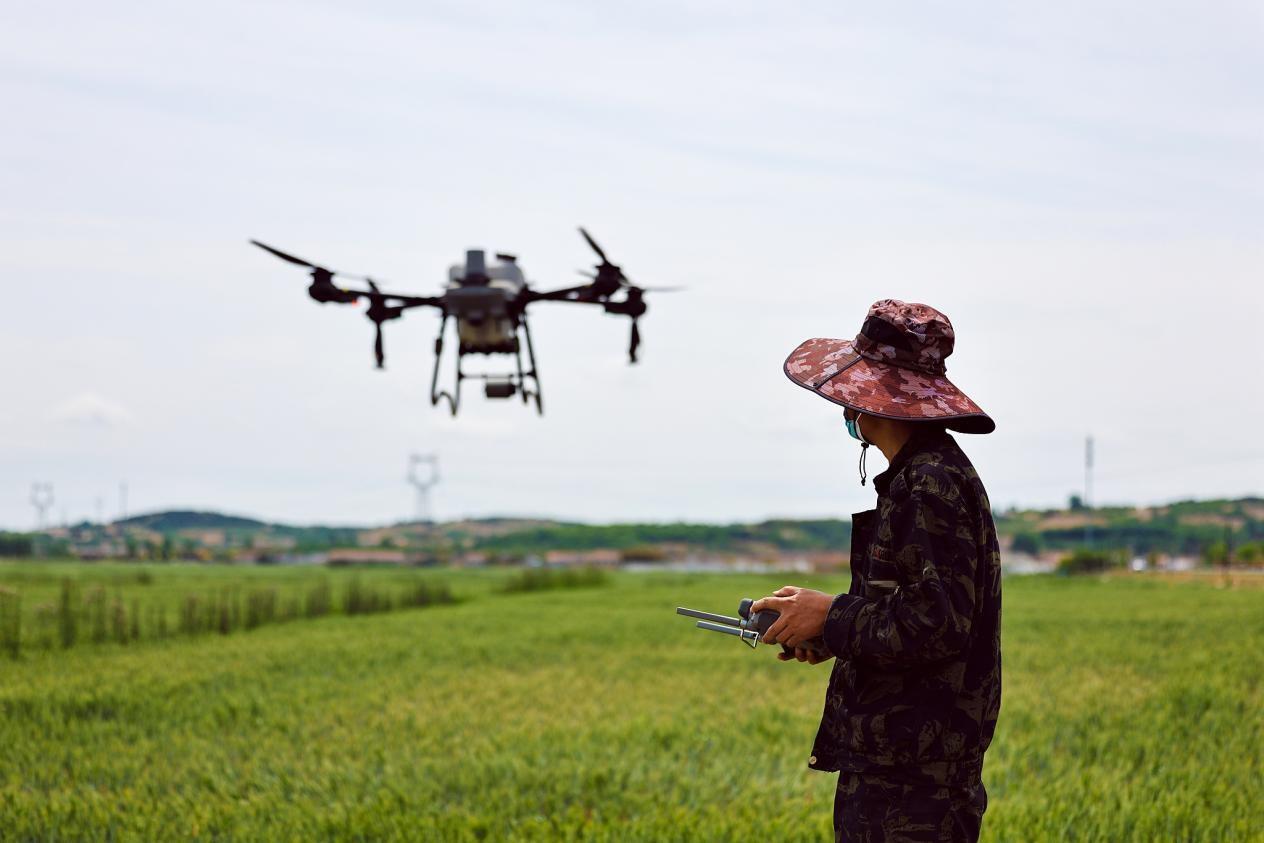
Core Insights - The central document emphasizes the importance of modernizing agriculture and rural areas, signaling a strong commitment to agricultural development and rural revitalization as part of China's broader modernization strategy [1] - The goal is to achieve a grain production of 1.43 trillion jin by 2025, ensuring food security and improving the livelihoods of farmers, which is crucial for the overall success of China's modernization [1] Group 1: Agricultural Modernization - The document highlights the need to transform agriculture into a modernized large industry, focusing on enhancing quality and efficiency rather than just increasing production scale [3] - The integration of technology, such as drones and artificial intelligence, is reshaping agricultural practices, moving from traditional methods to data-driven and algorithm-based operations [3] Group 2: Diversification and Value Addition - The concept of a "modernized large industry" includes expanding the agricultural value chain, addressing issues like "overproduction without profit" by enhancing processing and branding of agricultural products [3] - There is a push towards a diversified food supply system that includes not just traditional crops but also products from forests, grasslands, and aquatic environments, promoting health and quality in food consumption [3] Group 3: Rural Revitalization and Economic Growth - The integration of agriculture with tourism and cultural experiences is becoming increasingly important, creating new economic opportunities in rural areas and enhancing the quality of life for residents [5] - The central document outlines four key tasks and two major support guarantees for rural revitalization, emphasizing the need for sustained efforts to address rural development challenges and stimulate economic growth [5]
芯片短缺或延至2028年,微信出手限制元宝红包 | 财经日日评
吴晓波频道· 2026-02-05 00:30
Group 1 - The central government's focus on agricultural and rural issues continues with the release of the 14th guiding document on "Three Rural Issues," emphasizing rural revitalization as a key theme [2] - The document introduces new initiatives such as the "grain circulation quality improvement project" and the concept of "normalized precise assistance" for the first time in a decade, reflecting a shift towards sustainable agricultural development [2][3] - The integration of advanced technologies like drones and robots into agriculture is encouraged, aiming to enhance efficiency and reduce costs in agricultural practices [3] Group 2 - Intel's CEO predicts that the shortage of storage chips will persist until 2028, primarily driven by the high demand for high-bandwidth memory (HBM) from AI applications [4] - The ongoing AI boom is expected to significantly impact the storage chip market, with major players like Samsung, SK Hynix, and Micron maintaining a dominant position due to the long construction cycles of new production lines [4][5] - The software sector is experiencing a sell-off, with a total market value loss of approximately $285 billion, as traditional software companies face competition from AI applications that can replace human tasks [15][16] Group 3 - Walmart's stock has surged, making it the first traditional retailer to surpass a market capitalization of $1 trillion, reflecting its successful transition to e-commerce and competitive positioning against Amazon [6][7] - The company has invested heavily in its e-commerce operations, achieving profitability in its online business for the first time last year, which has attracted a new customer base [6][7] - Despite its success, Walmart faces challenges from tightening consumer spending among low-income households and must continue to innovate to maintain its market position [7] Group 4 - Gao Xin Retail, the parent company of RT-Mart, is facing management instability as its CEO has gone missing, prompting the board to appoint a new interim leader [8][9] - The company is undergoing significant changes amid a strategic shift away from Alibaba, with a focus on stabilizing operations and reversing financial losses [9] - The banking sector is adjusting its SMS notification services, with招商银行 (China Merchants Bank) raising the threshold for free transaction alerts, reflecting a broader trend of banks reducing free services to cut costs [12][14]


新闻1+1丨2026年中央一号文件,部署哪些“三农”重点?
Xin Lang Cai Jing· 2026-02-04 03:04
Core Viewpoint - The 2026 Central Document No. 1 emphasizes the modernization of agriculture and rural areas, focusing on enhancing agricultural production capacity and quality efficiency, while ensuring food security and implementing regular precise assistance for rural development [1][2]. Group 1: Stability and Changes in Agricultural Policy - The main theme of the 2026 Central Document No. 1 remains consistent, prioritizing "agriculture, rural areas, and farmers" as a key focus for the party's work, with core goals including promoting farmers' income and ensuring food security [1]. - Changes in this year's document include a more systematic approach to agricultural work, with clearer policies for food security and farmer income, as well as tailored regional strategies [2]. Group 2: Agricultural Technology Promotion - The document highlights the need for a systematic approach to agricultural technology, integrating various aspects such as good land, good seeds, good methods, and good opportunities to enhance productivity [3]. - Challenges in technology application include the acceptance of technology by small-scale farmers and the need for social services to facilitate technology transfer to the fields [3]. Group 3: Disaster Prevention and Mitigation - The document stresses the importance of building a robust agricultural disaster prevention and mitigation system in response to frequent extreme weather events [4]. - Key components of this system include monitoring and early warning, infrastructure development, and the supply of resilient crop varieties [5][6]. Group 4: Regular Precise Assistance - The document introduces regular precise assistance as a key focus, addressing the continuity of support for poverty alleviation populations and ensuring that assistance does not decrease [8]. - This approach aims to enhance the internal motivation of impoverished regions by improving their industrial foundations and capabilities, thereby promoting local employment and income growth [9]. Group 5: Rural E-commerce Development - Rural e-commerce is identified as a solution to the challenges of product sales, particularly for local specialties, facilitating better market access for farmers [10]. - The integration of e-commerce helps increase farmers' income by ensuring that quality products reach consumers effectively [10]. Group 6: Employment and Development of Migrant Workers - The document outlines strategies to stabilize employment for migrant workers, including skill enhancement and access to urban public services to facilitate their integration into city life [12]. - Continuous skill development is emphasized as a means to improve income, focusing on reducing expenses and increasing earnings for migrant workers [12].
定点爆破
Datayes· 2026-02-03 11:07
Group 1 - The article discusses potential tax adjustments targeting the financial and internet service sectors, with concerns that the tax rate for internet value-added services may rise from 6% to align more closely with the 32% rate of the liquor industry due to high profit margins [1][2] - There are rumors that high-tech enterprises may no longer qualify for the 15% preferential tax rate, shifting to a standard 25% corporate income tax rate, which could significantly impact major internet companies like Tencent and Alibaba [1][2] - The recent VAT law changes have raised investor concerns about possible tax increases across various sectors, including internet services and finance [2] Group 2 - Citigroup believes the likelihood of widespread tax increases in the short term is low, but the era of significant tax reductions may be over, as fiscal pressures mount due to factors like declining land transfer revenues and increased social security expenditures [6] - The article notes that the current economic environment shows weak domestic demand, which may limit the government's ability to implement broad tax hikes [6] Group 3 - The A-share market experienced a rebound, with the Shanghai Composite Index rising by 1.29%, and trading volume decreased by 411.38 billion yuan compared to the previous day [12] - The aerospace sector saw significant activity, with several stocks hitting the daily limit, driven by upcoming space missions and increased interest in space-related technologies [12][13] - The article highlights the performance of various sectors, noting that the power equipment, defense, and machinery sectors saw the largest net inflows of capital, while non-ferrous metals and banking sectors faced outflows [30][38] Group 4 - The article mentions that the central government's recent policy document emphasizes agricultural modernization and the integration of AI and technology in agriculture, which could create investment opportunities in related sectors [19] - In the semiconductor industry, major Chinese manufacturers are planning significant expansions to close the gap with market leaders amid a global chip shortage [20] Group 5 - The CDN industry is expected to experience growth as cloud service providers have begun raising prices, breaking a long-standing trend of price declines [21] - The robotics sector is seeing increased investment, with significant funding rounds reported for companies focused on humanoid robots and AI applications [22]

2026.01.26-2026.01.30日策略周报:一月制造业PMI再回荣枯线之下,A股指数宽幅震荡-20260201
Xiangcai Securities· 2026-02-01 10:41
Core Insights - The A-share market experienced wide fluctuations after the "opening red" in January, with major indices showing mixed performance [2][10] - The manufacturing PMI fell below the boom-bust line in January, indicating a decline in economic activity [6][27] - The report suggests a long-term bullish outlook for the A-share market supported by favorable monetary policies and economic recovery [8][31] Market Performance - During the week of January 26-30, 2026, the Shanghai Composite Index fell by 0.44%, the Shenzhen Component dropped by 1.62%, and the ChiNext Index saw a slight decline of 0.09% [3][10] - The largest weekly fluctuation was observed in the Sci-Tech Innovation Board Index, which experienced a 6.67% swing [10] - The overall market trend reflects increased volatility due to a stronger dollar and high index levels, leading to a demand for consolidation [13] Industry Analysis - Among the 31 first-level industries, the oil and petrochemical sector and telecommunications led with gains of 7.95% and 5.83%, respectively, while the defense and military industry and power equipment saw declines of -7.69% and -5.10% [4][20] - In the second-level industries, precious metals and oil service engineering had the highest weekly gains of 18.02% and 14.83%, while aerospace equipment II and military electronics II faced the largest declines of -15.78% and -8.45% [4][22] - The third-level industries showed gold and seeds leading with weekly increases of 18.22% and 15.02%, while aerospace equipment III and thermal power equipment had the largest drops of -15.78% and -9.93% [5][25] Macro Data - The manufacturing PMI for January was reported at 49.3%, indicating a contraction in manufacturing activity, with the production index at 50.6% showing slight expansion [6][27][28] - The new orders index fell to 49.2%, suggesting a slowdown in market demand across various sectors [28] Investment Recommendations - The report anticipates a stable economic environment in 2026, supported by proactive fiscal policies and moderate monetary easing, which is expected to sustain a "slow bull" market for A-shares [8][31] - Short-term market expectations remain strong, particularly in sectors related to "anti-involution," new productivity in AI and technology, and agriculture, which are expected to benefit from central bank policies [8][31]
