莲花血鸭

Search documents
江西餐饮从业者话赣菜发展:融入文化元素 开发新产品
Xin Lang Cai Jing· 2025-12-26 13:53
Group 1 - The restaurant industry in Jiangxi, particularly focusing on Gan cuisine, is experiencing growth due to increased popularity and cultural significance [1] - The local government has implemented policies to enhance the visibility and influence of Gan cuisine, contributing to its rising fame [1] - The demand for "Jiangxi small stir-fry" dishes is increasing, attracting more tourists to local restaurants [1] Group 2 - A technology food company in Jiangxi produces 15 to 20 tons of Gan cuisine raw materials daily, serving numerous national chain restaurants [2] - The company has achieved an annual revenue of 1 billion yuan through its two factories, driven by the growing demand for standardized ingredients [2] - Jiangxi has introduced a local standard for "Jiangxi small stir-fry" terminology and definitions to protect traditional cooking techniques and promote the standardization and branding of Gan cuisine [2]
江西小炒发展报告
Hong Can Chan Ye Yan Jiu Yuan· 2025-12-26 08:11
Investment Rating - The report indicates a positive investment outlook for the Jiangxi Xiaochao industry, highlighting its transition towards standardization and industrialization with over 20,000 stores nationwide as of December 2025 [5][31]. Core Insights - Jiangxi Xiaochao has evolved from informal dining represented by family-run restaurants to a more structured chain restaurant model, with significant growth potential in chain development as 97.5% of stores have five or fewer locations [3][31]. - The distribution of Jiangxi Xiaochao stores is heavily concentrated in the East China region, with over 80% of stores located there, particularly in Zhejiang province, which leads in store numbers outside Jiangxi [3][34]. - The industry faces challenges such as low efficiency in fresh cooking, talent shortages, and insufficient brand recognition, which can be addressed through efficiency optimization, talent development, and brand building [3][4]. Summary by Sections Industry Overview - Jiangxi Xiaochao has surpassed 20,000 stores nationwide, marking a new phase of standardized and industrialized development [5][11]. - The popularity of Jiangxi Xiaochao continues to rise, driven by online and offline synergy, with significant engagement on social media platforms [10][18]. Store Distribution - Over 80% of Jiangxi Xiaochao stores are located in East China, with Zhejiang province having the highest number of stores outside Jiangxi [34][36]. - The brand shows strong penetration in lower-tier cities, with 26.5% of stores in second-tier cities and over 20% in third-tier cities [40]. Development Characteristics - The industry is characterized by a shift towards standardization and efficiency in chain brands, while family-run shops maintain flexible product strategies [48][56]. - Brands are increasingly drawing inspiration from various regional cuisines in Jiangxi to create differentiated positioning [49]. Future Trends - The industry is expected to see differentiated expansion paths, the emergence of diversified business models, and multi-dimensional competition [3][4]. - Government policies and brand building efforts are facilitating the transition of Jiangxi Xiaochao from a local delicacy to a nationally recognized dining category [21][28]. Consumer Behavior - Consumer preferences are shifting towards dining experiences that emphasize freshness, affordability, and local flavors, aligning with the characteristics of Jiangxi Xiaochao [20][66]. - The pricing strategy is primarily focused on affordability, with a significant portion of menu items priced between 15 to 30 yuan [68]. Brand Evolution - The Jiangxi Xiaochao sector is witnessing the emergence of multiple brands with distinct styles, including "market-style," "fast fashion," and "beautiful meals," each targeting different consumer segments [75]. - The industry is moving towards a more structured and recognizable brand identity, supported by government initiatives and consumer engagement strategies [30][66].
“辣都”萍乡来长荐“莲花血鸭”
Xin Lang Cai Jing· 2025-12-20 10:54
Core Viewpoint - The event "Chinese Spicy Capital・Pingxiang" featuring the intangible cultural heritage dish Lotus Flower Blood Duck was held in Changsha, showcasing the full industrial chain development and cultural tourism synergy between Hunan and Jiangxi provinces [1][3]. Group 1: Event Overview - The event included a launch ceremony and multiple activities designed to immerse attendees in the charm of Gan cuisine and rural revitalization [3]. - A "Lotus Flower Blood Duck Changsha Food Map" was released, featuring 50 partner restaurants offering standardized dishes for local residents [3][5]. Group 2: Activities and Objectives - Various sub-activities were organized, including a specialty product exhibition, interactive cooking workshops, skill competitions, live streaming sales, and tourism route promotions [3]. - The event aimed to integrate food, intangible heritage, live streaming, and tourism to create a new cultural tourism consumption scene, driving income for related industries such as duck farming and chili planting [3][5]. Group 3: Economic Impact - The Lotus Flower Blood Duck, recognized as a provincial intangible cultural heritage project and one of the "Top Ten Gan Dishes," has established a complete industrial chain, with an expected output value exceeding 510 million yuan in 2024 [5]. - The "Lotus Flower Blood Duck Master" labor brand has created employment for 36,000 people [5].


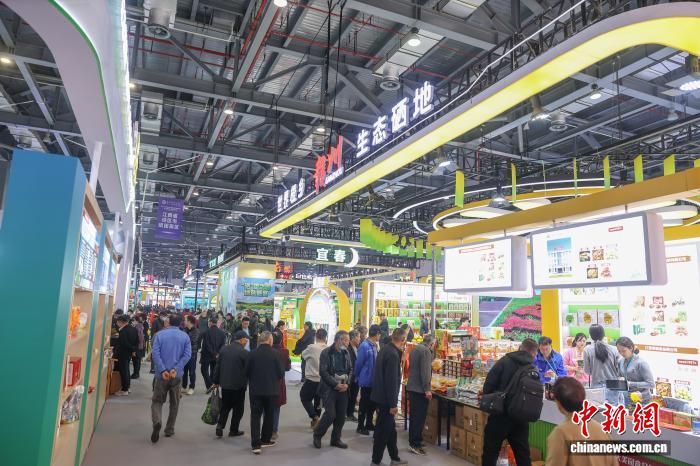
探秘2025世界绿发会:“土特产”如何“买卖全球”?
Zhong Guo Xin Wen Wang· 2025-11-29 01:29
Core Insights - The 2025 World Green Development Investment and Trade Expo is being held in Nanchang, Jiangxi, showcasing over 2,500 exhibitors and transforming local agricultural products into global commodities [1][5]. Group 1: Event Overview - The expo runs from November 27 to 30, 2025, focusing on the theme of "Digital Empowerment for Green Development, Open Jiangxi Linking the World" [5]. - The event aims to strengthen investment cooperation, facilitate economic exchanges, and promote consumption through over ten significant activities [5][6]. Group 2: Regional Advantages - Jiangxi is the only province in China that serves as both a national ecological civilization pilot zone and a trial area for realizing the value of ecological products [2]. - The province boasts a forest coverage rate of 63.35%, ranking second in the country, and has achieved excellent ratings in water resource management and air quality [3]. Group 3: Agricultural Transformation - The integration of technology into traditional agricultural practices is enhancing the value of local products, with a focus on upgrading the entire industry chain [5]. - The expo features various innovative products, such as spicy chili sauce and value-added uses for agricultural by-products [5]. Group 4: International Collaboration - The expo serves as a platform for international exhibitors, facilitating the exchange of local specialties and promoting global trade [9]. - Exhibitors from countries like Uzbekistan and Zambia are showcasing their products, aiming to expand their market reach in China [9][10].