蓝心小V

Search documents
AI场景新入口之争: 手机AI智能体正在撬动智能经济“新蓝海”
Zheng Quan Ri Bao· 2025-10-15 22:39
Core Insights - The article highlights a significant transformation in the mobile industry, driven by the emergence of AI agents, which are evolving from simple voice assistants to sophisticated, self-evolving AI systems that enhance user experience and decision-making [1][2][3]. Group 1: AI Agent Development - The introduction of the YOYO AI agent by Honor showcases the shift towards self-evolving AI native smartphones, capable of understanding user intent and automating tasks like coupon collection [1][2]. - Major smartphone manufacturers, including Honor, Huawei, Vivo, and OPPO, are competing to develop AI agents that can create new business models in various sectors such as shopping, travel, and home automation [1][2][3]. Group 2: Market Impact and Consumer Behavior - The upcoming "Double 11" shopping festival is expected to significantly change shopping behaviors, with AI agents replacing traditional search and comparison processes, thus becoming a new entry point for e-commerce [2]. - AI agents are transforming from passive tools to proactive partners, enhancing personalized services and reshaping user interactions with platforms [2][3]. Group 3: Industry Collaboration and Ecosystem Development - The shift towards AI agents is prompting a reconfiguration of relationships among hardware, software, and services, leading to a new ecosystem that integrates e-commerce platforms, developers, and hardware manufacturers [3][4]. - Companies are forming collaborative initiatives, such as the establishment of the IIFAA intelligent agent trust interconnection working group, to address challenges related to data privacy and standardization [6][7]. Group 4: Future Prospects and Economic Potential - The market for AI agents is projected to reach hundreds of billions, with self-evolving AI native smartphones becoming key entry points for the smart economy [5][6]. - Honor's upcoming global developer conference aims to further explore AI self-evolution technology and its implications for expanding the smart economy [7].
AI场景新入口之争:手机AI智能体正在撬动智能经济“新蓝海”
Zheng Quan Ri Bao· 2025-10-15 16:15
Core Insights - The article discusses the transformation of mobile phones from traditional smart devices to "self-evolving AI native phones," driven by the emergence of AI agents that enhance user interaction and decision-making [1][2][3]. Group 1: AI Agent Development - The YOYO AI agent, showcased by Honor, can automatically identify screen content and understand user intent, marking a significant advancement in mobile AI capabilities [1][2]. - AI agents are set to replace traditional shopping processes during events like "Double 11," becoming new entry points for e-commerce platforms [2][3]. - The shift from passive tools to proactive partners in user decision-making is highlighted, with AI agents now playing a central role in reshaping user interactions with platforms [2][3]. Group 2: Market Dynamics and Opportunities - The integration of AI agents into mobile devices is expected to create new business models in various sectors, including shopping, travel, and home automation [1][4]. - The overall market size driven by AI agents is projected to reach hundreds of billions, indicating a significant economic opportunity [5]. - The competition among major smartphone manufacturers, such as Honor, Vivo, and Huawei, is intensifying as they evolve from traditional voice assistants to advanced AI agents [2][3]. Group 3: Industry Collaboration and Challenges - The establishment of the IIFAA intelligent agent trust interconnection working group aims to address challenges related to data privacy, application execution, and ecosystem standards [6]. - Companies are increasingly focusing on collaborative innovation to overcome technical and commercial challenges in the AI landscape [6][7]. - Honor's upcoming global developer conference will further explore the AI self-evolution technology, emphasizing the importance of open standards and collaborative platforms in the industry [7].
手机AI智能体生态升温:厂商全面押注 实用性与隐私保护待升级
Xin Jing Bao· 2025-10-01 07:20
Core Insights - The mobile industry is accelerating the development of AI agents, with Huawei investing 1 billion yuan in the "Tian Gong Plan" and Qualcomm collaborating with major Android manufacturers on the "AI Acceleration Plan" [1][2] - AI agents are becoming standard features in smartphones, enhancing ecosystem competition through integration with third-party apps and other AI agents [1][2] Group 1: AI Agent Development - Major Chinese smartphone manufacturers are transitioning from traditional voice assistants to AI agents with autonomous decision-making and execution capabilities [2][3] - Huawei's new Harmony AI Agent Framework (HMAF) aims to create a collaborative AI ecosystem where all agents work together, supported by a 1 billion yuan investment to enhance the AI ecosystem [2][3] - Honor's AI agent YOYO, based on the MagicGUI open-source model, has developed multi-modal AI perception and cross-application execution capabilities [3] Group 2: Industry Collaboration - Qualcomm, in partnership with GTI and major telecom operators, has launched the "AI Acceleration Plan" to expand edge intelligence applications across various devices [3] - The industry is strengthening collaboration across the supply chain to enhance the capabilities of AI agents and their integration into smartphones [3][6] Group 3: Challenges and Limitations - Current AI agents face challenges in practical usability and privacy protection, with limitations in accurately interpreting complex app interfaces [4][5] - Many AI agents can only perform basic tasks, often relying on "screen reading and simulated clicking" methods, which are seen as transitional solutions [4] - Privacy concerns arise from the need for AI agents to access personal data, leading to calls for user verification of AI actions to prevent errors [5] Group 4: Future Directions - The establishment of the "IIFAA Intelligent Agent Trusted Interconnection Working Group" aims to create industry standards for secure interactions between AI agents [6] - Future developments may see AI agents expanding from smartphones to tablets, PCs, and other devices, enhancing their functionality and integration [6] - Qualcomm emphasizes the need for innovative memory architectures and low-power processors to support the growing demands of AI agents [7]

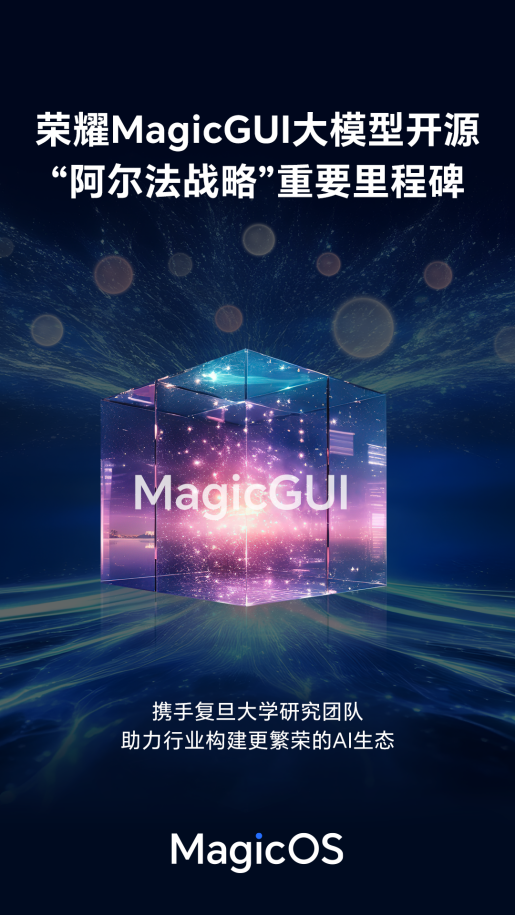
直击WAIC2025|手机Agent竞赛升级:荣耀发布多模态感知大模型MagicGUI,从单智能体任务执行到多智能体协同
Mei Ri Jing Ji Xin Wen· 2025-07-26 09:47
Core Insights - The article emphasizes that the era of AI in smartphones should extend beyond basic functionalities like translation and document processing, advocating for a broader imagination of AI's capabilities in mobile devices [1] - Honor's release of the MagicGUI model, with 7 billion parameters, marks a significant advancement in AI assistants, evolving from traditional voice assistants to more capable digital assistants that can understand complex needs and execute multi-step tasks [1][2] Group 1: Evolution of AI Assistants - Since the rise of large models in 2023, major smartphone manufacturers have recognized the shift from basic voice assistants to lightweight intelligent agents capable of perception, reasoning, decision-making, and operation [2] - Honor's YOYO has evolved from executing single tasks to coordinating multiple intelligent agents, showcasing a significant leap in functionality compared to traditional voice assistants [2][7] Group 2: Comparison with Competitors - Apple's Siri, introduced in 2011, has seen limited updates and remains largely underutilized, while Android counterparts like Honor's YOYO, Vivo's "Blue Heart Little V," and Xiaomi's "Super Xiao Ai" have advanced to task-oriented intelligent agents capable of executing complex tasks [5][6] - The transition from app-driven interactions to agent-driven frameworks signifies a major shift in user-device interaction, with AI assistants taking the lead in understanding and executing tasks [8] Group 3: Technical Advancements - The MagicGUI model employs a two-phase training paradigm, enhancing the model's screen perception and positioning capabilities through large-scale GUI knowledge injection and reinforcement learning [9] - The trained MagicGUI model allows YOYO to think and act based on visual information from the screen, improving its efficiency and adaptability in task execution [9] Group 4: Open Source Initiative - Honor has announced that the MagicGUI model and related testing data will be made available on open-source platforms, promoting collaboration and further development in the field [9]

隔屏有手,AI手机自动点咖啡背后,是偷偷启动的无障碍功能
3 6 Ke· 2025-06-16 09:08
Core Viewpoint - The rapid advancement of technology, particularly AI in smartphones, raises significant concerns regarding user privacy and data security, as the convenience of AI features may come at the cost of personal information exposure [1][2][20]. Group 1: AI Smartphone Features - AI smartphones are increasingly promoting voice-activated features that allow users to perform tasks like ordering food with simple commands, showcasing advancements in user convenience [2][5]. - Major brands such as Xiaomi, Honor, Vivo, and Huawei are competing in the AI smartphone market, with Honor's Magic7 Pro being highlighted for its smooth performance in executing voice commands [5][7]. - Despite the advancements, the current AI capabilities are still in the early stages, with many tasks requiring manual intervention, indicating that the technology has not yet fully realized its potential [7][20]. Group 2: Privacy Risks - The use of accessibility features in AI smartphones, originally designed to assist users with disabilities, has raised concerns as these features can be exploited to access sensitive user data without explicit consent [9][10]. - Reports indicate that malicious applications can misuse accessibility permissions to gain control over user devices, leading to potential privacy violations and financial fraud [11][12]. - The complexity of privacy agreements and the lack of clear user consent processes for enabling accessibility features contribute to the risk of unintentional data exposure [19][21]. Group 3: Regulatory and Ethical Considerations - Experts emphasize the need for clear user consent and transparent processes when enabling AI features that utilize accessibility functions, as failure to do so may infringe on user rights and privacy [20][21]. - The introduction of new standards, such as the Model Context Protocol (MCP), aims to enhance the integration of AI systems while addressing privacy concerns, but the current landscape still requires vigilance from users and developers [22][23].