蓝龙虾

Search documents
博罗龙溪:强村公司+特色产业,长湖村打造乡村经济新引擎
Nan Fang Du Shi Bao· 2025-12-29 14:24
Group 1 - The core idea of the article is the comprehensive rural revitalization efforts in Changhu Village, focusing on strong industries, improved environment, enhanced livelihoods, and effective governance [1] Group 2 - Changhu Village has leveraged digital technology to boost its agricultural industry, with local officials acting as "anchors" to promote products like lychees through live streaming, resulting in better prices and increased sales [2] - The establishment of "Huizhou Fuxing Property Management Co., Ltd." in 2024 aims to integrate strong village companies with特色产业 and community support, targeting an annual sales goal of 200,000 yuan for unique agricultural products [2] - E-commerce sales accounted for 45% of the total agricultural revenue in Changhu Village in 2024, highlighting the significant impact of digital sales channels [2] Group 3 - The construction of the 8,000 square meter Meihualing Park has enhanced the living environment, becoming a popular gathering place for villagers and contributing to their well-being [3] - Over 1,600 trees have been planted as part of ecological initiatives, and significant improvements have been made to the village's infrastructure, including the renovation of 19 houses and the installation of a rainwater and sewage separation system [3] Group 4 - Changhu Village has improved public services by paving approximately 3.4 kilometers of village roads and increasing streetlights from 20 to 330, addressing transportation issues for residents [4] - The "Little Seedling" public welfare class has provided over 130 free courses for children, serving 320 participants, while regular visits to elderly residents have ensured health and social support [4] - The implementation of a "Party Building + Points" model has encouraged community participation in environmental and volunteer activities, transforming residents' attitudes towards community service [4]
螃蟹、鲈鱼开始批量上市!新疆和田水产品半年产量超1000吨
Sou Hu Cai Jing· 2025-10-26 11:21
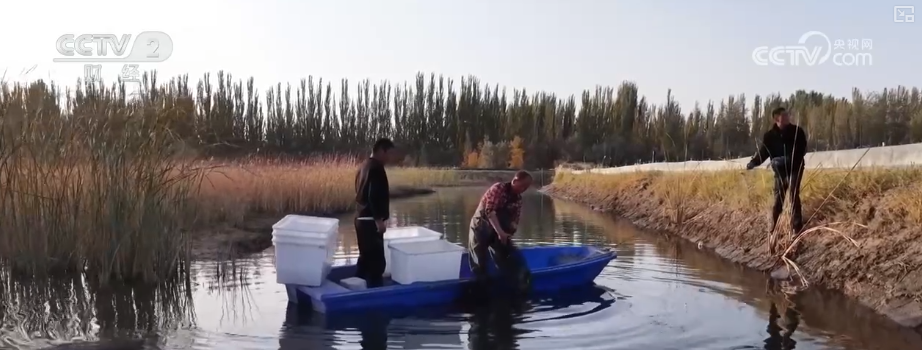
Core Viewpoint - The Xinjiang Hotan region has successfully developed a unique "desert seafood" aquaculture industry through the transformation of saline-alkali land, enabling large-scale cultivation of various aquatic products such as crabs and bass. Group 1: Aquaculture Development - The aquaculture base in Hotan County has seen the successful cultivation of crabs, bass, and other aquatic products, marking a rapid development of the local "desert seafood" industry [9][11]. - The crab farming season has reached its peak, with an average daily catch of approximately 500 kilograms [3]. - The total aquaculture area in Hotan County has reached 3,800 acres, with over 1,000 tons of aquatic products produced in the first half of the year [15]. Group 2: Production and Yield - The expected crab production for this year is around 40 tons, while bass production is estimated at about 30 tons, with total production potentially exceeding 70 tons [13]. - The crabs were released into the ponds in March and have grown for seven months, now ready for harvest [5]. - The local farmers have utilized scientific water diversion and land improvement techniques to transform previously barren land into a high-quality aquaculture base [5][9]. Group 3: Technical Innovations - The main challenge in raising crabs in saline-alkali land is managing the pH level of the water, which has been stabilized using techniques such as salt reduction, alkalinity removal, and the use of probiotics [7][11]. - The successful management of water quality has enabled the large-scale farming of various aquatic species in this unique environment [11].

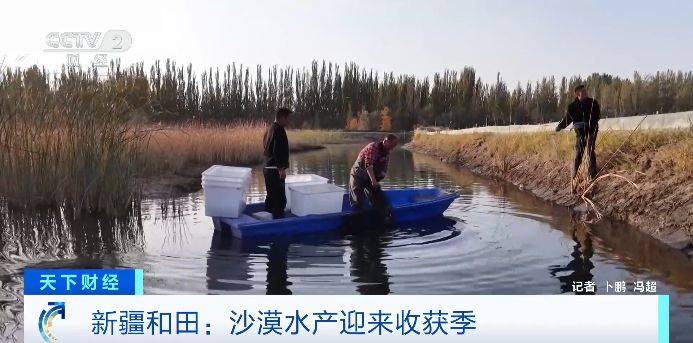
科技点沙成“金”产出“大经济” 多样化“沙漠海鲜”撑起养殖户“钱袋子”
Yang Shi Wang· 2025-10-26 07:26
Core Insights - The Xinjiang Hotan region has successfully implemented large-scale aquaculture of various aquatic products through saline-alkali land transformation technology, particularly in the desert edge [1][11] - The region is currently experiencing a peak in crab harvesting, with an average daily catch of around 500 kilograms [3] - The aquaculture base has achieved a total water area of 3,800 acres, with an expected total aquatic product output exceeding 1,000 tons in the first half of 2025 [15] Aquaculture Development - The crabs were introduced to the ponds in March 2025 and have grown for seven months, now entering the harvesting season [5] - The successful cultivation of crabs, bass, and lobsters in the saline-alkali desert has led to the rapid development of a unique "desert seafood" industry [11] - The use of techniques such as salt reduction, alkalinity removal, and beneficial bacteria regulation has stabilized the water pH to suitable levels for aquatic growth [13] Technical Challenges - The primary challenge in raising crabs in saline-alkali land is managing the water's pH level, which must be adjusted to between 8.0 and 8.2 for optimal crab growth [9][7] - The expected crab production for 2025 is around 40 tons, with bass production estimated at 30 tons and blue lobsters at a few tons, leading to a total expected output of over 70 tons [13]