蝶式期权

Search documents
看空情绪爆表:美元对冲成本升至2011年来最高 或跌向四年低点
智通财经网· 2026-01-27 11:39
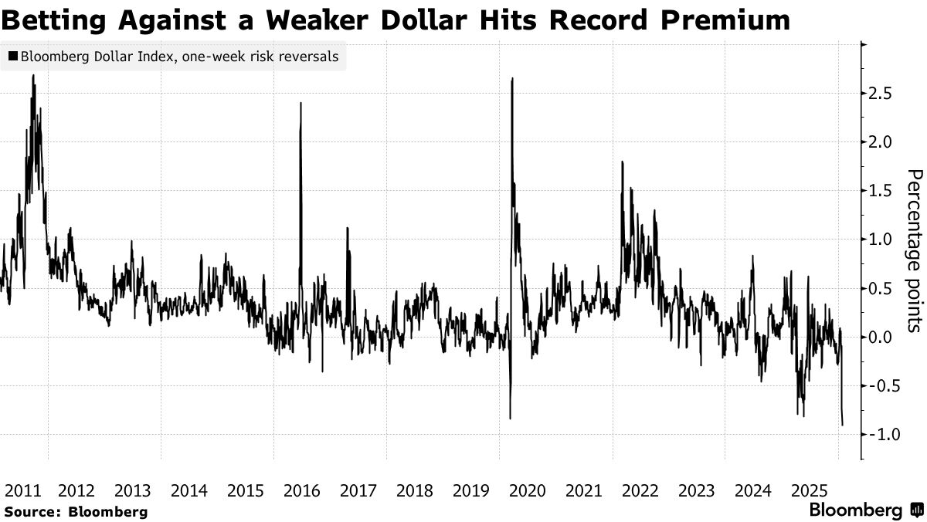
Group 1 - The core sentiment in the market is a significant bearish outlook on the US dollar, driven by political instability and rising costs for hedging against further declines [1][3] - The short-term options premium for betting on a weaker dollar has reached its highest level since 2011, indicating heightened market anxiety [1] - The dollar's performance has been the weakest among G10 currencies this year, reflecting a shift in investor perception towards this traditional safe-haven asset [3] Group 2 - Concerns over rising US fiscal deficits, sanction risks, and trade tensions are collectively exerting pressure on the dollar [3] - Trading volumes through the DTCC reached the second-highest level in history, indicating significant capital movement and market participation [3] - Speculation about potential coordinated intervention by the US and Japanese authorities to support the yen has further contributed to the downward pressure on the dollar [6] Group 3 - The market is experiencing heightened anxiety, as evidenced by the spike in one-month dollar volatility to its highest level since early September [6] - The "butterfly options" indicator, which measures demand for protection against extreme price fluctuations, has risen to a seven-month high, suggesting traders are preparing for potential further declines in the dollar [6]

美元看空成本飙至历史极值!政治风险溢价重归
Jin Shi Shu Ju· 2026-01-27 11:26
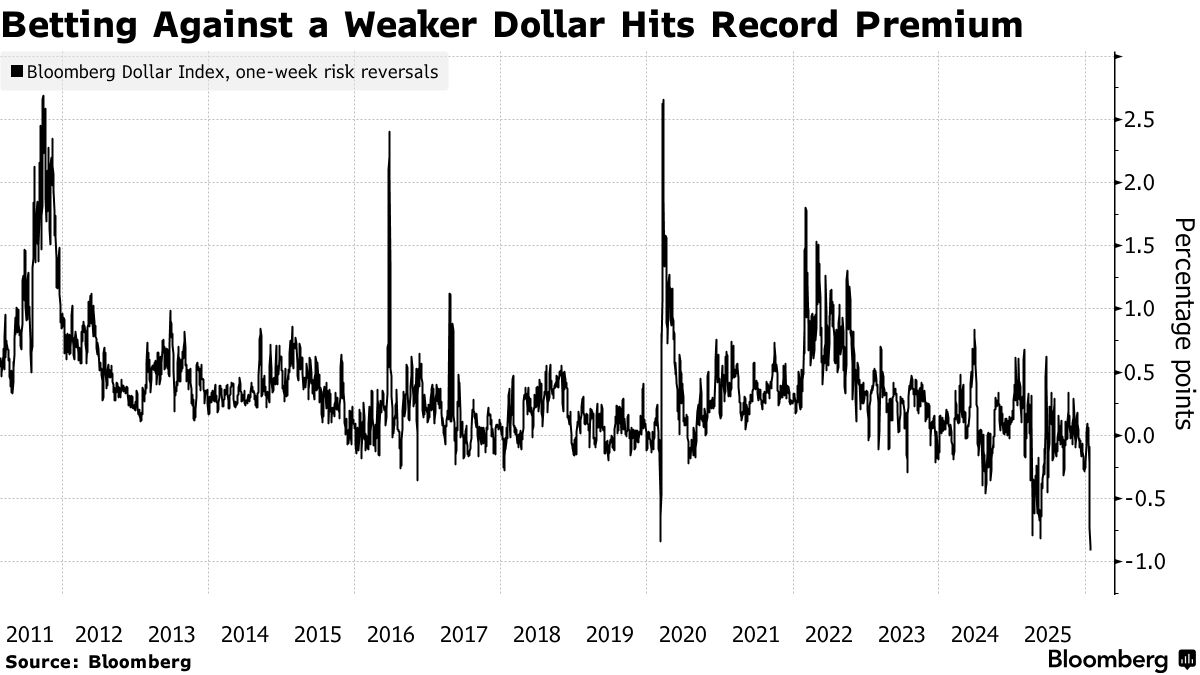
Core Viewpoint - The article highlights a significant bearish sentiment towards the US dollar, driven by political uncertainties and resulting in record-high costs for dollar bearish hedging tools. Investors are increasingly pessimistic about the dollar's long-term prospects, marking the lowest sentiment since May 2025 [1][4]. Group 1: Market Sentiment and Trends - Investors are heavily betting against the dollar, with short-term option premiums reaching the highest level since Bloomberg began tracking this data in 2011 [1]. - The Bloomberg Dollar Spot Index experienced a slight increase, but the previous three trading days saw the largest drop since April of last year, indicating a potential decline to a four-year low if the trend continues [4]. - The dollar is currently underperforming among the G10 currencies, reflecting a shift in investor perception towards this traditional safe-haven asset [4]. Group 2: Economic Factors Influencing the Dollar - Multiple pressures are affecting the dollar, including concerns over high US fiscal deficits, sanction risks, trade tensions, and a global trend of diversifying reserve assets into gold and other commodities [4]. - The recent dollar weakness is not solely sentiment-driven but is accompanied by significant capital flows, with trading volumes reaching historical highs [5]. - A severe one-sided market position is evident, with approximately two-thirds of euro and Australian dollar option trades betting on further dollar weakness [6]. Group 3: Market Volatility and Hedging Costs - Market anxiety is reflected in the soaring volatility of the dollar, which has reached its highest level since September of last year [7]. - The prices of butterfly options, which measure the demand for hedging against extreme price fluctuations, have surged to a seven-month high, indicating that traders are preparing for a potential further decline in the dollar [7]. - Speculation exists that the US government may collaborate with Japanese monetary authorities to stabilize the declining yen, further exacerbating the downward pressure on the dollar [7].