
制裁风险

Search documents
盘面震荡偏强运行,节前注意地缘风险
Hua Tai Qi Huo· 2026-02-12 04:11
1. Report Industry Investment Rating - High-sulfur fuel oil: Neutral [2] - Low-sulfur fuel oil: Neutral [2] - Cross-variety: None [2] - Cross-period: None [2] - Spot-futures: None [2] - Options: None [2] 2. Core Viewpoints - The fuel oil market is oscillating strongly, and geopolitical risks should be noted before the holiday [1] - The energy sector is greatly affected by the Iranian situation, and short-term caution is needed [1] - The market structure of high-sulfur fuel oil is strong, but it lacks the power to strengthen continuously [1] - The fundamental contradiction of low-sulfur fuel oil is not obvious, and it mainly follows the fluctuations of the crude oil end [1] 3. Summary by Relevant Catalogs Market Analysis - The main contract of Shanghai Futures Exchange fuel oil futures closed up 1.38% at 2,860 yuan/ton, and the main contract of INE low-sulfur fuel oil futures closed up 2.32% at 3,357 yuan/ton [1] - The energy sector is greatly affected by the Iranian situation, and the situation is still unclear [1] - The market structure of high-sulfur fuel oil is strong, downstream ship fuel demand is good, and domestic refineries' substitution of Venezuelan oil promotes import demand, but there is no shortage expectation, and the arrival volume in Asia will increase in February [1] - The fundamental contradiction of low-sulfur fuel oil is not obvious, there is an increase in supply in some areas such as Kuwait, but the overall pressure is relatively limited, and it mainly follows the fluctuations of the crude oil end in the short term [1] Strategy - High-sulfur: Neutral, pay attention to the development of the Iranian situation, avoid geopolitical risks as much as possible, and operate with a light position before the holiday [2] - Low-sulfur: Neutral, pay attention to the development of the Iranian situation, avoid geopolitical risks as much as possible, and operate with a light position before the holiday [2] - Cross-variety: None [2] - Cross-period: None [2] - Spot-futures: None [2] - Options: None [2] Figures - The report includes 18 figures, showing the spot prices, swap contracts, month-to-month spreads, closing prices, trading volumes, and open interests of Singapore high-sulfur and low-sulfur fuel oils, as well as the closing prices, trading volumes, and open interests of fuel oil FU and low-sulfur fuel oil LU futures [3]
燃料油日报:市场波动加剧,盘面大幅回撤-20260203
Hua Tai Qi Huo· 2026-02-03 05:04
1. Report Industry Investment Rating - High - sulfur fuel oil: Neutral, short - term wait - and - see; focus on the development of the Iran situation [2] - Low - sulfur fuel oil: Neutral, short - term wait - and - see; focus on the development of the Iran situation [2] - Cross - variety: None [2] - Cross - period: Pay attention to the opportunity of going long the spread between FU2603 and FU2605 at low prices (positive spread) [2] - Spot - futures: None [2] - Options: None [2] 2. Core Viewpoints - The main contract of Shanghai Futures Exchange fuel oil futures closed down 7.01% at 2,681 yuan/ton in the day session, and the main contract of INE low - sulfur fuel oil futures closed down 5.92% at 3,128 yuan/ton [1] - The recent overall rise in the energy sector was driven by multiple factors such as macro, geopolitical, and capital aspects. After the previous driving factors ebbed, the energy sector tumbled yesterday. High - sulfur fuel oil, which is closely related to Iran, had a larger decline than low - sulfur fuel oil [1] - From a fundamental perspective, high - sulfur fuel oil shows an "east - strong, west - weak" pattern, with tightening spot in the Asia - Pacific region, continuous decline in Singapore's inventory, and a decrease in domestic registered warehouse receipts. Low - sulfur fuel oil has limited market contradictions [1] 3. Summary by Related Catalogs Market Analysis - The main contract of Shanghai Futures Exchange fuel oil futures closed down 7.01% at 2,681 yuan/ton in the day session, and the main contract of INE low - sulfur fuel oil futures closed down 5.92% at 3,128 yuan/ton [1] - The overall rise in the energy sector was driven by multiple factors. The nomination of Kevin Warsh by Trump led to a rebound in the US dollar index and a weakening of macro sentiment. Geopolitical premiums in the oil market first rose and then fell. After the previous driving factors ebbed, the energy sector declined [1] - High - sulfur fuel oil shows an "east - strong, west - weak" pattern, with tightening spot in the Asia - Pacific region, continuous decline in Singapore's inventory, and a decrease in domestic registered warehouse receipts. Low - sulfur fuel oil has limited market contradictions [1] Strategy - High - sulfur: Neutral, short - term wait - and - see; focus on the development of the Iran situation [2] - Low - sulfur: Neutral, short - term wait - and - see; focus on the development of the Iran situation [2] - Cross - variety: None [2] - Cross - period: Pay attention to the opportunity of going long the spread between FU2603 and FU2605 at low prices (positive spread) [2] - Spot - futures: None [2] - Options: None [2]
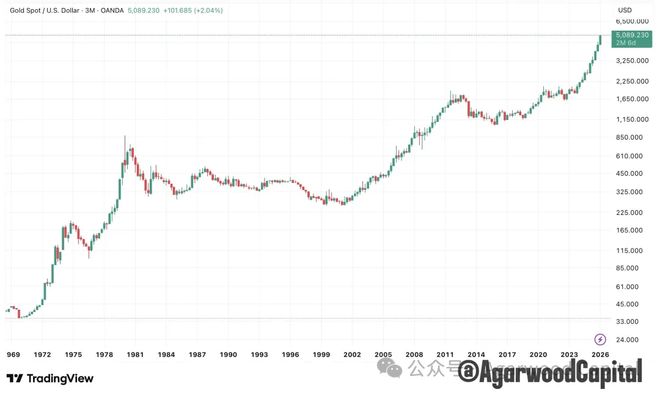
黄金:“美元秩序”衰退下的首选对冲工具
Xin Lang Cai Jing· 2026-02-01 15:11
Group 1 - The core thesis is that the logic for gold in the next three to five years stems from the decline of the dollar-dominated old order, with central banks and sovereign institutions needing to hedge against multi-dimensional risks associated with the dollar and dollar-denominated debt [2] - The first layer of drivers includes a reassessment of risks associated with the dollar order, such as asset freezes, geopolitical conflicts, erosion of trust among allies, unsustainable U.S. fiscal policies, and domestic turmoil [3] - The second layer of drivers is the reallocation of reserves by central banks and sovereign institutions, with increased gold purchases creating structural demand across cycles [3] Group 2 - Under the combination of continuous central bank purchases, unresolved risks in the dollar order, and limited supply growth, gold prices are likely to maintain a rising bottom over the next three to five years, with a baseline scenario predicting prices could exceed $10,000, and potential scenarios of $15,000 to $20,000 in case of severe geopolitical or monetary shocks [6] - Empirical evidence shows that gold has a long-term negative correlation with U.S. ten-year real interest rates, but since 2022, gold has reached historical highs even with relatively high real interest rates due to central banks being the main buyers [7] Group 3 - The chapter focuses on why the market needs to reassess the dollar and dollar assets, marking the macroeconomic starting point for gold as a counter to the dollar [8] - The impact of the Russia-Ukraine war and asset freezes has led to a re-evaluation of sanction risks, with approximately $280 billion to $300 billion of Russian sovereign assets being locked, directly affecting the belief in the safety of official reserves [9] - The shift in reserve asset composition from "internal currency diversification" to "diversification from sovereign liabilities to non-credit assets" reflects the changing landscape of trust in the U.S. dollar [12] Group 4 - The U.S. fiscal situation is deemed unsustainable, with projections indicating that federal deficits and government debt as a percentage of GDP will remain high, raising concerns about the long-term sustainability of U.S. debt [15] - Central banks have become significant net buyers of gold, with over 10,000 tons purchased since 2010, and net purchases exceeding 1,000 tons annually from 2022 to 2024, marking a historical record [19] - The motivation for central banks to purchase gold has shifted from historical reasons to insurance against sanctions and credit risks, leading to an upward adjustment in gold's target allocation in official reserves [22] Group 5 - The supply of gold is characterized by moderate growth and cost pressures, with global gold supply expected to reach approximately 4,974 tons in 2024, a 1% increase year-on-year [32] - The mining supply is nearing a plateau, with production levels hovering around 3,600 tons, indicating limited immediate supply response to price changes [33] - The overall supply structure suggests a relatively inelastic supply curve, with demand supported by central bank purchases and order factors, leading to price adjustments primarily driven by demand and financial conditions [36]

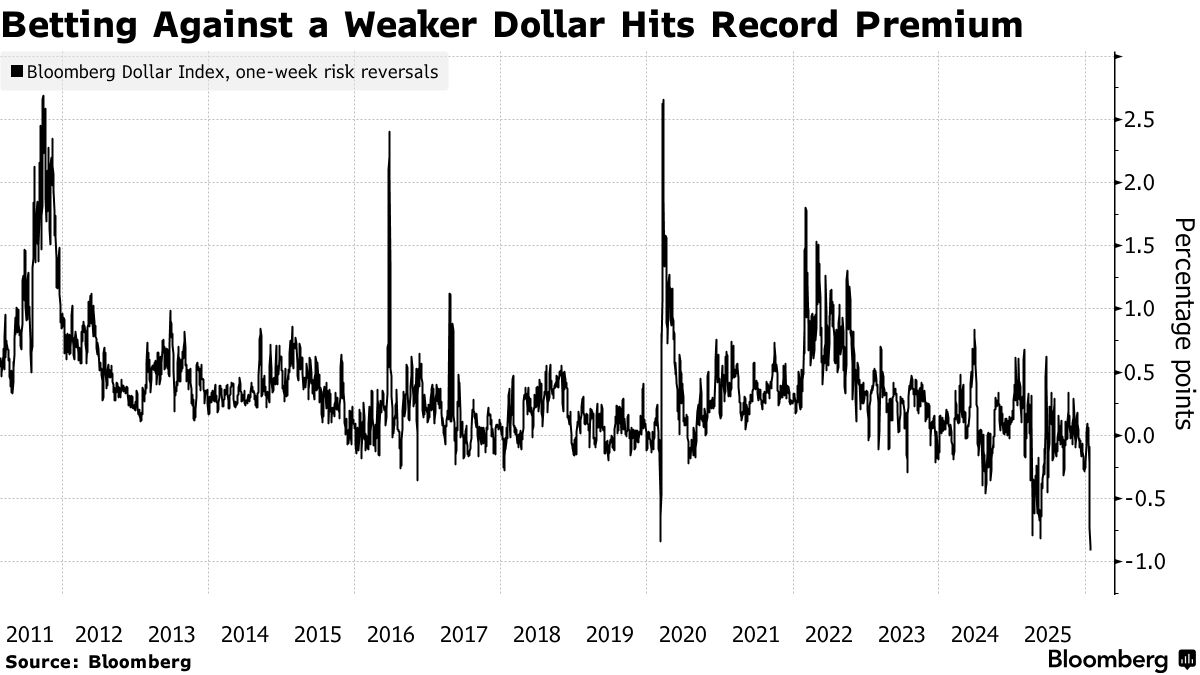
看空情绪爆表:美元对冲成本升至2011年来最高 或跌向四年低点
智通财经网· 2026-01-27 11:39
Group 1 - The core sentiment in the market is a significant bearish outlook on the US dollar, driven by political instability and rising costs for hedging against further declines [1][3] - The short-term options premium for betting on a weaker dollar has reached its highest level since 2011, indicating heightened market anxiety [1] - The dollar's performance has been the weakest among G10 currencies this year, reflecting a shift in investor perception towards this traditional safe-haven asset [3] Group 2 - Concerns over rising US fiscal deficits, sanction risks, and trade tensions are collectively exerting pressure on the dollar [3] - Trading volumes through the DTCC reached the second-highest level in history, indicating significant capital movement and market participation [3] - Speculation about potential coordinated intervention by the US and Japanese authorities to support the yen has further contributed to the downward pressure on the dollar [6] Group 3 - The market is experiencing heightened anxiety, as evidenced by the spike in one-month dollar volatility to its highest level since early September [6] - The "butterfly options" indicator, which measures demand for protection against extreme price fluctuations, has risen to a seven-month high, suggesting traders are preparing for potential further declines in the dollar [6]
金杜成功举办“贸易合规‘避坑指南’”主题研讨会,助力企业在变局中行稳致远
Jing Ji Guan Cha Wang· 2025-12-04 05:58
Core Insights - The seminar titled "Trade Compliance 'Pitfall Guide' - From Policy Interpretation to Practical Implementation, Responding to Sanctions and Supply Chain Compliance Risks" was successfully held by King & Wood Mallesons and LCOUNCIL in Beijing, attracting nearly 100 corporate legal and compliance professionals [1] - The evolving global trade landscape presents challenges such as sanction risks, supply chain restructuring pressures, and export control challenges, making compliance a critical issue for international business survival and development [1] Group 1: Opening Remarks - Xu Ping, Managing Partner of King & Wood Mallesons, emphasized the need for companies to systematically review their equity, business, and supply chain structures in light of increasing geopolitical and supply chain risks [2] - She introduced the recently published "Overseas Greenfield Investment Legal and Practical Guide," which provides practical guidance for risk identification and rights protection during the overseas expansion process [2] Group 2: Keynote Presentations - Jing Yunfeng, Partner at King & Wood Mallesons, reviewed key dynamics and enforcement trends in U.S. sanctions and export controls for 2025, advocating for a proactive risk assessment mechanism [3] - Yao Lijuan, Partner at King & Wood Mallesons, discussed strategies for global investment layout and supply chain adjustments, highlighting the importance of optimizing structures for risk diversification and business resilience [3] - Zheng Yinying, Partner at King & Wood Mallesons, focused on recent enforcement trends in China's export controls, emphasizing the core requirements of the legal framework and the importance of local compliance [3] - Hou Peng, Partner in the Dispute Resolution Department, analyzed representative cases of counter-sanction litigation, providing insights on how companies can use legal tools to defend their rights against unfair sanctions [3] Group 3: Interactive Session - Participants engaged in in-depth discussions with lawyers about specific challenges faced in their businesses, finding the seminar's content practical and comprehensive [4] - The seminar showcased King & Wood Mallesons' expertise and leading position in cross-border compliance, international trade, and dispute resolution [4] - The firm aims to continue supporting businesses in identifying risks and seizing opportunities in uncertain environments [4]
原油成品油早报-20251118
Yong An Qi Huo· 2025-11-18 02:24
Report Summary 1. Report Industry Investment Rating No investment rating information is provided in the report. 2. Core View of the Report - This week, oil prices remained volatile. News of potential negotiations between Russia and Ukraine on Thursday and the suspension of oil exports from Russia's Novorossiysk port due to an attack on Friday caused intraday fluctuations. The fundamentals maintain a pattern of oversupply and increased uncertainty regarding Russian sanctions risks. The US sanctions on Russia will take effect on November 21, and the short - term statements of the US and Russia will affect market expectations. The US EIA commercial crude oil inventory has increased, while the global oil inventory has slightly decreased. Due to high gasoline and diesel profits, the refinery operations in Europe and the US have recently recovered, and the maintenance rate of Middle Eastern refineries remains high. In the short term, the interruption of Russian ports supports the Dubai monthly spread, but the global supply pressure and the potential OPEC production increase plan limit the upside. In the short term, the monthly spread and absolute prices will maintain a volatile pattern, and a short - selling strategy is recommended for the fourth quarter [6]. 3. Summary by Relevant Catalogs 3.1 Price Data - **Crude Oil Prices**: From November 11 - 17, BRENT crude oil price decreased by $0.57 to $63.82, DUBAI decreased by $0.18 to $65.00. SC increased by 0.70 to 458.10, and OMAN decreased by $0.40 to $64.46 [3]. - **Product Prices**: From November 11 - 17, NYMEX RB, RBOB - BR, NYMEX HO, HO - BRT, and other product prices showed corresponding changes. For example, the change in the difference between DUBAI - BRT was 0.22, and the change in the difference between SC - BRT was 0.68 [3]. - **Domestic Product Prices**: From November 11 - 17, domestic gasoline price increased by 20.00 to 7100, and the difference between domestic gasoline - BRT increased by 54.00 to 3335. Domestic diesel price increased by 5.00 to 6440, and the difference between domestic diesel - BRT increased by 35.00 to 3118 [3]. 3.2 Daily News - US President Trump said he would not rule out any possibilities regarding Venezuela and that any country doing business with Russia would be sanctioned, and Iran might be added to the list [3][4]. - Three Iraqi energy officials stated that the Iraqi government is discussing applying to the US Treasury for a six - month exemption to allow Lukoil to sell its stake in the West Qurna - 2 oilfield [4]. - Market news reported that Sudan's energy facilities were attacked, and oil exports were interrupted [4]. - As of the week ending November 17, the crude oil arrival volume of Shandong independent refineries was 2.67 million tons, a decrease of 75,000 tons from the previous week, a decline of 2.73%. Compared with the same period last year, the arrival volume was 2.039 million tons, a decrease of 483,000 tons, a decline of 19.15%. The arriving crude oil was mainly medium - quality crude oil, with 795,000 tons of Russian crude oil arriving, and no new diluted bitumen arrived [4]. 3.3 Inventory - **US Inventory**: In the week ending November 7, US crude oil exports decreased by 1.551 million barrels per day to 2.816 million barrels per day, domestic crude oil production increased by 211,000 barrels to 13.862 million barrels per day, the API crude oil inventory was 1.3 million barrels (previous value: 6.521 million barrels), and the commercial crude oil inventory excluding strategic reserves increased by 6.413 million barrels to 428 million barrels, an increase of 1.52%. The US strategic petroleum reserve (SPR) inventory increased by 798,000 barrels to 410.4 million barrels, an increase of 0.19% [5][17]. - **Japanese Inventory**: As of the week ending November 8, Japan's commercial crude oil inventory decreased by 353,966 kiloliters to 10,379,001 kiloliters compared with the previous week [6]. - **Venezuelan Inventory**: As of the week ending November 12, the total refined oil inventory at the Port of Fujairah in the UAE was 21.181 million barrels [17]. - **Gasoline and Diesel Inventory**: From November 7 - 13, both gasoline and diesel inventories decreased. Gasoline inventory was 10.4149 million tons, a decrease of 1.52%, and diesel inventory was 12.8156 million tons, a decrease of 0.63%. The refinery profits of major and independent refineries rebounded [6].
燃料油日报:宏观风险显现,市场波动增加-20251014
Hua Tai Qi Huo· 2025-10-14 05:37
1. Report Industry Investment Rating - High-sulfur fuel oil: Cautiously bearish, with a short-term focus on waiting and observing [2] - Low-sulfur fuel oil: Cautiously bearish, with a short-term focus on waiting and observing [2] - Cross-variety: None [2] - Cross-period: None [2] - Spot-futures: None [2] - Options: None [2] 2. Core View of the Report - The main contract of SHFE fuel oil futures closed down 2.35% at 2,737 yuan/ton, and the main contract of INE low-sulfur fuel oil futures closed down 3% at 3,232 yuan/ton The recent continuous decline in crude oil prices has led to a downward trend in the energy sector, and the FU and LU contracts are operating weakly [1] - During the China-US tariff negotiation window, oil prices may be affected by various news, and volatility may increase significantly [1] - The fundamentals of fuel oil are currently acceptable, with tightened Middle East supply and improved refinery demand boosting the market However, based on the current valuation and supply-demand situation, the upward drive and space are still limited, and new variables are needed for catalysis [1] - In the case of low-sulfur fuel oil, the shutdown of the RFCC units at the Dangote and Pengerang refineries has led to an increase in local supply, with September shipments reaching 500,000 tons, which has suppressed the spot market According to the latest news from IIR, the Dangote refinery's units may restart on October 14, and if they operate smoothly, the refinery's low-sulfur fuel oil production will decline again, alleviating local supply pressure [1] - Against the backdrop of increasing tariff risks, shipping and marine fuel demand also face potential pressure Compared with high-sulfur fuel oil, the downstream demand for low-sulfur fuel oil is more concentrated and may be more sensitive [1] 3. Summary by Relevant Catalog Market Analysis - The main contract of SHFE fuel oil futures closed down 2.35% at 2,737 yuan/ton, and the main contract of INE low-sulfur fuel oil futures closed down 3% at 3,232 yuan/ton [1] - The recent continuous decline in crude oil prices has led to a downward trend in the energy sector, and the FU and LU contracts are operating weakly [1] - During the China-US tariff negotiation window, oil prices may be affected by various news, and volatility may increase significantly [1] - The fundamentals of fuel oil are currently acceptable, with tightened Middle East supply and improved refinery demand boosting the market However, based on the current valuation and supply-demand situation, the upward drive and space are still limited, and new variables are needed for catalysis [1] - In the case of low-sulfur fuel oil, the shutdown of the RFCC units at the Dangote and Pengerang refineries has led to an increase in local supply, with September shipments reaching 500,000 tons, which has suppressed the spot market According to the latest news from IIR, the Dangote refinery's units may restart on October 14, and if they operate smoothly, the refinery's low-sulfur fuel oil production will decline again, alleviating local supply pressure [1] - Against the backdrop of increasing tariff risks, shipping and marine fuel demand also face potential pressure Compared with high-sulfur fuel oil, the downstream demand for low-sulfur fuel oil is more concentrated and may be more sensitive [1] Strategy - High-sulfur: Cautiously bearish, with a short-term focus on waiting and observing [2] - Low-sulfur: Cautiously bearish, with a short-term focus on waiting and observing [2] - Cross-variety: None [2] - Cross-period: None [2] - Spot-futures: None [2] - Options: None [2]
中石化冠德:日照实华被OFAC列入SDN清单
Zhi Tong Cai Jing· 2025-10-13 12:17
Core Viewpoint - Sinopec Kantons Holdings (00934) announced that the U.S. Department of the Treasury's Office of Foreign Assets Control (OFAC) has placed Rizhao Shihua Oil Terminal Co., Ltd. (in which the company holds a 50% stake) on the Specially Designated Nationals (SDN) list, which may impact the company's overall performance [1] Financial Impact - Rizhao Shihua is primarily engaged in the operation of oil terminals and related facilities, contributing approximately 12% to the company's pre-tax profit for the fiscal year 2024, which is estimated to be around HKD 1.287 billion [1] - Following the inclusion of Rizhao Shihua on the SDN list, the company anticipates potential restrictions on its related business, which could adversely affect the overall performance of the group [1] Operational Status - The company's other business operations remain normal despite the developments concerning Rizhao Shihua [1]
俄罗斯市场深度解析:制裁下的重构机遇与风险应对指南
Sou Hu Cai Jing· 2025-09-29 08:33
Core Insights - The article highlights the structural changes in the Russian market post the Ukraine conflict, presenting new opportunities for Chinese enterprises to expand into Russia [1][12]. Economic Growth and Structural Changes - Russia's nominal GDP is projected to grow by 4.1% in 2024, marking one of the highest growth rates in the past five years, with an unemployment rate at a historical low of 2.3% [1]. - The growth is characterized by a significant shift towards defense-driven economic growth, with over 35% of industrial output growth in 2024 stemming from military and strategic security orders, while civilian manufacturing output has decreased by 1.2% [3]. - Defense and security spending in the federal budget is expected to rise to 36% in 2024, the highest since the dissolution of the Soviet Union [3]. - Russia's trade dynamics have shifted dramatically, with exports to the EU plummeting by 72%, while trade with China surged, increasing from 17% in 2021 to 35% in 2024 [3]. - Energy export revenues have risen from 39% of the federal budget in 2021 to 52% in 2024, indicating a growing dependency on energy [3]. Investment Opportunities by Sector - **Energy and Resources**: Russia, as a major oil and gas exporter, has seen a 46.6% increase in natural gas supplies to China in 2023, presenting collaboration opportunities for Chinese companies in energy extraction, transportation, and processing [4]. - **High-Tech and IT**: The local software industry is expected to grow at an annual rate of over 25% from 2023 to 2024, supported by tax incentives and the "Digital Sovereignty Law," particularly in areas like basic software and cybersecurity [4]. - **Agriculture and Food Processing**: Russia's wheat exports are projected to reach a record 55.3 million tons in the 2023-2024 agricultural season, accounting for 26% of global wheat exports, making agriculture a resilient sector amid sanctions [4]. - **Consumer and Retail**: The demand for home appliances, furniture, and daily consumer goods is increasing, with a notable rise in electronic products among younger consumers [4]. Government Support and Policy Initiatives - The Russian government is focusing on production-linked incentive programs to boost local industries, particularly in import substitution, with a 40% increase in domestic automotive and machinery manufacturing capacity from 2023 to 2024 [5]. - Infrastructure development remains a priority, with opportunities for Chinese companies to leverage their expertise in transportation, energy, and urban infrastructure [6]. Market Entry and Legal Structure - Foreign investors must navigate the Russian legal framework, which includes options like Limited Liability Companies (OOO) and Joint Stock Companies (AO), with a registration process typically taking 30-45 days [8]. - Companies are advised to establish a local presence through market research, pilot projects, and building local networks to facilitate entry into the Russian market [10][13].

《农产品》日报-20250716
Guang Fa Qi Huo· 2025-07-16 02:07
Group 1: Pig Industry Report Industry Investment Rating Not provided. Core View The current breeding profit has returned to a low level, and the market is cautious about expanding production capacity. There is no basis for a significant decline in the market. The market expects a potential market wave in July and August due to the impact of piglet diarrhea at the beginning of the year, but the actual subsequent slaughter is expected to continue to recover, and the live inventory continues to be postponed. The pressure on the upper side of the 09 contract is accumulating. Pay attention to the pressure above 14,500 yuan/ton and operate with a short - bias when the price is high [2]. Summary by Relevant Catalog - **Futures Indicators**: The main contract price increased by 8.43% to 450 yuan/ton, the "pig 2511" contract rose 0.11% to 13,620 yuan/ton, and the "pig 2509" contract fell 0.25% to 14,250 yuan/ton. The 9 - 11 spread decreased by 7.35%. The main contract positions decreased by 2.17%, and the number of warehouse receipts remained unchanged [2]. - **Spot Prices**: Spot prices in Henan remained unchanged, while those in Shandong, Sichuan, Liaoning, Hunan, and Hebei decreased slightly. The sample point slaughter volume increased by 0.84%, the weekly white - strip price remained unchanged, the weekly piglet price decreased by 3.20%, the weekly sow price remained unchanged, the weekly slaughter weight increased by 0.30%, the weekly self - breeding profit increased by 11.82%, and the weekly purchased - pig breeding profit increased by 220.34%. The monthly fertile sow inventory increased by 0.10% [2]. Group 2: Oil and Fat Industry Report Industry Investment Rating Not provided. Core View For palm oil, the Malaysian BMD crude palm oil futures have pulled back from high levels, with limited rebound space and the risk of further decline after the rebound. Domestic palm oil still has the pressure to weaken and adjust, and it is expected to seek support at 8,500 yuan/ton. For soybean oil, the market's digestion of the US sanctions on Russia has put pressure on crude oil, dragging down the vegetable oil market. CBOT soybean oil has maintained a narrow - range shock adjustment. Domestic soybean imports are expected to be high in July - August, but the market's attention has shifted to the limited imports in the fourth quarter, and there will be positive factors in August [4]. Summary by Relevant Catalog - **Futures and Spot Data**: For soybean oil, the current price in Jiangsu increased by 0.36%, the futures price of Y2509 increased by 0.23%, and the basis increased by 5.08%. For palm oil, the current price in Guangdong decreased by 0.34%, the futures price of P2509 decreased by 0.46%, and the basis changed significantly. For rapeseed oil, the current price in Jiangsu increased by 0.31%, the futures price of Ol209 increased by 0.21%, and the basis increased by 43.10%. There were also changes in cross - period spreads and price differences between different oils [4]. Group 3: Corn Industry Report Industry Investment Rating Not provided. Core View On July 15, the transaction volume of imported corn auctions reached a new low. With the depletion of remaining grain, traders are more likely to support prices, and the overall price is stable with partial rebounds. The downstream deep - processing industry is in the seasonal maintenance period, and the demand from the breeding end is mainly for rigid replenishment. In the medium term, the tight supply of corn and the increase in breeding consumption will support the corn price. In the short term, the weak market sentiment is gradually being released, and the corn price is stabilizing, with the futures market remaining volatile. Attention should be paid to the scale and transaction of subsequent auctions [5]. Summary by Relevant Catalog - **Futures and Spot Data**: The price of the "corn 2509" contract decreased by 0.30%, the Pingcang price in Jinzhou Port remained unchanged, the basis increased by 14.58%, the 9 - 1 spread decreased by 7.81%, and the import profit decreased by 2.83%. For corn starch, the price of the "corn starch 2509" contract decreased by 0.23%, and the basis increased by 11.32%. The positions of both increased, while the number of warehouse receipts decreased [5]. Group 4: Sugar Industry Report Industry Investment Rating Not provided. Core View The global sugar supply is becoming more abundant, putting pressure on the price of raw sugar, which is expected to maintain a bottom - shock pattern. The domestic market demand is weak, and the low inventory supports the spot price in Guangxi. However, the entry of processed sugar into the market has put pressure on prices. Considering the increase in future imports, the domestic supply - demand situation will gradually ease. It is recommended to maintain a short - bias strategy after the price rebounds, with the pressure reference range of 5,800 - 5,900 yuan/ton [8]. Summary by Relevant Catalog - **Futures Indicators**: The price of the "sugar 2601" contract decreased by 0.07%, the "sugar 2509" contract decreased by 0.26%, and the ICE raw sugar main contract increased by 1.53%. The 1 - 9 spread increased by 6.18%. The main contract positions decreased by 3.20%, the number of warehouse receipts decreased by 0.12%, and the effective forecast decreased by 100% [8]. - **Spot Market Prices**: The spot price in Nanning remained unchanged, while that in Kunming increased by 0.43%. The import price of Brazilian sugar (both within and outside the quota) decreased, and the price difference with Nanning also decreased [8]. - **Industry Situation**: The cumulative national sugar production increased by 12.03%, the cumulative sales increased by 23.07%, the cumulative national sales rate increased by 9.70%, and the industrial inventory decreased by 9.56% [8]. Group 5: Cotton Industry Report Industry Investment Rating Not provided. Core View The differentiation between the upstream and downstream of the cotton industry has intensified, with the downstream profits, cash flow deteriorating, and the开机 rate decreasing while the finished - product inventory increasing. However, the tight commercial inventory of cotton in the 2024/25 season before the new cotton is listed is difficult to resolve, which still strongly supports the cotton price. In the short term, the domestic cotton price may fluctuate in a moderately strong range, while it will face pressure after the new cotton is listed [9]. Summary by Relevant Catalog - **Futures Market Prices**: The price of the "cotton 2509" contract decreased by 0.18%, the "cotton 2601" contract increased by 0.04%, and the ICE US cotton main contract increased by 0.68%. The 9 - 1 spread decreased by 50%. The main contract positions decreased by 1.98%, the number of warehouse receipts decreased by 0.93%, and the effective forecast increased by 3.24% [9]. - **Spot Market Prices**: The Xinjiang arrival price, CC Index, and FC Index all increased to varying degrees. Some price differences also changed [9]. - **Industry Situation**: The commercial inventory decreased by 9.5%, the industrial inventory decreased by 2.9%, the import volume decreased by 33.3%, and the bonded - area inventory decreased by 8.9%. The yarn inventory days increased by 14.1%, and the grey - cloth inventory days increased by 3.2%. The cotton outbound shipping volume increased by 22.6%, and the clothing and textile retail sales increased by 4.0% [9]. Group 6: Meal Industry Report Industry Investment Rating Not provided. Core View The excellent rate of US soybeans exceeds market expectations, and the market is worried about the impact of tariffs. The futures market remains at the bottom. The Brazilian soybean premium is continuously rising, and the Brazilian soybeans are relatively strong. Currently, the domestic soybean and soybean meal inventories continue to rise, the开机 rate remains high, and the basis fluctuates at a low level. Although the subsequent supply is expected to maintain a high arrival volume, the continuity of soybean arrivals after October is uncertain, and the basis decline space is limited. The soybean meal main contract has returned above the 20 - day moving average, and with the stabilization of US soybeans and the increase in premiums, the domestic futures market may have further upward space. It is recommended to operate with a cautious long - bias [11]. Summary by Relevant Catalog - **Futures and Spot Data**: For soybean meal, the spot price in Jiangsu remained unchanged, the futures price of M2509 decreased by 0.47%, and the basis increased by 8.64%. For rapeseed meal, the spot price in Jiangsu increased by 0.39%, the futures price of RM2509 decreased by 0.15%, and the basis increased by 12.84%. For soybeans, the spot price in Harbin remained unchanged, the futures price of the soybean - one main contract increased by 0.44%, and the basis decreased by 10.53%. The basis of the soybean - two main contract increased by 39.13% [11]. - **Spreads and Ratios**: The soybean meal cross - period spread decreased by 27.59%, the rapeseed meal cross - period spread decreased by 3.38%, the oil - meal ratio increased slightly, and the soybean - rapeseed meal price difference decreased [11].