
西湖益联保

Search documents
百元保费 保障“再升级”:2026,惠民保有哪些变化
Jing Ji Wang· 2026-01-04 02:16
Core Insights - The article discusses the development and benefits of the "Beijing Universal Health Insurance" and similar programs across China, highlighting their affordability and accessibility for various demographics, particularly the elderly and those with pre-existing conditions [1][4][9]. Group 1: Program Features and Benefits - The 2026 edition of the "Beijing Universal Health Insurance" offers a premium of 195 yuan, providing significant health coverage and allowing payment through personal medical accounts [1]. - The program has expanded its coverage to include 159 types of special drugs, enhancing access to innovative treatments for patients [4][5]. - The insurance aims to bridge the gap between basic medical insurance and commercial health insurance, providing a supplementary layer of coverage [3][4]. Group 2: Market Trends and Development - The "Universal Health Insurance" is experiencing a high-quality development phase, with increasing participation and improved service delivery [2][6]. - The program has seen stable enrollment numbers, with 3.6 million participants in Guangzhou's "Sui Suikang" program, which has paid out 2.62 billion yuan in claims over five years [3]. - The insurance landscape is evolving, with a focus on lowering claim thresholds and enhancing the value proposition for consumers [5][7]. Group 3: Consumer Insights and Recommendations - There is a common misconception that "Universal Health Insurance" provides comprehensive coverage, whereas it primarily serves as a safety net for major illnesses [7][9]. - Experts recommend that individuals, especially the elderly and those with chronic conditions, consider this insurance as a core option, while younger individuals may benefit from a combination of this and commercial health insurance [9][10]. - Consumers are advised to carefully evaluate the terms of coverage, including exclusions and reimbursement rates, to ensure they understand the product's limitations [10][11].
从“卷价格”到“卷价值” 惠民保的可持续经营之“道”
Jin Rong Shi Bao· 2025-11-19 09:20
Core Insights - The recent launch of the 2026 version of the Huiminbao products emphasizes "upgraded protection" and "comprehensive enhancement," with unchanged premiums but higher coverage and lower claims thresholds [1][2] - Huiminbao, a city-customized commercial health insurance, has evolved over ten years to become a crucial part of China's multi-tiered medical security system, shifting from price competition to value competition [1][3] Product Features - The 2026 version of Huiminbao products focuses on expanding special drug coverage, including CAR-T therapy and rare disease medications, significantly enhancing their appeal to consumers [2][3] - The coverage range is extending to chronic disease management and health management services, with examples like dental services and health assessments included in the Anhui Huiminbao 2026 version [3] - Premiums remain stable while coverage limits are increasing, such as the Beijing Puhui Health Insurance maintaining a premium of 195 yuan per person per year while raising the total coverage to 3.5 million yuan [3] Pricing Strategy - Differentiated pricing is becoming a mainstream trend in new Huiminbao products, allowing for tailored premiums based on age and health status [4][5] - This approach enhances the attractiveness of Huiminbao to healthier populations and supports sustainable development by avoiding the pitfalls of uniform pricing [5][6] Market Dynamics - The transformation of Huiminbao reflects a balance between inclusivity and sustainability, with significant participation rates and increasing renewal rates indicating a positive trend [8] - The long-term positioning of Huiminbao is seen as a middle layer in the multi-tiered insurance system, complementing basic medical insurance and commercial health insurance [8] Future Directions - Future Huiminbao products are expected to evolve towards precision, ecological integration, and technological advancement, relying more on data for product design and enhancing service efficiency [9] - Recommendations for Huiminbao include maintaining its inclusive positioning, continuous innovation in products and services, and leveraging insurance technology to improve actuarial and risk management capabilities [9]
惠民保“上新”
第一财经· 2025-11-14 02:08
Core Viewpoint - The article discusses the evolution and challenges of the "Hui Min Bao" (惠民保) insurance scheme in China, highlighting its rapid growth in coverage and the increasing complexity of claims and benefits, particularly in relation to innovative drugs and treatments [3][4][6]. Group 1: Overview of Hui Min Bao - Hui Min Bao has been promoted nationwide for nearly six years, with "special drug liability" becoming a standard feature. In the previous year, it contributed approximately 1.8 billion yuan in innovative drug payments from a premium scale of less than 20 billion yuan, marking a ninefold increase from 2021 [3][4]. - The scheme faces challenges due to varying experiences among the 150 million insured individuals, with some receiving substantial claims while others struggle to meet deductibles or face reduced payouts due to pre-existing conditions [3][4]. Group 2: Regulatory Changes and Trends - The recent notification from the National Financial Regulatory Administration emphasizes the need for commercial health insurance, including Hui Min Bao, to align premium collection with coverage levels and avoid chaotic low-price competition [4][8]. - The 2026 version of Hui Min Bao is introducing a trend of "premium stratification," moving away from low premiums to better match coverage levels, with new inclusions for chronic diseases and overseas drugs [4][6]. Group 3: Expansion of Special Drug Coverage - As of 2024, 90% of Hui Min Bao projects include "special drug liability," with a total of 672 drugs covered, reflecting a 1.8 times increase since 2021. The focus remains on cancer and rare disease medications, with over 40% of the drugs being innovative cancer treatments [6][7]. - Some regions are expanding their special drug coverage to include high-value drugs for chronic diseases, with certain plans approaching the coverage levels of pure commercial health insurance [7][8]. Group 4: Pricing and Risk Management - The core of commercial health insurance is the dynamic balance between funding and benefits. The low premium model of Hui Min Bao has slowed funding growth, impacting benefit enhancements [10][12]. - The 2026 version of Hui Min Bao is adopting a risk stratification approach, allowing for differentiated pricing based on factors like age and health status, which aims to enhance fairness and adaptability in product offerings [10][11]. Group 5: Inclusion of New Citizens and Cross-Regional Medical Services - The new Hui Min Bao products are increasingly targeting healthy individuals and young people by lowering deductibles and enhancing coverage for outpatient services and common illnesses [16][18]. - Several regions are allowing the use of personal medical insurance accounts for family members and expanding coverage to include new citizens and those seeking medical services across regions [17][18].

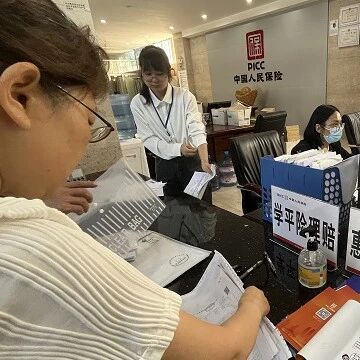
惠民保“上新”:多地保费分层,汕头主动衔接创新药目录丨“病有所保”大调研
Di Yi Cai Jing· 2025-11-13 12:41
Core Insights - The "惠民保" (Huimin Insurance) has expanded its coverage to include chronic diseases, mental health medications, outpatient drugs, overseas drugs, and original research drugs, reflecting a shift in the insurance landscape [1][2] - The insurance scheme has seen a significant increase in claims, with approximately 18 billion yuan paid for innovative drugs in the previous year, a ninefold increase from 2021 [1] - However, the experience of claims varies widely among the 150 million insured individuals, with some facing high out-of-pocket costs due to thresholds and pre-existing conditions [1][6] Group 1: Policy Changes and Trends - The recent notification from the National Financial Regulatory Administration emphasizes the need for commercial health insurance to align premium collection with coverage levels and avoid low-price competition [2] - The 2026 version of "惠民保" has introduced a tiered premium structure, moving away from the previous low-cost model, and has expanded coverage to include more drug categories [2][3] - The number of drugs covered under "惠民保" is expected to reach 672 by 2024, with a significant focus on innovative treatments for cancer and rare diseases [3] Group 2: Coverage Expansion - The 2026 "北京普惠健康保" (Beijing Universal Health Insurance) will cover 87 disease categories and 159 drugs, including new treatments for Alzheimer's and CAR-T therapy [4] - The "齐鲁保2026版" (Qilu Insurance 2026) has expanded its coverage to include 3 high-value medical devices and additional innovative drugs for chronic conditions [4] - Many regions are now including outpatient drugs and original research drugs in their coverage, indicating a trend towards more comprehensive health insurance products [3][4] Group 3: Risk Management and Pricing Strategies - The insurance sector is adopting a risk-based pricing model, allowing for differentiated premiums based on age, health status, and pre-existing conditions [6][10] - The introduction of tiered coverage options aims to balance the need for affordable premiums with adequate benefits, particularly for high-risk groups [6][10] - Recent adjustments have led to increased reimbursement rates for patients with pre-existing conditions, reflecting a shift towards more equitable coverage [8][10] Group 4: Inclusion of New Demographics - The 2026 "惠民保" products are increasingly targeting new citizens and those seeking medical care outside their registered locations, broadening the scope of insured individuals [10][11] - Initiatives to allow family members to share health insurance accounts and to include flexible workers and retirees in coverage are being implemented in various regions [10][11] - The trend towards inclusivity aims to enhance the overall participation rate in the "惠民保" scheme, particularly among younger and healthier individuals [10]