
豆包老师

Search documents
经济热点快评:这个春节,很“赛博”!
Xin Lang Cai Jing· 2026-02-23 11:26
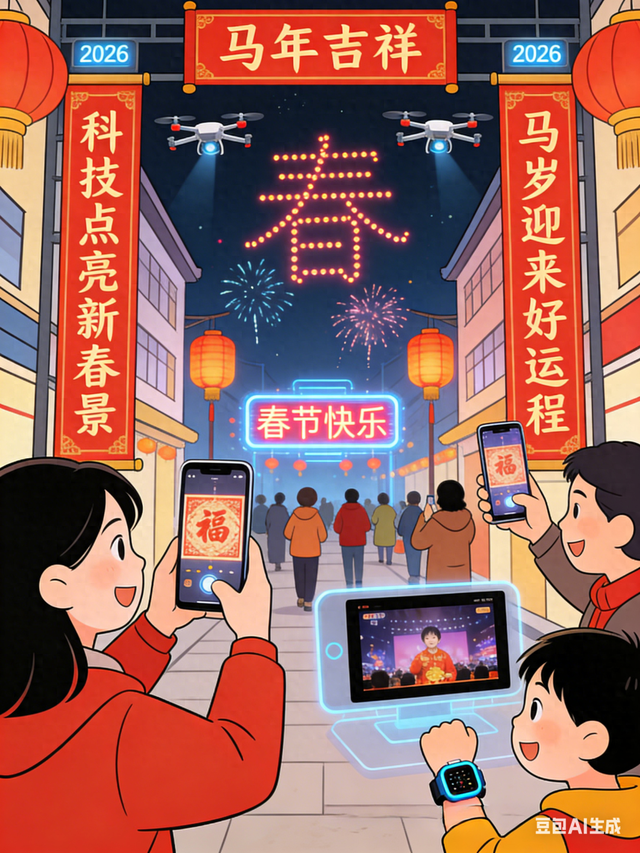
Core Viewpoint - The integration of technology into traditional Chinese New Year celebrations has transformed the way people engage with the holiday, highlighting advancements in artificial intelligence, digital platforms, and smart devices [3][4]. Group 1: Technological Advancements - The Spring Festival Gala featured robots in four different programs, showcasing a variety of technological elements such as AI-generated imagery and AR technology [1]. - The use of AI for writing couplets and digital platforms for sending red envelopes has become commonplace, indicating a shift from traditional practices to digital interactions [3]. Group 2: Changing Celebration Practices - Traditional activities like visiting friends and family have been replaced by video greetings and online interactions, reflecting a significant change in how people celebrate the New Year [3]. - The emergence of online shopping for New Year goods and the popularity of live-streaming family dinners illustrate the digital transformation of holiday customs [3]. Group 3: Emotional Connection - Despite technological advancements, the essence of the Spring Festival remains centered on family reunions, with technology facilitating communication for those unable to return home [4][6]. - Video calls allow for emotional connections, enabling families to maintain a sense of togetherness even when physically apart, emphasizing the importance of familial bonds during the holiday [4][6].

传媒互联网产业行业周报:重估海外中国资产的情绪浓烈-20250914
SINOLINK SECURITIES· 2025-09-14 11:33
Investment Rating - The report suggests a positive outlook on overseas Chinese assets, particularly in the internet technology and virtual asset sectors, indicating a potential investment opportunity in these areas [10][15]. Core Insights - The sentiment for re-evaluating overseas Chinese assets is strong, driven by better-than-expected performance from companies like Alibaba in AI and technology sectors, attracting renewed interest from overseas investors [10][15]. - The report highlights various sectors including education, luxury goods, coffee and tea, e-commerce, streaming platforms, virtual assets, real estate transactions, and automotive services, each showing distinct trends and investment opportunities [4][11][19][22][28][33][38]. Summary by Sections 1. Education - The Chinese education index rose by 3.17% from September 8 to September 12, outperforming the Shanghai Composite Index and the CSI 300 [11]. - Notable stock performances include Yuhua Education (+46.00%), Zhongjiao Holdings (+24.56%), and Minsheng Education (+23.21%) [11][14]. 2. Luxury Goods - The S&P Global Luxury Goods Index decreased by 0.64%, while the MSCI European Luxury Goods Index increased by 0.63% [19]. - Key stocks include Samsonite (-1.82%) and Prada (+2.19%) [19]. 3. Coffee and Tea - The Hang Seng Non-Essential Consumer Index increased by 5.61%, with Luckin Coffee showing a rise of 6.14% [22]. - The report notes a competitive landscape with brands like Moutai and others experiencing varied performance [22][24]. 4. E-commerce - The Hang Seng Internet Technology Index rose by 7.56%, with Alibaba and JD.com showing significant gains of 14.64% and 7.86%, respectively [28]. - The report mentions regulatory scrutiny on delivery platforms to control subsidies and maintain fair pricing [32]. 5. Streaming Platforms - The Hang Seng Media Index increased by 7.3%, with notable performances from NetEase Cloud Music (+7.83%) and Tencent Music (+2.08%) [33]. - The report emphasizes the potential for growth in the streaming sector driven by new content initiatives [38]. 6. Virtual Assets - The global cryptocurrency market capitalization reached $416.96 billion, with Bitcoin and Ethereum prices increasing by 5.0% and 9.3%, respectively [38][39]. - The report highlights the positive trend in virtual assets supported by regulatory developments and institutional interest [44]. 7. Real Estate Transactions - The report provides data on second-hand housing transactions in major cities, indicating ongoing pressure in the real estate market [32][46]. 8. Automotive Services - The report notes a significant price drop in new cars, with an average reduction of 17,000 yuan, reflecting competitive dynamics in the automotive market [4].

