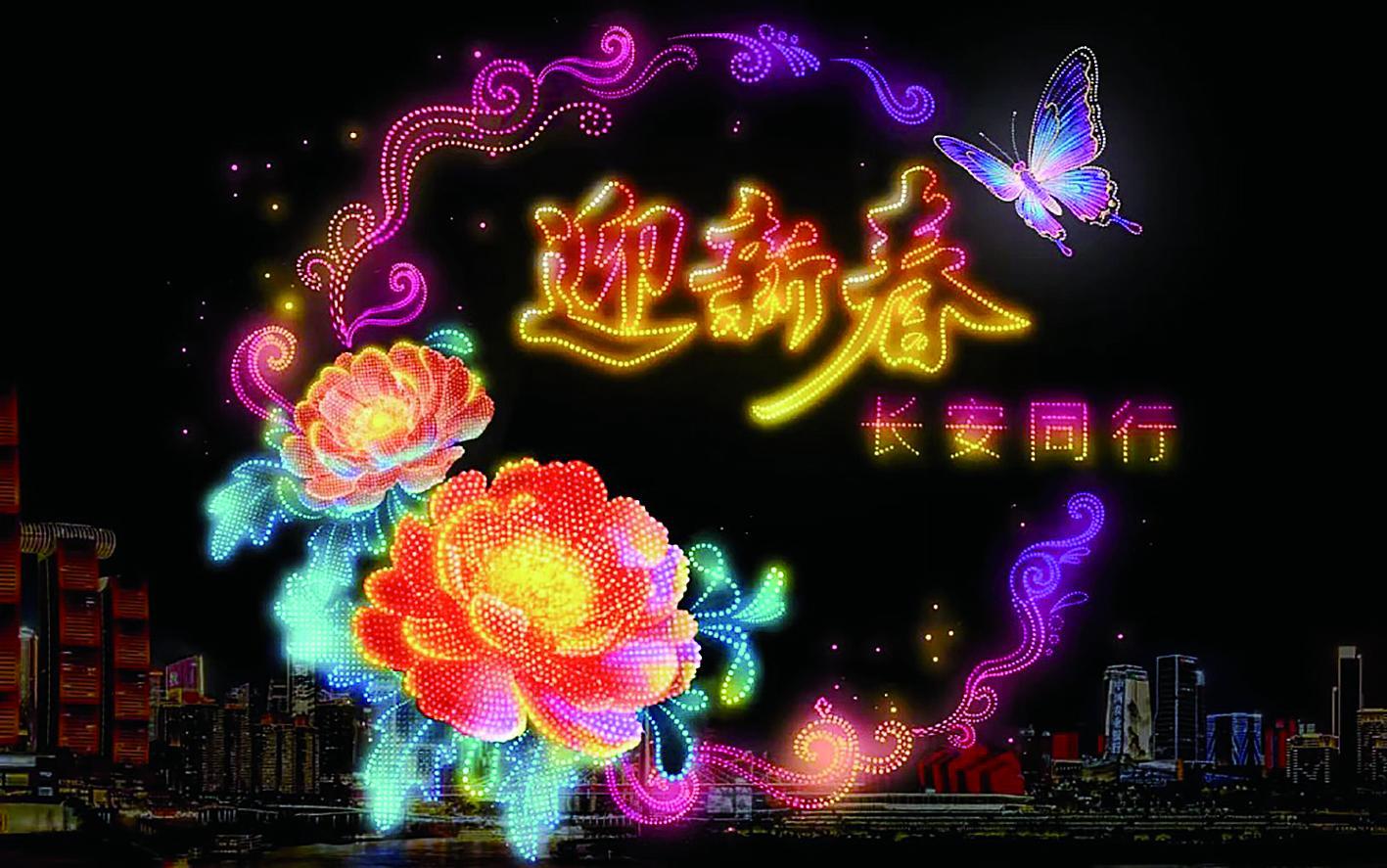
赛博年味

Search documents
中金研途 | 春节见闻:寻找年味的“双向奔赴”
中金点睛· 2026-03-01 01:05
Core Viewpoint - The article highlights the evolving dynamics of the Spring Festival, emphasizing the "dual-directional journey" that connects generations, traditional customs with modern technology, and quality supply with the demand for a better life [1][3][53]. Group 1: Intergenerational Dual-directional Journey - The trend of "reverse New Year" is gaining popularity, where parents travel to their children's cities for the holiday, with a reported 84% increase in ticket bookings for this trend in early February 2026 compared to the previous year [5][4]. - Major cities like Beijing, Shanghai, and Chengdu are becoming more vibrant as they transform into inclusive homes for family reunions, reflecting a shift in traditional holiday practices [5][4]. Group 2: New Consumption Patterns in Lower-tier Cities - In lower-tier cities, new consumption patterns are emerging, with a high density of tea and snack stores attracting returning young people, indicating a shift in local consumer behavior [14][15]. - The nightlife economy in these areas, particularly in venues like Livehouses, is showing significant activity, with attendance and spending levels surpassing those in first-tier cities during the holiday period [16][19]. Group 3: Integration of Tradition and Technology - The Spring Festival showcased technological advancements, such as humanoid robots performing at the Spring Festival Gala, highlighting the intersection of culture and technology [20][21]. - In cities like Shenzhen, drone delivery services are becoming commonplace, enhancing convenience for residents and showcasing the city's technological prowess [21][22]. Group 4: Quality Supply and Demand for a Better Life - The extended holiday period in 2026 saw 596 million domestic trips, a 19% increase from the previous year, with total spending reaching approximately 803.48 billion yuan, reflecting a robust recovery in travel and leisure spending [28][29]. - Upgrades in urban commercial areas, such as Shanghai's Nanjing Road, have attracted significant foot traffic, with a reported 84.6% increase in visitors compared to the previous year, driven by new store openings and enhanced consumer experiences [30][31][32].

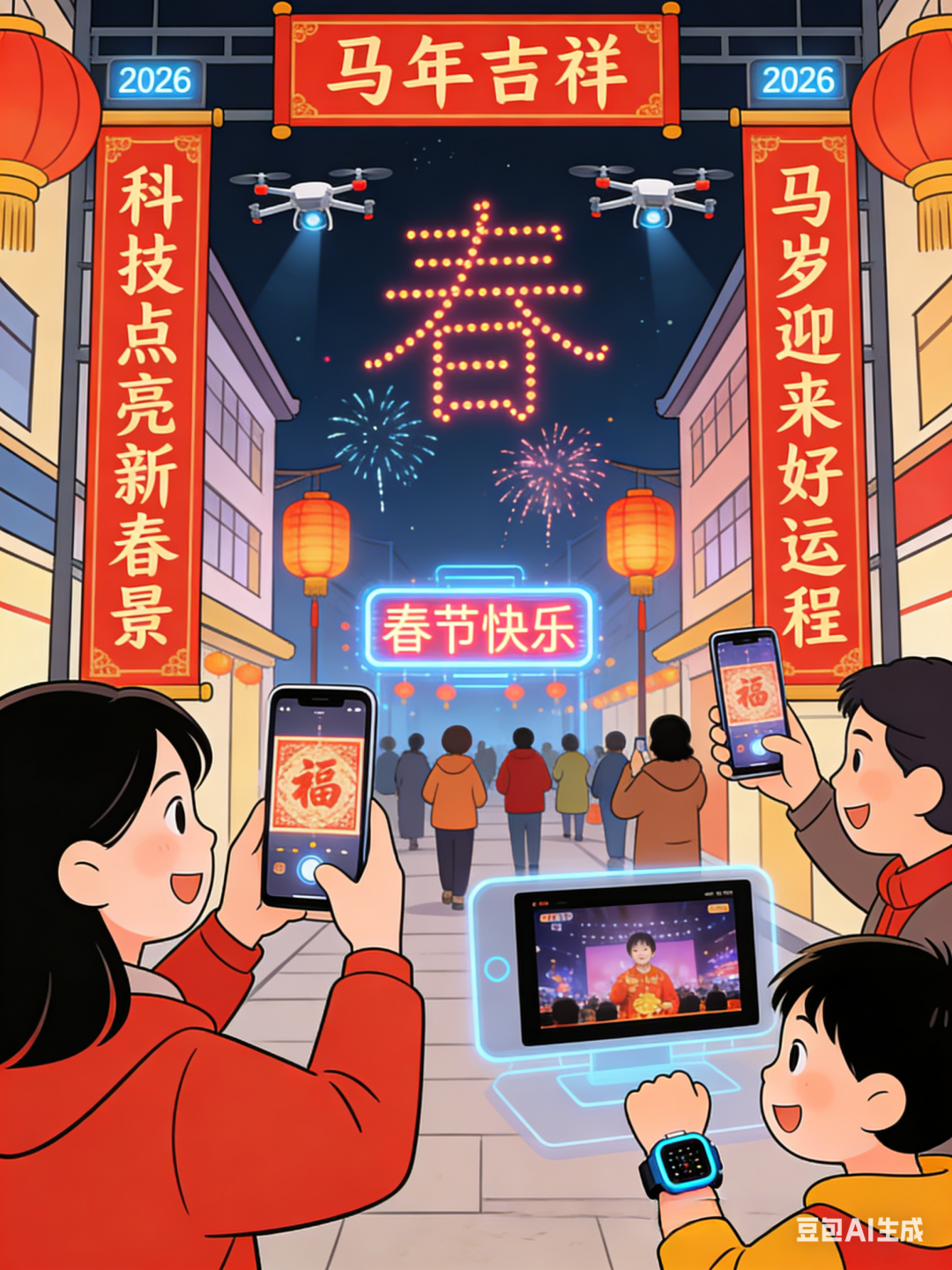
这个春节,很“赛博”!
Jing Ji Wang· 2026-02-24 07:24
Group 1 - The core theme of the articles is the transformation of traditional Chinese New Year celebrations into a more "cyber" experience due to advancements in technology, particularly artificial intelligence and digital platforms [1][3][4] - The integration of technology into the Spring Festival is evident through various performances and activities, such as AI-generated videos, AR technology, and drone light shows, which enhance the festive atmosphere [1][3] - The shift from traditional in-person gatherings to digital interactions, like video greetings and online shopping, reflects a significant change in how people celebrate the New Year, making it more accessible and convenient [3][4] Group 2 - Despite the technological advancements, the essence of the Spring Festival remains centered around family reunions and emotional connections, facilitated by technology that allows for virtual communication [4][6] - The articles highlight that while technology enhances the celebration, the fundamental human desire for connection and togetherness during the New Year persists, emphasizing the importance of family presence, even if virtual [4][6] - The narrative suggests that as technology continues to evolve, it will further shape the way cultural traditions are experienced, blending modernity with traditional values [3][6]
经济热点快评:这个春节,很“赛博”!
Xin Lang Cai Jing· 2026-02-23 11:26
Core Viewpoint - The integration of technology into traditional Chinese New Year celebrations has transformed the way people engage with the holiday, highlighting advancements in artificial intelligence, digital platforms, and smart devices [3][4]. Group 1: Technological Advancements - The Spring Festival Gala featured robots in four different programs, showcasing a variety of technological elements such as AI-generated imagery and AR technology [1]. - The use of AI for writing couplets and digital platforms for sending red envelopes has become commonplace, indicating a shift from traditional practices to digital interactions [3]. Group 2: Changing Celebration Practices - Traditional activities like visiting friends and family have been replaced by video greetings and online interactions, reflecting a significant change in how people celebrate the New Year [3]. - The emergence of online shopping for New Year goods and the popularity of live-streaming family dinners illustrate the digital transformation of holiday customs [3]. Group 3: Emotional Connection - Despite technological advancements, the essence of the Spring Festival remains centered on family reunions, with technology facilitating communication for those unable to return home [4][6]. - Video calls allow for emotional connections, enabling families to maintain a sense of togetherness even when physically apart, emphasizing the importance of familial bonds during the holiday [4][6].
2026春节营销趋势洞察报告-慧科讯业Wisers
Sou Hu Cai Jing· 2026-02-15 16:51
Group 1: Core Insights - The report emphasizes that the 2026 Spring Festival marketing will revolve around "emotional value," with successful marketing needing to resonate emotionally with consumers [1][3] - Young consumers are identified as the core group driving Spring Festival consumption and the construction of "new year flavor," with "surprise" becoming a central emotion during the festival [1][11] - The integration of technology, termed "cyber new year," is emerging as a new custom, with AI greetings and virtual celebrations gaining popularity among younger audiences [1][13] Group 2: Consumption Trends - The first trend highlights that young people are shifting traditional new year experiences towards emotional value, with "surprise" being a key element that brands should focus on [1][11] - The second trend indicates that technology-enhanced "cyber new year" practices, such as AI greetings and virtual events, are becoming mainstream, with significant engagement on social media platforms [1][13] - The third trend showcases the combination of intangible cultural heritage and local customs, with traditional cultural elements becoming a vital tool for brands to attract young consumers [1][16] Group 3: Marketing Case Studies - The report reviews classic marketing cases across nine industries, showcasing how brands leverage trends to create diverse marketing strategies [2] - For instance, Mixue Ice City collaborated with a cultural heritage inheritor to bring traditional craftsmanship closer to the public, while PepsiCo's partnership with an animated IP resonated emotionally with consumers [2][20][24] - Other brands, such as Tencent and Baidu, engaged in a "red envelope war," integrating AI technology with traditional customs to meet the demand for "cyber new year" experiences [2][20] Group 4: Conclusion - The core of 2026 Spring Festival marketing lies in creating a sense of "human touch," aligning with the trends led by young consumers and utilizing cultural heritage, emotional IP connections, and technological empowerment [3][1]

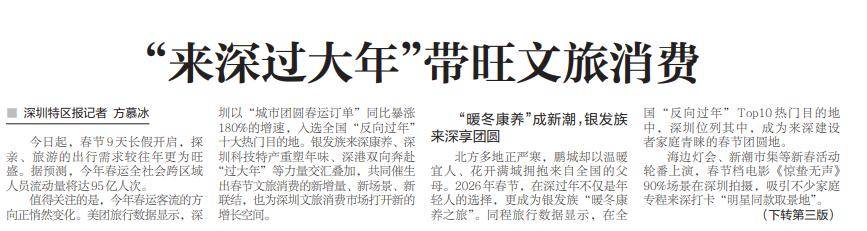
【深圳特区报】“来深过大年”带旺文旅消费
Sou Hu Cai Jing· 2026-02-15 02:18
Group 1 - The core viewpoint of the articles highlights the significant increase in travel demand during the Spring Festival, with a projected 9-day holiday leading to 9.5 billion cross-regional trips, indicating a shift in travel patterns towards cities like Shenzhen for family reunions and tourism [1] - Shenzhen has emerged as a top destination for the "reverse New Year" trend, with a 180% year-on-year increase in travel orders, driven by factors such as the aging population seeking warm winter experiences and the city's unique cultural offerings [1][2] - The introduction of specialized care services for elderly visitors during the Spring Festival addresses the needs of families, enhancing the overall experience for the silver-haired demographic [2] Group 2 - The concept of "Cyber New Year" is gaining popularity, with technological innovations redefining traditional celebrations, such as drone performances and interactive cultural events, attracting younger audiences and enhancing the festive atmosphere [4] - The cross-border consumption between Shenzhen and Hong Kong is thriving, with cultural activities at border points transforming them into vibrant community spaces, fostering closer ties between residents of both regions [5][6] - The "Hong Kong Residents' Peace of Mind Tour" initiative provides convenient transportation and multilingual services, enhancing the overall experience for visitors and positioning the border as a cultural landmark rather than just a transit point [6]
万架无人机飞越重庆 除夕夜点亮最美中国年
Xin Lang Cai Jing· 2026-02-11 16:40
Core Viewpoint - The "New Rhythm Chongqing" large-scale drone light show will take place on the eve of the Lunar New Year, featuring 10,000 drones to create a spectacular visual celebration for audiences worldwide, emphasizing themes of reunion and traditional culture [4][5]. Group 1: Event Details - The drone light show is scheduled for February 16, coinciding with the Lunar New Year, and will be held along the banks of the Yangtze River in Chongqing [4]. - The event will showcase a narrative centered around "reunion," aligning with the festive atmosphere of the New Year's Eve [5]. - The light show will run for eight consecutive nights from February 15 to February 22, with the special performance on New Year's Eve being the highlight [5]. Group 2: Artistic and Cultural Elements - The design team has meticulously crafted the visuals to blend traditional customs with modern technology, creating a "cyber New Year" aesthetic [5]. - Visual elements will include intricate patterns inspired by Shu embroidery, representations of the city's natural beauty, and symbols of prosperity such as the golden-scaled koi [5]. - The event aims to evoke feelings of joy and togetherness, with the overarching message of wishing for peace and happiness in the new year [5].