咖啡茶饮

Search documents
京东卖4块钱咖啡,对手怕的要命
东京烘焙职业人· 2026-03-26 08:33
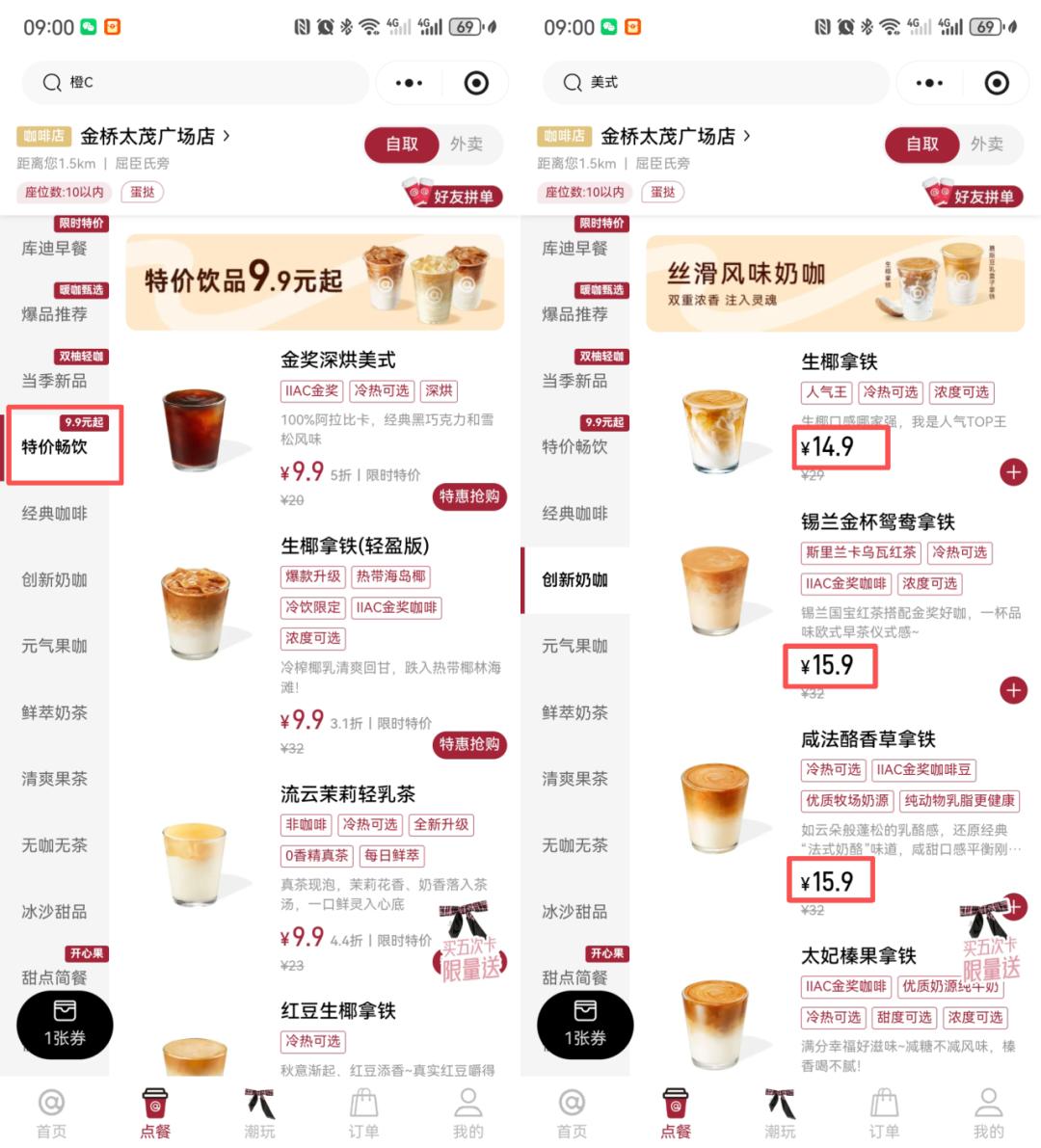
Core Viewpoint - The article discusses the aggressive pricing strategy of JD's new coffee venture, positioning it as a strategic move to capture market share in the local lifestyle and instant retail sectors rather than merely selling coffee [4][11]. Group 1: Pricing Strategy - JD's new coffee offerings are priced extremely low, with American coffee at 4 yuan and other beverages like coconut coffee and jasmine latte priced similarly, which is unprecedented in the market [6][9]. - The use of fresh milk in these low-priced beverages is highlighted, emphasizing the quality of ingredients despite the low price point [9]. Group 2: Market Positioning - The coffee venture is seen as a tactic to increase foot traffic and user engagement with JD's app, transforming casual coffee buyers into active users of JD's platform [13][14]. - The competition is not just with other coffee brands like Luckin but also with broader lifestyle services, aiming to integrate coffee consumption into daily shopping habits [15][17]. Group 3: Competitive Dynamics - The article suggests that JD's entry into the coffee market is a strategic move to disrupt existing players and force them to lower prices, benefiting consumers in the long run [21][22]. - The presence of a new player like JD is expected to stimulate competition among established brands, leading to better deals for consumers [25].



传媒互联网产业行业研究:蚂蚁要约收购耀才获批,阿里成立Token Hub事业群
SINOLINK SECURITIES· 2026-03-22 12:24
Investment Rating - The report does not explicitly state an investment rating for the industry Core Insights - The coffee industry remains highly prosperous with brands actively opening new stores and potential cost improvements due to falling Arabica coffee futures prices [4] - The tea beverage sector is experiencing slight pressure due to increasing data volatility from last year's delivery subsidies [4] - E-commerce continues to face challenges, with online retail sales in January-February reaching 20,812 billion yuan, growing by 10.3% [4] - Streaming platforms are seeing intensified competition, with Tencent Music's revenue projected to reach 32.9 billion yuan in 2025, a year-on-year increase of 15.8% [4] - The virtual asset and trading platform sector is under pressure from macroeconomic fluctuations, with the global cryptocurrency market cap at 24,816 billion USD, showing a slight increase of 0.06% [24] - The automotive service sector is expanding, with Tuhu expected to have 8,008 service stores by 2025, leading the global automotive aftermarket [39] - The real estate transaction sector is seeing mixed results, with Beike's net income for 2025 projected at 94.6 billion yuan, a year-on-year increase of 1.2% [46] - The ride-hailing sector, represented by Didi, reported a 10.1% year-on-year increase in order volume, reaching 3.578 billion orders in Q4 2025 [42] - The AI and cloud sector is witnessing a shift in demand from chatbots to agents, with significant growth in token and computing power requirements [4] Summary by Sections 1.1 Consumer & Internet - Coffee: High prosperity maintained with brands actively opening stores and potential cost improvements from falling coffee prices [4] - Tea: Slight pressure observed due to increasing data volatility from last year's subsidies [4] - E-commerce: Online retail sales reached 20,812 billion yuan, growing by 10.3% [4] 1.2 Platform & Technology - Streaming Platforms: Tencent Music's revenue projected at 32.9 billion yuan in 2025, a year-on-year increase of 15.8% [4] - Virtual Assets & Trading Platforms: Global cryptocurrency market cap at 24,816 billion USD, showing a slight increase of 0.06% [24] - Automotive Services: Tuhu expected to have 8,008 service stores by 2025, leading the global automotive aftermarket [39] 2.0 Real Estate & Ride-Hailing - Real Estate Transactions: Beike's net income for 2025 projected at 94.6 billion yuan, a year-on-year increase of 1.2% [46] - Ride-Hailing: Didi reported a 10.1% year-on-year increase in order volume, reaching 3.578 billion orders in Q4 2025 [42] 1.2.5 AI & Cloud - AI demand shifting from chatbots to agents, with significant growth in token and computing power requirements [4]



传媒互联网产业行业研究:蚂蚁要约收购耀才获批,阿里成立TokenHub事业群
SINOLINK SECURITIES· 2026-03-22 11:42
Investment Rating - The report does not explicitly state an investment rating for the industry Core Insights - The coffee industry remains highly prosperous, with brands actively opening new stores and potential cost improvements due to the decline in Arabica coffee futures prices [4] - The tea beverage sector is experiencing slight pressure, with data fluctuations expected due to last year's delivery subsidies [4] - E-commerce continues to face challenges, with online retail sales reaching 20,812 billion yuan, growing by 10.3% [4] - Streaming platforms are seeing increased competition, with Tencent Music reporting a total revenue of 32.9 billion yuan for 2025, a year-on-year increase of 15.8% [4] - The virtual asset and trading platform sector is under macroeconomic pressure, with the SEC and CFTC releasing new regulatory guidelines [4] - The automotive service sector is expanding, with TuHu expected to have 8,008 service stores by 2025, leading the global market [4] - The real estate transaction sector is showing mixed results, with Beike reporting a net income of 94.6 billion yuan for 2025, a year-on-year increase of 1.2% [4] - The ride-hailing sector is experiencing growth, with Didi reporting a 10.1% year-on-year increase in order volume [4] - AI and cloud services are seeing a shift in demand, with Alibaba and Tencent making significant investments in AI capabilities [4] Summary by Sections 1.1 Consumer & Internet - Coffee and tea beverage sectors are highlighted, with coffee maintaining high growth and tea under slight pressure [4] - E-commerce is under pressure, with a notable growth rate of 10.3% in online retail sales [4] 1.2 Platform & Technology - Streaming platforms are facing increased competition, with Tencent Music's revenue growth reported [4] - The virtual asset sector is experiencing regulatory changes, impacting market sentiment [4] - The automotive service sector is expanding rapidly, with TuHu leading in store numbers [4] 1.2.1 Streaming Platforms - Tencent Music reported a total revenue of 32.9 billion yuan for 2025, with a year-on-year increase of 15.8% [4] 1.2.2 Virtual Assets & Trading Platforms - The global cryptocurrency market cap reached 24,816 billion USD, with Bitcoin and Ethereum prices showing slight fluctuations [24] 1.2.3 Automotive Services - TuHu is projected to have 8,008 service stores by 2025, leading the global market [39] 1.2.4 O2O - Didi reported a 10.1% year-on-year increase in order volume, indicating strong growth in the ride-hailing sector [42] 1.2.5 AI & Cloud - Alibaba and Tencent are making significant investments in AI, with new product launches and organizational changes [51]

传媒互联网产业行业周报:腾讯构建“养虾”矩阵,阿里Qwen团队管理调整出炉-20260315
SINOLINK SECURITIES· 2026-03-15 11:05
Investment Rating - The report maintains a positive outlook on the coffee industry, indicating sustained high demand and a favorable environment for growth [4]. Core Insights - The coffee sector is experiencing a beta dividend, with brands actively opening new stores and a slowdown in price competition, particularly with the decline in Arabica coffee futures prices, which is expected to improve costs [4]. - The tea beverage segment is facing some pressure due to increased competition and reduced platform subsidies affecting sales data [4]. - The e-commerce sector continues to be under pressure, reflecting a lackluster performance in the domestic consumption environment [4]. - Music streaming platforms are highlighted as quality internet assets driven by domestic demand, with Tencent Music launching a new ticketing platform, "Goose Ticket" [4]. - The virtual asset and trading platform sector is experiencing macroeconomic volatility, with limited catalysts in the cryptocurrency market, as indicated by the recent performance of major cryptocurrencies [4][19]. - The automotive service sector is seeing a focus on post-market services, with several major automotive service chains expanding their store openings and promotional policies [4]. - The report suggests monitoring the Robotaxi sector, particularly with Didi's new autonomous driving Robotaxi receiving licenses in major cities [4]. - The AI and cloud sectors are viewed positively, with Tencent's deployment of AI technologies indicating a shift towards execution-based applications [4]. Summary by Sections 1.1 Consumer & Internet - The Hang Seng non-essential consumer index showed a slight increase of +0.09%, while the Hang Seng index increased by +1.22 percentage points [9]. - Notable stock performances include Shanghai Aunt (+3.23%), Bawang Tea (+3.14%), and Luckin Coffee (-0.86%) [9][10]. 1.2 Platform & Technology 1.2.1 Streaming Platforms - The Hang Seng media index decreased by -0.31%, outperforming the Hang Seng index by +0.82 percentage points [15]. - Key stock performances include Tencent Music (+4.19%) and Spotify Technology (-8.69%) [15][16]. 1.2.2 Virtual Assets & Trading Platforms - As of March 13, the global cryptocurrency market cap was $248.01 billion, down 0.08% [19]. - Bitcoin and Ethereum prices reached $70,965 and $2,093.01, reflecting increases of 4.1% and 5.7% respectively [19]. 1.2.3 Automotive Services - The Hang Seng composite index decreased by -1.02%, with notable stock performances including Advance Auto Parts (+2.78%) and O'Reilly Automotive (-3.23%) [28]. 1.2.4 O2O - The Hang Seng internet technology index decreased by -0.32%, with key stock performances including JD Health (+1.24%) and Didi Global (-6.41%) [35]. 1.2.5 AI & Cloud - The Nasdaq internet index decreased by -3.89%, with notable stock performances including Tencent (+6.49%) and Meta (-4.83%) [40].


传媒互联网产业行业研究:阿里大模型品牌统一为千问,大钲资本竞得蓝瓶咖啡
SINOLINK SECURITIES· 2026-03-08 09:52
Investment Rating - The report indicates a neutral investment rating for the industry, expecting a fluctuation range of -5% to 5% compared to the broader market over the next 3-6 months [55]. Core Insights - The coffee industry remains highly prosperous, with brands actively opening new stores and a slowdown in price competition. The decline in Arabica coffee futures prices is expected to improve cost structures [3]. - The tea beverage sector is facing slight pressure due to short-term competition in food delivery platforms, although data shows resilience [3]. - The e-commerce sector continues to be under pressure, with a lackluster performance attributed to the domestic consumption environment [3]. - Streaming platforms are seen as quality internet assets driven by domestic demand, benefiting from cost-effective self-consumption and scale effects [3]. - The virtual assets and trading platforms are experiencing macroeconomic volatility, with limited catalysts in the cryptocurrency market [3]. - The automotive service sector is witnessing a push from several major automotive service chains to expand their market presence, while OEMs are struggling with inventory pressures [3]. - The AI and cloud sectors are viewed positively, with major internet companies having the resources to implement AI-related business advancements [3]. Summary by Sections 1.1 Consumer & Internet - **Coffee and Tea**: The coffee sector is thriving with ongoing store openings and reduced price competition, while the tea sector is slightly pressured by delivery competition [3][15]. - **E-commerce**: The sector is underperforming due to a challenging consumption environment, as reflected in the performance of major players like JD and Alibaba [14]. 1.2 Platform & Technology - **Streaming Platforms**: The media index has outperformed the broader market, with notable performances from Spotify and Netflix [22]. - **Virtual Assets**: The global cryptocurrency market capitalization reached $2481.9 billion, with Bitcoin and Ethereum prices showing slight increases [27]. - **Automotive Services**: The automotive service sector is seeing a decline in market performance, with several companies adjusting their strategies to capture market share [36]. - **AI & Cloud**: The sector is experiencing growth, with significant stock performances from companies like Oracle and Microsoft [47].
传媒互联网产业行业研究:恒生科技继续回调,“沪七条”企稳房市价格锚
SINOLINK SECURITIES· 2026-03-01 08:19
Investment Rating - The report indicates a neutral investment rating for the industry, with expectations of limited movement relative to the market in the next 3-6 months [53]. Core Insights - The coffee industry remains in a high-growth phase, with brands actively opening new stores and a slowdown in price competition. The decline in Arabica coffee futures prices is expected to improve cost structures [3]. - The tea beverage sector is facing some pressure, with concerns over potential "sugar tax" regulations impacting market sentiment, despite resilient data [3]. - The e-commerce sector continues to be under pressure due to the domestic consumption environment, showing lackluster performance [3]. - Music streaming platforms are seen as quality internet assets driven by domestic demand, with a focus on cost-effective consumption. NetEase Cloud Music's revenue for 2025 is slightly below expectations, but growth in subscription services is anticipated for 2026 [3]. - The virtual assets and trading platforms are experiencing pressure from geopolitical risks, with ongoing regulatory developments in Hong Kong aimed at establishing a licensing system for virtual asset service providers [3]. - In the automotive service sector, several major automotive service chains are expanding their market presence with aggressive store opening policies, while OEMs are struggling with inventory pressures in the fuel vehicle segment [3]. - The real estate sector is stabilizing with new policies in Shanghai aimed at price stabilization, suggesting a focus on companies like Beike-W [3]. - The AI and cloud sectors are facing challenges due to tightening dollar liquidity and concerns over profitability among internet giants, but the long-term outlook for AI remains positive [3]. Summary by Sections 1.1 Consumer & Internet - The Hang Seng non-essential consumer index saw a cumulative decline of 1.82%, outperforming the Hang Seng index by 2.64 percentage points [8]. - Notable stock performances include Tims (+21.35%), Bawang Tea (+5.71%), and Haidilao (+4.45%), while Luckin Coffee (-10.08%) and Mixue Ice Cream (-9.07%) faced significant declines [8][9]. 1.2 Platform & Technology 1.2.1 Streaming Platforms - The Hang Seng media index dropped by 4.14%, underperforming both the Hang Seng index and the Hang Seng technology index [17]. - Key stock performances included Netflix (+22.33%) and Spotify (+4.96%), while iQIYI (-12.09%) and Tencent Music (-3.95%) struggled [17]. 1.2.2 Virtual Assets & Trading Platforms - As of February 27, the global cryptocurrency market cap reached $240.27 billion, with Bitcoin and Ethereum prices at $65,884 and $1,931.32, respectively [25]. 1.2.3 Automotive Services - The Hang Seng composite index showed a cumulative increase of 0.42%, with notable stock performances from O'Reilly (+0.41%) and AutoZone (+0.19%) [33]. 1.2.4 O2O - The Hang Seng internet technology index declined by 2.49%, with stocks like Cao Cao Mobility (+9.77%) performing well, while major players like Didi Global (-5.17%) faced declines [39]. 1.2.5 AI & Cloud - The Nasdaq internet index increased by 0.76%, with TSMC (+1.09%) showing positive performance, while major tech companies like Alibaba (-6.69%) and Baidu (-8.41%) faced declines [46].


委员踊跃建言献策,赋能千亿强区高质量发展
Nan Fang Du Shi Bao· 2026-02-11 06:31
Group 1: Core Insights - The meeting of the Fifth Session of the Fifth Committee of the CPPCC in Pengjiang District focused on high-quality development, with participants discussing various strategies for growth, including innovation in industries and spatial optimization [1] - The GDP of Pengjiang exceeded 100 billion yuan in the past year, showcasing significant achievements in connecting with Hong Kong and Macao, enhancing cooperation, and improving living standards for residents [2] - Suggestions were made to improve urban development in old districts, including the construction of smart parking facilities and the renovation of old residential areas, emphasizing community involvement and safety [3] Group 2: Industry and Land Use - The local government has made substantial progress in optimizing land use and ensuring industrial land availability, which is crucial for supporting the manufacturing sector [4] - The focus on maintaining agricultural land while promoting industrial development is highlighted, with strategies proposed to balance both objectives effectively [4][5] - The medical device industry is identified as a key sector for strategic development, with calls for government-led initiatives to foster collaboration across the industry [7] Group 3: Future Expectations - There are expectations for further improvements in the business environment, including simplified approval processes and tailored support for enterprises to enhance their core research and development efforts [8] - The establishment of a comprehensive service system for businesses is anticipated, aiming to address specific challenges faced by companies in the region [8]
库迪咖啡告别“全场9.9元”:价格战的终结与中国咖啡行业的价值回归
Xin Lang Cai Jing· 2026-02-10 10:34
Core Viewpoint - The end of the "9.9 yuan unlimited" promotion by Cotti Coffee marks a significant shift in the Chinese coffee market from aggressive price competition to a focus on refined operations and sustainable profitability [1][9]. Group 1: Price War Dynamics - Cotti Coffee initiated a price war in 2023 with its aggressive "9.9 yuan" strategy, which led to rapid market expansion and increased brand recognition, resulting in over 18,000 stores by December 2025 [2][10]. - The price war attracted competitors like Luckin Coffee and Starbucks, who also adopted similar low-price strategies to maintain market share [2][10]. - The "attack hammer" strategy, while initially successful, has turned into a "bleeding wound" as the cost structure became unsustainable, with Cotti's average cost per cup at 11.1 yuan, leading to a loss of 1.2 yuan per cup sold at the 9.9 yuan price point [3][11]. Group 2: Transition to Sustainable Practices - The coffee industry is transitioning from a phase of "barbaric growth" to one of refined operations, with a focus on quality and product differentiation rather than just low prices [4][12]. - By 2025, the Chinese coffee market is projected to reach 218.1 billion yuan, with a shift in consumer behavior towards coffee as a daily necessity rather than a luxury [4][12]. - Cotti Coffee has reported achieving positive cash flow and profitability since May 2024, indicating a strategic pivot away from unsustainable pricing models [7][14]. Group 3: Consumer Behavior and Market Strategy - Consumer reactions to price changes are varied, with some loyal to the low-price model feeling disappointed by price increases, while others support a return to normal market pricing [4][12]. - The end of the price war is expected to lead to a split in consumer preferences, with some seeking alternatives and others becoming loyal customers of brands that innovate [5][13]. - Brands are now focusing on product innovation and supply chain efficiency as new competitive focal points, moving away from price-based competition [5][13].
传媒互联网行业周报:大厂角逐AI流量入口,境内资产境外代币化监管指引发布-20260208
SINOLINK SECURITIES· 2026-02-08 11:24
Investment Rating - The report does not explicitly state an investment rating for the industry Core Insights - The coffee industry remains highly prosperous with brands actively opening new stores, while the tea beverage sector is experiencing slight pressure due to competition and subsidy reductions [3][8] - E-commerce continues to face challenges, with projected online retail sales of physical goods reaching 13,092.3 billion yuan in 2025, growing by 5.2% [3][12] - Music streaming platforms are identified as high-quality internet assets driven by domestic demand, suggesting continued interest in music subscription platforms [3][15] - The virtual asset and trading platform sector is under pressure with limited market catalysts and regulatory scrutiny impacting capital inflow [3][22] - The automotive service market shows a decline in market entry and production value, indicating a need for ongoing monitoring [3][31] - The AI and cloud sector is seeing increased capital expenditure, but concerns about investment returns and cash flow persist [3][40] Summary by Sections 1.1 Consumer & Internet - **1.1.1 Coffee & Tea**: The coffee sector is thriving with brands like Luckin Coffee opening 192 new stores, while the tea sector faces challenges from AI-driven competition and subsidy reductions [3][13] - **1.1.2 E-commerce & Internet**: The e-commerce sector is underperforming, with a significant drop in the Hang Seng Internet Technology Index by 7.54% [12][19] 1.2 Platform & Technology - **1.2.1 Streaming Platforms**: The media index fell by 9.24%, with major players like Spotify and Tencent Music experiencing declines [15][19] - **1.2.2 Virtual Assets & Trading Platforms**: The global cryptocurrency market capitalization dropped to 2,233.9 billion USD, with Bitcoin and Ethereum prices falling by 16.2% and 23.7% respectively [22][24] - **1.2.3 Automotive Services**: The automotive service sector is seeing a decline in market entry and production value, with a year-on-year decrease of 6% in market entries [31][35] - **1.2.4 O2O**: The O2O sector is facing challenges, with significant fluctuations in individual company performances [36] - **1.2.5 AI & Cloud**: The AI and cloud sector is experiencing increased capital expenditure, but concerns about investment returns and cash flow remain [40][46]


库迪取消“全场9.9元” ,咖啡大战落幕
3 6 Ke· 2026-02-05 12:30
Core Viewpoint - Kudi Coffee announced a price increase starting February 2026, ending the "all items at 9.9 yuan" promotion, with most products now priced between 11.9 to 16.9 yuan, marking a price increase of 30% to 60% for some core items [1][3][20] Group 1: Price Changes and Market Dynamics - Kudi Coffee, as the initiator of the 9.9 yuan price war, previously reduced prices to 8.8 yuan, which helped it rank among the top three global coffee chains [3] - Other brands like Luckin Coffee and Nayuki have also adjusted their prices since 2025, indicating a broader trend of price increases in the coffee and tea beverage industry [1][15] - The end of the price war suggests a shift in competition focus away from pricing to other factors in the tea and coffee industry [1][20] Group 2: Financial Performance and Business Model - Kudi's revenue model relies on a partnership with franchisees, taking a service fee from their gross profits, which has been affected by the previous low pricing strategy [6] - Kudi's rapid expansion led to a significant number of store openings and closures, with 1,655 new stores opened and 1,009 closed within 90 days, resulting in a total of 18,000 stores, far from its goal of 50,000 by the end of 2025 [4][5] - In contrast, Luckin Coffee has stabilized its core product prices between 10.9 to 13.9 yuan and reported a total net revenue of 15.287 billion yuan in Q3 2025, a 50.2% year-on-year increase [5] Group 3: Cost Structure and Supply Chain - The cost of coffee production is under pressure due to rising raw material prices, with coffee bean prices increasing by approximately 13.8% year-on-year as of December 2025 [4] - Kudi has implemented a new subsidy policy for franchisees, focusing on high rent and low sales in underdeveloped markets to improve store survival rates [6][14] - The coffee industry is expected to shift towards supply chain efficiency and cost control as key competitive factors, with Kudi and Luckin both optimizing their operations [20]