
贱金属制品

Search documents
数据印证海南对全球资本“磁吸力” 解读海南自由贸易港全岛封关“含金量”
Yang Shi Wang· 2025-12-19 02:36
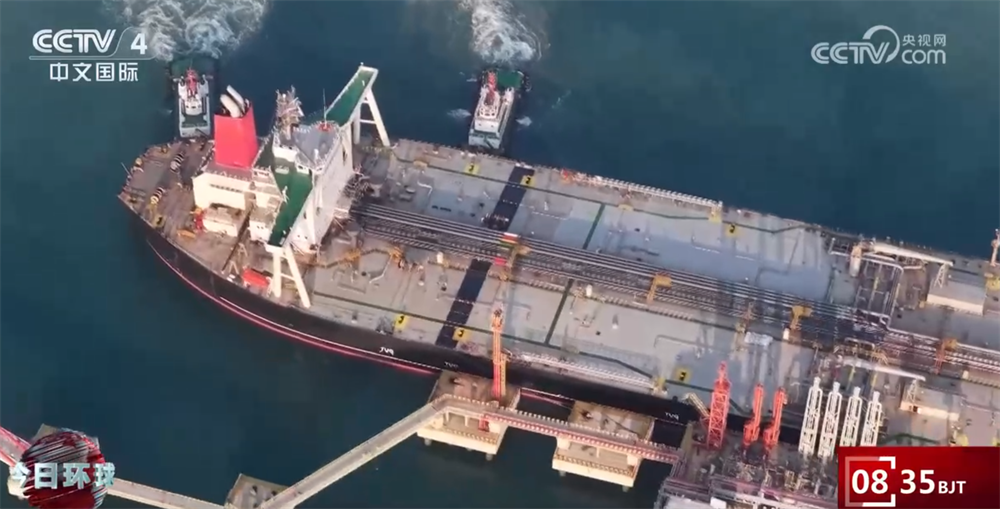
Core Viewpoint - The official launch of the Hainan Free Trade Port's full island closure marks a significant step in China's commitment to high-level opening-up and the construction of an open world economy [1][5]. Group 1: Policy Implementation - Hainan has become a special customs supervision area, implementing a policy characterized by "one line" opening, "two lines" management, and free movement within the island [1][5]. - The first batch of "zero tariff" imported products, including 179,000 tons of petrochemical raw materials, has arrived at Yangpu Port, demonstrating the efficiency of customs clearance with a time saving of nearly 4 hours [1][3]. Group 2: Tax and Trade Benefits - The list of "zero tariff" goods has expanded to approximately 6,600 tax items, with a significant broadening of the beneficiaries [3][11]. - The processing and value-added goods for domestic sales are exempt from tariffs, with lowered thresholds for policy benefits [3][11]. - Companies in Hainan can benefit from a 30% value-added processing exemption for goods sold to the mainland [11]. Group 3: Economic Impact - Over the past five years, Hainan has attracted foreign investment from 176 countries and regions, with actual foreign capital utilization reaching 102.5 billion RMB, growing at an annual rate of 14.6% [16]. - The establishment of foreign enterprises in Hainan has averaged 8,098 annually, with a growth rate of 43.7% [16]. - The annual growth rate of foreign direct investment has reached 97%, indicating Hainan's increasing attractiveness to global capital [16]. Group 4: Local Benefits - Travelers from the mainland to Hainan will not need additional documentation, and the duty-free shopping options have increased, with an annual limit of 100,000 RMB per person for duty-free purchases [9]. - Residents of Hainan can purchase duty-free items without limits if they have a record of leaving the island within the year [9]. - High-demand talent working in Hainan may benefit from personal income tax exemptions on amounts exceeding a 15% effective tax rate [15].

视频丨什么是海南自贸港全岛封关运作?一文解答
Yang Shi Xin Wen Ke Hu Duan· 2025-11-19 07:08
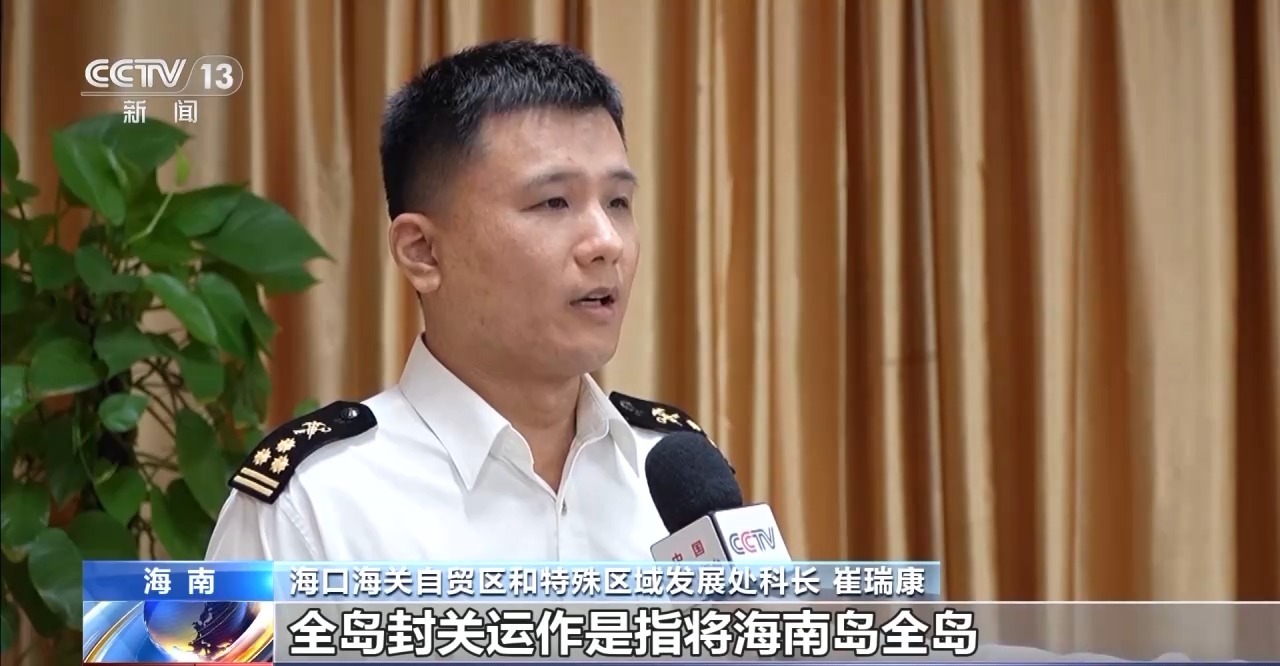
Group 1 - The core concept of the "full island closure operation" is to establish Hainan Island as a customs supervision special area, implementing a policy characterized by "open on the first line, controlled on the second line, and free within the island" [4] - The "first line" refers to the open trade between Hainan Free Trade Port and other countries, while the "second line" involves precise management of trade between Hainan and mainland China [4][6] - The "zero tariff" policy means that imported goods are exempt from import duties, value-added tax, and consumption tax, with the scope of zero-tariff goods expanding from over 1,900 to more than 6,600 items, covering approximately 74% of all tariff items [8][10] Group 2 - The zero-tariff goods mainly include production materials such as traditional Chinese medicine, textile raw materials, non-ferrous metal products, and machinery, while personal consumer goods like meat, seafood, cosmetics, clothing, mobile phones, and home appliances will still be subject to import taxes [10] - The beneficiaries of the zero-tariff policy are eligible enterprises, institutions, and certain non-profit educational organizations, while individuals do not qualify for zero-tariff benefits and must pay import taxes on goods processed from zero-tariff items [13]
中银晨会聚焦-20250421
Bank of China Securities· 2025-04-21 01:55
Core Insights - The report highlights a selection of stocks for April, including 中远海特 (600428.SH), 极兔速递-W (1519.HK), and 宁德时代 (300750.SZ) among others, indicating potential investment opportunities in these companies [1] - The macroeconomic analysis indicates a strong support for China's trade surplus from Europe, the US, and ASEAN, with a year-on-year GDP growth of 5.4% in Q1 2025, surpassing expectations [2][9] - The report emphasizes the resilience of the Chinese economy despite external pressures, with significant contributions from manufacturing and infrastructure investments [9][12] Industry Performance - The communication sector showed a positive growth of 1.59%, while the beauty care and social services sectors experienced declines of 2.46% and 2.45% respectively, indicating varied performance across industries [2] - The report notes that the telecommunications industry may benefit from Germany's policy changes, which could allow more Chinese companies to participate in European infrastructure projects [3][16] Macroeconomic Analysis - In Q1 2025, the actual GDP growth was 5.4%, with industrial output and retail sales also exceeding expectations, driven by export demand and consumer subsidies [9][11] - The report discusses the impact of the US's "reciprocal tariff" policy, which is expected to affect China's exports throughout 2025, necessitating a shift towards non-US markets [12][9] Company-Specific Insights - 万华化学 (Wanhua Chemical) reported a revenue of 182.07 billion yuan for 2024, a 3.83% increase year-on-year, but faced a 22.49% decline in net profit [4][19] - The company is focusing on expanding its polyurethane and fine chemicals segments, with significant production increases expected in the coming years [20][21] - Wanhua Chemical is also investing in technological innovations, particularly in battery materials, to enhance its competitive edge [22] Investment Recommendations - The report suggests monitoring companies in the telecommunications sector due to potential growth from policy changes in Europe, particularly for Chinese firms [16][17] - It also highlights the importance of focusing on high-tech industries and consumer goods to stimulate domestic demand and support economic growth [15][12]





宏观点评:一季度出口韧性哪里来?-20250420
Bank of China Securities· 2025-04-20 05:53
Export Performance - In Q1 2025, China's exports grew by 5.8% year-on-year, with a trade surplus of $272.97 billion[5] - The contribution of exports to the US and EU markets was positive, with contributions of 0.654 and 0.724 percentage points respectively[6] - ASEAN and "Belt and Road" sample countries contributed positively to export growth, achieving contributions of 0.433 and 0.104 percentage points respectively[6] Product Contribution - Major products contributing to export growth included machinery and electrical products, with contributions of 0.374 and 0.117 percentage points to the US and EU respectively[6] - Textile products also showed positive contributions, with 0.016 and 0.117 percentage points for exports to ASEAN and the EU respectively[2] - Automotive exports maintained an advantage in ASEAN and EU markets, contributing 0.041 and 0.104 percentage points to export growth[7] Trade Surplus Analysis - The US and EU markets provided strong support for China's trade surplus, with contributions of 4.10 and 2.59 percentage points respectively[12] - ASEAN achieved a positive contribution of 0.78 percentage points to the trade surplus, while "Belt and Road" sample countries had a negative contribution of -1.63 percentage points[12] - The overall trade surplus was influenced by factors such as the end of the Spring Festival and export-driven strategies by foreign trade enterprises[13] Risks and Outlook - There are increasing risks of economic recession in the US and EU, alongside a complex international situation that may impact future trade dynamics[3] - The manufacturing new export orders index remains below the threshold, indicating weak expectations among foreign trade enterprises[13]