
超导磁体电源模块

Search documents
可控核聚变突破在即,重构全球能源格局(附股)
Ge Long Hui A P P· 2025-12-19 01:52
Group 1 - The controllable nuclear fusion sector is experiencing strong growth, with companies like Western Materials reaching new highs and several others, including Wangzi New Materials and Xue Ren Group, hitting the daily limit up [1] - The domestic production rate of key nuclear fusion equipment has exceeded 96%, with critical components like tungsten-based divertors and high-temperature superconducting tapes now being produced independently [1] - The industry is entering a new phase characterized by multiple competitive technological routes and concentrated capital investment, driven by advancements in the BEST device and EAST's long-pulse operation records [2] Group 2 - The nuclear fusion industry is progressing from experimental verification to engineering demonstration, with a clear three-step development plan: experimental pile, demonstration pile, and commercial pile, aiming for completion of the experimental pile by 2035 and commercial demonstration by 2050 [5] - AI technology is playing a significant role in accelerating the commercialization of nuclear fusion, optimizing reaction conditions, and predicting plasma behavior, which enhances the stability and efficiency of fusion reactions [8][13] - Material innovation is crucial for overcoming bottlenecks in the nuclear fusion industry, focusing on surface and structural innovations, optimizing superconducting materials, and enhancing material properties through modification [15][17] Group 3 - Leading companies in the energy equipment sector have made significant progress in the development of core components for nuclear fusion, with a clear path to industrialization and ongoing benefits in sub-sectors like superconductors and divertor materials [23][25] - Four Creation Electronics is the only domestic company to achieve the localization of superconducting magnet power supply modules for fusion devices, securing a significant market position [26][27] - An Tai Technology is a global supplier of core components for controllable nuclear fusion devices, providing a range of products that support various nuclear power technologies [30]


可控核聚变突破在即,重构全球能源格局!
格隆汇APP· 2025-12-14 10:06
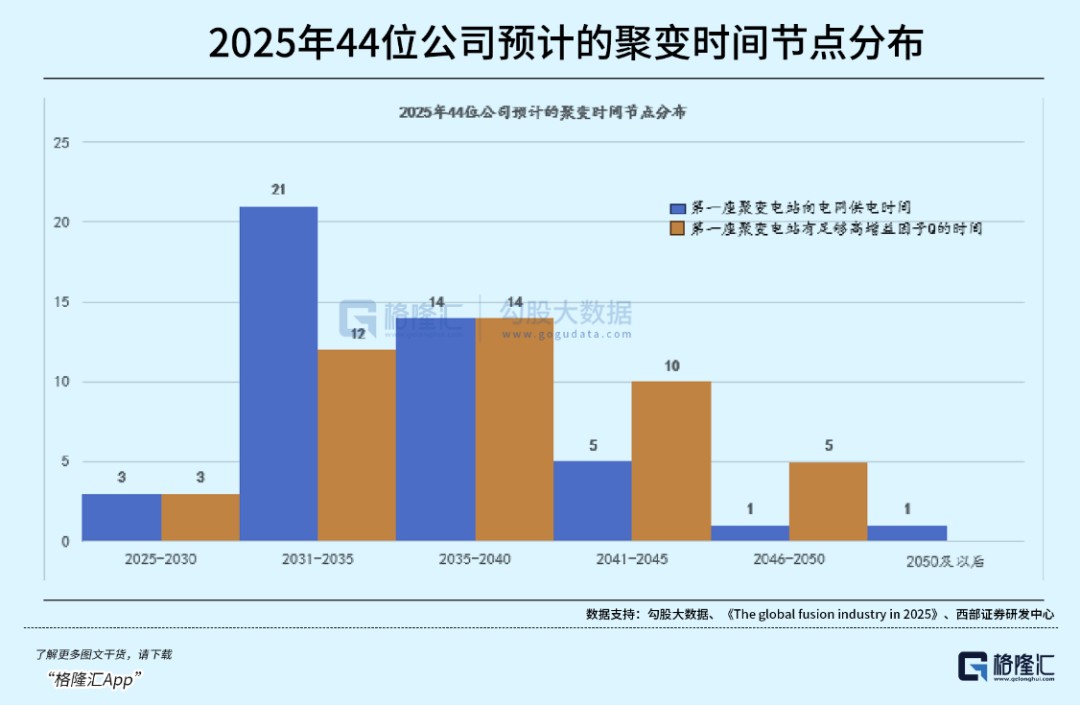
Core Viewpoint - The article emphasizes the accelerating industrialization of controlled nuclear fusion, highlighting its importance for national energy security and technological independence. The industry is transitioning from experimental validation to engineering demonstration, with significant advancements in material performance and domestic production capabilities [5][11][14]. Industry Overview - Controlled nuclear fusion is entering a new phase characterized by multiple competitive technological routes and concentrated capital investment, with key equipment's domestic production rate exceeding 96% [5][8]. - The nuclear fusion industry is expected to achieve commercial power generation within the next decade, with 2031-2035 being the widely recognized timeframe for commercialization [15]. Investment Opportunities - The capital market has shown sustained interest in the controlled nuclear fusion sector, with stock performance indicating a potential new market cycle. Recent trading activity has seen significant gains in related stocks, suggesting a bullish trend [8][30]. - Investors are encouraged to focus on core enterprises within the nuclear fusion sector to seize investment opportunities as the industry progresses towards commercialization [9]. Technological Development - The development of controlled nuclear fusion is structured into five stages: scientific theory, scientific feasibility, engineering feasibility, commercial feasibility, and commercial reactor. The industry is currently advancing towards engineering feasibility [10]. - AI technology is playing a crucial role in accelerating the commercialization of nuclear fusion by optimizing reaction conditions and predicting plasma behavior, significantly enhancing research efficiency [15][19]. Material Innovation - Material innovation is critical for overcoming bottlenecks in the nuclear fusion industry, with research focusing on surface and structural innovations, superconducting materials optimization, and material modification [22][28]. - Superconducting materials are essential for the operation of controlled nuclear fusion devices, directly impacting energy efficiency and plasma confinement capabilities [25][26]. Key Enterprises - Several leading companies are making significant strides in the nuclear fusion sector, including: - **Sichuan Four Creation Electronics (四创电子)**: The only domestic company to achieve the localization of superconducting magnet power supply modules for fusion devices [36]. - **Parker New Materials (派克新材)**: The only company capable of mass-producing core components for nuclear fusion, continuously enhancing its technological advantages [38]. - **Antai Technology (安泰科技)**: A global supplier of core components for controlled nuclear fusion, providing a range of tungsten-related products for nuclear power technologies [39].



招商证券:核聚变产业化提速 维持行业投资评级“推荐”
智通财经网· 2025-11-05 02:06
Core Insights - The report from China Merchants Securities highlights the accelerated industrialization process of controllable nuclear fusion, transitioning from experimental validation to engineering demonstration, with a focus on material performance breakthroughs as a core bottleneck [1][2] - The overall domestic production rate of key nuclear fusion equipment exceeds 96%, with significant advancements in core components such as tungsten-based divertors and high-temperature superconducting materials [1] - The industry is entering a new phase characterized by "multiple routes racing + capital resonance," with a recommendation to focus on leading companies and suppliers of domestically replaced materials and core components [1] Group 1: Industrialization Progress - The urgency of global energy transition is propelling controllable nuclear fusion as a clean energy solution, moving towards engineering and commercialization [1] - The magnetic confinement tokamak route currently dominates the industrialization process, while inertial confinement and hybrid routes are also developing in parallel [1] - China is leveraging major scientific devices like EAST and BEST to achieve breakthroughs in key areas, with the BEST device expected to demonstrate fusion energy generation by 2027 [1] Group 2: Material Innovation - Material innovation is identified as the core bottleneck and breakthrough point for current industrialization, with extreme operational environments demanding near-limit performance from materials [2] - Key materials include high melting point and radiation-resistant materials for first walls/divertors, and the transition from low-temperature to high-temperature superconductors to enhance magnetic field strength [2] - Domestic companies have made significant progress in areas such as tungsten-copper divertors and superconducting wires, but challenges remain in material reliability verification and cost control [2] Group 3: Market Opportunities - The energy equipment sector is seeing significant growth, with leading enterprises establishing clear paths for core component R&D and industrialization [3] - Companies involved in superconductors, first walls, and divertor materials are expected to benefit significantly from this growth [3] - Military enterprises are extending their high-precision manufacturing capabilities into civilian sectors, with companies like Sui Chuang Electronics and Wangzi New Materials gaining early advantages in supporting roles [3] Group 4: Recommended Companies - Companies to focus on include Guoguang Electric, Hezhu Intelligent, Lianchuang Optoelectronics, Western Superconducting, Sui Chuang Electronics, Wangzi New Materials, Parker New Materials, Antai Technology, Yongding Co., Xuguang Electronics, Sui Rui New Materials, Zhongzhou Special Materials, and Jiuli Special Materials [4]
