
超阶零碳大楼

Search documents
【新思想引领新征程】扎实推进绿色低碳转型 彰显负责任大国担当
Yang Guang Wang· 2025-09-28 01:08
Group 1 - China's commitment to green development is highlighted by its new round of Nationally Determined Contributions (NDCs) announced by President Xi Jinping at the UN Climate Change Summit, emphasizing the country's determination to fulfill its promises [1][5] - The construction of the ±800 kV UHVDC project from southeastern Tibet to the Guangdong-Hong Kong-Macao Greater Bay Area is a significant step in China's energy transition, expected to deliver over 43 billion kWh of green electricity annually, equivalent to half of the Three Gorges Dam's annual output [1] - The project will replace approximately 12 million tons of standard coal consumption and reduce carbon dioxide emissions by about 33 million tons, showcasing China's role as a responsible major power in global energy transformation [1] Group 2 - Since the announcement of the "carbon peak" and "carbon neutrality" goals in September 2020, China has built the world's largest and fastest-growing renewable energy system, providing over 80% of global photovoltaic components and 70% of wind power equipment [2] - The successful implementation of ammonia co-firing technology at the first coal-fired power plant in China marks a breakthrough in clean energy, contributing to the establishment of a low-carbon and efficient energy system [2] - The global first ultra-zero carbon building in Qingdao, which operates on 100% green energy, represents a new model for zero-carbon architecture and an integrated energy ecosystem [3] Group 3 - China's forest coverage rate exceeds 25%, with a forest stock volume of over 20 billion cubic meters, contributing to a national carbon sink of over 1.2 billion tons of CO2 equivalent annually, ranking first in the world [3] - The carbon trading market in China has seen a cumulative transaction volume of over 723 million tons of carbon emission allowances as of September 26 [3] - Jiangxi province is exploring the integration of forest carbon sink values into ecological compensation mechanisms, providing financial benefits to local farmers based on the carbon sequestration capabilities of their forests [3] Group 4 - By 2035, non-fossil energy consumption is projected to account for over 30% of total energy consumption, with forest stock volume expected to reach over 24 billion cubic meters, and new energy vehicles becoming the mainstream of new vehicle sales [4]
中国改革现场|建筑工地上的绿色未来
Yang Guang Wang· 2025-09-22 01:11
Group 1 - The Chinese government is implementing advanced green low-carbon technology demonstration projects to foster new growth points in green construction, energy, and transportation [1] - A notable project in Jinan, Shandong, features a "balloon" structure that utilizes a gas membrane to suppress dust by 90% and noise by 80%, addressing high environmental standards from the surrounding community [1] - The world's first ultra-zero carbon building was inaugurated in Qingdao, Shandong, incorporating retired electric vehicle batteries for energy storage and utilizing the underground parking lot as an energy reservoir [1] Group 2 - The green transformation of the construction industry is seen as a comprehensive revolution that addresses environmental constraints, industrial upgrades, and social changes, with significant market potential [2] - This transformation is not only about environmental protection but also about reshaping industry competitiveness and seizing future economic advantages [2]
解密“超阶”零碳大楼
Zhong Guo Dian Li Bao· 2025-09-18 03:19
Core Insights - The "Ultra-Stage" zero-carbon office building in Qingdao, operated by Teld New Energy Co., integrates advanced technologies to achieve energy self-sufficiency and flexible power delivery to the grid, positioning it as a benchmark for carbon neutrality and new power systems in China [1][2][4] Group 1: Building Features and Technology - The building features photovoltaic glass that generates green electricity, with a total area of approximately 4,750 square meters, expected to produce around 400,000 kWh annually [2][3] - It incorporates ten advanced technologies, including BIPV (Building-Integrated Photovoltaics), tiered energy storage, V2G (Vehicle-to-Grid), and smart microgrid systems, enabling it to achieve energy self-sufficiency and flexible power supply [2][3] Group 2: Energy Management and Efficiency - The building is equipped with a tiered energy storage system with a total capacity of about 4,000 kWh, allowing it to charge during low electricity price periods and discharge during peak times, with a maximum discharge power of approximately 1,380 kW [3] - An intelligent management system can connect up to 500 electric vehicles, increasing the adjustable storage capacity to 25,000 kWh, facilitating automatic operations for charging and discharging based on electricity prices [3] Group 3: Environmental Impact - The "Ultra-Stage" zero-carbon building is projected to save 140 tons of coal consumption and reduce carbon dioxide emissions by 398.8 tons annually [3] - The integration of renewable energy sources and smart technologies is expected to enhance energy utilization efficiency by 25%, significantly lowering annual electricity costs by over one million yuan [4] Group 4: Support from Power Grid - Qingdao Power Supply Company provided comprehensive support throughout the project's lifecycle, from planning to operation, ensuring efficient grid integration and long-term operation of the zero-carbon building [4] - The company developed a specialized service team to address the complexities of integrating multiple energy sources and established a real-time monitoring and protection scheme for energy quality [4][5]
全球首个超阶零碳大楼启用
Zhong Guo Hua Gong Bao· 2025-09-16 03:44
Core Insights - The world's first ultra-zero carbon building has been officially launched in Qingdao, Shandong, featuring a collaborative operation of "photovoltaics + energy storage + electric vehicle charging and discharging" to create a virtual power plant at the park level, achieving 100% green energy replacement [1][2] Group 1: Project Overview - The project commenced construction in May 2023 and is expected to be completed by March 2025, covering an area of approximately 43,000 square meters with a total height of 117 meters [1] - The building integrates multiple innovative achievements from Trina Solar Group, focusing on the fusion of "charging network, microgrid, and energy storage network" [1] Group 2: Energy Efficiency and Environmental Impact - The building has a daily electricity consumption of about 6,000 kWh, with its east, west, and south facades featuring building-integrated photovoltaic glass curtain walls, generating direct current electricity to meet approximately 25% of the building's energy needs, resulting in an annual carbon reduction of nearly 500 tons [1] - The building utilizes 14 sets of tiered automotive power battery packs, which complete daily charge and discharge cycles, absorbing surplus photovoltaic power and storing clean electricity at a low cost of 0.22 yuan/kWh during off-peak hours, significantly enhancing grid regulation capabilities [1] Group 3: Economic and Operational Benefits - The ultra-zero carbon building is expected to consume a large amount of green electricity annually, reducing carbon emissions by nearly 2,500 tons, while digitalized operations lower investment costs by 20% to 30%, improve operational efficiency by 30%, and reduce overall energy costs by approximately 30% [2] - The building represents a complete energy ecosystem, achieving self-sufficiency in 100% green electricity and establishing a new model for zero-carbon buildings [2]

100%绿电自给 全球首座超阶零碳大楼在青岛投用
Zheng Quan Shi Bao Wang· 2025-08-25 03:42
Core Viewpoint - The world's first "super zero-carbon building," the Telai Electric Headquarters project, has officially commenced operations in Qingdao, achieving 100% green electricity replacement through innovative technologies [1] Group 1: Building Features - The building utilizes photovoltaic power generation, along with tiered energy storage batteries and electric vehicle discharging, to create a highly integrated and efficient clean energy supply system [1]
全球首座超阶零碳大楼青岛投用
Qi Lu Wan Bao· 2025-08-24 21:09
Core Insights - The world's first "super zero-carbon building," the Telai Electric Headquarters, has officially commenced operations in Qingdao, showcasing significant advancements in green energy technology and contributing to China's dual carbon goals [2][4] - The building integrates multiple innovative technologies, achieving 100% green energy replacement through a highly efficient and collaborative clean energy supply system [2][3] Group 1: Building Specifications and Features - The project began construction in May 2023 and is set for completion in March 2025, covering an area of 14.33 acres with a total building area of approximately 43,000 square meters and a height of 117 meters [2] - The building utilizes building-integrated photovoltaic (BIPV) glass curtain walls on three facades, generating direct current electricity that meets about 25% of the building's energy needs, resulting in an annual carbon reduction of nearly 500 tons [2][3] Group 2: Energy Management and Efficiency - The building features 14 sets of tiered automotive power battery packs that store surplus photovoltaic energy and provide energy during peak demand or adverse weather conditions, enhancing grid regulation capabilities [3] - Daily green energy storage is approximately 1,500 kWh, contributing to a 25% green energy replacement, while the smart parking system can discharge over 3,000 kWh from 300 electric vehicles, achieving a 50% green energy replacement [3] Group 3: Digitalization and Operational Efficiency - Nearly 30,000 micro-sensors are deployed throughout the building, creating a comprehensive sensing network that enables smart management of equipment through a digital IoT platform, achieving an overall energy saving rate of 40% [3] - The building incorporates an AI-driven smart parking system that enhances parking experience, ensures safety, and reduces construction and operational costs by 20%-30%, while improving operational efficiency by 30% [4] Group 4: Environmental Impact and Future Implications - The super zero-carbon building is expected to reduce carbon emissions by nearly 2,500 tons annually and serves as a replicable model for urban integration and green building development in China [4]

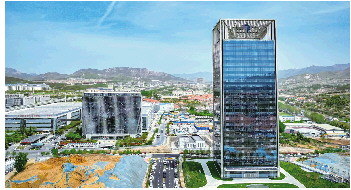
零碳建筑、零碳园区遍地开花 多角度透视零碳带来新变化↓
Yang Shi Wang· 2025-08-24 06:53
Core Viewpoint - The world's first ultra-zero carbon building has been officially launched in Qingdao, Shandong, marking a significant advancement in zero-carbon architecture in China [1] Group 1: Building Features - The ultra-zero carbon building stands 117 meters tall with 23 floors and has a daily electricity consumption of approximately 6000 kWh [4] - Unlike traditional photovoltaic installations, this building utilizes building-integrated photovoltaic glass curtain walls on three sides, providing about 25% of its green energy and saving nearly 500 tons of carbon emissions annually [4] - The building incorporates 14 retired automotive batteries for energy storage, allowing it to store excess energy generated by the photovoltaic glass and utilize low-cost clean energy during peak usage [4] Group 2: Energy Management and Technology - A digital system supports the building's zero-carbon operations by integrating five major power stations into one, achieving 100% self-sufficiency in green electricity [5] - The building features nearly 24,000 micro-sensors that automate interactions with lighting, air conditioning, and elevators, enhancing energy efficiency [8] - The building acts as a flexible adjustment node for the power grid, helping to alleviate peak electricity pressure and ensuring reliable power supply [20] Group 3: Innovative Parking and Power Supply - The building includes a fully automated rapid parking system that saved 50 million yuan in construction costs and enhances operational efficiency [11] - This parking system allows electric vehicles to provide reverse power supply to the building, with a small device enabling automatic connection for charging and discharging [16] - Only 300 vehicles supplying 10 kWh each can meet nearly half of the building's energy needs, with potential for complete reliance on vehicle power in extreme situations [19] Group 4: Broader Implications and Developments - The ultra-zero carbon building represents a new model for zero-carbon architecture, addressing challenges in battery recycling and environmental risks associated with battery disposal [8] - The development of zero-carbon buildings and applications is becoming increasingly prevalent, contributing to a cleaner energy network and improved environmental conditions [21][29] - China's coal consumption share is projected to decrease from 56.8% in 2020 to 53.2% in 2024, with clean energy generation accounting for 39.7% of the total, indicating a shift towards a more efficient and clean energy network [29]
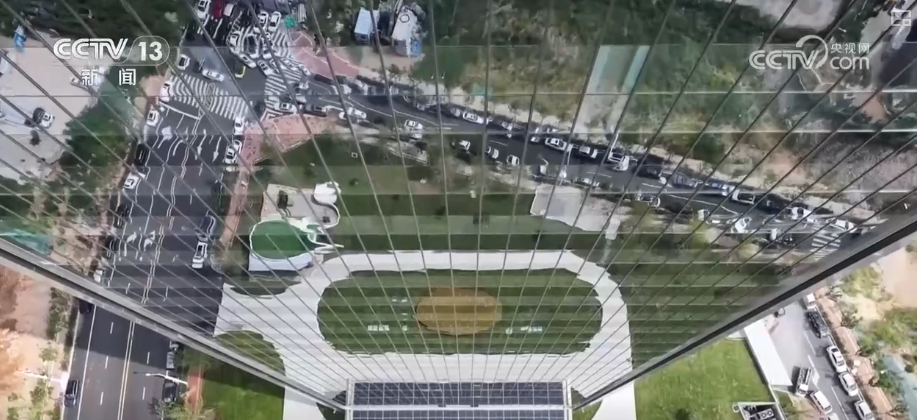
解动力电池回收难题 全球首个“超阶零碳建筑”在青岛启用
Yang Shi Xin Wen· 2025-08-23 23:58
Group 1 - The world's first ultra-zero carbon building was officially inaugurated in Qingdao, Shandong on the 24th [1] - The term "ultra-zero" refers to the building's capability to achieve 100% green energy replacement through photovoltaic power generation, tiered energy storage batteries, and electric vehicle discharging [1] - The inauguration of this building marks a significant advancement in China's zero-carbon architecture [1]