车家号

Search documents
车企出海,谁来补齐最短的一块板?
虎嗅APP· 2026-03-25 14:11
Core Viewpoint - Chinese automotive companies are making significant strides in the Southeast Asian market, particularly in Thailand, but face challenges such as entrenched competition from Japanese brands and the need for better localization strategies [2][3][6]. Group 1: Market Presence and Competition - The 2025 market share in Thailand shows Japanese brands holding 69.3%, with Toyota at 36.2%, while Chinese brands have risen to 21.5%, indicating a gap to overcome [3]. - Chinese automotive brands are transitioning from being mere participants to becoming key players in the Southeast Asian market, as evidenced by their strong presence at the Bangkok International Motor Show [2]. Group 2: Challenges Faced by Chinese Brands - Chinese brands are struggling with brand perception issues, often associated with low prices and poor resale value, which complicates their efforts to establish a positive image [7][12]. - The strategy of aggressive price cuts and capacity expansion has backfired in Thailand, leading to consumer dissatisfaction and a decline in brand reputation [6][7]. Group 3: Role of Media and Localization - Automotive platforms like Autohome are crucial in bridging the gap between Chinese brands and Southeast Asian consumers, providing localized content and insights [10][13]. - The launch of YesAuto Thailand aims to create a comprehensive ecosystem that integrates local resources and enhances brand storytelling through localized narratives [13][17]. Group 4: Future Strategies and Goals - Autohome plans to establish a local team and operational platform in Thailand, aiming for a comprehensive service experience rather than just media coverage [20]. - The strategic roadmap includes three phases: establishing a local presence in 2026, upgrading services in 2027, and expanding the successful model to other regions by 2028 [21].



从内容到生态,20岁的TA开启新程
Bei Jing Ri Bao Ke Hu Duan· 2025-12-02 11:12
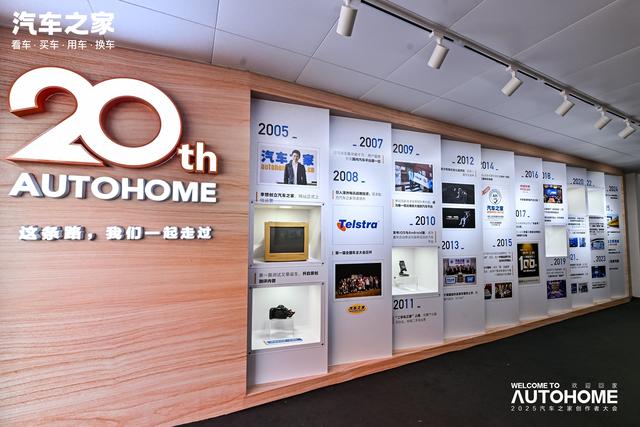
Core Insights - The article highlights the rapid growth of China's automotive market, with vehicle ownership increasing from 43.29 million in 2005 to 360 million by 2025, and the number of drivers expanding from 80.17 million to 550 million during the same period [1] - It emphasizes the transformation of the automotive media landscape, particularly the evolution of Autohome from a content producer to a comprehensive ecosystem builder, reflecting the broader changes in the automotive industry [1][17] Industry Growth - China's automotive ownership is projected to reach 360 million vehicles by 2025, marking a significant increase from 43.29 million in 2005 [1] - The number of automotive drivers is expected to grow to 550 million, up from 80.17 million in 2005, indicating a substantial expansion in the automotive user base [1] Media Transformation - Autohome has transitioned from a content distribution platform to an integrated content ecosystem, focusing on data, services, and user experiences [1] - The media's business logic has evolved from building trust to creating a "content-trust-transaction" closed loop, enhancing its role in the automotive industry [1] Autohome's Development - Autohome was founded in 2005 and quickly became a leading automotive vertical website, achieving daily views of over 10 million within two years [4] - The platform has continuously adapted its strategy, launching mobile applications in 2010 and a self-media platform in 2017, marking its shift from content producer to aggregator [4] User-Centric Approach - Autohome's evolution is centered around user needs, with a focus on enhancing user experience through strategic pivots [7] - The platform aims to provide not just vehicle information but also enrich users' lives through automotive experiences [7] Content Ecosystem - Autohome's content ecosystem is built on three layers: Original Generated Content (OGC), Professional Generated Content (PGC), and User Generated Content (UGC), each contributing to a diverse and dynamic content landscape [8][9] - The platform has produced over 100,000 professional evaluation articles and tested more than 2,500 vehicle models, showcasing its commitment to quality content [8] Future Directions - Autohome plans to expand its content ecosystem by transitioning from a platform to a comprehensive "content forest," integrating various content creators and enhancing collaboration [12][14] - The introduction of "Zhijia Media" MCN aims to address content homogenization and foster a rich creative environment [14] Global Expansion - Autohome is set to enhance its online presence across multiple platforms, including Douyin, Xiaohongshu, and Bilibili, while also pursuing international outreach to connect Chinese automotive brands with global audiences [15]