车抵贷

Search documents
高息助贷不死,监管不休
经济观察报· 2026-03-22 03:16
Core Viewpoint - The new regulations will significantly impact the high-interest lending business, making it difficult for lending platforms to continue operating under previous models that involved rates exceeding 24% [2][12]. Group 1: Regulatory Changes - The Financial Regulatory Bureau and the People's Bank of China issued new rules that will enforce a cap on annualized interest rates for personal loans at 24%, affecting high-interest lending practices [2][8]. - The new regulations require lending platforms to clearly disclose all fees and costs associated with loans, including interest rates and service fees, to ensure transparency for borrowers [11][12]. - The implementation of these regulations is expected to eliminate the gray areas that allowed lending platforms to operate high-interest loans under various schemes [11][12]. Group 2: Industry Impact - The high-interest lending market is estimated to be between 300 billion to 400 billion yuan, accounting for about 10% of the personal internet loan market [2]. - Many small and medium-sized lending platforms are facing a shrinking operational space due to the new regulations, leading to a potential exit from the market for high-interest loans [6][23]. - The regulatory changes have prompted some banks and licensed consumer finance institutions to demand additional collateral from lending platforms to cover potential bad debt risks associated with high-interest loans [19][20]. Group 3: Operational Adjustments - Lending platforms are required to adjust their business systems to comply with the new regulations, including the implementation of a comprehensive cost disclosure system for borrowers [12][13]. - There is ongoing internal debate within lending institutions regarding the inclusion of "small rights" in the comprehensive financing cost disclosure, which could affect overall compliance with the new rules [15][16]. - Some lending platforms are exploring strategies to lower their interest rates to remain compliant while managing the risk of borrower defaults that could push rates above the 24% cap [17][21].


到手5.7万要还7.7万,起底变相“车抵贷”高收费陷阱
第一财经· 2026-03-15 13:24
Core Viewpoint - The article highlights the deceptive practices in the car collateral loan market, where consumers are often misled into signing financing lease contracts instead of traditional loans, resulting in significantly higher costs and hidden fees [3][4][10]. Group 1: Case Study of Consumer Experience - A consumer named Zheng Dayuan intended to use his car as collateral for a loan but ended up signing a financing lease contract, leading to a total repayment of 77,484 yuan over three years for a loan of 64,820 yuan [5][6]. - The actual funds received by Zheng were only 57,000 yuan after deducting various fees, resulting in a total cost of 20,000 yuan in additional charges, with an effective interest rate exceeding 35% [6][10]. Group 2: Market Practices and Trends - The article identifies a trend where legitimate institutions are increasingly using financing leases to circumvent regulatory restrictions on traditional car collateral loans, which are subject to strict oversight [10][11]. - The closure of high-interest loan products has led to a surge in demand for car collateral loans, particularly from consumers with credit issues, further intensifying competition in the market [12]. Group 3: Regulatory and Legal Implications - The article discusses the legal ambiguities surrounding the classification of these financing leases, which often blur the lines between legitimate leasing and disguised high-interest loans [15][16]. - Recent regulations have clarified that financing lease companies cannot engage in lending activities, indicating that misleading consumers into signing such contracts may constitute illegal financial practices [16][19].

平安融易淮安分公司:高效便捷融资服务,支持小微经营发展
Cai Fu Zai Xian· 2025-12-17 05:00
Core Insights - The article highlights the effective financing solutions provided by Ping An Rongyi, which have significantly aided small business operators like Mr. Gui in managing their cash flow needs [1][2] Group 1: Financing Experience - Mr. Gui, a property manager, successfully obtained a 500,000 yuan car loan from Ping An Rongyi in 2023, which he repaid early in 14 installments, showcasing the flexibility of the service [1] - Following the car loan, Mr. Gui applied for and received an unsecured loan of 500,000 yuan, further alleviating his financial pressure [1] - The financing process was streamlined, allowing Mr. Gui to complete transactions quickly through remote scanning, taking only a few minutes [1] Group 2: Service Model and Technology - Ping An Rongyi emphasizes a "three savings" service model, focusing on saving time, effort, and money for clients [2] - The company utilizes an "AI + O2O" service model, with the self-developed "Xingyun 2.0" AI loan system enabling 95% of micro clients to receive loans within 1.3 hours with zero text input [2] - The service team actively engages with clients in the field, combining on-site visits with rapid risk control responses to create a comprehensive service network [2] Group 3: Future Commitment - Ping An Rongyi's Huai'an branch aims to continue providing high-quality, one-stop financing services to small business operators, supporting their transformation and industrial upgrades [2]

2026年汽车金融有哪些机会点?
Zhong Guo Qi Che Bao Wang· 2025-12-14 06:38
Core Insights - The automotive finance industry is expected to shift towards quality and efficiency enhancement in 2026, with opportunities focusing on compliance, technology empowerment, and international expansion [1][10] Group 1: Industry Trends - The automotive finance sector is currently experiencing low-level competition, primarily focused on price reduction, leading to unsustainable profits [3] - The overseas market, particularly in new energy vehicles and commercial vehicle exports, is seen as a key direction for breaking through industry challenges [3] - The car mortgage business is anticipated to thrive in 2026 due to increased funding, improved customer acquisition models, and optimized business processes [7] Group 2: Technology and AI Integration - AI is reshaping the automotive finance industry by enhancing efficiency, optimizing service experiences, and expanding business boundaries [4] - The transition from "single-point intelligence" to "global intelligence" in AI applications is crucial for improving overall process efficiency [4] Group 3: Compliance and Regulation - Compliance is fundamental for sustainable growth in the automotive finance sector, especially with the increasing application of AI [9] - Companies that prioritize compliance and consumer rights protection will have a competitive advantage in capturing market opportunities [9][10] - Adhering to local market regulations is essential for building trust in overseas markets, which is a core competitive advantage for financial technology companies [9]

消金下半场:缩表、坏账与裁员降本
Sou Hu Cai Jing· 2025-10-22 19:05
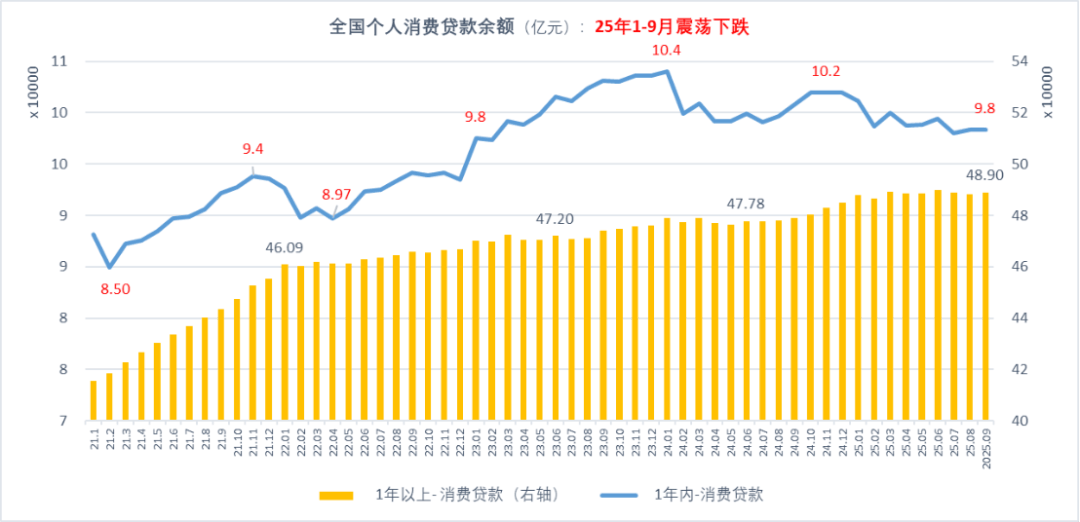
Core Viewpoint - The consumer finance industry is undergoing significant layoffs and cost-cutting measures due to the implementation of new lending regulations, which have negatively impacted high-priced off-balance-sheet business models [1][2][11]. Group 1: Layoffs and Cost-Cutting - A southern consumer finance company has initiated layoffs, particularly affecting certain business and back-office departments, as a direct response to declining business performance [1]. - Other consumer finance institutions are also expected to follow suit in reducing costs, indicating a widespread trend across the industry [2]. - The industry is experiencing a collective "balance sheet contraction," with multiple institutions lowering their lending targets and asset scales since September [7][11]. Group 2: Business Model Adjustments - The new regulations have forced companies to pivot towards on-balance-sheet lending models, such as car and home equity loans, as off-balance-sheet business shrinks [4][5]. - The short-term personal consumption loan balance in the industry has decreased by 365.2 billion, a drop of 3.6% since the beginning of the year, indicating a broader trend of contraction in consumer finance [9]. Group 3: Industry Challenges and Future Outlook - The consumer finance sector is facing intensified competition and a potential shakeout, with smaller institutions struggling to maintain growth while larger firms become more cautious in their operations [11][12]. - There is an expectation of further contraction in the industry, particularly during the upcoming Spring Festival, with predictions of additional declines in overall scale within the next five months [11]. - The risk associated with credit assets is rising, with some institutions reporting a 20-30% increase in credit asset risk, leading to higher provisions for bad debts [11].