迪士尼动画

Search documents
泡泡玛特20260308
2026-03-10 10:17
Summary of the Conference Call on Pop Mart Company and Industry Overview - The conference focused on **Pop Mart**, a company in the **IP (Intellectual Property)** and **entertainment** industry, drawing comparisons with major players like **Disney** and **Netflix** [1][2]. Key Points and Arguments Disney's Business Model and Evolution - **Disney's Development**: Established in 1923, Disney has evolved from creating iconic characters like Mickey Mouse to becoming a global entertainment giant through strategic acquisitions (Pixar, Marvel, Lucasfilm, 21st Century Fox) and a diversified business model [2][3][4][6][10]. - **Revenue Breakdown**: As of the fiscal year 2025, Disney's total revenue reached **$94.4 billion**, with a net profit of **$12.4 billion**. The entertainment segment generated **$42.47 billion**, while the experience segment (theme parks) contributed **$36.16 billion** [10][14]. - **IP Strategy**: Disney's IP acquisition strategy includes original creations, copyright purchases, and strategic acquisitions, resulting in a robust portfolio of valuable IPs, including **Mickey Mouse**, **Star Wars**, and **Marvel** franchises [13][19]. Netflix's Business Model and Evolution - **Netflix's Transformation**: Founded in 1997, Netflix transitioned from DVD rentals to a leading global streaming platform, emphasizing original content creation since 2013 with hits like "House of Cards" [19][20][21]. - **Revenue Growth**: Netflix's revenue has shown significant growth, with a projected **60.8%** increase in net profit for 2024 and **26%** growth in 2025, driven by advertising and subscription strategies [21][22]. - **User Base and Market Position**: As of 2025, Netflix boasts **325 million** global subscribers, maintaining a **23%** market share in the streaming video on demand (SVOD) sector, significantly ahead of competitors like Amazon and Disney [22][23][24]. Comparative Analysis of Disney and Netflix - **Content Strategy**: Both companies leverage their IPs to create a diverse content library. Disney focuses on family-friendly content and experiences, while Netflix emphasizes a wide range of genres to cater to various demographics [19][30]. - **User Engagement**: Netflix's user retention rate is notably low at **2%**, attributed to its extensive content library and personalized viewing experience, while Disney's experience segment provides significant cash flow to support its streaming ambitions [30][36]. Financial Performance Insights - **Disney's Financials**: Disney's entertainment segment saw a **3%** revenue growth, while its linear networks faced a **12%** decline due to competitive pressures [10][11]. - **Netflix's Financials**: Netflix's average revenue per member (ARM) increased from **$9.43** in 2017 to **$11.7** in 2024, showcasing its effective monetization strategies [24][35]. Other Important Insights - **Market Trends**: The conference highlighted the increasing competition in the streaming market, with both companies adapting their strategies to maintain and grow their user bases [21][22]. - **Future Outlook**: The discussion emphasized the importance of continuous innovation in content creation and distribution to sustain growth in the rapidly evolving entertainment landscape [19][30]. This summary encapsulates the key insights from the conference call regarding Pop Mart's positioning within the broader context of the entertainment industry, particularly in relation to Disney and Netflix.



记者手记丨跨国企业借“国风”广告吸引“中国心”
Xin Hua She· 2025-12-12 03:20
Core Insights - Multinational companies are increasingly using traditional Chinese cultural themes in their advertising to attract Chinese consumers, reflecting a shift towards local cultural integration [1][2][4] - The Chinese market continues to show strong growth potential, with retail sales expected to exceed 50 trillion yuan in 2024 and foreign investment surpassing 700 billion USD during the 14th Five-Year Plan [1][3] Group 1: Advertising Strategies - Companies are shifting from a Western-centric advertising approach to one that resonates with local culture, utilizing teams familiar with Chinese social media and cultural nuances [2][3] - Popular social media platforms like Douyin, Bilibili, and Xiaohongshu are being leveraged by foreign companies to engage with audiences through culturally relevant content during traditional festivals [2][3] - Collaborations with local brands and timely marketing campaigns, such as Coca-Cola's "Tribute to 40 Years" series, are becoming essential strategies for foreign companies to connect with Chinese consumers [3] Group 2: Cultural Integration - There is a growing trend among younger consumers to favor local cultural elements, as seen in Adidas's use of traditional motifs like Miao embroidery and the story of "Fish Leaping Over the Dragon Gate" [4] - The rise of cultural confidence in China is reshaping consumer behavior, leading to a preference for products that reflect local heritage and emotional resonance [4] - The success of non-material cultural heritage products on platforms like Douyin, which sold 6.5 billion units of related items, indicates a strong market for culturally inspired goods [3]
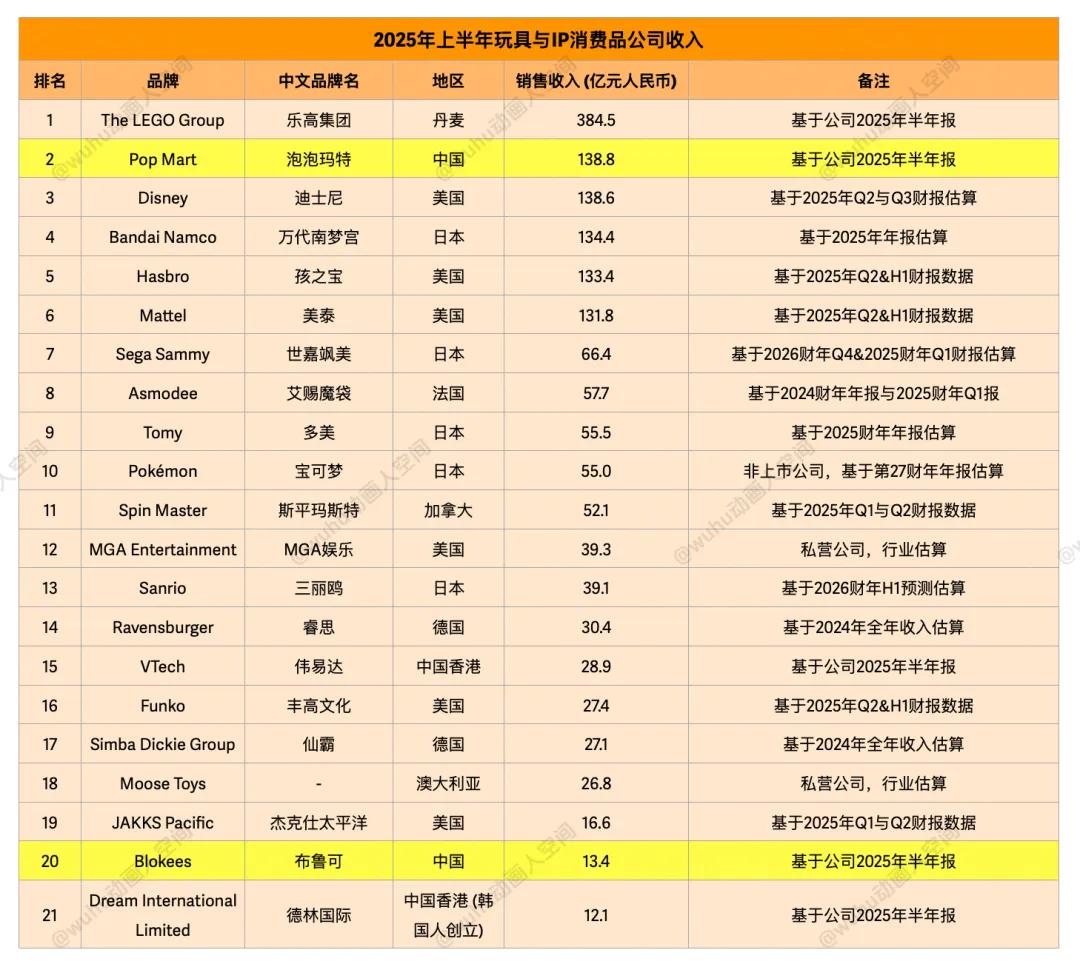
泡泡玛特收入首次超过迪士尼,说明了什么?
3 6 Ke· 2025-09-29 11:31
Core Insights - In the first half of 2025, Pop Mart achieved a revenue of 13.88 billion RMB, surpassing Disney's consumer products division, which reported 13.86 billion RMB, marking a significant milestone in the toy industry [1][2]. Group 1: Revenue Rankings - The LEGO Group leads the toy and IP consumer goods sector with a revenue of 38.45 billion RMB [2]. - Pop Mart ranks second with 13.88 billion RMB, followed closely by Disney at 13.86 billion RMB [2]. - Other notable companies include Bandai Namco (13.44 billion RMB), Hasbro (13.34 billion RMB), and Mattel (13.18 billion RMB) [2]. Group 2: Business Models and Strategies - Disney's business model has evolved over nearly a century, focusing on content creation, licensing, and theme parks, adapting to changes in media consumption [3]. - Pop Mart's success is attributed to its ability to leverage social media and e-commerce, creating emotional connections with consumers through its IPs, which cater to the growing "Kidult" market [4][5]. - The emotional value provided by Pop Mart's products resonates with consumers seeking personal expression and identity through their purchases [5][7]. Group 3: Market Trends and Consumer Behavior - The rise of the "Kidult" demographic, characterized by adults purchasing toys for emotional and social value, has significantly impacted the toy market [4][8]. - Both Disney and Pop Mart face challenges in maintaining consumer engagement in a fragmented market, with Disney focusing on emotional resonance and Pop Mart navigating the risk of becoming a "fast fashion" brand [8][9].