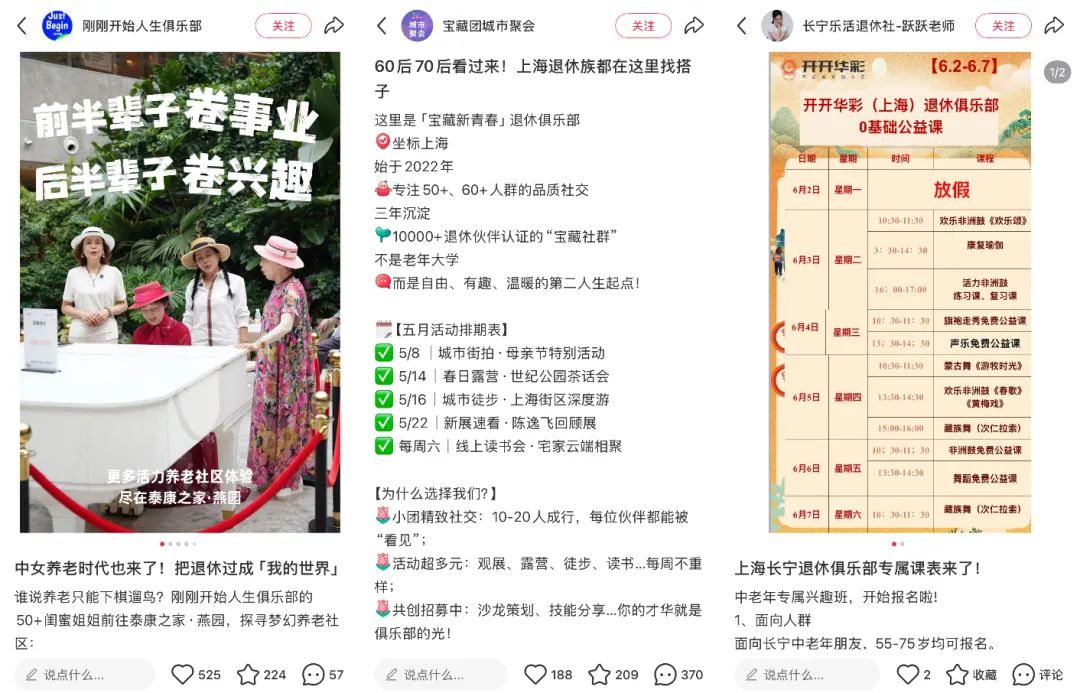
退休俱乐部服务

Search documents
“退休俱乐部”拓展银发消费新场景
Sou Hu Cai Jing· 2025-12-05 08:04
Core Insights - The emergence of retirement clubs is catering to the growing demand for vibrant and engaging activities among the elderly, particularly those aged 60 and above, who seek independence, health, and social participation [2][3][4] Group 1: Market Trends - Retirement clubs are increasingly popular in cities like Shanghai, Nanjing, and Suzhou, offering innovative courses such as jazz dance, script reading, and other trendy activities, distinguishing themselves from traditional elderly education institutions [2][3] - The "young tribe" retirement club in Nanjing has over 200 regular members and has connected with more than 1,500 individuals through various offline activities and lectures [3] Group 2: Social Dynamics - Retirement clubs provide a platform for newly retired individuals to rebuild social connections and find a sense of belonging, addressing the loneliness that often accompanies retirement [4][5] - Members express a renewed sense of purpose and excitement in their lives, engaging in activities like playing video games and participating in dance classes, which were previously considered youthful pursuits [5] Group 3: Business Challenges - Despite the high demand for retirement clubs, many operators face significant challenges in establishing a sustainable business model, often relying on passion rather than profitability [6] - Different clubs are experimenting with various operational strategies, such as hosting numerous events monthly or charging annual membership fees, but profitability remains a concern [6] Group 4: Future Outlook - Experts suggest that the development of the elderly care industry is transitioning from a survival model to a growth-oriented approach, driven by the new generation of retirees who have higher education levels and more open consumption attitudes [5][6] - Collaboration among government, market, and community is essential to create a supportive environment for the elderly, encouraging innovative business models and enhancing the quality of life for seniors [6]

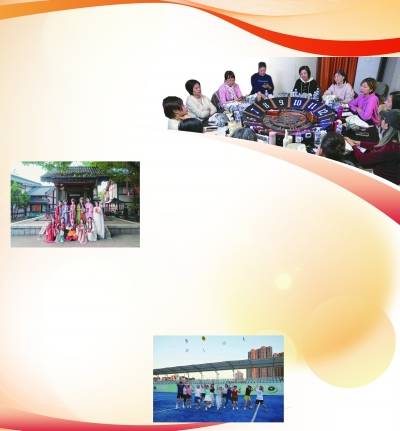
视频丨老年人“买买买”,有哪些新趋势?
Yang Shi Xin Wen Ke Hu Duan· 2025-10-29 12:07
Core Insights - The "silver economy" is rapidly growing in China, driven by an increasing elderly population with strong purchasing power [2][3][4] - By the end of 2024, the elderly population aged 60 and above is expected to exceed 310 million, accounting for 22% of the total population [2] - The silver economy is projected to reach 30 trillion yuan by 2035, representing 10% of the GDP [3] Group 1: Consumption Trends - "Self-indulgent consumption" is emerging as a new market driver, with retirement clubs gaining popularity among seniors [3][4] - The elderly are increasingly willing to pay for social activities and learning experiences, with a notable rise in silver tourism, which now accounts for over 20% of total tourism in China [4][5] - Revenue from elderly tourism services, health services, and cultural activities has seen significant growth, with increases of 26.2%, 23.9%, and 20.7% respectively in the first half of the year [5][12] Group 2: New Business Models - The shift in elderly needs is prompting innovation in commercial spaces, with shopping malls adapting to provide social and learning opportunities for seniors [8][9] - A notable example includes a shopping mall in Chongqing that transformed into a "silver-themed store," resulting in a 307% increase in sales on opening day [8] - The demand for travel and leisure among seniors is leading to the establishment of numerous travel and wellness centers, significantly boosting local economies [9][10] Group 3: Product Innovation - There is a growing market for products specifically designed for the elderly, such as larger chess pieces and modified toys that cater to their needs [10][11] - The integration of technology into elderly care is increasing, with smart devices and robots becoming commonplace in daily life, enhancing convenience and engagement for seniors [11][12] - Sales of smart elderly care technologies and wearable devices have seen year-on-year growth of 33.7% and 32.6% respectively [12]

AI绘画、组队攀岩…“退休俱乐部”重新定义退休生活
Sou Hu Cai Jing· 2025-08-27 09:19
Core Insights - The emergence of "retirement clubs" is providing new options for retirees, offering activities that break traditional stereotypes of aging [1][13] - These clubs are primarily attracting individuals aged 50 to 65, indicating a growing interest in active lifestyles among older adults [13] Group 1: Retirement Clubs - "Retirement clubs" are organizing diverse activities such as AI painting, DJing, rock climbing, and coffee art, catering to the interests of newly retired individuals [7][11] - The founder of a notable retirement club, Liu Jing, initially aimed to find companions for her parents but ended up attracting over ten thousand elderly members, highlighting the demand for such social platforms [11] - The rapid growth of these clubs across the country is injecting new vitality into the silver economy, which is projected to reach a market size of 30 trillion yuan by 2035 [13] Group 2: Participant Experiences - Participants, like Ms. Liu, express that these activities not only help in physical exercise but also provide opportunities for social interaction and learning [5][9] - The clubs are fostering a sense of community among retirees, allowing them to engage in enjoyable and enriching experiences [5][11]

2025银发经济,偷偷赚钱的四大新机会
3 6 Ke· 2025-08-13 11:31
Group 1 - The core idea of the articles revolves around the transformation of the elderly consumer market, highlighting a shift from basic survival consumption to a focus on personalized, self-satisfying experiences, termed "悦己银发" [1][2][49] - The emergence of retirement clubs catering to the elderly's new social and entertainment needs, offering activities like DJing, dancing, and games, indicates a significant market opportunity [4][5][49] - The trend of "情怀消费" (emotional consumption) is exemplified by the growing interest of the elderly in attending concerts, such as those of the artist 刀郎, which serve as a nostalgic experience and a way to connect with their past [25][49] Group 2 - Four new consumption trends for the elderly have been identified: social clubs beyond traditional activities, emotional consumption through concert tickets, tailored fitness products for the elderly, and beauty services aimed at enhancing their appearance [2][31][49] - The business models of retirement clubs vary, with some operating on a membership basis and others offering pay-per-activity options, reflecting the diverse preferences of the elderly [6][8] - The beauty industry is responding to the elderly's desire to maintain their appearance, with brands launching products specifically designed for older consumers, indicating a growing market segment [35][36][49]