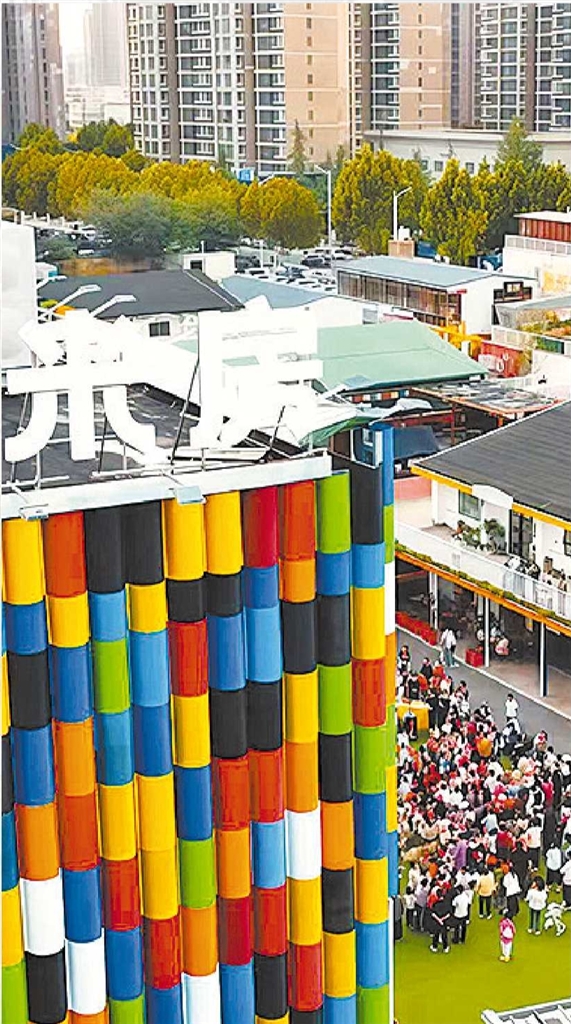
郑州记忆1952油化厂旅游休闲街区

Search documents
当城市开始“逆生长”——解码郑州街区的进化与新生
He Nan Ri Bao· 2025-11-26 00:02
Core Insights - The article discusses the transformation of urban spaces in Zhengzhou, particularly focusing on the evolution of historical and industrial areas into vibrant cultural and commercial districts, reflecting a shift from mere expansion to qualitative urban renewal [1][10]. Group 1: Urban Development and Cultural Transformation - Zhengzhou has recognized 7 national-level and 40 provincial-level tourism and leisure districts, showcasing a significant investment in urban cultural spaces [1]. - The city is transitioning from "incremental expansion" to "quality improvement," with a focus on creating immersive experiences that meet the spiritual needs of residents [1][10]. - The revitalization of old industrial sites, such as the transformation of the Zhengzhou 0143 grain reserve into a trendy creative district, exemplifies this urban evolution [2][10]. Group 2: Industrial Heritage and Creative Spaces - The article highlights successful examples of industrial heritage revitalization across China, including the Beijing 798 Art District and Shanghai's EKA, which serve as models for Zhengzhou's transformation [3]. - The "磨街文创园" (Mojie Cultural and Creative Park) has become a hub for social interaction and commerce, attracting over 13,000 daily visitors by blending historical architecture with modern design [5][9]. - The preservation of historical buildings while integrating modern amenities is a key strategy in creating appealing urban spaces that resonate with younger demographics [10][12]. Group 3: Community Engagement and Experience Economy - The article emphasizes the importance of community-driven initiatives in urban renewal, where local designers and artists play a crucial role in shaping the cultural landscape [9][10]. - The transformation of traditional shopping areas into multi-functional spaces that cater to social and experiential needs reflects a broader trend in consumer behavior, moving from mere transactions to lifestyle experiences [12][14]. - Events and activities tailored to younger audiences are increasingly becoming a focal point for urban districts, enhancing their appeal and engagement [12][14]. Group 4: Historical Context and Future Directions - The integration of historical elements into modern urban design is seen as a way to maintain cultural continuity while fostering innovation [17][21]. - Projects like "亳都·新象" (Bodou New Image) illustrate how commercial spaces can thrive by embedding themselves within historical contexts, attracting significant foot traffic and enhancing local identity [21][22]. - The ongoing urban renewal efforts in Zhengzhou are characterized by a commitment to preserving historical narratives while adapting to contemporary needs, ensuring that the city's evolution is both respectful and forward-looking [25].

高质量发展看中国丨多元场景激活消费新活力
Yang Guang Wang· 2025-08-16 04:58
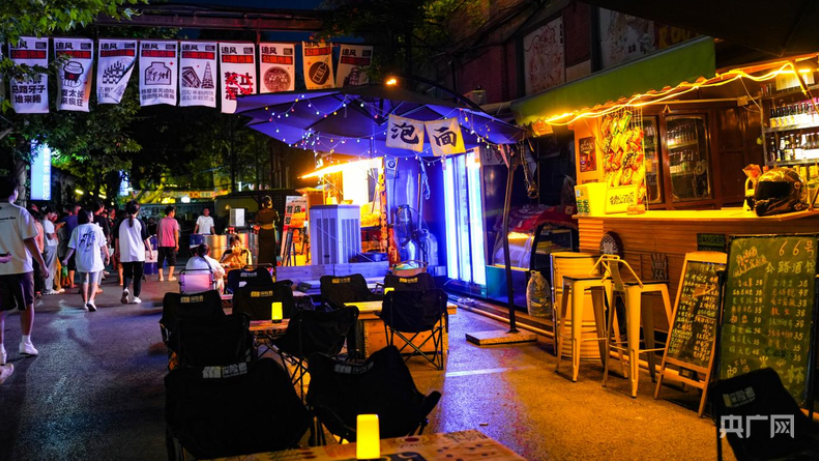
Group 1: Transformation of Industrial Sites - The Zhengzhou Oil Chemical Plant, built in 1952, has transformed from an industrial site to a vibrant lifestyle destination, preserving its historical elements while integrating new experiences [2][3] - The street area has introduced over 130 cultural and dining shops, attracting an average of over 30,000 visitors daily, with an annual footfall reaching 10 million [3] Group 2: Rural Tourism Development - In Guangde, nearly 300 leisure agriculture and rural tourism sites have been developed since 2022, showcasing a renewed appreciation for rural values [4] - The "Hanquan Academy" in Nantan Community serves as a multifunctional cultural space, combining reading, relaxation, and cultural education [4] - The "Huxing Pet Paradise" in Hexing Village offers a family-friendly experience with affordable ticket prices and plans for future expansions [5] Group 3: Sports Economy and Consumer Engagement - The "Su Super" league in Jiangsu has redefined weekend consumption patterns, linking sports events with local shopping and dining experiences [6][8] - The league has attracted over 10,000 spectators per match, significantly boosting local economic activity [6] - In the first half of the year, Jiangsu's retail sales reached 144.77 billion yuan, with a year-on-year growth of 7.1%, driven by the "Su Super" league [8][9] - The combined revenue from tourism, dining, and accommodation related to the league reached 37.96 billion yuan, marking a 42.7% increase year-on-year [9]
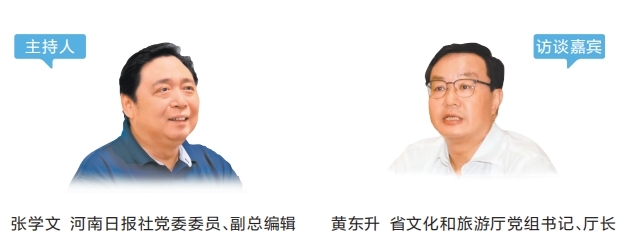
总编有约·“两高四着力”大家谈丨加快构建现代文旅产业体系
He Nan Ri Bao· 2025-07-29 23:23
Core Insights - The article discusses the comprehensive deployment of the spirit of Xi Jinping's important speech during his inspection in Henan, focusing on promoting cultural prosperity and building a strong cultural tourism province [2] Group 1: Industry Development - The cultural tourism industry in Henan achieved a milestone last year, receiving over 1 billion visitors and generating over 1 trillion yuan in tourism revenue, but still faces challenges such as lagging urban tourism compared to cities like Changsha, Xi'an, and Chengdu [2] - To become a pillar industry, Henan's cultural tourism must focus on cultural transformation, industry capability, international communication, and operational entities [2] - The province aims to enhance its cultural tourism capabilities by creating a modern cultural tourism system and implementing projects like "cultural empowerment" and "street renewal" to revitalize historical cultural districts [2] Group 2: IP Development and Marketing - Henan has seen the emergence of popular cultural tourism IPs like Wansui Mountain Wuxia City, and to sustain this momentum, the province plans to create an IP matrix and strengthen its main brand "Walking Henan, Understanding China" [3] - The strategy includes integrating IP with technology to develop immersive experiences and promoting IP elements across the entire tourism value chain [3] - Innovative marketing strategies will be employed, utilizing new media to create buzz around IPs through events and collaborations with influencers [4] Group 3: Future Directions - The article emphasizes the need for regional collaboration to create a unified cultural tourism development community, leveraging the historical significance of the Yellow River ancient capital group [4] - It advocates for breaking industry boundaries to promote integration across culture, tourism, and technology, and expanding into various tourism sectors such as educational tourism and wellness tourism [4] - The focus will be on nurturing specialized enterprises in key areas like digital cultural tourism, cultural creativity, and tourism performance to drive structural adjustments and industry chain reshaping [4]