酷睿Ultra系列3处理器

Search documents
CES 2026,万物皆可汽车?
汽车商业评论· 2026-01-07 00:39
Core Insights - The CES 2026 is shifting focus from electric vehicles to "physical AI," which integrates sensors, computer vision, and actuators to enable machines to interact with and adapt to their environments [4][6][8] - The automotive industry is evolving from electrification to intelligence, with discussions centered on how vehicles can become autonomous "physical AI" entities [8][10] - Major companies like NVIDIA, Uber, and Sony Honda Mobility are showcasing advancements in autonomous driving technologies and smart vehicle systems [10][14][19] Automotive Innovations - NVIDIA introduced the Alpamayo platform, aiming for L4-level autonomous driving capabilities, marking a significant step in AI-driven vehicle technology [10][12] - Uber unveiled its luxury autonomous taxi, featuring personalized passenger experiences and advanced perception systems, with plans for public service by the end of the year [10][14] - Sony Honda Mobility is developing the AFEELA model, which aims to create a "creative entertainment space" within the vehicle, enhancing user experience beyond mere transportation [14][19] Smart Cockpit Developments - BMW is integrating Alexa and generative AI into its vehicles, enhancing user interaction and personalization [21][23] - Mercedes-Benz launched the electric GLC model in the U.S., featuring advanced AI integration and immersive audio systems [23][25] - LG's smart cockpit platform aims to evolve user experience through context-aware adjustments, although still in early deployment stages [25][27] Chinese Automotive Brands - Geely and Great Wall are the only major Chinese brands participating in CES 2026, showcasing their advancements in AI and smart driving technologies [27][19] - Geely's G-ASD system aims to enhance safety and confidence in complex driving scenarios, while Great Wall focuses on intelligent driving capabilities [15][19] Battery Technology Innovations - Donut Lab introduced the world's first solid-state battery for OEM vehicles, promising high energy density and rapid charging capabilities [39][41] - Lyten showcased lithium-sulfur battery technology with a clear commercialization timeline, targeting military and automotive applications [43] - ProLogium and Electra Vehicles presented advancements in battery management and solid-state technology, aiming to enhance safety and efficiency in electric vehicles [45][47]



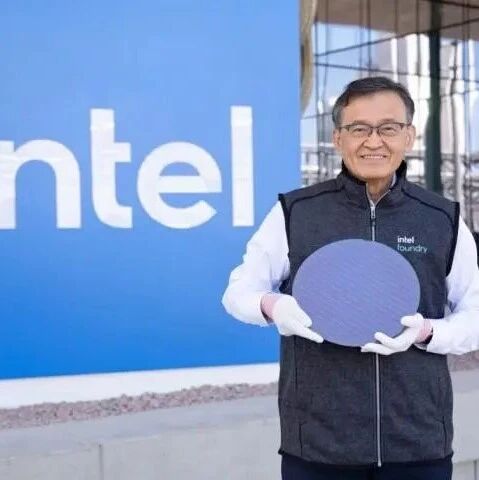
英特尔展示1.8nm工艺晶圆!
国芯网· 2025-10-10 13:48
Core Viewpoint - Intel's Panther Lake chip, based on the 18A (1.8nm) process, is seen as a crucial factor for the company's turnaround in the semiconductor market, especially after years of lagging behind competitors like TSMC and AMD [2][5]. Group 1: Product Development and Features - The Panther Lake chip is designed to support various consumer and commercial AI PCs, gaming devices, and edge computing solutions, featuring a scalable multi-chip architecture with up to 16 performance and efficiency cores, resulting in over 50% performance improvement compared to the previous generation [4]. - The XPU design of Panther Lake allows for next-generation AI acceleration, with a maximum platform performance of 180 TOPS (trillions of operations per second) [4]. - The 18A process is Intel's first self-developed 2nm process node, offering up to 15% energy efficiency improvement and 30% higher chip density compared to the Intel 3 process [4]. Group 2: Market Position and Financial Performance - Intel has faced continuous revenue decline for six consecutive quarters, with a projected net loss of $7.6 billion for the 2024 fiscal year, leading to a significant loss of market share in the AI chip sector, where NVIDIA holds over 80% market share [5][6]. - The company has been under pressure to regain its technological leadership and customer trust, with Panther Lake representing a strategic mission to reclaim its position in the market [6]. Group 3: Capital and Investment Support - Intel has secured substantial capital support through various investments, including $8.9 billion from the U.S. government, $2 billion from SoftBank, and $5 billion from NVIDIA, totaling $15.9 billion, which alleviates financial pressure for Panther Lake's production and market launch [6]. - Following the announcement of these investments, Intel's stock price surged from $22.1 to $26.8 per share, marking a single-day increase of over 21%, and later reached a new high of $34.5 per share [6]. Group 4: Market Sentiment and Future Outlook - As of October 9, Intel's stock closed at $37.2 per share, reflecting a cumulative increase of 68.3% since early August, with a market capitalization of $174.2 billion [7]. - Despite the positive stock performance, market confidence remains cautious, with analysts emphasizing the need for Intel to convince customers to pre-order its next-generation 14A chip manufacturing technology to avoid potential setbacks [7].