重稀土(镝

Search documents
中国出口管制重创日本稀土半导体产业
Sou Hu Cai Jing· 2026-01-10 03:37
Group 1 - Japan's economy and industries are facing significant impacts due to China's export controls on dual-use items, particularly in critical sectors like rare earths and semiconductors [1] - Japan's reliance on rare earths, especially heavy rare earths like dysprosium and terbium, is nearly 100%, which is crucial for military and electric vehicle applications. The export controls have led to a critical inventory shortage, with only 3-6 weeks of supply remaining. If the situation persists for a year, Japan's GDP could shrink by 0.43%, resulting in an economic loss of 2.6 trillion yen [1] - Major Japanese companies such as Toyota and Mitsubishi Heavy Industries are forced to reduce production due to raw material shortages, with semiconductor production lines facing shutdown risks [1] Group 2 - Japan's military-industrial complex is severely affected, with high-end weapon production halted due to the inclusion of essential materials like heat-resistant alloys and carbon fibers in the export control list. Projects such as the F-15J fighter jet upgrade and hypersonic missile development are delayed [1] - The civilian sectors, including automotive and electronics, are experiencing supply chain disruptions. The automotive industry, particularly electric vehicle production, has seen a production drop of over 20% due to a 90% reliance on Chinese neodymium-iron-boron magnets [1] - The semiconductor industry is facing a wave of contract defaults due to the shortage of high-purity gallium and germanium [1] Group 3 - Japan's countermeasures against China's export controls are weak, revealing strategic deficiencies. Alternatives like deep-sea mining or sourcing from Australia are not viable in the short term due to a fivefold increase in costs and a 15-year lag in refining technology compared to China [3] - Japan's export structure to China is heavily imbalanced, with 17% of its total exports going to China, compared to only 4% of China's exports going to Japan. This places Japan at a significant disadvantage in the economic confrontation [5] Group 4 - Domestic tensions in Japan are escalating, with strong dissatisfaction in the economic sector regarding political statements, leading to calls for a no-confidence motion against the cabinet. The Nikkei index dropped by 556 points in a single day, reflecting public panic [5] - Japan's diplomatic isolation is increasing, with South Korea seizing the opportunity to capture market share in semiconductors. Although the U.S. appears to support Japan, it is simultaneously raising military sales prices and delaying weapon deliveries, highlighting cracks in the alliance [5] Group 5 - China's export control measures are strategically designed, covering 1,030 dual-use items across ten industry categories, with a "catch-all clause" to prevent any support for Japan's military capabilities. A third-party transfer accountability mechanism is in place to block circumvention paths [4] - The measures are not a complete embargo; trade in civilian sectors can still occur under compliance review, while military-related applications are largely rejected. This approach fulfills export control laws and international non-proliferation obligations, signaling that crossing red lines will incur consequences [6] - The export controls directly target Japan's resource scarcity and economic structural issues, causing short-term disruptions in the supply chain while pressuring Japan to adjust its policy towards China. Further losses are anticipated if Japan does not retract its controversial statements regarding Taiwan [6]


日本首次从澳大利亚进口重稀土
日经中文网· 2025-10-31 03:07
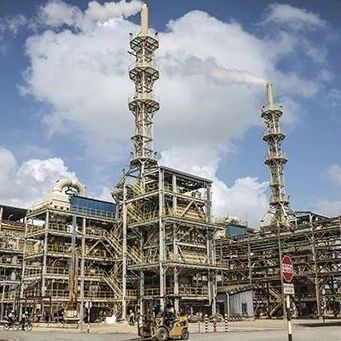
Core Viewpoint - Australia’s Lynas Corporation has successfully separated heavy rare earth elements at its processing plant in Malaysia, marking Japan's first import of heavy rare earths from a country outside China, which dominates the global market with nearly 100% share [2][5]. Group 1: Company Operations - Lynas extracts rare earths from its Mount Weld mine in Western Australia, processes them in Malaysia into dysprosium and terbium, and then ships them to Japan [4]. - The Japanese trading company Sojitz has imported heavy rare earths produced by Lynas for the first time, which are essential for electric vehicle (EV) and wind turbine motor production [2][4]. Group 2: Market Dynamics - China accounts for 70% of global rare earth production and nearly 100% of heavy rare earths, making the establishment of a non-China dependent supply chain critical [5]. - In response to China's export controls on dysprosium and terbium, which were implemented as a retaliatory measure against U.S. tariffs, companies like Suzuki and Ford have had to pause production due to supply shortages [5]. Group 3: Future Demand and Agreements - The International Energy Agency (IEA) predicts that global demand for rare earths will expand to 3.4 times the 2020 levels by 2040, driven by decarbonization trends [5]. - A framework for stable rare earth procurement was agreed upon during the Japan-U.S. summit on October 28, highlighting the urgency of securing alternative supply sources [5].
特朗普访日前夕,日本加入中美“稀土博弈”?高市早苗要和中国针锋相对,站在了必败的那一边
Sou Hu Cai Jing· 2025-10-29 12:45
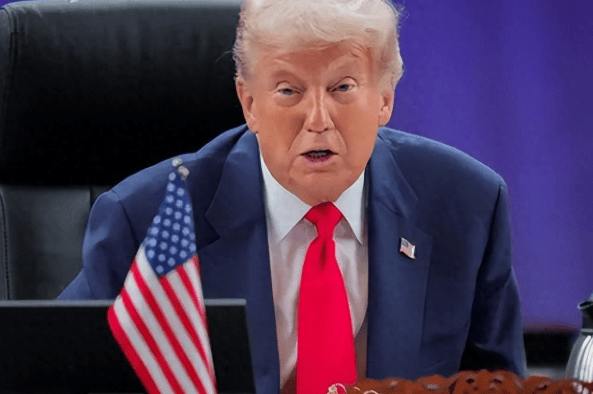
Core Viewpoint - The meeting between US President Trump and Japanese Prime Minister Kishi Sanae highlights the strategic cooperation between the US, Japan, and Australia in the rare earth sector, aiming to reduce dependence on China, but the initiative faces significant challenges and contradictions [1][8]. Group 1: Strategic Cooperation - The US and Japan signed a memorandum of understanding to accelerate the production of high-performance magnets, marking a new phase in US-Japan rare earth cooperation [1]. - Australia is included as a mineral resource supplier in this "rare earth alliance," aiming to reduce reliance on China [1][3]. Group 2: Challenges and Limitations - The US and Australia face significant shortcomings in the refining of heavy rare earths, which are crucial for advanced military and electric vehicle technologies [3]. - Japan's reliance on China for heavy rare earth production remains a critical issue, with 92% of high-purity heavy rare earth refining capacity concentrated in China [5][6]. Group 3: China's Dominance - China controls the entire rare earth supply chain, from mining to refining and magnet manufacturing, allowing it to dominate the global market with lower costs and higher purity [5]. - China's technological barriers, such as the "cascade extraction theory," significantly lower separation costs and achieve high purity levels, making it difficult for the US and Japan to catch up [5][8]. Group 4: Political Implications - The cooperation between the US, Japan, and Australia is seen as a political maneuver rather than a practical solution to the challenges posed by China's dominance in the rare earth market [8]. - The notion of "decoupling" from China in the rare earth sector is viewed as a risky gamble that may not yield the desired results in the short term [8].