量子虚拟电厂

Search documents
成都市政协委员、成都智元汇董事长邓波:成都地铁可打造成为城市“AI超级充电宝”
Mei Ri Jing Ji Xin Wen· 2026-01-29 07:31
Core Viewpoint - The transformation of urban metro systems into "quantum virtual power plants" and "AI supercharging stations" is essential for achieving high-quality urban development under the "dual carbon" goals, emphasizing the need for digital and intelligent energy systems [1][4]. Group 1: Metro System Transformation - The metro system in Chengdu, with over 750 kilometers of operational track and nearly 500 stations, has the potential to act as a significant energy resource due to its predictable load patterns and large-scale energy consumption [4]. - The concept of a "quantum virtual power plant" highlights the complexity and real-time optimization required for energy dispatch, potentially utilizing advanced algorithms like quantum computing to manage vast amounts of data [5]. - The integration of distributed energy resources, such as solar panels and energy storage systems, can transform the metro network into a hub for energy and transportation, enhancing the resilience and economic efficiency of the urban energy system [4][5]. Group 2: Value Proposition - The economic value of this transformation includes potential savings of 10% to 15% on electricity costs through participation in electricity markets and demand response programs, alleviating operational pressures on metro systems [6]. - The safety value is significant, as a metro virtual power plant can provide emergency power supply during peak demand or extreme weather events, enhancing urban disaster resilience [6]. - Environmental benefits include substantial carbon emissions reductions by increasing the share of green electricity and decreasing reliance on fossil fuels, contributing to national carbon reduction targets [7]. Group 3: Industry Development - The project is expected to stimulate local industry growth in AI algorithms, energy storage technologies, and big data services, creating a new industrial chain that integrates "rail + energy" [7]. - Chengdu's metro system possesses the necessary resources and technological capabilities to build a virtual power plant, supported by local enterprises and research institutions [8]. - Policy support from the Chengdu government, including subsidies for construction and V2G (Vehicle-to-Grid) initiatives, provides a strong foundation for the project's development [8]. Group 4: Implementation Challenges - Successful implementation requires collaboration among government, enterprises, and research institutions to address planning, approval, and safety challenges [13]. - Innovative market mechanisms and continuous policy support are essential for enabling metro load resources to participate in electricity markets effectively [13]. - Pilot projects are recommended to validate the feasibility of integrating distributed energy resources and to develop a comprehensive set of guidelines for constructing a Chengdu metro virtual power plant [14].


三箭齐发”!成都锦江区大步迈入“量子时代
Zhong Guo Fa Zhan Wang· 2026-01-29 03:24
Core Insights - The first quantum technology industry fund in Sichuan Province has been established in Chengdu's Jinjiang District, marking a significant step in the development of the quantum technology ecosystem [1][2] - The fund, with a scale of 1 billion yuan, aims to cultivate the quantum industry chain and enhance the competitiveness of the region's quantum technology sector [2] - A comprehensive plan for the "Quantum Corridor" and ten major quantum technology application scenarios has been released, outlining the spatial framework and implementation paths for industry development [5][6] Group 1: Fund Establishment and Strategic Goals - The quantum technology industry fund is a collaboration between Chengdu Xingjin Industrial Investment Co., Ltd. and the Sichuan Industrial Fund, focusing on project investment and innovation in the quantum sector [2] - The establishment of this fund fills a gap in the province's quantum technology funding landscape and aims to create a win-win situation for government, funds, and industry [2][3] Group 2: Quantum Corridor and Application Scenarios - The "Quantum Corridor" will be developed along a 4-kilometer stretch in the Chengdu metropolitan area, integrating research, manufacturing, and application [5] - The ten application scenarios include key areas such as energy and finance, aiming to transition quantum technology from research to practical applications in daily life [6] Group 3: Industry Collaboration and Development - Jinjiang District is actively collaborating with top institutions like the University of Science and Technology of China to enhance its quantum technology capabilities [3] - Six leading companies, including Tianfu Quantum Technology Co., Ltd., have signed agreements to establish a presence in the Quantum Technology Building, which will serve as a core engine for the Quantum Corridor [7][8]

四川省首只量子科技产业基金正式落户,成都锦江区大步迈入“量子时代”
Sou Hu Cai Jing· 2026-01-27 06:49
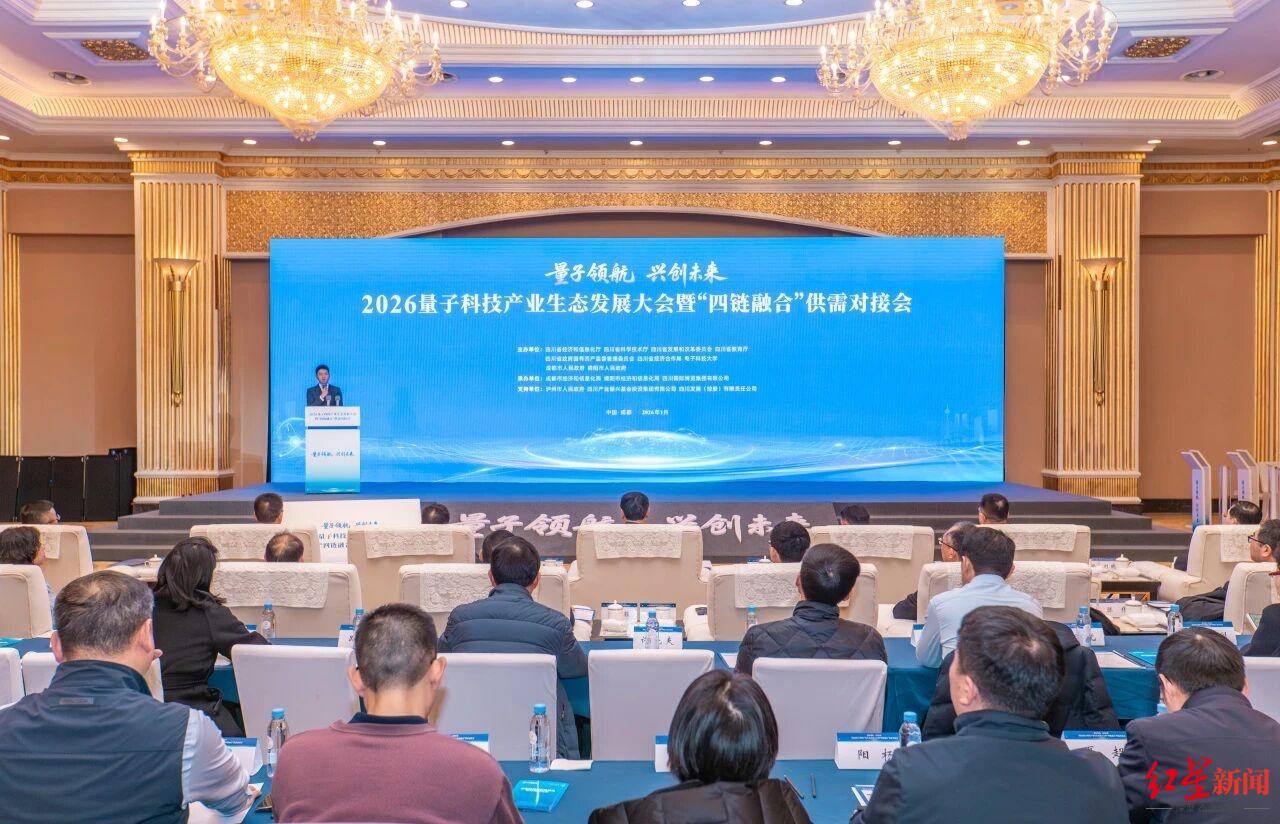
Group 1 - The Quantum Technology Industry Ecosystem Development Conference highlighted the launch of the first quantum technology industry fund in Sichuan, with a scale of 1 billion yuan, aimed at nurturing the quantum industry chain and enhancing the industrial cluster [2] - The "Quantum Corridor" plan was unveiled, which will create a 4-kilometer core industrial belt for quantum technology, integrating research, manufacturing, and demonstration areas to promote innovation and application [4] - Six key enterprises in the quantum technology industry signed intention agreements to settle in the Quantum Technology Building, which will serve as a core engine for the "Quantum Corridor" [6] Group 2 - The Quantum Technology Building will feature four functional areas to support the entire industry chain, with a focus on building China's first "quantum virtual power plant" in collaboration with Sichuan Chuaneng Smart Network [6] - The Jinjiang District has identified quantum technology as one of its six future industries, aiming to connect with top research institutions and focus on core technology breakthroughs and talent cultivation [6] - Future goals include optimizing supporting services, demonstrating application scenarios, and gathering high-end innovation resources to establish a leading area for quantum technology applications in Sichuan [6]