金色小熊巧克力

Search documents
金帝巧克力再回应擦边营销:此前不知可关闭AI推广优化功能
Nan Fang Du Shi Bao· 2026-01-13 12:28
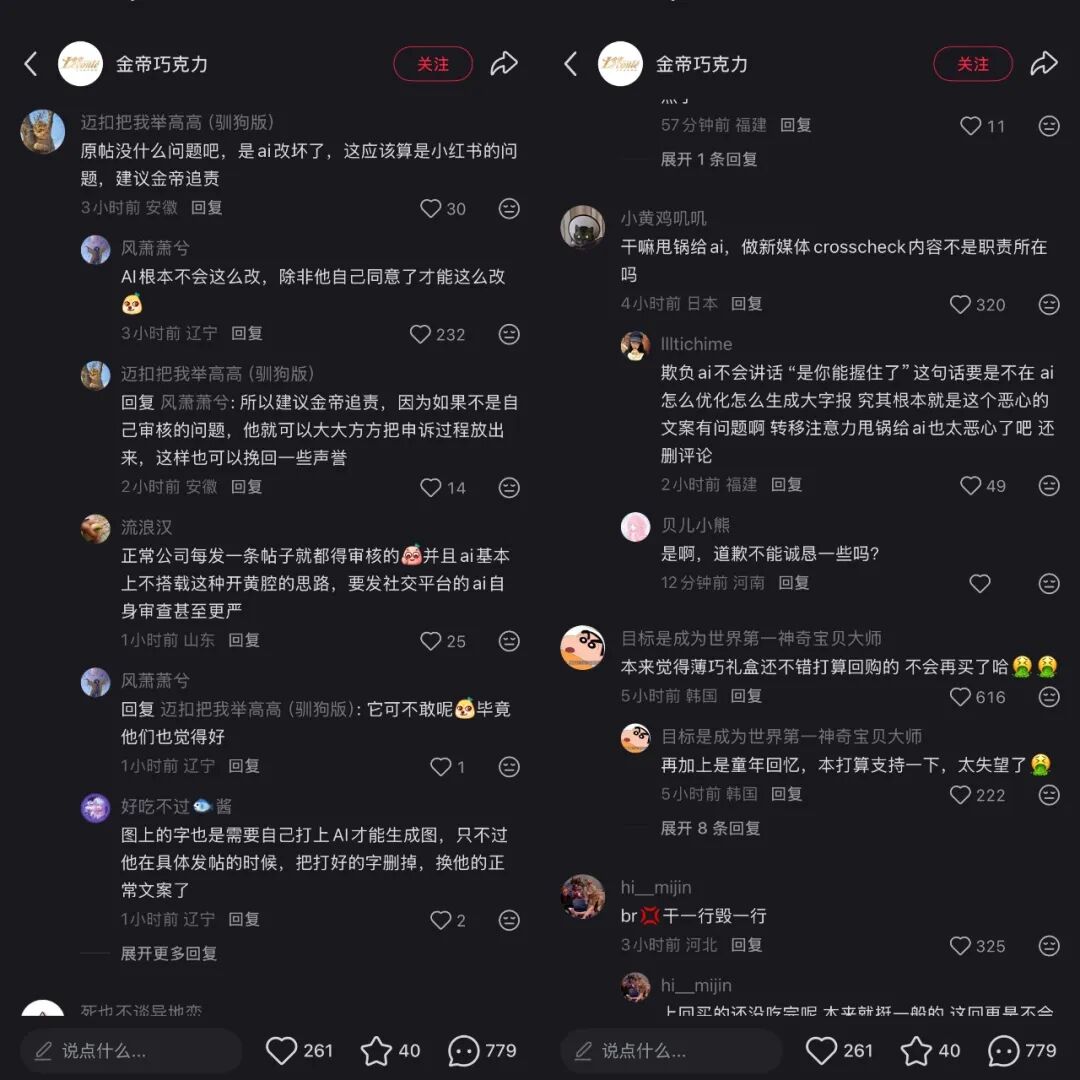
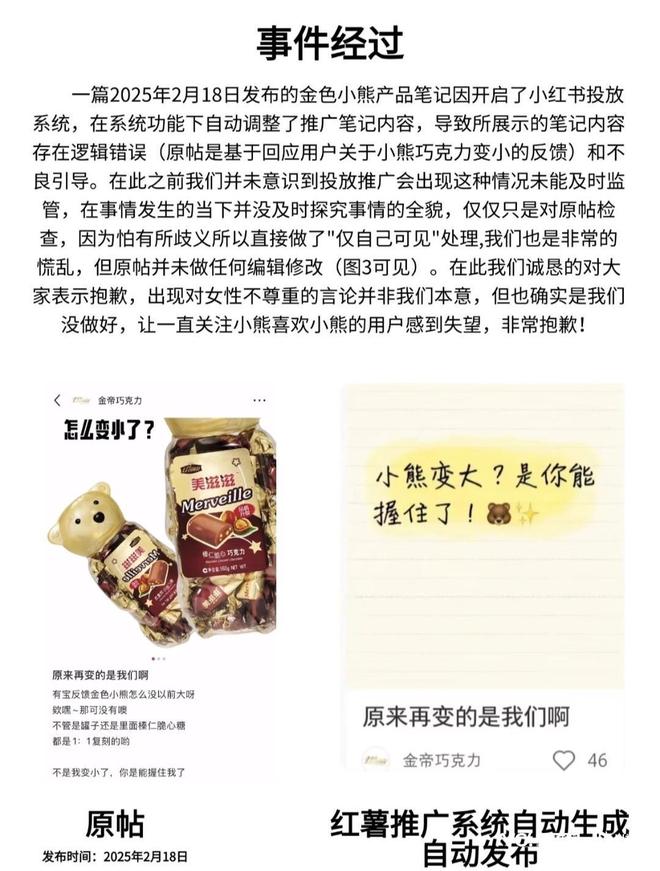
Core Viewpoint - The controversy surrounding the Chinese chocolate brand "Jindi" arose from a promotional post on Xiaohongshu, which some netizens perceived as having sexual innuendos and disrespecting women. The brand issued an apology, but skepticism remained among users [1][2]. Group 1: Incident Overview - The controversial statement was not part of the original content but was generated automatically by Xiaohongshu's algorithm during the promotion process [1][2]. - The post was published on February 18, 2025, and the promotional function was activated on December 24, 2025, leading to the automatic generation of the misleading cover text [1]. - The brand's team was unaware that the AI optimization feature could be manually turned off, and they could not preemptively filter sensitive words [2]. Group 2: Brand Response and Measures - Following the incident, the brand has taken immediate corrective actions, including halting all promotions of the post on Xiaohongshu [5]. - The brand is in communication with Xiaohongshu to improve the algorithmic processes to prevent misinterpretation of content in the future [5]. - An internal review of all previously published content is underway to ensure stricter oversight [5]. Group 3: Brand Background - "Jindi" is a product line under Jindi Food Co., Ltd., established in 2017 in Quanzhou, Fujian Province, focusing on food manufacturing [6]. - The company specializes in the production and sale of chocolate, confectionery, and snack foods, and has been operating under the brand name "Jindi" for over 20 years [6].

陷“擦边营销”争议,金帝巧克力道歉
Guo Ji Jin Rong Bao· 2026-01-13 07:14
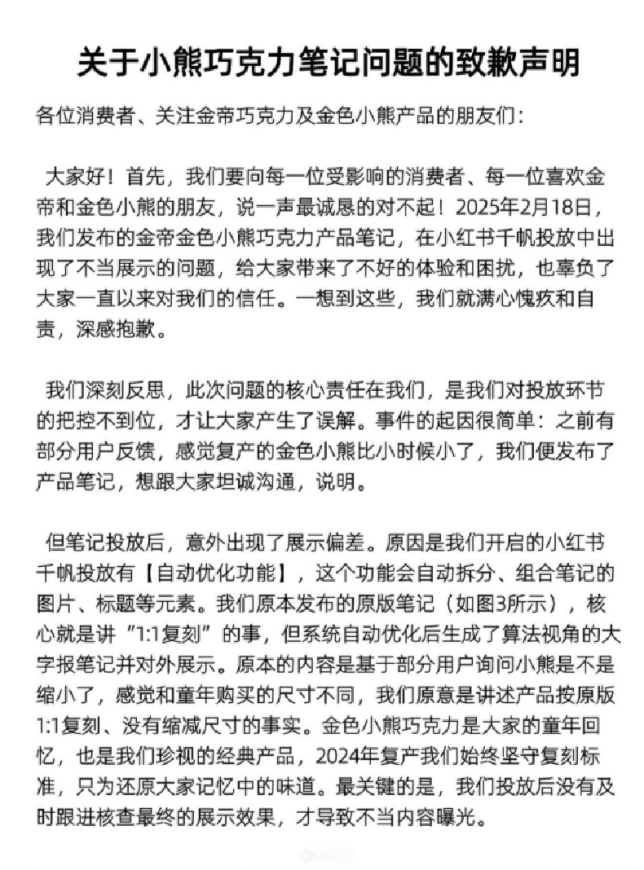
Core Viewpoint - The controversy surrounding Jindi Chocolate's marketing content has led to significant backlash from consumers, particularly due to perceived inappropriate implications in their promotional material [1][2][4]. Group 1: Marketing Controversy - Jindi Chocolate faced criticism for a promotional post on Xiaohongshu that included the phrase "The bear gets bigger? Is it something you can hold?" which was interpreted as having vulgar connotations [1][2]. - Consumers expressed discomfort with the marketing approach, with some parents stating they would not purchase the product for their children [2][6]. - In response to the backlash, Jindi Chocolate issued an apology, attributing the issue to an "automatic optimization feature" in their marketing system that generated inappropriate content without human oversight [2][4]. Group 2: Brand Response and Impact - Following the controversy, Jindi Chocolate took steps to hide the problematic content and paused all related marketing campaigns on Xiaohongshu, while forming a special team to review the marketing system [4][6]. - The initial apology did not quell the criticism, leading to a second apology that clarified the content was generated by the system and not manually created [4][6]. - The incident has negatively impacted Jindi Chocolate's brand reputation, with many consumers expressing their discontent by removing the brand from their shopping carts and unfollowing them on social media [6]. Group 3: Company Background - Jindi Chocolate, originally established in 1990 as Zhongliang Jindi Food (Shenzhen) Co., Ltd., was once a leading domestic chocolate brand [7]. - The company was acquired and restructured by Haolinjia Co., Ltd. in 2016, and is now planning a revival strategy for 2024 aimed at rekindling consumers' childhood memories associated with the brand [7].
陷“擦边营销”争议 金帝巧克力道歉
Guo Ji Jin Rong Bao· 2026-01-13 07:06
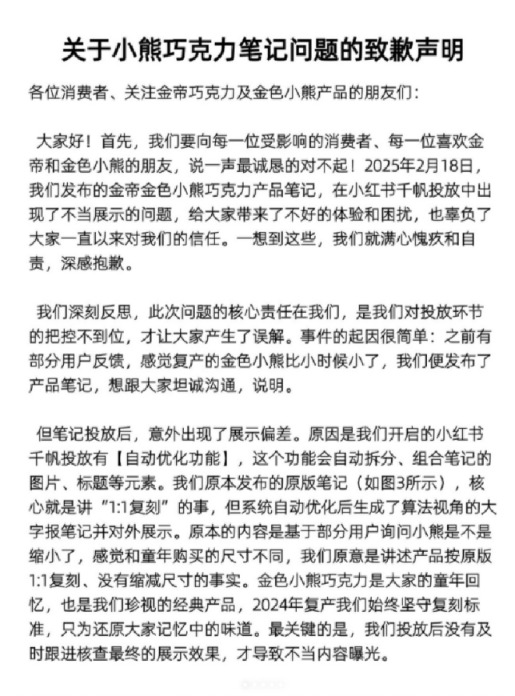
Core Viewpoint - The controversy surrounding Jindi Chocolate's marketing content has led to significant public backlash, particularly due to a perceived inappropriate advertisement that sparked discomfort among consumers [1][2]. Group 1: Marketing Controversy - Jindi Chocolate faced criticism for a promotional post on Xiaohongshu that included the phrase "The bear gets bigger? Is it something you can hold?" which was interpreted as having vulgar implications [1][2]. - Consumers expressed their disapproval, with some parents stating they would not purchase the product for their children due to the inappropriate nature of the marketing [2]. Group 2: Company Response - In response to the backlash, Jindi Chocolate issued an apology on January 12, explaining that the controversial content was generated by an "automatic optimization feature" of their marketing system, which led to unintended display of inappropriate material [2][4]. - The company has since hidden the related content, paused all marketing related to the golden bear chocolate, and formed a special team to review the risks associated with their marketing system [4]. Group 3: Public Reaction - The initial apology did not quell the controversy; instead, it intensified criticism, with many consumers dismissing the "automatic optimization" explanation as an excuse [5]. - Following the backlash, Jindi Chocolate retracted their first apology and issued a second one, clarifying that the controversial image was neither manually written nor AI-generated, and that the content could not be monitored during the marketing process [5]. Group 4: Brand Impact - The incident has negatively impacted Jindi Chocolate's brand reputation, with many consumers expressing their discontent in the comments section of the apology, stating they have removed the brand from their shopping carts and unfollowed it [7]. - Jindi Chocolate, originally established in 1990 and a leading domestic chocolate brand, was acquired by Haolinjia Co. in 2016 and is currently attempting to revive its brand by appealing to consumers' childhood memories [8].
金帝巧克力擦边营销翻车,这个锅AI不背
Feng Huang Wang· 2026-01-12 12:02
Core Insights - The marketing incident involving Jindi Chocolate has sparked public outrage due to a controversial slogan that was perceived as inappropriate, leading to a backlash against the brand [1][4] - Jindi Chocolate's initial response was to attribute the issue to the "automatic optimization" of the advertising platform, which did not resonate well with consumers [1][6] Group 1: Incident Overview - The controversy originated from a product note for the golden bear chocolate, which was intended to address consumer concerns about the size of the product [4] - The automated system displayed the phrase "Is the bear getting bigger? It's you who can hold it!" in a large format, which was criticized as "borderline marketing" [4][6] - Following the backlash, Jindi Chocolate issued an apology on January 12, acknowledging a lack of control over the advertising process [4][6] Group 2: Company Response and Accountability - Jindi Chocolate admitted to significant oversights in marketing supervision and management, leading to the incident [6][8] - The company has taken corrective measures, including halting related advertising and forming a special team to assess risks in the advertising system [6] - Consumers expressed confusion over the brand's handling of the situation, highlighting a fundamental issue in the marketing content review and monitoring process [6][8] Group 3: Industry Implications - The incident underscores the dual-edged nature of AI in marketing, where it can enhance efficiency but also magnify errors if not properly supervised [7][8] - The reliance on algorithms and automated systems necessitates robust internal management to ensure accountability and oversight [7][8] - The event serves as a cautionary tale for brands, emphasizing the importance of maintaining a clear communication strategy and a strong ethical framework in marketing practices [8]