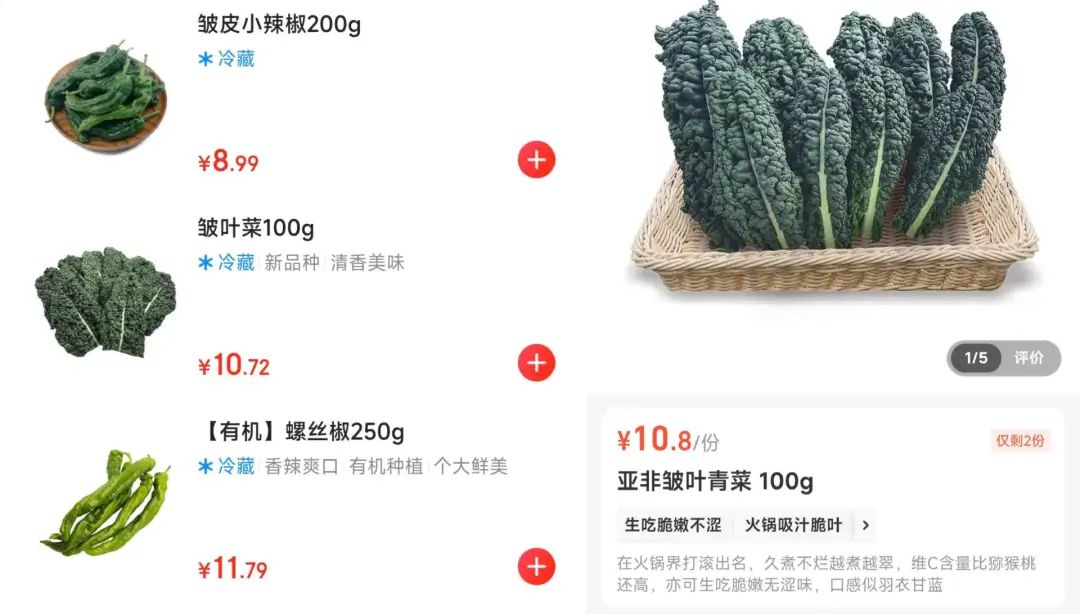
金雀花

Search documents
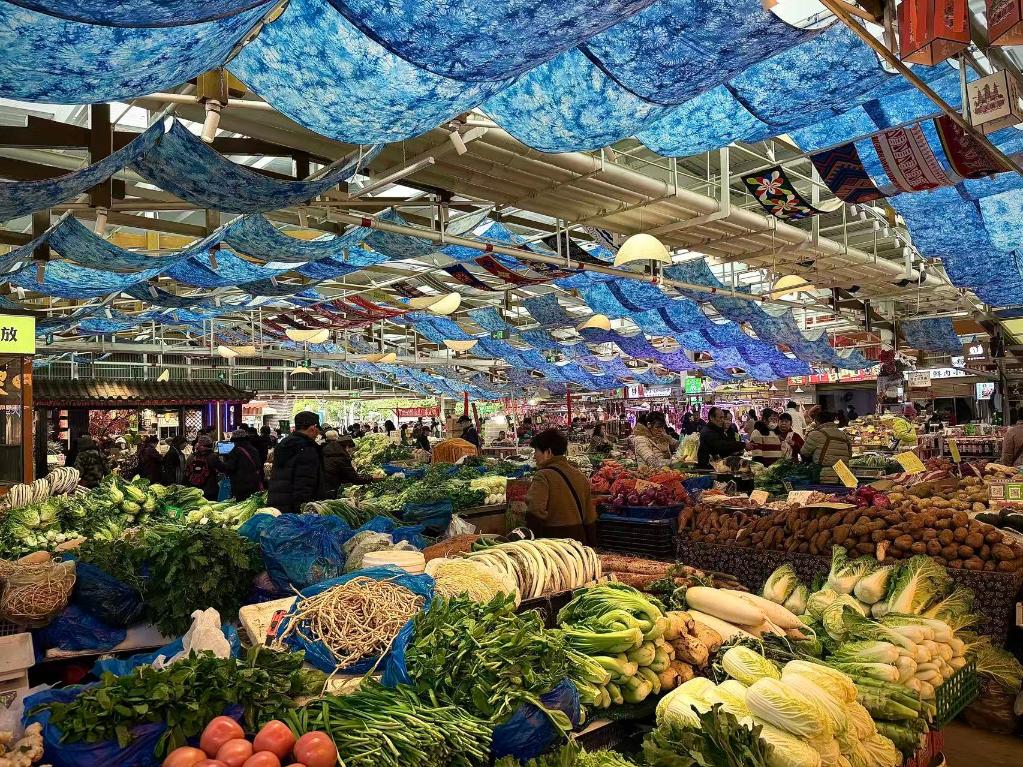
昆明大观篆新农贸市场:文旅融合焕新老市集
Xin Hua She· 2026-01-27 11:48
Core Insights - The Daguanzhuan New Agricultural Market in Kunming has become a vibrant hub for both locals and tourists, showcasing local produce and culinary delights [1][2] - The market has successfully transformed from a traditional agricultural market into a comprehensive consumer space that integrates culture, leisure, and shopping [2][3] Group 1: Market Overview - The market covers an area of approximately 20 acres and attracts an average daily foot traffic of 50,000, with peak holiday traffic reaching 100,000, nearly half of which consists of out-of-town visitors [2] - The market features over 600 vendors, offering a diverse range of products including fresh produce, local specialties, and cultural experiences [2] Group 2: Transformation and Upgrades - The market has undergone multiple renovations to meet the evolving consumer demands, blending traditional market elements with modern tourism features [2] - By August 2025, the second phase of the market's project will be completed, enhancing infrastructure and optimizing space layout based on a "category zoning + scene interaction" principle [2] Group 3: Cultural and Educational Initiatives - The market has partnered with Yunnan Agricultural University to establish a research and study service station, turning the market into a practical classroom [3] - A Citywalk route has been introduced in collaboration with local authorities, linking the market with urban cultural landmarks to enrich the visitor experience [3]
人文经济激活消费新动能丨昆明大观篆新农贸市场:文旅融合焕新老市集
Xin Hua Wang· 2026-01-26 10:44
Core Insights - The Daguanzhuan New Agricultural Market in Kunming is successfully integrating cultural tourism with traditional market experiences, attracting a significant number of visitors and enhancing local consumption [1][4]. Group 1: Market Overview - The Daguanzhuan New Agricultural Market covers an area of approximately 20 acres and has become a popular destination for both locals and tourists, offering a variety of fresh produce and local specialties [1][3]. - The market experiences an average daily foot traffic of 50,000 visitors, with peak holiday attendance reaching up to 100,000, nearly half of whom are from outside the region [4]. Group 2: Transformation and Upgrades - The market has undergone multiple renovations to meet the evolving consumer demands, blending traditional market elements with a tourist-friendly environment [4]. - By August 2025, the second phase of the market's project will be completed, enhancing infrastructure and optimizing space layout according to the "category zoning + scene interaction" principle [4]. Group 3: Business and Consumer Experience - Currently, over 600 merchants operate within the market, offering a diverse range of services that include dining, shopping, and cultural experiences, transforming it into a comprehensive consumption space [6]. - The market has partnered with Yunnan Agricultural University to establish a research and study service station, creating an experiential classroom, and has introduced a Citywalk route to connect the market with urban cultural landmarks [6].

50-150元/公斤,昆明市场春菜上市了!
Xin Lang Cai Jing· 2026-01-18 21:31
Group 1 - The market for spring vegetables, specifically Jinquehua (金雀花) and Xiangchun (香椿), is beginning to emerge in Kunming, with prices ranging from 50 to 120 yuan per kilogram for Jinquehua and 70 to 150 yuan per kilogram for Xiangchun [1][5] - A specialized wild vegetable store reports selling Jinquehua at 100 yuan per kilogram and Xiangchun from Yiliang Zhushan at 150 yuan per kilogram, indicating that current supplies are mainly sourced from other regions within the province, resulting in lower quality and prices not yet reaching their peak [5] - The Daguanzhuan New Agricultural Market has a limited number of vendors selling these spring vegetables, and many merchants believe it is still too early for spring vegetables, affecting both quality and pricing, which in turn impacts sales [6]
“中产丑菜”,卖爆了?
3 6 Ke· 2025-07-24 12:03
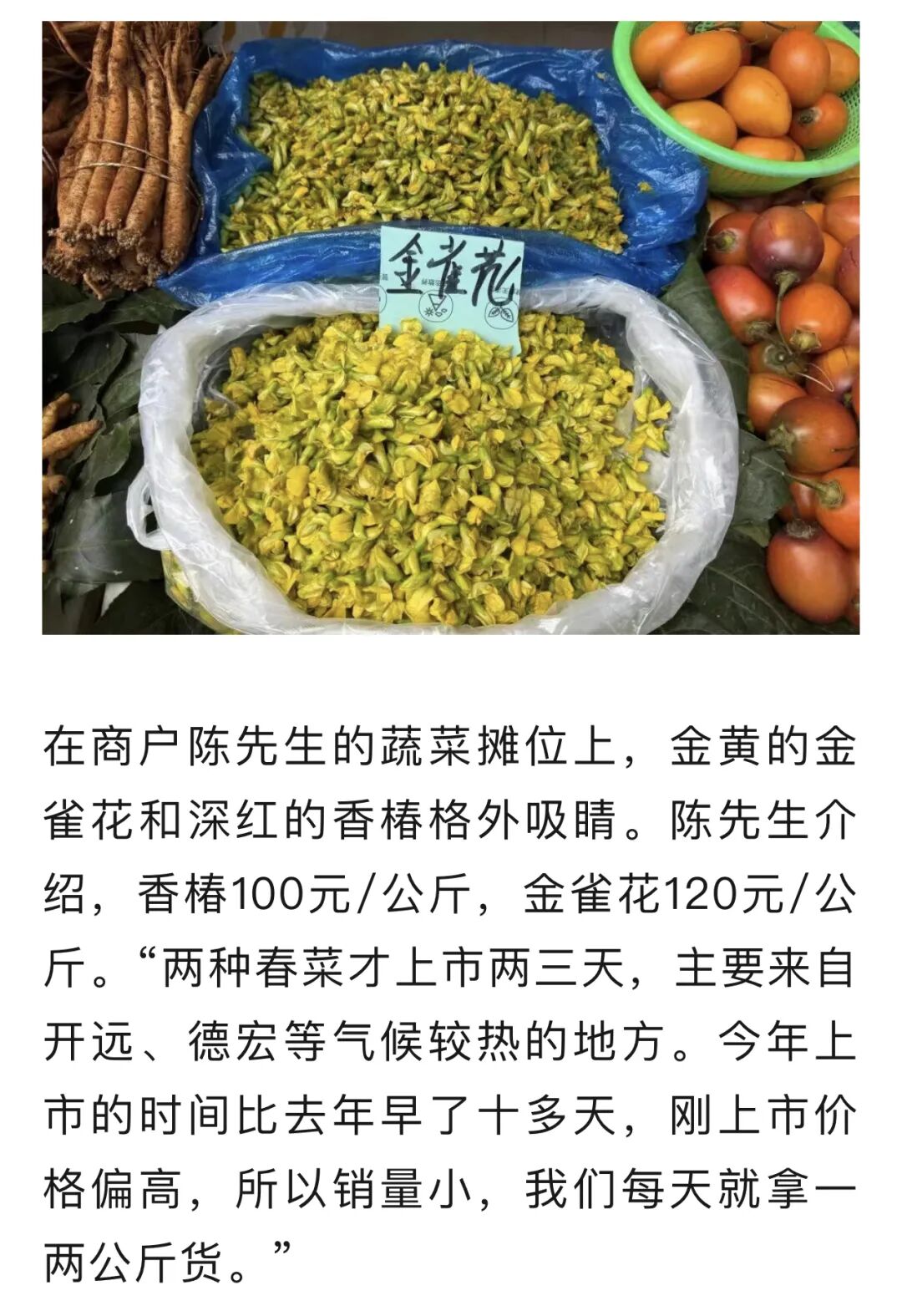
Core Insights - The return of the "wrinkled leaf vegetable" has been marked by significant sales growth, with a reported 80% month-on-month increase since its launch on Hema Fresh, and over 1,000 orders in the last month [1][6] - The introduction of this vegetable follows a trend of high-priced, unique vegetables entering the market, similar to the previously popular "ban lan gen" vegetable [6][24] - Both the wrinkled leaf vegetable and ban lan gen are considered "laboratory vegetables," developed through scientific breeding methods to meet consumer preferences [7][8] Product Development and Market Introduction - The wrinkled leaf vegetable was developed by Wuhan Asia-Africa Seed Industry Co., Ltd., with a focus on creating a variety that retains the nutritional benefits of kale while catering to Chinese culinary preferences [11][12] - The development process took over a decade, with successful cultivation achieved in 2020, leading to its market introduction in late 2022 [11][12] - The vegetable's market presence is still limited, with a current planting area of 5,000 acres, and plans to expand to 10,000 acres [27] Consumer Reception and Sales Performance - The wrinkled leaf vegetable is priced at approximately 10.8 yuan per 100g, making it relatively expensive compared to traditional vegetables [15][26] - Despite its novelty, sales figures indicate that it has not yet reached the popularity of more established vegetables, with only 1,000 monthly orders compared to 10,000 for more common varieties [26][27] - Consumer feedback on the taste has been mixed, with some describing it as needing specific cooking methods to enhance its flavor [28][32] Market Trends and Future Outlook - The trend of introducing unique vegetables is driven by consumer demand for health, taste, and novelty, with platforms like Hema and Dingdong Maicai actively seeking out new varieties [22][24] - The success of these new vegetables will depend on their ability to meet consumer expectations for taste and quality, as well as effective market supply management [33] - The potential for these vegetables to become mainstream depends on their adaptability to different regional tastes and the overall market saturation of unique vegetable varieties [33]