铁路12306服务

Search documents
春运在即多部门出台便民措施加强服务 保障百姓更好便捷出行
Yang Shi Wang· 2026-01-30 02:59
Group 1 - The core point of the article is that the 2026 Spring Festival travel season will see a record high of 9.5 billion trips, starting from February 2 to March 13, lasting for 40 days [1] - During the 2026 Spring Festival travel period, self-driving will dominate travel modes, accounting for about 80% of the total [3] - The railway sector expects to transport 540 million passengers during the Spring Festival, with a peak day capacity of over 14,000 trains, representing a 5.3% increase in seating capacity compared to the previous year [5] Group 2 - New services introduced by the railway include a phone booking service for elderly passengers over 60 and a free refund policy for mistakenly purchased tickets within 30 minutes [7][9] - The road travel sector will enhance service guarantees, especially for popular tourist destinations and rural transport, with small passenger cars exempt from tolls during the Spring Festival [12] - The civil aviation sector anticipates a passenger volume of 95 million, a year-on-year increase of approximately 5.3%, with a focus on increasing flights to hub airports and popular tourist destinations [17] Group 3 - The water transport sector will strengthen capacity on key routes, such as the Qiongzhou Strait between Hainan and Guangdong, and continue implementing ticket reservation systems [20] - Various departments will coordinate weather warnings and emergency responses to ensure safe travel, while also managing the transportation of essential goods during the Spring Festival [23] - The expansion of high-speed rail pet transportation services will include 67 new stations, increasing the total to 110, with specific booking procedures and pricing structures outlined [26][29]

2026春运迎大考:95亿人次怎么出行?这些保障给出硬核答案
Jing Ji Guan Cha Wang· 2026-01-29 07:21
Core Viewpoint - The 2026 Spring Festival travel season in China is expected to see a record high of 9.5 billion trips, lasting from February 2 to March 13, 2026, over a period of 40 days [1]. Group 1: Travel Volume and Modes - The total cross-regional personnel flow during the Spring Festival is projected to reach 9.5 billion trips, marking a historical peak [1]. - Self-driving travel will dominate, accounting for approximately 80% of the total travel volume [2][6]. - Railway passenger transport is expected to reach 540 million trips, while civil aviation is projected to handle 95 million trips, both surpassing previous records [2][6]. Group 2: Weather Conditions - The overall weather during the Spring Festival travel period is expected to exhibit significant fluctuations, with more precipitation in the north and less in the south [2]. - Two major cold air masses are anticipated to impact the country, potentially causing strong temperature drops and snowfall in various regions [4]. Group 3: Railway Services and Upgrades - The National Railway Group anticipates a passenger transport volume of 540 million, with over 14,000 passenger trains expected to operate on peak days, reflecting a 5.3% increase in capacity [3]. - New services include a dedicated phone booking service for elderly passengers and a free ticket refund policy within 30 minutes of purchase [5]. Group 4: Road and Air Transport Measures - The Ministry of Transport plans to enhance capacity for popular tourist destinations and rural transport during the Spring Festival [6]. - The Civil Aviation Administration expects a 5.3% year-on-year increase in passenger transport, with an average of 19,400 flights per day [6]. Group 5: Water Transport Safety - The transport department will strengthen capacity on key maritime routes and ensure safety measures are in place for adverse weather conditions [7]. Group 6: Travel Tips and Infrastructure - As of the end of 2025, 71,500 electric vehicle charging stations have been established across national highways, with an additional 20,000 added in 2025 [8]. - Travelers are advised to monitor weather forecasts and traffic updates closely, and to plan their journeys accordingly [9].
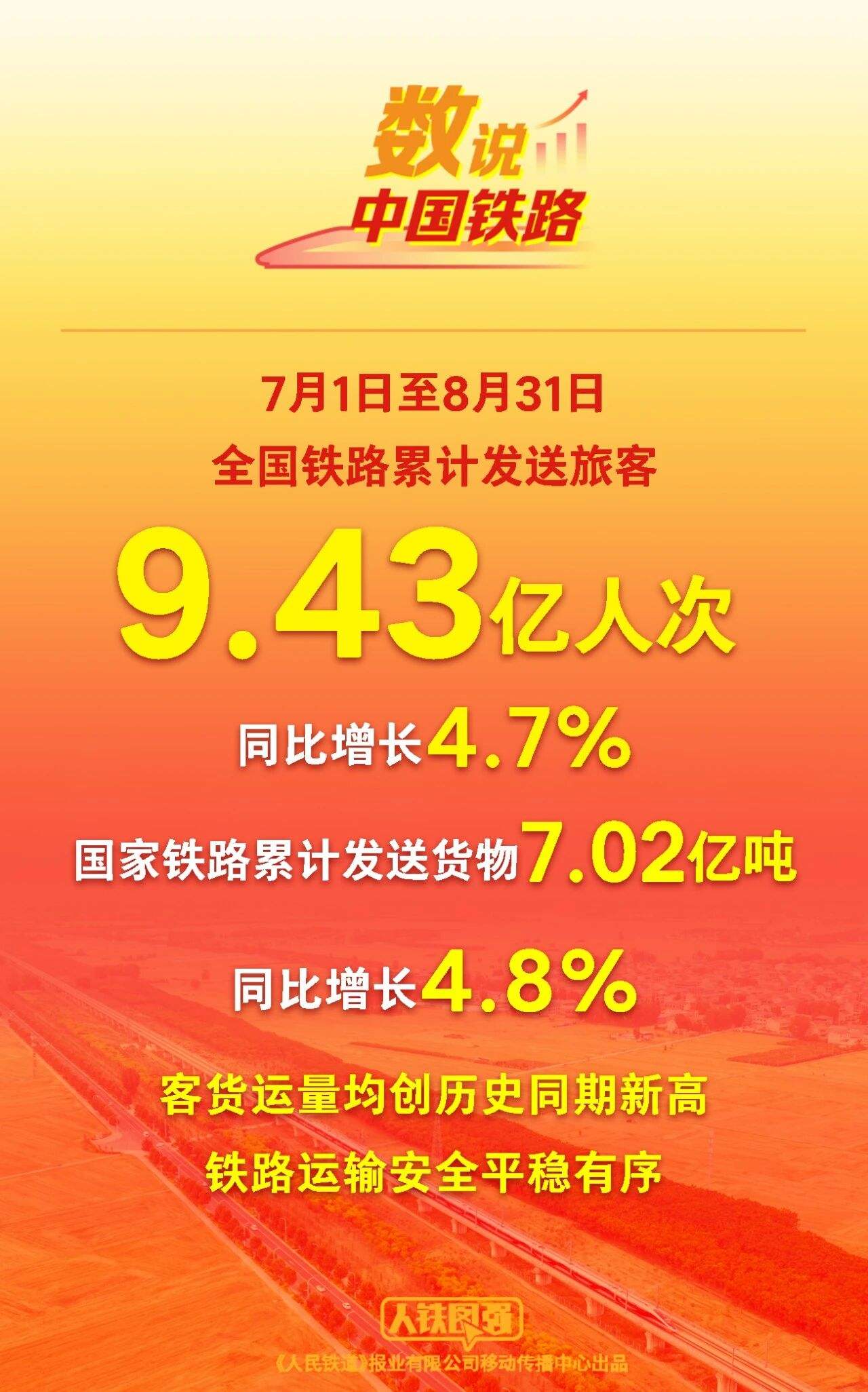
全国铁路暑运累计发送旅客9.43亿人次 同比增长4.7%
智通财经网· 2025-09-01 05:44
Core Insights - The railway summer transportation period from July 1 to August 31 concluded successfully, with a total of 943 million passengers transported, marking a year-on-year increase of 4.7% [1] - The total freight volume reached 702 million tons, also reflecting a year-on-year growth of 4.8%, achieving historical highs for both passenger and freight transport [1] Passenger Transport - The historical peak in passenger volume was achieved, with an average of 11,330 passenger trains operated daily, representing an 8% increase year-on-year [6] - The railway system effectively utilized big data from ticket sales to optimize train schedules, enhancing capacity during peak travel times and meeting passenger demand [6] - The number of foreign passengers transported reached 3.484 million, a significant increase of 23.9% year-on-year, facilitated by the relaxation of visa policies [6] Tourism Integration - The railway launched various themed tourist trains, including family tours and wellness trips, with a total of 579 tourist trains operated during the summer, up 31% from the previous year [7] - New routes connecting scenic spots were introduced, enhancing travel experiences and stimulating tourism-related economic growth [7] Passenger Experience Enhancement - The railway improved its ticketing services, with 19.88 million student tickets sold during the summer, ensuring better travel access for students [8] - Services such as internet meal ordering and enhanced coordination with local transport systems were expanded to improve the overall travel experience [8] Freight Transport Stability - The railway focused on energy supply transportation, sending 243 million tons of coal during the summer, ensuring stable coal supply for power generation [9] - Key materials for national needs, including food and fertilizers, were prioritized in transport, with a "green channel" established for efficient delivery [9] - International freight services remained stable, with consistent operations of international cargo trains, supporting the stability of global supply chains [9] Safety and Emergency Response - The railway maintained safety during extreme weather conditions, issuing 355 weather alerts and deploying over 500,000 personnel for inspections [9] - Measures were taken to ensure passenger safety and service continuity during adverse weather, including train schedule adjustments and timely communication of service changes [9]