
银联二维码

Search documents
跨境联通 无缝接轨:银联如何织就一张全球支付网络
Xin Hua Wang· 2026-01-21 01:30
Group 1 - The core viewpoint of the articles emphasizes UnionPay's evolution from a service primarily for Chinese cardholders to a global payment network, showcasing its commitment to expanding its international presence and adapting to the mobile payment trend [1][2][4]. Group 2 - UnionPay's internationalization began in 2004 in Hong Kong, aiming to address the payment challenges faced by Chinese travelers abroad, and has since expanded to cover 183 countries and regions with over 75 million merchants accepting UnionPay [2]. - The establishment of UnionPay International in 2012 marked a significant step in its global strategy, leading to a comprehensive product matrix that includes mobile payment solutions, enhancing its competitive edge [2][3]. - UnionPay has issued over 200 million cards in 83 overseas markets, with a notable penetration rate in the Asia-Pacific region, and has launched over 200 cooperative wallets in 37 countries [2][3]. Group 3 - UnionPay employs a dual-track strategy for market expansion, utilizing G2G (government-to-government) models in regulated markets and N2N (network-to-network) models in mature commercial markets to facilitate efficient connections with local payment networks [3]. - The company is also involved in building a new "four-party model" open ecosystem, acting as a hub connecting various stakeholders in the payment industry, exemplified by projects like the QR code interoperability between China and Indonesia [3][4]. Group 4 - UnionPay's role has evolved from a "builder" of payment infrastructure to an "enabler" of industry standards, exporting its technology and standards to enhance digital payment capabilities in countries like Laos and Thailand [4]. - The company is actively participating in national infrastructure projects, such as the upcoming cross-border QR code unified gateway set to launch in 2025, which aims to improve cross-border payment efficiency [3][4]. Group 5 - UnionPay's services cater to both individual consumers and businesses, offering a range of products including standard credit and debit cards, as well as specialized cards for cross-border tourists and students [5][6]. - The introduction of mobile payment tools like UnionPay Mobile Pay and QR code wallets allows cardholders to enjoy convenient payment services in over 100 countries [6]. Group 6 - To enhance the payment experience for foreign visitors in China, UnionPay has launched products like the "Jinxiu Zhonghua Card" and the "Nihao China" app, which integrates various services to facilitate seamless transactions [7]. - UnionPay is also promoting the integration of foreign wallets into the Chinese payment ecosystem, allowing users to pay using local payment habits, which has shown significant growth in transaction volumes [7]. Group 7 - UnionPay is positioning itself as a digital bridge connecting different currencies, payment habits, and cultures, contributing to a more open and inclusive global payment ecosystem [8]. - The company's development practices highlight that the competitiveness of a payment network in the digital age relies on both the breadth of coverage and the depth of ecosystem connections [8].
支付互联赋能全球协同 银联二维码生态聚力谱新篇
Shang Hai Zheng Quan Bao· 2026-01-20 18:53
Core Insights - The World Economic Forum emphasizes the importance of collaborative models for global cooperation, with UnionPay positioning itself as a key player in global payment services through a new "four-party model" and QR code interoperability [1] Group 1: Cross-Border Payment Trends - The deepening of global economic integration has led to increased demand for efficient, convenient, and secure cross-border payment services, particularly in the context of the Belt and Road Initiative [2] - QR code payments are becoming the mainstream payment method in emerging markets due to their low cost and ease of promotion, with significant adoption in Southeast Asia, Brazil, and Turkey [2] Group 2: UnionPay's Cross-Border Payment Strategy - UnionPay's approach to cross-border QR code interoperability is driven by a combination of policy alignment, innovative models, and technological empowerment [3] - The company has introduced a dual-track mechanism of Government-to-Government (G2G) and Network-to-Network (N2N) cooperation to facilitate payment standard recognition and system integration in various markets [3] Group 3: Consumer Experience and Market Expansion - The core value of payment interoperability is reflected in enhanced consumer experiences, allowing for seamless cross-border transactions without the need for currency exchange or unfamiliar payment tools [4][5] - UnionPay has established QR code interoperability partnerships in approximately 50 countries, with significant growth in cross-border payment volumes, evidenced by a 124% increase in domestic users' transactions abroad and a 100% increase in foreign users' transactions in China in 2025 [5] Group 4: Future Outlook - UnionPay aims to strengthen its global acceptance network to support dual circulation in domestic and international markets, focusing on regions like Southeast Asia, Central Asia, and Africa [6] - The company plans to accelerate the development of a new "four-party model" for cross-border payments, integrating quality resources across the payment industry to foster an open and collaborative global payment ecosystem [6]
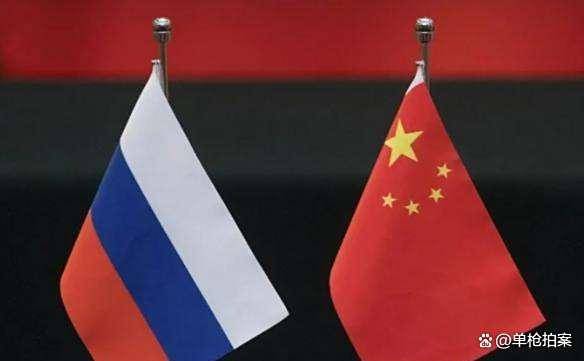
中俄免签刚实行不久,新状况就出现了?
Sou Hu Cai Jing· 2025-10-06 17:04
Core Insights - The implementation of the visa-free policy between China and Russia has led to a significant increase in cross-border activities, particularly in the northeastern regions of China, showcasing both opportunities and challenges for local businesses and infrastructure [1][10]. Group 1: Economic Impact - The search volume for flights from Moscow to Shanghai surged to nearly double compared to the same period last year, indicating a strong demand for travel and commerce [3]. - Rental prices for accommodations in Suifenhe have increased by 30% year-on-year, reflecting the rising demand from Russian visitors [5]. - The influx of Russian currency (Ruble) has created challenges for local businesses, as they struggle to exchange cash for Chinese Yuan, impacting daily transactions [6][9]. Group 2: Healthcare System Strain - The number of Russian patients in Suifenhe's hospitals has increased significantly, leading to challenges in communication and service delivery [8]. - Local medical facilities are facing financial strain due to the lack of integration with the Russian healthcare insurance system, requiring them to cover additional costs [12]. Group 3: Cultural Exchange and Social Dynamics - The blending of cultures is evident in local markets, where Russian products and customs are becoming more prevalent, but this also raises questions about the sustainability of such rapid cultural integration [1][5]. - Marriage agencies are experiencing a surge in activity, with cross-border marriages being facilitated at an unprecedented pace, highlighting the social implications of the visa-free policy [3]. Group 4: Infrastructure and Payment Systems - The existing payment systems are inadequate for the volume of transactions occurring, with many Russian tourists facing difficulties using their MIR cards in China [9][15]. - There is a need for improved infrastructure, such as the establishment of intelligent currency exchange terminals and better integration of payment systems between the two countries [17][20]. Group 5: Educational Challenges - Local schools are adapting to the influx of Russian students by repurposing facilities and struggling to recruit qualified Russian language teachers, indicating a strain on educational resources [13][14].

银联七年公益,让每一次支付都点亮梦想
梧桐树下V· 2025-08-24 04:07
Core Viewpoint - The article highlights the "UnionPay Poetry POS Machine" initiative, which has successfully brought poetry written by children from rural China to Thailand, fostering cultural exchange and charitable contributions [1][5][7]. Group 1: Initiative Overview - The "UnionPay Poetry POS Machine" was launched in 2019 and has now expanded internationally, marking its first overseas event in Bangkok, Thailand, coinciding with the 50th anniversary of China-Thailand diplomatic relations [1][5]. - The initiative aims to connect different cultures through poetry, allowing children from rural areas to share their creative expressions with a broader audience [5][7]. Group 2: Event Details - The event in Bangkok featured a vibrant display of Chinese lanterns adorned with poetry from Chinese children, creating a poetic atmosphere during the Chinese Lantern Festival [2][5]. - Visitors could donate using UnionPay cards at the Poetry POS Machine, receiving a bilingual poetry receipt, with proceeds directed towards improving children's education and living conditions in Thailand [2][5]. Group 3: Impact and Achievements - Over the past seven years, the initiative has reached over 400 rural schools across various provinces in China, helping more than 7,000 children access arts education and collecting over 6,000 poems [7]. - The program has also led to the publication of a poetry collection titled "Little Poets in the Mountains" and established the first UnionPay public library and 114 reading corners in rural areas [7].

二维码跨境支付互联互通提速 新“四方模式”助力拓展“朋友圈”
Shang Hai Zheng Quan Bao· 2025-04-29 20:02
Core Insights - The article highlights the rapid expansion of QR code cross-border payment systems, enhancing the payment experience for both domestic and foreign tourists, particularly during the upcoming holiday season [1][2][3] Group 1: Cross-Border Payment Expansion - UnionPay's QR code acceptance has reached 46 countries and regions, with over 10 million overseas merchants now accepting QR payments, creating a diverse cross-border payment ecosystem [1][2] - The implementation of cross-border QR code payment interoperability is being accelerated through partnerships with various countries, including Thailand, Cambodia, and Vietnam, allowing seamless payment experiences for tourists [2][3] Group 2: Strategic Partnerships and Models - UnionPay is adopting a "new four-party model" that integrates traditional card networks with digital wallet providers and payment service providers, enhancing the cross-border payment infrastructure [4] - The company is leveraging government-to-government (G2G) and network-to-network (N2N) cooperation models to maximize the scale and impact of its cross-border payment solutions [3][4] Group 3: Market Growth and Projections - The QR code payment interoperability is expected to significantly boost consumption, especially during peak travel seasons, with projections indicating a substantial increase in payment frequency and volume [3][6] - UnionPay plans to deepen its acceptance network and expand into Southeast Asia and Latin America, aiming to add millions of new overseas QR code acceptance merchants by the end of 2025 [6][7]