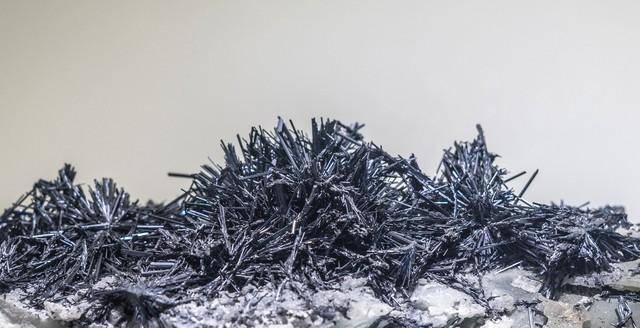
锑化铟

Search documents
中国又一超级王牌,比稀土稀缺100倍!或将领导新一轮半导体革命
Sou Hu Cai Jing· 2026-01-24 14:12
Core Insights - The article discusses the significance of antimony, gallium, and germanium, which are less abundant than rare earth elements but are crucial for various high-tech applications. China produces over 70% of the global supply of these metals, primarily extracted from industrial waste rather than mined directly [1][3][4]. Group 1: Metal Abundance and Importance - Gallium and germanium are extremely rare, with gallium's abundance in the earth's crust at 0.0015% and germanium at 0.00015%, making them significantly less common than iron and aluminum [3][4]. - Antimony, while having independent deposits mainly in China and Russia, is also scarce, with a crustal abundance of only 0.0001% [3][4]. - These metals are essential for various applications, including semiconductors, military technology, and advanced materials [6][7]. Group 2: China's Industrial Advantage - China has developed a robust aluminum and zinc smelting industry, which allows for the recovery of gallium and germanium from waste products [9][10]. - The country has made significant advancements in refining techniques, achieving a high purity level of gallium (99.9999%) necessary for semiconductor applications [12][13]. - By 2020, China's high-purity gallium production accounted for over 90% of the global supply, showcasing its industrial capabilities [13]. Group 3: Technological Developments and Market Dynamics - The third-generation semiconductor materials, such as silicon carbide and gallium nitride, are becoming increasingly important, with gallium being a critical component [24][25]. - In 2023, the domestic market for power electronics using these materials surpassed 7 billion yuan, growing at an annual rate of over 20% [27]. - Chinese companies are achieving breakthroughs in core technologies, enhancing production efficiency and quality in semiconductor materials [28][30]. Group 4: Export Controls and Market Impact - In 2023, China implemented export controls on gallium, germanium, and antimony, requiring licenses for exports, which has significantly reduced export volumes [31][33]. - The price of antimony surged from around $10,000 per ton at the beginning of the year to $25,000 by the end, reflecting the impact of these controls on global markets [34]. - The U.S. Treasury Secretary expressed concerns about China's control over rare metals, indicating a potential shift in the global supply chain dynamics [34][36]. Group 5: Future Outlook - The article suggests that rebuilding a rare metal supply chain in the West will be a long and challenging process, requiring significant industrial infrastructure and expertise [36][39]. - China's strategy appears to focus on moving up the value chain from raw materials to high-end products, aiming for greater control and profitability in the global market [40].


锑管制升级!中国握紧高科技命脉,美国兵工厂开始翻箱倒柜
Sou Hu Cai Jing· 2026-01-04 13:39
Core Viewpoint - Recent regulations in China impose penalties for illegal exports of antimony products, highlighting the strategic importance of antimony as a key resource alongside rare earths in the context of changing international dynamics [1] Group 1: Antimony Overview - Antimony (symbol Sb) is a silver-gray brittle metal that plays a crucial role in various modern applications, particularly due to its unique ability to enhance the hardness of lead alloys by three times with just 0.5% addition [3] - In semiconductor manufacturing, indium antimonide is essential for infrared detectors and thermal imaging devices, while military applications rely on its alloy properties for armor-piercing coatings and missile gyroscopes [4] Group 2: Resource Reality - China holds approximately 32% of the world's known antimony reserves, but more significantly, it supplies about 60% of global antimony products, a concentration even higher than during the peak of rare earth shortages [6] - The U.S. is entirely dependent on imported antimony, primarily from China, raising concerns in the West about the concentrated nature of the global antimony supply chain [6] Group 3: Technological Advancements - Over the past decade, China has made significant advancements in antimony deep processing technologies, achieving 99.999% purity levels suitable for chip manufacturing and developing high-value nanostructured antimony oxide flame retardants [7] - The emergence of gallium antimonide semiconductor materials is in pilot testing, potentially breaking foreign monopolies and shifting the focus from raw material exports to technology-driven value addition [7] Group 4: Global Supply Chain Impact - The introduction of new regulations has triggered a chain reaction in international markets, with the U.S. Department of Defense listing antimony as a critical material shortage and initiating strategic reserve assessments [9] - The EU is accelerating investments in antimony mining in the Democratic Republic of Congo, although infrastructure development will take 3-5 years [9] Group 5: Future Directions - Resource management is a double-edged sword, requiring a balance between national interests and market credibility, with potential developments including a tiered management system distinguishing between raw materials, semi-finished products, and high-value products [11] - The upgrade in antimony management reflects a shift from raw material sales to technology exports, with international buyers increasingly willing to pay for patent licenses rather than just raw materials [12]