
稀散金属

Search documents
中国又一超级王牌,比稀土稀缺100倍!或将领导新一轮半导体革命
Sou Hu Cai Jing· 2026-01-24 14:12
Core Insights - The article discusses the significance of antimony, gallium, and germanium, which are less abundant than rare earth elements but are crucial for various high-tech applications. China produces over 70% of the global supply of these metals, primarily extracted from industrial waste rather than mined directly [1][3][4]. Group 1: Metal Abundance and Importance - Gallium and germanium are extremely rare, with gallium's abundance in the earth's crust at 0.0015% and germanium at 0.00015%, making them significantly less common than iron and aluminum [3][4]. - Antimony, while having independent deposits mainly in China and Russia, is also scarce, with a crustal abundance of only 0.0001% [3][4]. - These metals are essential for various applications, including semiconductors, military technology, and advanced materials [6][7]. Group 2: China's Industrial Advantage - China has developed a robust aluminum and zinc smelting industry, which allows for the recovery of gallium and germanium from waste products [9][10]. - The country has made significant advancements in refining techniques, achieving a high purity level of gallium (99.9999%) necessary for semiconductor applications [12][13]. - By 2020, China's high-purity gallium production accounted for over 90% of the global supply, showcasing its industrial capabilities [13]. Group 3: Technological Developments and Market Dynamics - The third-generation semiconductor materials, such as silicon carbide and gallium nitride, are becoming increasingly important, with gallium being a critical component [24][25]. - In 2023, the domestic market for power electronics using these materials surpassed 7 billion yuan, growing at an annual rate of over 20% [27]. - Chinese companies are achieving breakthroughs in core technologies, enhancing production efficiency and quality in semiconductor materials [28][30]. Group 4: Export Controls and Market Impact - In 2023, China implemented export controls on gallium, germanium, and antimony, requiring licenses for exports, which has significantly reduced export volumes [31][33]. - The price of antimony surged from around $10,000 per ton at the beginning of the year to $25,000 by the end, reflecting the impact of these controls on global markets [34]. - The U.S. Treasury Secretary expressed concerns about China's control over rare metals, indicating a potential shift in the global supply chain dynamics [34][36]. Group 5: Future Outlook - The article suggests that rebuilding a rare metal supply chain in the West will be a long and challenging process, requiring significant industrial infrastructure and expertise [36][39]. - China's strategy appears to focus on moving up the value chain from raw materials to high-end products, aiming for greater control and profitability in the global market [40].

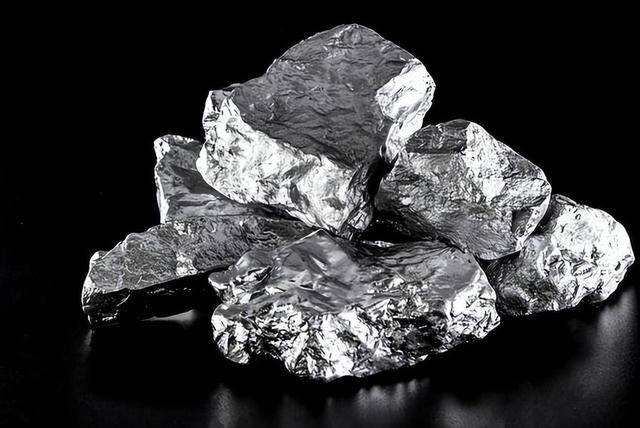
中国稀散金属开发利用取得一系列重大突破
Ren Min Ri Bao· 2025-11-26 22:57
Core Insights - China has made significant breakthroughs in the development and utilization of rare metals such as gallium, germanium, and indium, particularly in the efficient extraction of low-grade rare metals from coal, aluminum, copper, lead, and zinc ores [1] Extraction Technology - The comprehensive recovery rate of germanium from coal has increased from 55% to over 80% [1] - The average recovery rate of gallium, germanium, and indium during the lead-zinc smelting process has improved by approximately 10% [1] - The recovery rates of selenium, tellurium, and rhenium in the copper smelting process have been raised from 93%, 65%, and 70% to 97%, 90%, and 80% respectively [1] High-Purity Product Development - Key technologies and core equipment for the preparation of high-purity rare metal products have achieved important breakthroughs [1] - China has independently developed five core pieces of equipment, including a temperature gradient condensation and crystal orientation control directional crystallizer, enabling stable mass production of 8N-grade high-purity gallium for semiconductor molecular beam epitaxy [1] - The first domestically produced planar high-purity germanium detector has been developed [1] - A production line for ultra-high-purity germanium and other high-end raw materials has been established, facilitating the transition from primary products to high-end products [1] - The self-sufficiency rate for key strategic metal products such as MBE high-purity gallium, LCD panel indium, germanium single crystal substrates, and cadmium telluride films has been raised to over 70%, breaking foreign monopolies and restrictions [1]
我国稀散金属开发利用取得一系列重大突破
Xin Hua She· 2025-11-26 11:17
Core Insights - China's breakthroughs in the efficient extraction of rare metals such as gallium, germanium, and indium are crucial for high-tech development [1][2] - The recovery rates of these metals from various mining processes have significantly improved, enhancing the overall production efficiency [1] Group 1: Extraction Technology Advancements - The comprehensive recovery rate of germanium from coal has increased from 55% to over 80% [1] - The average recovery rates of gallium, germanium, and indium during lead-zinc smelting processes have improved by approximately 10% [1] - The recovery rates of selenium, tellurium, and rhenium during copper smelting have risen to 97%, 90%, and 80% respectively [1] Group 2: Equipment and Product Development - China has developed five core pieces of equipment, including a temperature gradient condensation directional crystallizer, enabling stable mass production of 8N-grade high-purity gallium [1] - The first domestically produced planar high-purity germanium detector has been developed, filling a domestic gap [1] - Production lines for ultra-high-purity germanium and other high-end raw materials have been established, marking a transition from primary to high-end products [1] Group 3: Strategic Importance - Rare metals like gallium, germanium, and indium are essential for strategic emerging industries, future industries, and national defense, playing a critical role in enhancing supply chain resilience and security [2] - The advancements in extraction and production capabilities help mitigate reliance on foreign high-end materials and products [2] - The self-sufficiency rate for key strategic metal products has increased to over 70%, supporting sectors such as defense, new energy, 5G communications, and semiconductors [1]
先导科技集团有限公司:以材料硬核实力,铸就全球科技新标杆
Sou Hu Cai Jing· 2025-11-05 05:54
Core Insights - XianDao Technology Group has established itself as a global leader in the rare metal industry, focusing on strategic emerging industries such as semiconductors and new energy, and has been included in the 2024 Fortune China 500 list [1] Industry and Company Overview - The company has developed a complete industrial ecosystem encompassing "resources - materials - devices - systems - recycling," with over 10,000 employees globally, positioning itself as a core force in promoting domestic high-end materials [1] Comprehensive Business Layout - The company has implemented a vertical integration strategy, forming five synergistic business segments with an annual output value of nearly 30 billion yuan [3] - As a leader in the global rare metal market, the company holds over 30% market share in gallium and germanium, with proprietary purification technology achieving over 99.999% purity [3][4] - The company has made significant advancements in high-end devices and system integration, including the establishment of an 8-inch silicon-based MEMS infrared detector production line and the development of high-purity materials for major semiconductor companies [4] R&D Innovation Strength - The company has built a robust innovation system centered on R&D, with national-level innovation platforms and advanced research facilities covering over 100,000 square meters [8] - It has accumulated hundreds of authorized patents, including 387 invention patents, and has led the formulation of national standards in the rare metal sector [9] - The core R&D team comprises over 30% of personnel with doctoral or senior titles, emphasizing the company's commitment to technological breakthroughs [10] Global Strategic Layout - The company has established production bases in multiple countries, including China and the U.S., with a total area of 1.8 million square meters, enhancing its domestic semiconductor material production capacity [11] - It has formed deep partnerships with top global companies in various sectors, including semiconductors and new energy, and actively participates in international exhibitions to expand its global brand influence [12] Corporate Responsibility - The company adheres to strict environmental regulations, achieving a 100% compliance rate in industrial wastewater and emissions treatment, and has been recognized as a national-level green factory [13] - It has invested 30 million yuan in social initiatives, including education and disaster relief, and has contributed to local economic upgrades through industrial cluster development [14] Future Outlook - The company aims to maintain an annual R&D investment ratio of over 5%, focusing on technological innovation in semiconductor materials and new energy, and strives to become a leader in the semiconductor materials and devices sector [16]
株洲科能IPO:专科以下占76%的“科技企业”,债务1年激增77倍
Sou Hu Cai Jing· 2025-10-09 01:07
Core Viewpoint - Zhuzhou Keno's debt has surged from 5.27 million to 405 million within a year, marking a staggering increase of 77 times, raising concerns about its IPO application on the Sci-Tech Innovation Board, which is not aligned with its "technology" label [1][3]. Financial Performance - Revenue for Zhuzhou Keno from 2022 to 2024 was reported at 679 million, 609 million, and 787 million respectively, with net profits of 50.82 million, 43.04 million, and 70.82 million, indicating a potential recovery in 2024 [5]. - However, the company has a concerning cash flow situation, with a net cash flow from operating activities of -427 million over the same period, despite a total net profit of approximately 165 million [10][11]. Ownership and Governance Issues - The actual controllers of the company, Zhao Kefu and Tang Yan, have a 14-year history of shareholding proxy arrangements, raising questions about corporate governance and transparency [6][8]. - The company has signed performance-based agreements with all strategic investors except for Zhoushan Gaoshang, which could reactivate if the company fails to complete a qualified IPO by December 2026 [9]. Debt and Cash Flow Concerns - The asset-liability ratio increased dramatically from 10.27% in 2023 to 41.81% in 2024, significantly exceeding the industry average of 40.4% [15][16]. - The company’s interest-bearing debt constitutes 81.69% of total liabilities, indicating a high dependency on debt financing [16]. Inventory and Operational Efficiency - Inventory has surged from 156 million at the end of 2020 to 641 million by the end of 2024, a 420% increase, with inventory accounting for 52.74% of total assets [12][21]. - The inventory turnover days increased from 147.02 days in 2020 to 242.95 days in 2024, with a turnover rate dropping from 3.64 times to 1.45 times, well below the industry average of 3.02 times [12][14]. Research and Development - R&D expenditures from 2022 to 2024 were 29.81 million, 28.53 million, and 30.32 million respectively, with R&D expense ratios declining from 4.39% to 3.85%, falling below the implicit 5% threshold for Sci-Tech Innovation Board companies [30][31]. - The educational background of employees is concerning, with 76.02% holding a diploma or lower, which raises doubts about the company's technological capabilities [32]. Market Position and Risks - The company has a high customer concentration risk, with significant reliance on a few major clients, which could pose a threat to its business stability [37]. - The cyclical nature of the rare metal industry, coupled with the company's substantial debt, increases operational risks, especially in a potential downturn [24][26].
朱世会30年产业长征成稀散金属之王 先导系三公司连亏曲线上市折戟突围承压
Chang Jiang Shang Bao· 2025-06-30 00:24
Core Viewpoint - The ambitious acquisition plan led by Zhu Shihui has failed, impacting the financial health of his companies within the "Xian Dao" system, which includes Guangzhi Technology, Wanye Enterprises, and Shangong Shenbei [2][12][13]. Group 1: Company Overview - Zhu Shihui, known as the "King of Rare Metals," has built a significant business empire over 30 years, focusing on breaking international monopolies in the rare metals industry [4][7]. - The "Xian Dao" system comprises Guangzhi Technology, Wanye Enterprises, and Shangong Shenbei, which are all facing financial difficulties and require urgent assistance [11][12]. Group 2: Financial Performance - Guangzhi Technology has reported continuous losses over the past four years, with a total loss of 4.35 billion yuan, despite a revenue increase from 7.24 billion yuan in 2021 to 14.55 billion yuan in 2024 [14]. - Wanye Enterprises has seen a decline in revenue and net profit, with 2023 and 2024 revenues of 9.65 billion yuan and 5.81 billion yuan, respectively, marking a decrease of 16.67% and 39.72% [15]. - Shangong Shenbei, although not directly controlled by Zhu, has also faced losses, reporting a loss of 2.44 billion yuan in 2024 and a further loss of 2505.55 million yuan in the first quarter of the current year [15]. Group 3: Market Reactions and Future Prospects - The market had high expectations for the failed merger between Guangzhi Technology and Xian Dao Technology, which had previously led to a significant increase in Guangzhi's stock price [13]. - The termination of the asset restructuring plan has put additional pressure on the financial stability of the "Xian Dao" system, raising questions about Zhu Shihui's next steps to resolve these challenges [16].


