锡制品

Search documents
专访丨“希望将更多锡器精品呈现给中国消费者”——访马来西亚皇家雪兰莪董事总经理杨永礼
Xin Hua She· 2025-11-24 00:56
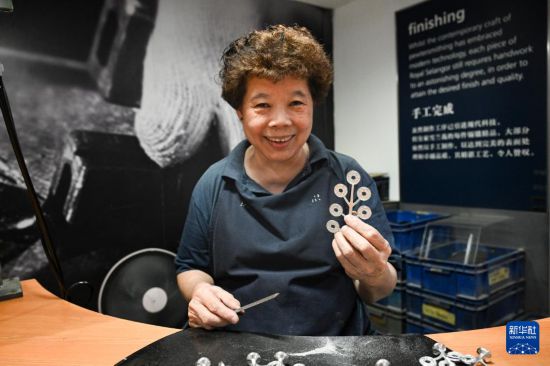
Core Insights - The company aims to expand its presence in the Chinese market, recognizing its significant potential for growth [3][5] - Royal Selangor, established in 1885, is the world's largest and most diverse pewter brand, offering over 2,000 products sold in over 100 countries [3][5] - The company draws inspiration from Chinese culture and traditional craftsmanship, which influences its product designs [5] Company Strategy - The company plans to continue investing in China, having already opened its largest overseas flagship store in Beijing and established counters in Shanghai and Chengdu [5] - Future plans include expanding the offline retail network to more cities across China [5] Product Development - The latest product line, "Silk Road Series," is inspired by classic art forms from Dunhuang, showcasing the integration of traditional techniques with innovative designs [5] - The company emphasizes the deep cultural connections between pewter products and Chinese traditions, enhancing its appeal to local consumers [5]

沪锡 维持宽幅波动走势
Qi Huo Ri Bao· 2025-04-16 23:21
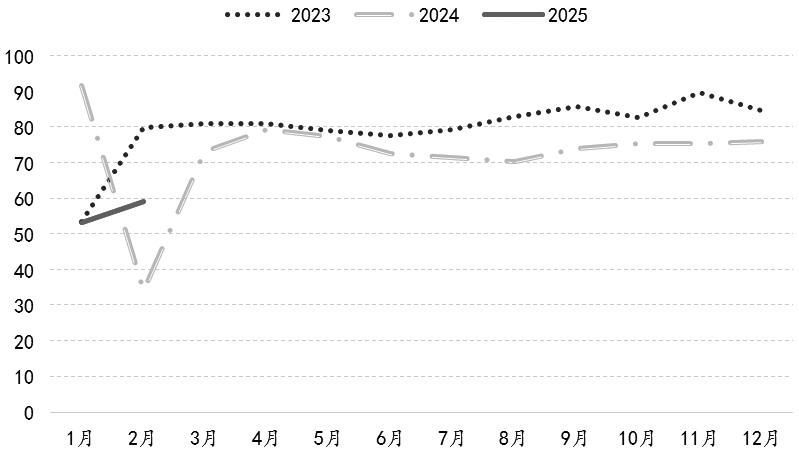
Core Viewpoint - Recent fluctuations in tin prices on the Shanghai Futures Exchange have been characterized by significant volatility, with prices rising over 10% in the first quarter and reaching a 34-month high before experiencing a drop of over 20% in just five trading days, driven by macroeconomic shocks and supply-demand mismatches [1][2]. Group 1: Market Dynamics - The sharp decline in tin prices is attributed to two main factors: the U.S. "reciprocal tariff" policy raising concerns about increased global trade costs and demand contraction, and supply expectation adjustments from major producing regions like Myanmar and the Democratic Republic of Congo [2]. - The ongoing trade war and changing tariff policies have led to heightened market risk aversion, significantly impacting tin as a high-volatility commodity [2]. - The tightening of dollar liquidity and geopolitical conflicts have further exacerbated market fluctuations, with LME tin inventories dropping to their lowest point in 2023 [2]. Group 2: Supply and Demand Analysis - Current supply-demand dynamics indicate a "tight but not lacking" supply situation, with demand showing signs of recovery from weakness [6]. - Data shows that China's tin ore imports in January-February 2025 fell nearly 50% year-on-year, with a sharp 81.07% decline in imports from Myanmar, influenced by recent earthquakes affecting supply [6]. - The global mining capital expenditure growth rate for tin-related projects from 2019 to 2024 is only 1.2%, indicating a mismatch between existing project recovery and new project development timelines against demand growth [6]. Group 3: Future Outlook - The demand for tin is expected to significantly improve in the medium to long term, supported by growth in sectors such as semiconductor chips, 5G communications, photovoltaic cells, and AI chip soldering materials [6][8]. - The International Tin Association predicts a "non-linear leap" in tin demand from AI servers, with consumption per server expected to be three times that of traditional devices by 2025 [8]. - Despite the ongoing global trade tensions, tin is recognized as a strategic resource, with its overall value anticipated to rise as macroeconomic concerns are gradually absorbed by the market [8].