全球贸易战

Search documents
美总统15%关税被推翻!欧盟英联手施压,全球贸易战2.0一触即发!
Sou Hu Cai Jing· 2026-02-25 10:39
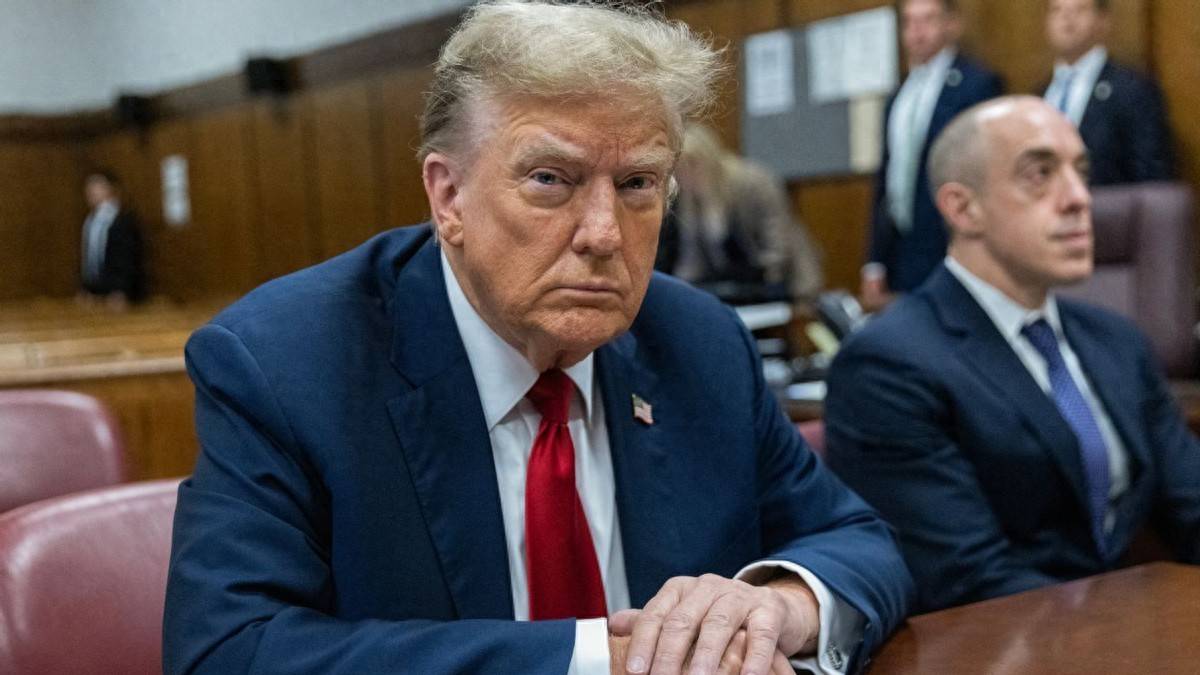
Group 1 - The U.S. Supreme Court ruled 6-3 to overturn the global reciprocal tariffs imposed by the Trump administration under the International Emergency Economic Powers Act, particularly the 15% base tariff on most EU goods [1][3] - The court determined that the International Emergency Economic Powers Act does not grant the president the authority to impose tariffs directly, which should be decided by Congress [3] - Following the ruling, there is uncertainty regarding the refund of hundreds of billions in tariffs already collected, causing anxiety among businesses [3][9] Group 2 - The EU and the UK quickly responded by pressuring the U.S. to stabilize the current trade framework, emphasizing the need to adhere to previously reached agreements [5] - The European Commission stated that they will not accept unilateral tariff increases by the U.S. and demanded detailed explanations of subsequent actions following the court ruling [7] - In response to the ruling, Trump announced a temporary 10% tariff on all global imports, which was raised to 15% the next day, indicating that existing tariff policies would not cease [8][9] Group 3 - The new tariff policy is set to take effect on February 24, covering all imported goods regardless of prior agreements, leading to market volatility and manufacturers recalculating costs [8] - The situation indicates a shift from the old tariff policies to new ones, raising the risk of a "Trade War 2.0" [9] - Businesses remain concerned about the potential lengthy legal processes required to resolve refund issues related to the overturned tariffs [9]

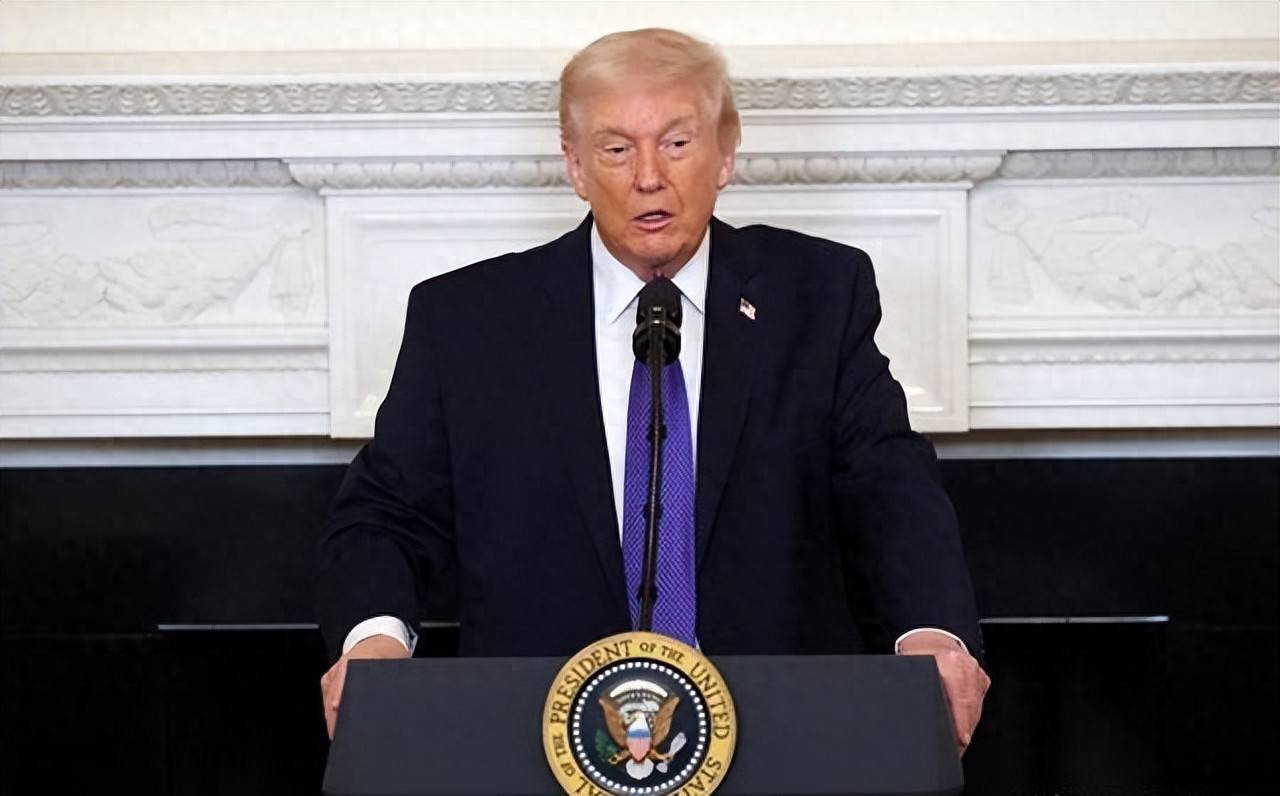
朗普明抢全球石油,美州长急眼:这是在把美国的未来卖给中国
Sou Hu Cai Jing· 2026-02-20 11:10
Group 1 - The article discusses the impact of President Trump's policies on global trade and U.S. credibility, highlighting his approach to a trade war and the revival of the Monroe Doctrine [1] - It mentions Trump's military actions in Venezuela and the buildup of forces around Iran, indicating a focus on regaining U.S. bargaining power over oil resources [3] - The article notes the criticism from U.S. officials regarding Trump's dealings with large corporations and his perceived alignment with China, suggesting a shift in leadership dynamics [6] Group 2 - The response from the Democratic Party, particularly California Governor Newsom, is highlighted as a significant challenge to Trump, indicating a potential shift in U.S. foreign policy direction [7] - The article contrasts the Democratic and Republican approaches to governance, with Democrats favoring globalization and cooperation with Europe, while Trump’s administration adopts a more isolationist and pragmatic stance [9] - It raises concerns about the potential for increased domestic conflict between the two parties, suggesting that escalating tensions could lead to severe consequences [9]
50天暴涨80%!白银飙升至94美元,三大推手曝光!这波行情我们普通人还能追吗?
Sou Hu Cai Jing· 2026-01-19 14:27
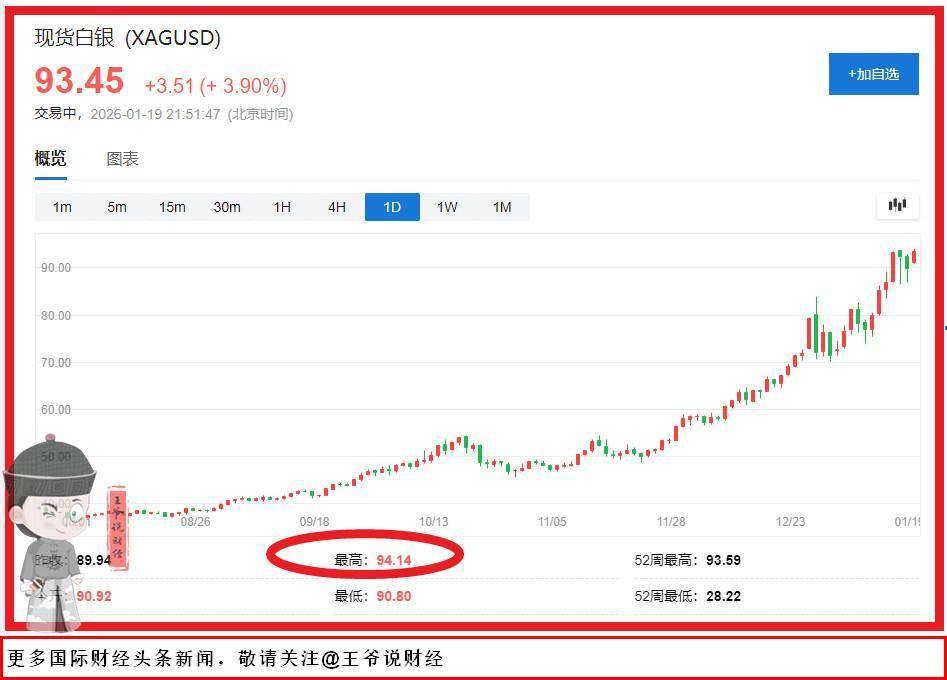
Core Viewpoint - The silver market has experienced a dramatic surge, with prices reaching historical highs, driven by multiple factors including geopolitical tensions, monetary policy, and supply-demand dynamics [1][3][15]. Group 1: Price Movement - On January 19, 2026, the international spot silver price surged past $94 per ounce, marking a daily increase of over 5% and reaching a peak of $94.36, which is a historical high [1]. - In just two months, silver prices have nearly doubled, increasing by over 80% from around $50 [3]. Group 2: Driving Forces Behind the Surge - The first driving force is geopolitical tensions, particularly Trump's announcement of a 10% tariff on eight European countries, which has heightened fears of a global trade war and led to increased demand for silver as a safe-haven asset [6]. - The second factor is the dovish stance of the Federal Reserve, which has indicated potential interest rate cuts, causing the dollar index to decline and making silver more attractive as an investment [8]. - The third and most critical factor is the increasing demand for silver in various industries, including solar panels, AI data centers, and electric vehicles, while mining output has not significantly increased, leading to a supply-demand gap [9][10]. Group 3: Future Outlook - There are mixed opinions on the future of silver prices. Some analysts believe that the current gold-silver ratio indicates that silver is undervalued and has significant upside potential, with some institutions projecting target prices as high as $5,000 for gold, suggesting even greater potential for silver [12]. - Conversely, there are concerns about the current market being overbought, with technical indicators suggesting a potential correction, cautioning investors against chasing prices [13]. - The broader context indicates that silver is becoming a strategic resource in the era of de-dollarization and technological advancement, positioning it as a vital asset in the industrial and green energy sectors [15].
华宝期货有色金属周报-20260105
Hua Bao Qi Huo· 2026-01-05 12:11
Report Industry Investment Rating No relevant information provided. Core Viewpoints of the Report - Aluminum: Supported by macro - sentiment and new geopolitical crises, prices are strong at high levels. However, with the domestic off - season continuing, inventories gradually accumulating, and downstream industries going on holiday approaching the Spring Festival, be vigilant about high - price risks and focus on macro - sentiment [13]. - Zinc: Geopolitical crises trigger hedging demand, and the strength of non - ferrous metals drives up zinc prices. In the medium - to - long - term, supply increases will put pressure on the upside, but it will take time to materialize. Prices are strong within a short - term range, and attention should be paid to macro - risk events and internal and external inventory trends [14]. - Tin: Tin prices are in a high - level consolidation [15]. - Lithium Carbonate: It shows an upward trend in fluctuations, with cost support and a tight balance between supply and demand driving the price movements [16][17]. Summary According to Different Catalogs 01 Colorful Weekly Market Review - **Futures and Spot Prices**: For copper (CU2602), the futures price decreased by 0.49% week - on - week, while the spot price increased by 1.45%. For aluminum (AL2602), the futures price rose by 2.32% week - on - week, and the spot price increased by 2.09%. For zinc (ZN2602), the futures price increased by 0.45% week - on - week, and the spot price rose by 1.86%. For tin (SN2602), the futures price decreased by 4.62% week - on - week, and the spot price dropped by 2.25%. For nickel (NI2602), the futures price increased by 4.81% week - on - week, and the spot price rose by 5.34% [9]. 02 This Week's Non - Ferrous Market Forecast - **Aluminum** - **Logic**: Last week, Shanghai aluminum fluctuated strongly. Macro - concerns about key economic data, trade wars, and Fed independence persisted. Geopolitical crises boosted prices. Fundamentally, in December, China's electrolytic aluminum cost increased, but the cost increase was lower than the price increase, expanding profit margins. The downstream processing industry's开工 rate declined, and domestic aluminum ingot inventories have been increasing since mid - December due to multiple factors [13]. - **Viewpoint**: Prices are strong at high levels but beware of risks [13]. - **Follow - up Concerns**: Geopolitical crisis development, macro - policy implementation, supply increase, and consumption release [13]. - **Zinc** - **Logic**: Last week, zinc prices fluctuated strongly. The Shanghai - London ratio recovered, and the zinc ingot import window remained closed. Overseas, the Fed's meeting minutes supported further interest rate cuts, and copper and precious metals drove up the price of LME zinc. On the demand side, the galvanizing start - up rate decreased, and zinc inventories in galvanizing enterprises declined. The bonded - area inventory remained stable [14]. - **Viewpoint**: Zinc prices are driven up by non - ferrous metals, with medium - to - long - term supply pressure [14]. - **Follow - up Concerns**: Macro - policy implementation, mine - end production release, and consumption release [14]. - **Tin** - **Logic**: In November 2025, China's tin ore imports showed a complex trend. Indonesia's refined tin exports increased. Myanmar's supply accelerated, and downstream demand weakened, leading to inventory accumulation [15]. - **Viewpoint**: Tin prices are in high - level consolidation [15]. - **Follow - up Concerns**: Myanmar's resumption of production and the situation in the Democratic Republic of the Congo [15]. - **Lithium Carbonate** - **Logic**: Last week, the lithium carbonate contract fluctuated greatly. On the supply side, raw material prices rose, and production capacity increased steadily. On the demand side, there was a significant structural differentiation. Social inventories increased, and the overall inventory was still tight. The profit pattern was also differentiated [17]. - **Viewpoint**: It shows an upward trend in fluctuations, with cost support and a tight balance between supply and demand driving the price movements [16][17]. - **Follow - up Concerns**: Raw material price fluctuations, production capacity release rhythm, terminal demand, market sentiment, funds, and policy changes [17]. 03 Variety Data Aluminum - **Bauxite** - **Price**: Domestic high - grade bauxite in Henan remained unchanged week - on - week, with a year - on - year decrease of 50 yuan/ton; domestic low - grade bauxite also remained unchanged week - on - week, with a year - on - year decrease of 50 yuan/ton; the average import price index decreased by 1.98 week - on - week and 37.44 year - on - year [22]. - **Arrival and Departure Volumes**: The arrival volume at ports increased by 1.87 week - on - week and 15.79 year - on - year; the departure volume decreased by 56.57 week - on - week and increased by 46.53 year - on - year [27]. - **Alumina**: The domestic price in Henan decreased by 5 week - on - week and 2940 year - on - year. The full cost decreased by 18.3 week - on - week and 622.1 year - on - year, and the profit in Shanxi decreased by 5 week - on - week and 2638.3 year - on - year [30]. - **Electrolytic Aluminum** - **Total Cost**: The total cost decreased by 68.58 week - on - week and 5256.98 year - on - year [32]. - **Regional Price Difference**: The price difference between Foshan and SMM A00 aluminum increased by 20 week - on - week and decreased by 210 year - on - year [32]. - **Downstream Processing**: The start - up rates of various downstream products, such as aluminum cables, aluminum foil, etc., showed different degrees of change [38][39]. - **Inventory**: Different types of inventories, including bonded - area, social, and exchange inventories, changed in different directions [44][45]. - **Spot and Basis**: The basis of different contracts decreased week - on - week and year - on - year [51]. - **Inter - month Spread**: The spreads between different contracts increased week - on - week and year - on - year [52]. Zinc - **Zinc Concentrate** - **Price and Processing Fee**: The domestic zinc concentrate price increased by 812 week - on - week and decreased by 6 year - on - year. The domestic processing fee decreased by 100 week - on - week and 350 year - on - year, and the import processing fee decreased by 3.64 week - on - week [62]. - **Production Profit, Import Profit and Loss, and Inventory**: The enterprise production profit increased by 196 week - on - week and decreased by 1682 year - on - year. The import loss decreased by 14.44 week - on - week and increased by 677.97 year - on - year. The import zinc concentrate inventory in Lianyungang increased by 1 week - on - week and 4 year - on - year [66]. - **Refined Zinc Inventory**: Different types of refined zinc inventories, such as social, bonded - area, and exchange inventories, changed in different directions [69]. - **Galvanizing**: The production decreased, the start - up rate decreased, the raw - material inventory decreased, and the finished - product inventory decreased [73]. - **Zinc Basis and Inter - month Spread**: The basis and spreads of different contracts changed week - on - week and year - on - year [77][78]. Tin - **Refined Tin Production and Start - up Rate**: The combined production of Yunnan and Jiangxi increased by 0.0012 week - on - week, and the combined start - up rate increased by 0.25 week - on - week [87]. - **Tin Ingot Inventory**: SHFE tin ingot inventory and social inventory decreased week - on - week and increased year - on - year [90]. - **Tin Concentrate Processing Fee**: The processing fees in different regions remained unchanged week - on - week and decreased year - on - year [93]. - **Tin Ore Import Profit and Loss**: The import profit and loss level increased by 25281.48 week - on - week and 27442.54 year - on - year [94]. - **Spot Average Price**: The average prices of tin concentrates in different regions decreased by 8300 week - on - week and increased by 81950 year - on - year [101]. Lithium Carbonate - **Price Index**: The prices of various lithium carbonate products, including the main contract, SMM index, and different grades, showed different degrees of change week - on - week and year - on - year [104]. - **Supply Side** - **Raw Material Market**: The prices of all types of raw materials increased significantly both week - on - week and year - on - year, strengthening cost support [106][107]. - **Start - up Rate**: The overall start - up rate of lithium carbonate increased, with different changes in different production methods [109][113]. - **Production**: The total production and production of different production methods of lithium carbonate increased, except for lithium - mica - produced lithium carbonate [115]. - **Demand Side** - **Downstream Cathode Materials**: The inventory and production of ternary and iron - lithium materials changed in different ways [122]. - **Terminal Market**: The sales volume of domestic passenger cars and new - energy vehicles increased, and the production of power cells showed different trends for different types [126]. - **Inventory**: Social inventory increased, sample inventory de - stocking slowed down, and the overall inventory was still tight [138]. - **Cost and Profit**: The profit pattern of lithium carbonate was significantly differentiated, with the opening of the delivery arbitrage window and increasing import profit [140][142].
中美决战倒计时?美国选好2个帮手,中国已经在台海摆上“硬菜”
Sou Hu Cai Jing· 2026-01-03 08:45
Group 1: US-China Trade Relations - The trade tensions between the US and China have escalated significantly, with tariffs imposed by the Trump administration leading to retaliatory measures from China [1] - In January, a 10% tariff was placed on Chinese steel and electronics, which was met with a similar response from China on US agricultural products and automobiles [1] - By March, US tariffs increased to 54%, causing disruptions in global supply chains, prompting US companies to seek local sources [1] - The tariffs peaked at 104% in April, with China responding with an 84% tariff, further complicating the global economic landscape [1] - Negotiations in May led to a reduction of tariffs back to 10%, but China's tariffs on US exports reached as high as 27% [1] - The International Monetary Fund (IMF) adjusted growth forecasts for both countries, reflecting the impact of the trade war on economic expectations [1] Group 2: Military Developments and Defense Spending - The US defense budget proposed by Trump reached $1 trillion, aimed at addressing tensions in the Pacific region, with increased spending on submarine missiles targeting China [3] - China's military expenditure reached $711 billion, prompting heightened vigilance from the US [3] - The US conducted military exercises in the region, including the "Lightning Storm" drill, showcasing advanced military capabilities [3] - The Philippines and Japan are enhancing military cooperation, with Japan planning to increase defense spending to 1.8% of GDP by 2025 and 2% by 2027 [5] - China's military activities in the South China Sea and Taiwan Strait have intensified, with significant military drills and increased naval presence [3][7] Group 3: Global Military Spending Trends - Global military spending reached a record $2.46 trillion, with the US leading in defense expenditures [7] - The rise in military budgets is observed not only in the US but also in Europe and the Middle East, driven by ongoing geopolitical tensions [8] - The military exercises and defense spending are part of a broader strategy among nations to counter perceived threats, particularly from China [8] - The ongoing conflict in Ukraine has heightened awareness and military readiness among nations, influencing defense policies globally [8] Group 4: Economic Implications of Tariffs - The imposition of tariffs by the US on various countries, including a 15% tariff on the EU and 25% on Canada, has had significant economic repercussions [7] - The price increase in the US was reported at 2.1%, affecting consumer spending and economic stability [7] - China's shift in production to countries like Vietnam is reshaping global supply chains, as companies adapt to the new tariff landscape [7][8] - The agricultural sector in the US has been adversely affected, with a notable decline in exports to China due to high tariffs [7]

东大两大友国倒戈美国?特朗普收340亿大单,美国棘手问题解决了
Sou Hu Cai Jing· 2025-12-15 10:09
Group 1 - The core viewpoint of the article highlights the strategic shift in U.S. trade policy, as evidenced by recent trade agreements with Vietnam, Cambodia, and Indonesia, which reflect America's efforts to reshape regional trade rules and extend its influence globally [1][3][12] - Cambodia successfully reduced its punitive tariffs from 49% to 20% through its agreement with the U.S., while Indonesia signed a $34 billion deal prioritizing U.S. access to its nickel resources, indicating a new phase in U.S. economic positioning in Southeast Asia [1][9] - The U.S. has implemented a tiered tariff policy, imposing tariffs as high as 40% on re-exported goods from third countries, and has strengthened origin verification standards, which could disrupt the export pathways of Chinese goods through Southeast Asia [3][12] Group 2 - Cambodia's economic reliance on the U.S. is significant, with exports to the U.S. reaching $26.2 billion in 2024, accounting for 40% of its total exports, primarily driven by the textile and footwear sectors [6][8] - The U.S. has mandated Cambodia to establish a comprehensive traceability system for exports, which poses challenges for local production costs, increasing them by 8% to 12%, thereby squeezing profit margins for Cambodian businesses [8] - Indonesia's agreement with the U.S. to prioritize nickel supply raises concerns about economic dependency, as Indonesia is the largest nickel producer globally, holding 24% of the world's reserves, which could jeopardize its economic autonomy [9][10] Group 3 - The agreements also include provisions for Indonesia to increase its imports of U.S. liquefied natural gas (LNG) to 30% over the next five years, aiming to diminish China's influence in the regional energy market [10] - Indonesia's military cooperation with the U.S. is deepening, with plans to acquire advanced military aircraft, which further complicates its strategic autonomy [10] - Despite the growing ties between Southeast Asian nations and the U.S., the article suggests that these countries' economic vulnerabilities may ultimately undermine their positions, potentially benefiting China in the long run [16]

"美元微笑"理论提出者:特朗普任期内美元将再跌13.5%
Hua Er Jie Jian Wen· 2025-11-11 22:05
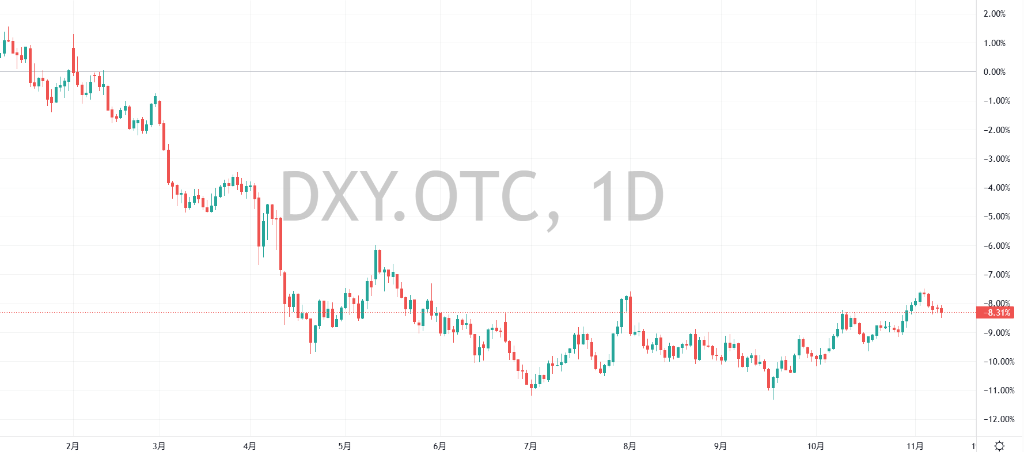
Core Viewpoint - Stephen Jen, CEO of Eurizon, maintains a long-term bearish outlook on the US dollar, predicting a 13.5% decline during Trump's remaining term despite a recent rebound [1]. Group 1: Dollar Performance and Predictions - The US dollar has fallen over 8% this year, potentially marking its worst year in eight years, influenced by unpredictable trade policies and expectations of Federal Reserve rate cuts [1][2]. - Jen's "dollar smile" theory suggests that the dollar tends to strengthen during periods of strong economic performance or deep recession, while it struggles during moderate growth phases [3]. - Jen anticipates that the next significant movement for the dollar will be downward, despite its recent rebound [3]. Group 2: Economic Context - Jen argues that the decline in the dollar is primarily due to capital leaving US dollar assets rather than being attracted to other regions, indicating a soft landing for the US economy [3]. - The International Monetary Fund forecasts a slowdown in US GDP growth from 2.8% last year to 2% in 2025, while the Eurozone is expected to grow by 1.2%, up from 0.9% in 2024 [4]. - Jen believes that the global economic performance is likely to surpass that of the US, with improving growth in Europe [3][4]. Group 3: Long-term Outlook - Jen describes the current situation as a "multi-year dollar adjustment," suggesting that the weak dollar cycle will be prolonged [5].
最高法院质疑“特朗普关税”零售股应声大涨,“千亿美元退税”在望?
Zhi Tong Cai Jing· 2025-11-06 01:55
Group 1 - The U.S. Supreme Court is questioning the legality of the "global tariffs" policy implemented by former President Trump, which could lead to the cancellation of tariffs affecting various retail brands [1][3] - A ruling against Trump could result in the government needing to refund over $100 billion to importers, alleviating a significant burden on companies [1][3] - Non-essential consumer goods stocks are performing well, with notable increases in companies like Lululemon (up 4.3%), Williams Sonoma (up 2.6%), Kohl's (up 8.9%), Macy's (up 7%), and Mattel (up 4%) [1] Group 2 - The hope for tariff reductions is also boosting the stock prices of major automakers like General Motors and Ford, despite them not being directly affected by the ruling [2] - Analysts suggest that a favorable ruling for retailers could enhance consumer purchasing power, indirectly benefiting automobile sales [2] - The Supreme Court's questioning during the hearings indicates skepticism about Trump's use of emergency powers to impose tariffs, suggesting potential overreach [3]
美股新纪录!暴涨暴跌为何频现?
Xin Lang Cai Jing· 2025-10-30 03:54
Core Insights - The article highlights the increasing volatility in the U.S. stock market, with a record number of individual stocks experiencing daily market value fluctuations exceeding $100 billion, totaling 119 occurrences this year, surpassing previous years significantly [2][4]. Market Volatility - The U.S. stock market has seen a historic high in daily market value changes, with major tech stocks like Nvidia, Microsoft, and Apple contributing to the largest fluctuations [2][4]. - The volatility is exacerbated by macroeconomic concerns, including renewed tariff risks and potential regional banking crises similar to the Silicon Valley Bank situation [2][4]. Federal Reserve Impact - The Federal Reserve's recent decision to cut interest rates by 25 basis points and end quantitative tightening was met with a hawkish stance from Chairman Powell, leading to a sharp decline in market expectations for future rate cuts [2][4]. Derivatives Market Influence - The derivatives market is identified as a key driver of increased volatility, with retail investors and hedge funds heavily betting on individual stocks, prompting market makers to hedge their positions, which amplifies price movements [5][6]. - The trading volume of single-stock options has reached its highest level since the retail trading boom in 2021, with retail investors accounting for 60% of this market [5][6]. Leverage and Market Dynamics - The rise of leveraged products, including double or triple leveraged ETFs, has contributed to heightened price volatility, with significant forced liquidations observed during market downturns [5][6]. - Current market themes, such as artificial intelligence and tax policy changes, are creating divergent impacts on stocks, leading to a temporary suppression of correlations among individual stocks [6].
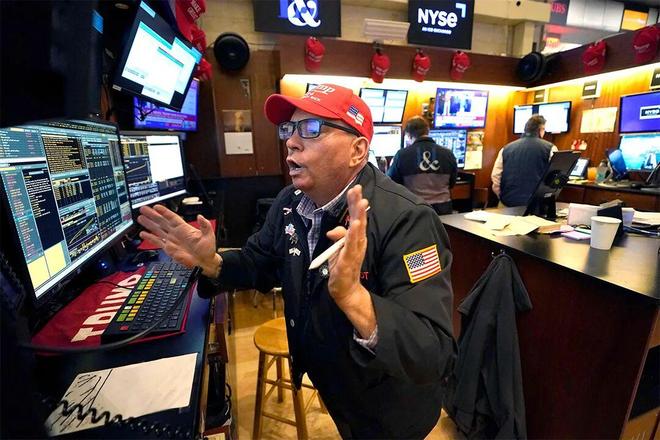
美股新纪录!暴涨暴跌为何频现?
第一财经· 2025-10-30 03:36
Core Viewpoint - The article discusses the increasing volatility in the U.S. stock market, particularly among large technology stocks, and highlights the role of derivatives in amplifying this volatility [3][4][7]. Group 1: Market Volatility - As of this year, there have been 119 instances of individual U.S. stocks experiencing a market cap change of over $100 billion in a single day, a record high compared to 84 instances last year and only 33 during the bear market of 2022 [4]. - Major tech stocks like Nvidia, Microsoft, and Apple have been responsible for some of the largest single-day market cap fluctuations, with Nvidia losing $592.7 billion on January 27 and gaining $441 billion on April 9 [4]. - The VIX index, which measures market volatility, has risen sharply in October, exceeding the average level of the past 20 years by nearly 5% [4]. Group 2: Derivatives Market Impact - The derivatives market is identified as a key driver of increased volatility, with retail investors and hedge funds making short-term bets on individual stocks, leading market makers to hedge their positions and further exacerbate price swings [7]. - In October, trading volume for single-stock options reached its highest level since the retail trading boom in 2021, with retail investors accounting for 60% of this market [7]. - The rise of leveraged products, including double or triple leveraged ETFs, has contributed to the prevalence of significant single-day stock fluctuations, as seen when $26 billion worth of stocks were forcibly liquidated to maintain leverage requirements [7]. Group 3: Market Themes and Risks - Current market themes such as artificial intelligence, tax policy changes, and global trade tensions are affecting certain stocks while benefiting others, leading to a temporary suppression of correlations among individual stocks [8]. - If correlations among stocks rise again, it could lead to coordinated sell-offs among major stocks, posing greater risks to overall market stability [8].