镓)

Search documents
【中国新闻网】中国团队独创技术获得5种二维金属 入选2025年十大科学突破
Zhong Guo Xin Wen Wang· 2025-12-18 03:11
Core Insights - The research team led by Zhang Guangyu from the Chinese Academy of Sciences has achieved a significant breakthrough by successfully fabricating the first examples of two-dimensional metals, which has been recognized in the "Top Ten Scientific Breakthroughs of 2025" by Physics World [3][4] - This achievement fills a critical gap in material science, as it is the only Chinese result included in this year's list, highlighting the team's innovative approach and the importance of their findings [3][6] Summary by Categories Breakthrough Achievement - The team developed a unique "van der Waals squeezing technology" that allows for the universal fabrication of two-dimensional metals at atomic-level thickness, successfully producing five types of two-dimensional metals: bismuth (6.3Å), tin (5.8Å), lead (7.5Å), indium (8.4Å), and gallium (9.2Å) [4][6] - These materials are incredibly thin, measuring only one two-hundred-thousandth of a human hair's diameter and one-millionth of the thickness of an A4 paper [4] Technical Advantages - The fabricated two-dimensional metals exhibit over one year of performance stability in environmental conditions and possess non-bonding interfaces, laying the groundwork for exploring intrinsic material properties [4] - Electrical tests indicate that the room temperature conductivity of monolayer bismuth is over an order of magnitude higher than that of bulk bismuth, demonstrating unique P-type field effect characteristics with resistance adjustable by gate voltage by 35% [4] Future Implications - This breakthrough not only fills a key puzzle piece in the family of two-dimensional materials but also opens up new research fields, with potential applications in high-temperature quantum Hall effects, two-dimensional superconductivity, low-power transistors, high-frequency devices, and ultra-sensitive detectors [6] - Currently, only five out of 88 metallic elements have been realized as two-dimensional metals, indicating that there are thousands of potential two-dimensional metal materials yet to be explored, suggesting vast development opportunities in this area [6]


必须杀一儆百!中企竟协助美国偷运3834吨稀土,中国加强管控
Sou Hu Cai Jing· 2025-07-15 06:50
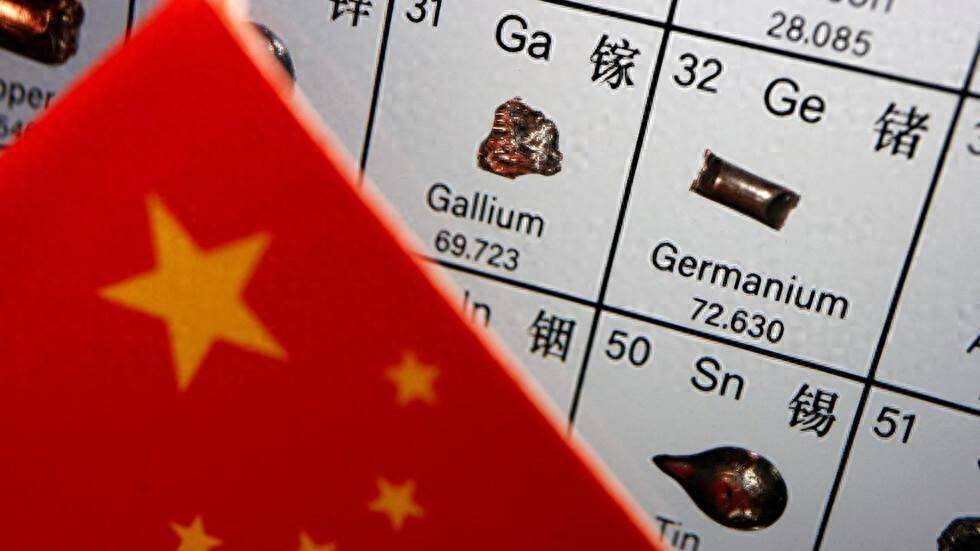
Core Viewpoint - The article discusses China's export control on rare metals, particularly antimony and gallium, in response to U.S. technology blockades, highlighting the unexpected resilience of U.S. supply chains through third-party countries like Thailand and Mexico [2][3]. Group 1: Export Control and U.S. Response - In December 2024, China implemented export controls on critical rare metals, aiming to counter U.S. technology restrictions [2]. - Despite these controls, the U.S. managed to import approximately 3,834 tons of antimony from Thailand and Mexico, nearly matching the total imports from China over the past three years [3]. Group 2: Domestic Challenges - Some Chinese companies are reportedly engaging in practices to obscure the origin of these metals, labeling them as "Thai" or "Mexican" to facilitate their export to the U.S. [3][5]. - The rise of these practices raises concerns about the commitment of certain enterprises to national interests, as they prioritize profit over strategic resource management [5]. Group 3: Supply Chain Dynamics - The article describes a complex "smuggling chain" involving production, customs, transportation, and third-party labeling, indicating a well-organized network rather than isolated incidents [7]. - Thailand and Mexico are seen as opportunistic players in this scenario, capitalizing on the trade tensions between China and the U.S. [9]. Group 4: Regulatory Challenges - Current regulatory measures for tracking rare earth exports rely heavily on customs declarations and manual inspections, which are inadequate against sophisticated evasion tactics [10]. - There is a pressing need for enhanced regulatory frameworks, including the use of big data tracking and smart identification systems to ensure accountability in the export of these critical resources [12]. Group 5: Future Implications - Experts suggest that stringent measures must be enforced to deter companies from exploiting loopholes, with a focus on technological advancements like AI and blockchain to close these gaps [14]. - The potential for U.S. military applications of these rare metals raises significant security concerns for China, emphasizing the importance of safeguarding its strategic resources [14].