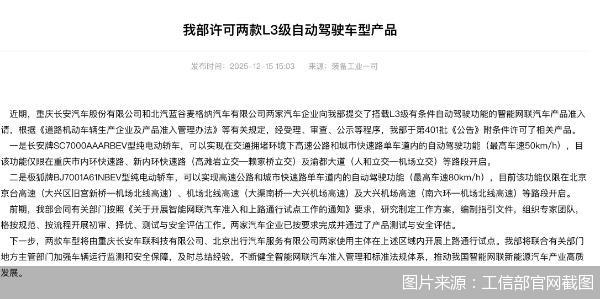
长安深蓝获批车型

Search documents
日本加息为何不跌反涨?黄金跳水,亚太股市全线飘红,4500股上涨
Sou Hu Cai Jing· 2025-12-20 20:07
Group 1 - The Asia-Pacific stock markets experienced a synchronized rally following the Bank of Japan's decision to raise its policy interest rate from 0.5% to 0.75%, marking the highest level in 30 years [1][3] - The A-share market saw significant trading activity, with over 4,400 stocks rising and a total transaction volume of 1.75 trillion yuan, an increase of 719 billion yuan from the previous day [3] - The controlled nuclear fusion sector emerged as a major winner, with stocks like Wangzi New Materials and Macro Micro Technology hitting their daily limits, driven by a merger announcement between Trump Media & Technology Group and TAE Technologies valued at over $6 billion [3][5] Group 2 - The autonomous driving sector also showed strong performance, with companies like Zhejiang Shibao and Huati Technology achieving consecutive daily limits, supported by the recent approval of L3-level autonomous driving models by the Ministry of Industry and Information Technology [6][10] - The commercial aerospace concept continued to thrive, with companies like Huati Technology and Western Materials achieving consecutive daily limits [8] - The nuclear fusion industry is expected to see significant growth, with the International Energy Agency predicting a market size approaching $500 billion by 2030 [5][10] Group 3 - The recent interest rate hike in Japan was aimed at alleviating yen depreciation pressure and controlling inflation, with the market having anticipated this move, resulting in limited short-term impact on various assets [8][10] - The silver market showed a divergence from gold, with silver prices nearing $66 per ounce, reflecting a year-to-date increase of nearly 130% [10][14] - The approval of L3-level autonomous driving vehicles is expected to pave the way for commercial applications, with specific models approved for use in designated congested and highway areas [6][10]


L3级准入破冰,自动驾驶商业化落地驶入“快车道”
Bei Jing Shang Bao· 2025-12-15 14:07
Core Viewpoint - The Ministry of Industry and Information Technology (MIIT) of China has officially granted the first batch of L3 conditional autonomous driving vehicle permits, allowing Changan Automobile and BAIC's Arcfox models to conduct road trials in designated areas of Chongqing and Beijing, respectively [1][4]. Group 1: Policy and Regulatory Developments - The MIIT has approved L3 autonomous driving vehicles under specific conditions, marking a significant step towards the commercialization of autonomous driving technology in China [4][9]. - The approval process involved thorough assessments and compliance with regulations, ensuring that the vehicles meet safety and operational standards [3][4]. Group 2: Vehicle Specifications and Capabilities - Changan's model can achieve autonomous driving at speeds up to 50 km/h in congested traffic conditions on designated roads in Chongqing [3][4]. - BAIC's Arcfox model can operate at speeds up to 80 km/h on specific highways in Beijing, showcasing the capabilities of L3 autonomous driving technology [3][4]. Group 3: Industry Trends and Competitive Landscape - The autonomous driving industry is entering a competitive phase, with multiple automakers racing to develop and deploy L3 technology [6][9]. - Companies like GAC and BYD are also advancing their L3 capabilities, with GAC's model receiving a license for high-speed testing and BYD integrating L3 systems into urban driving scenarios [7][9]. Group 4: Technological Advancements and Partnerships - The successful deployment of L3 technology relies on advanced sensor systems, with BAIC's Arcfox equipped with 34 high-performance sensors for comprehensive environmental perception [7][8]. - Partnerships with technology firms are crucial, as seen with Horizon Robotics and Huawei, which are providing the necessary technological foundation for L3 commercialization [8][10]. Group 5: Market Outlook and Future Projections - The autonomous driving market in China is projected to approach 450 billion yuan by 2025, driven by technological advancements and increasing adoption rates [9]. - The focus on safety, regulatory compliance, and user experience will shape the competitive landscape, with companies needing to balance innovation with responsible marketing practices [9][10].