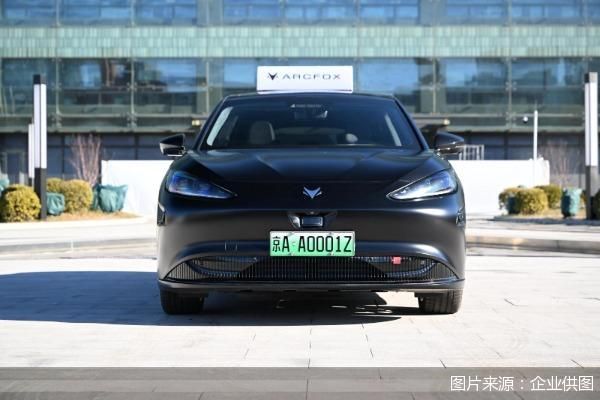
长安深蓝车型

Search documents
长安汽车总裁赵非:技术务实锚定产业稳态 生态聚力激活资本估值
Zhong Guo Zheng Quan Bao· 2025-12-26 00:21
Core Insights - Zhao Fei's career reflects Changan Automobile's transformation from a traditional manufacturer to a technology company, leading the firm through the challenges of profitability in the new energy vehicle (NEV) sector [1] - Changan's NEV sales have exceeded 100,000 units for three consecutive months, with an annual target of one million units, showcasing the company's commitment to technological advancement and market adaptation [1][2] Group 1: Strategic Management and Organizational Restructuring - Zhao Fei's appointment is part of a systematic organizational restructuring during a critical strategic transition for Changan, with a complete personnel reshuffle across the group and its main brands [2] - The company aims for a stable progression in the NEV market, predicting a 7:3 ratio of NEVs to fuel vehicles in China within two to three years, while globally, fuel vehicles will still account for 70% by 2030 [2] - Changan emphasizes a rational approach to technology, focusing on steady growth rather than aggressive competition, with a commitment to internal capabilities [2] Group 2: Industry Challenges and Responses - Changan welcomes government efforts to address industry over-competition, having reduced supplier payment cycles to 53 days to build trust within the supply chain [3] - The company is committed to avoiding a "no profit" cycle in the industry, advocating for responsible pricing practices [3] - Changan invests 6% of its sales revenue in R&D annually, underscoring the importance of innovation in its transition to a technology-driven enterprise [3] Group 3: Technological Advancements and Safety - The company has achieved significant milestones in L3-level autonomous driving technology, becoming one of the first in China to utilize specialized licenses for such vehicles [3][4] - Zhao Fei identifies data as the critical factor for advancing from L3 to L4 autonomous driving capabilities, emphasizing the need for extensive data to enhance system performance [4] Group 4: Brand Strategy and Market Positioning - Changan's three NEV brands—Avita, Deep Blue, and Changan Origin—are strategically positioned to target different market segments, supported by a centralized management structure [5] - Avita has established a foothold in the high-end market, while Deep Blue has attracted younger consumers with innovative technology [5] Group 5: Capital Operations and Global Strategy - Capital operations are crucial for enhancing the competitiveness of Changan's sub-brands, with a focus on building capabilities rather than immediate profitability [6] - Changan aims for overseas sales to exceed 600,000 units by 2025, with a comprehensive strategy for global market penetration [6] - The company maintains a proactive stance on supply chain risks, particularly regarding battery and chip prices, and is recognized for its advancements in domestic chip applications [6] Group 6: Market Valuation and Operational Quality - Zhao Fei emphasizes that market valuation is a gradual process based on operational quality rather than speculative practices [7] - Changan's focus on practical R&D over marketing has helped it avoid pitfalls in the NEV transition, building a robust foundation of technological and brand strength [7] - The company's transformation is characterized by a systematic approach to value reconstruction, with a clear path for enhancing efficiency and expanding globally [7]

北京L3级自动驾驶获准合法上路
Xin Lang Cai Jing· 2025-12-23 17:03
Core Insights - The development of L3 conditional autonomous driving in China is reaching a critical breakthrough, with the first specialized license plates for L3 vehicles being issued in Beijing [1][3] - The issuance of these license plates marks a transition from testing to commercial use of autonomous vehicles, indicating a significant milestone in the automotive industry's shift towards intelligent vehicles [3][4] Industry Developments - The Ministry of Industry and Information Technology has granted the first L3 conditional autonomous vehicle licenses to models from Changan Automobile and BAIC's Arcfox, allowing them to conduct road trials in designated areas [3] - Multiple automakers, including Xiaomi, Xpeng, Li Auto, and Lantu, have announced their acquisition of L3 road licenses, indicating a rapid acceleration towards the implementation of L3 technology [3] Technological Advancements - The BAIC Arcfox Alpha S (L3 version) is the only model among the first batch to be equipped with lidar technology, which is crucial for its autonomous capabilities [4] - The vehicle can perform dynamic driving tasks under specific conditions, achieving a maximum speed of 80 km/h on highways and urban expressways, although a driver must remain in the seat to take control in emergencies [3][4] Safety and Innovation - BAIC's proprietary intelligent network technology system, "BAIC Yuanzheng Intelligent," has achieved full coverage from L2 to L4 levels, establishing a robust safety development framework [4] - The system includes a 24/7 monitoring platform for real-time vehicle status analysis, ensuring high safety standards across all models [4] Market Implications - The launch of L3 autonomous driving is expected to accelerate the iteration of core technologies such as sensors, chips, and algorithms, fostering an integrated infrastructure for vehicle-road-cloud collaboration [5] - New business models focusing on subscription services, data services, and scenario-based operations are anticipated to emerge, shifting the profit focus from hardware to software and services [5] - The competitive landscape is likely to evolve, with companies possessing comprehensive self-research capabilities expected to dominate the market as L3 functionalities become more mainstream [5]


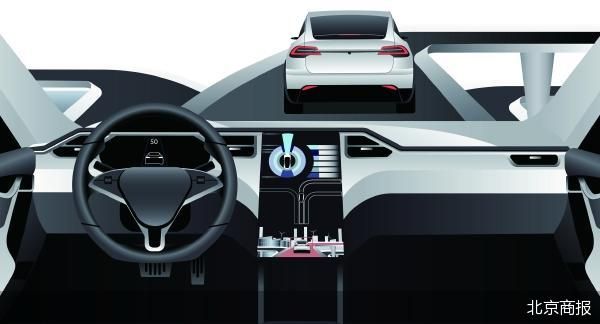
首批3个号牌落户北汽极狐,北京L3级自动驾驶获准合法上路
Bei Jing Shang Bao· 2025-12-23 12:43
Core Viewpoint - The development of Level 3 (L3) conditional autonomous driving in China is making significant progress, with the issuance of special license plates for L3 vehicles marking a transition from testing to commercial use [2][3]. Group 1: Policy and Implementation - Beijing has issued the first batch of special license plates for L3 autonomous vehicles, including the BAIC Arcfox Alpha S (L3 version), which has received legal road qualifications [2]. - The Ministry of Industry and Information Technology has granted approval for the first L3 conditional autonomous driving models, allowing Changan Automobile and BAIC Arcfox to conduct road trials in designated areas [2]. - The first L3 special license plate "渝AD0001Z" was issued in Chongqing, indicating a shift to compliant commercial use of autonomous vehicles [2]. Group 2: Technical Advancements - The BAIC Arcfox Alpha S (L3 version) is the only model in the first batch equipped with LiDAR technology, which is crucial for its autonomous capabilities [3]. - The vehicle can perform dynamic driving tasks under specific conditions, achieving a maximum speed of 80 km/h on designated highways and urban expressways, although a driver must remain in the seat to take control in emergencies [3]. - The successful deployment of L3 autonomous driving is attributed to BAIC's long-term technological investments in intelligent networking, new energy, and safety [3]. Group 3: Industry Impact and Future Trends - The rollout of L3 autonomous driving is expected to accelerate the iteration of core technologies such as sensors, chips, and algorithms, promoting the integration of "vehicle-road-cloud" infrastructure [5]. - New business models, including subscription services and data services, are anticipated to emerge, shifting the profit focus from hardware to software and services [5]. - The market is expected to undergo a reshuffle, with companies possessing comprehensive self-research capabilities likely to dominate as L3 functionalities become more mainstream and accessible [5].