
极狐阿尔法S(L3版)

Search documents
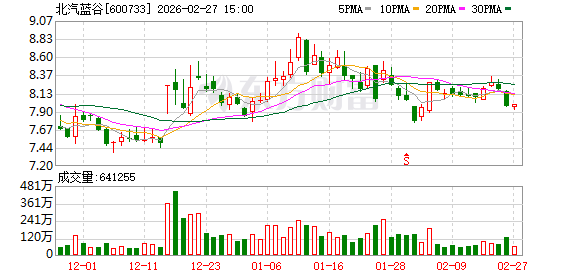
22位核心高管集体“加仓”:北汽蓝谷创业发展迎来关键注脚
Xin Hua Cai Jing· 2026-02-27 13:46
Core Viewpoint - The management team of BAIC Blue Valley has made a significant investment in the company, signaling strong confidence in its future growth and aligning their interests with that of the company [2][3]. Group 1: Management Share Purchase Details - A total of 22 key executives from BAIC Group and BAIC Blue Valley participated in the share purchase, with a total investment of 15.32 million yuan, averaging 8.23 yuan per share [2][3]. - Several executives, including the chairman and general manager, invested over 1 million yuan each, indicating a strong commitment to the company's future [3]. - The average purchase price of 8.23 yuan per share is higher than the 7.56 yuan per share cost of a recent 6 billion yuan private placement by institutional investors, establishing a dual anchor point for confidence in the stock [3]. Group 2: Strategic Implications and Future Outlook - The share purchase reflects a belief in the company's "three-year leap" and the "15th Five-Year Plan," focusing on the development cycle from 2026 to 2030 [5]. - BAIC Blue Valley has achieved significant milestones in 2025, including a sales volume exceeding 200,000 units, a year-on-year growth of 84%, and a successful turnaround in gross margin [6]. - The company is set to launch new models in 2026, including a new luxury SUV and MPV, which are expected to drive sales and enhance brand positioning in the competitive market [6][7]. Group 3: Corporate Culture and Team Dynamics - The management's investment is seen as a shift from traditional state-owned enterprise culture to a more entrepreneurial spirit, emphasizing a deep connection between decision-makers and the company's fate [4][9]. - The restructuring of the management team has led to a younger, more dynamic group focused on innovation and customer-centric product development [9][10]. - The commitment of the management team to invest their own money in the company is viewed as a strong signal of their dedication and a key competitive advantage in the increasingly fierce new energy vehicle market [10][11].


京津冀携手构建智能网联汽车产业高地,共造“未来之车”
Xin Lang Cai Jing· 2026-02-24 19:19
Core Viewpoint - The launch of L3-level autonomous driving vehicles in Beijing marks a significant milestone in the development of intelligent connected vehicles, transitioning from testing to practical application in urban settings [1][5][7]. Group 1: Autonomous Driving Development - In early 2026, a fleet of 30 L3-level autonomous vehicles, the Arcfox Alpha S, will begin trial operations on designated highways in Beijing [1]. - The successful approval of L3-level vehicles by BAIC Arcfox at the end of 2025 signifies a shift towards mass production and application of autonomous driving technology [1][5]. - The development of autonomous driving in Beijing has been a seven-year journey, starting from initial testing phases to the current operational status [2][3]. Group 2: Policy and Infrastructure Support - Beijing has been at the forefront of autonomous driving policy, being the first to implement road testing support policies in 2017 and establishing a regulatory sandbox for smart connected vehicles in 2021 [6]. - The city has developed a comprehensive testing environment, with over 40 companies and more than 1,400 autonomous vehicles having completed over 48 million kilometers of testing [6]. - The establishment of the Beijing high-level autonomous driving demonstration zone has facilitated the integration of various technologies, enhancing the reliability and safety of autonomous vehicles [6]. Group 3: Regional Collaboration - The development of the autonomous driving industry is a collaborative effort among the Beijing-Tianjin-Hebei region, focusing on coordinated growth across different sectors [8][9]. - The "Modern Capital Metropolitan Area Spatial Coordination Plan (2023-2035)" identifies smart connected vehicles as a key industry for regional collaboration [8]. - The region has initiated the construction of a technology ecological port for smart connected vehicles, promoting resource optimization and cross-regional development [8][10]. Group 4: Market Impact and Future Outlook - The autonomous driving industry in the Beijing-Tianjin-Hebei region has created a robust automotive industrial cluster, with a total output value exceeding 840 billion yuan [10]. - Analysts suggest that the integration of policies and technological advancements across the region will enhance the competitiveness of the autonomous driving sector, potentially expanding its influence throughout northern China [9][10].
三地共造一辆“未来之车”:超8400亿的集群效应
Xin Jing Bao· 2026-02-24 11:18
Core Viewpoint - The launch of the L3-level autonomous driving trial with 30 vehicles of the Arcfox Alpha S marks a significant milestone in Beijing's smart connected vehicle industry, transitioning from testing to mass application [1][2][5] Group 1: Industry Development - The Arcfox Alpha S (L3 version) has received conditional approval for road use, making it one of the first two companies in China to achieve this milestone [1] - The smart connected vehicle industry in the Beijing-Tianjin-Hebei region is evolving into a comprehensive development model, with R&D in Beijing, manufacturing in Tianjin, and application scenarios in Hebei [1][8] - The autonomous driving sector in Beijing has seen significant advancements, with over 48 million kilometers of testing completed, showcasing a robust infrastructure for autonomous vehicle deployment [6][9] Group 2: Policy and Regulation - Beijing has been at the forefront of autonomous driving policy, being the first to issue road testing support policies and establishing a regulatory sandbox for smart connected vehicles [6][7] - The implementation of the "Beijing Autonomous Driving Vehicle Regulations" in 2025 has further solidified the legal framework for autonomous driving in the region [6] - Collaborative policies between Beijing, Tianjin, and Hebei aim to promote innovation and standardization in the smart connected vehicle sector [9][10] Group 3: Market and Consumer Adoption - The autonomous driving trial is expected to expand to personal users by the second quarter of 2026, indicating a shift towards broader consumer adoption [2] - Autonomous taxis and other driverless vehicles have become commonplace in areas like Yizhuang, demonstrating the practical application of autonomous technology in daily life [4][7] - The competitive pricing and convenience of autonomous taxis are attracting regular users, indicating a positive reception from the public [4]

中国自动驾驶加速驶向城市道路
Zheng Quan Ri Bao· 2026-01-28 16:30
Core Viewpoint - The launch of L3-level autonomous driving vehicles in Beijing marks a significant milestone in the development of the autonomous driving industry, transitioning from closed testing to compliant road operation and real-world application [4] Group 1: Industry Development - The first batch of L3-level autonomous vehicles, including 30 units of the Arcfox Alpha S (L3 version), has begun trial operations on designated highways in Beijing, indicating a shift towards integrating autonomous driving into everyday traffic systems [1][3] - The approval of L3-level vehicles by the Ministry of Industry and Information Technology signifies a regulatory framework that supports the commercial rollout of autonomous driving technology [1][5] - The operational strategy for these vehicles will prioritize safety and will initially focus on B-end (business) users before gradually opening to individual consumers by the second quarter of 2026 [2] Group 2: Technological Advancements - L3-level autonomous driving allows the vehicle system to take over primary driving tasks under certain conditions, reducing the need for constant driver monitoring, which is a key advancement from L2-level systems [2][3] - The Arcfox Alpha S (L3 version) is equipped with three LiDAR sensors and 34 high-precision sensors, creating a 360-degree perception network to enhance safety and operational reliability [3] - The cost of LiDAR technology is decreasing, with current prices dropping below 1500 yuan, which is expected to further improve the commercial viability of autonomous driving systems [6][7] Group 3: Policy and Regulatory Environment - Recent policies in various regions, such as Guangdong and Shanghai, are aimed at promoting the safe and orderly deployment of autonomous driving technologies, reflecting a supportive regulatory environment [5] - The implementation of the Beijing Autonomous Driving Vehicle Regulations in April 2025 has expanded the testing area significantly, providing valuable practical experience for nationwide L3-level operations [5] Group 4: Industry Challenges - Despite advancements, L3-level autonomous driving faces challenges related to software maturity, regulatory frameworks, and infrastructure development, which are critical for widespread adoption [9][10] - The transition from demonstration operations to full-scale deployment requires addressing issues such as the legal definition of responsibility and the integration of vehicle-to-infrastructure communication systems [9][10] - The industry recognizes that the path to commercializing L3-level autonomous driving will be gradual, with a focus on single-vehicle operations complemented by collaborative systems [10]
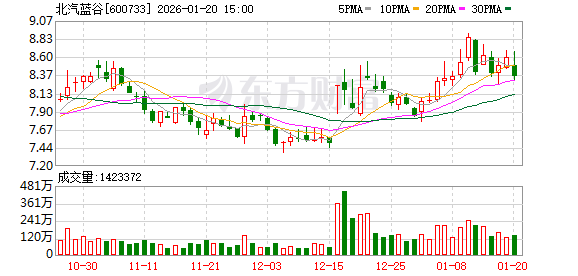
北汽蓝谷的“翻身”困局
Hua Er Jie Jian Wen· 2026-01-20 11:43
Core Viewpoint - Beiqi Blue Valley's 2025 performance report reveals a complex picture of "growth and losses coexisting," with an expected net loss of 4.35 billion to 4.65 billion yuan, despite a significant reduction from the previous year's loss of 6.948 billion yuan [2] Group 1: Financial Performance - The company's net loss for 2025 is projected to be between 4.35 billion and 4.65 billion yuan, a notable decrease from the 6.948 billion yuan loss in 2024, yet still at a high level [2] - Sales volume reached 209,600 units in 2025, marking an 84.06% year-on-year increase, but this growth has not translated into improved profitability [2][3] - Historical losses from 2020 to 2024 were 6.482 billion yuan, 5.244 billion yuan, 5.465 billion yuan, 5.400 billion yuan, and 6.948 billion yuan respectively, indicating a persistent trend of financial challenges [2] Group 2: Strategic Investments and Challenges - The paradox of increasing sales but ongoing losses stems from substantial strategic investments, particularly in R&D, which rose to 1.573 billion yuan in the first three quarters of 2025, a 43.26% increase from the previous year [3] - The company's traditional B-end market, primarily the EU series, which contributed 70%-80% of sales, is being disrupted, leading to a shift in brand perception [4] - The transition to new high-end brands, such as Arcfox and Xiangjie, is ongoing, but the sales from these new models have not yet compensated for the decline in sales from older models [5] Group 3: Partnerships and Technological Advancements - A significant focus is on the collaboration with Huawei, which has resulted in the high-end brand "Xiangjie" becoming a new growth engine, raising the average selling price by 8,000 yuan [7] - The partnership has evolved into a "strategic community," with plans for a 20 billion yuan investment over three years to establish dedicated departments and supply chains [8] - The company has also achieved a milestone by obtaining the first batch of L3 conditional autonomous driving permits for its Arcfox Alpha S model, positioning itself at the forefront of autonomous driving commercialization in China [10] Group 4: Future Outlook and Market Position - Despite ongoing losses, the increase in sales has instilled some confidence among analysts, with expectations for continued growth in 2026 due to new model launches [13] - The current focus on L3 technology is seen as a long-term investment, requiring sustained R&D and market development, with limited immediate financial impact [12] - The company faces the challenge of transforming its brand perception and market recognition while relying on Huawei's support to establish a solid high-end market presence [13]
L3落地+L4出海!北汽新能源以技术创新破局,2025年量利双升
Xin Hua Cai Jing· 2026-01-20 07:29
Core Insights - The article highlights that BAIC New Energy has successfully transitioned from the "technology investment phase" to the "performance realization phase" in the competitive autonomous driving sector, establishing a significant leading advantage [2][3] - The company is set to achieve a complete value loop of "technology-sales-benefits" by 2025, breaking the stereotype of state-owned enterprises in the automotive industry and redefining the value model of "new state-owned enterprise vehicle manufacturing" [3] Technological Advancements - BAIC New Energy's L3 autonomous driving model, the Arcfox Alpha S, received the first batch of L3 autonomous driving licenses in December 2025, marking a shift from "technical verification" to "commercial realization" [5] - The Alpha S (L3 version) is equipped with 34 high-precision sensors, including three LiDARs, ensuring a comprehensive 360-degree perception matrix and a leading speed limit of 80 km/h among approved L3 models in China [9] Strategic Collaborations - The company announced an upgrade of its collaboration with Pony.ai to the 2.0 era, aiming to deploy 3,000 units of the Arcfox Alpha T5 Robotaxi within the year, targeting both the domestic and global Robotaxi markets [9] Market Positioning - BAIC New Energy has established a dual-brand strategy, with the Arcfox brand achieving over 160,000 units sold and the premium Enjoy brand breaking 10,000 units in December, solidifying its position in the luxury electric vehicle market [12] - The company has successfully crossed the scale threshold in the mainstream market, with a total sales volume of 209,000 units in 2025, reflecting an 84% year-on-year increase [12] Financial Performance - The gross margin for BAIC Blue Valley turned positive at 1.8% in Q3 2025, with revenue showing positive growth for three consecutive quarters, indicating a shift towards a profitable business model [14] - The company is entering a virtuous cycle of "scale driving profitability, profitability feeding innovation," supported by the introduction of new products and technologies [14]
“产品大年”叠加“技术兑现”,北汽新能源2026冲刺高端智能赛道
Jin Rong Jie· 2026-01-19 10:20
Core Insights - In 2026, the company launched a strategic technology release focused on smart mobility, showcasing significant achievements in L3 autonomous driving and L4 Robotaxi operations, while outlining its vision for a smart mobility community [1][2] - The company experienced a pivotal year in 2025, with total sales exceeding 200,000 units and a historic recovery in gross margin, indicating a transition to a new growth phase driven by technological advancements [1][4] Group 1: Technological Advancements - The company revealed a new competitive logic in the "second half of intelligentization," emphasizing an ecological development strategy to collaborate with upstream and downstream partners [2] - The company has obtained the first batch of L3 autonomous driving special license plates in China, marking a significant step from "technology validation" to "revenue generation" [2][3] - A partnership with Pony.ai has led to the mass production and trial operation of 600 Robotaxis, indicating deep integration of autonomous driving systems and manufacturing processes [3] Group 2: Market Performance - In 2025, the company achieved a total sales volume of 209,576 units, reflecting an 84% year-on-year growth, significantly outperforming the automotive market [4] - The "Extreme Fox" brand has seen sales exceed 160,000 units, achieving a doubling in sales for three consecutive years, while the "Enjoy" brand has entered the top three in the luxury market segment [4] Group 3: Financial Health - The gross margin turned positive at 1.8% in Q3 2025, with a significant reduction in annual losses by over 30%, indicating a shift from a strategy of heavy investment to a focus on sustainable profitability [4] Group 4: Future Plans - The company plans for 2026 to be a "product year," with a strategy of launching new vehicles monthly, including a luxury MPV and a high-end SUV [5] - 2026 is also designated as a year for the large-scale realization of key technologies, with plans to expand L3/L4 technology into more complex operational scenarios [6] - The company aims to leverage its unique positioning as a "new state-owned enterprise" to drive innovation and maintain competitive advantages in the smart electric vehicle market [6]
1.16犀牛财经早报:国内首只千亿级黄金ETF诞生
Xi Niu Cai Jing· 2026-01-16 01:40
Group 1 - The first domestic gold ETF in China has surpassed 100 billion yuan in scale, driven by rising gold prices and continuous investor buying, indicating significant asset allocation value in the current low-interest-rate environment [1] - Domestic power grid investment is expected to exceed 1 trillion yuan per year during the 14th Five-Year Plan, with a projected 40% increase in fixed asset investment by the State Grid Company compared to the previous plan [1] Group 2 - The space photovoltaic concept has gained significant attention in 2026, with multiple companies like JinkoSolar and Trina Solar actively disclosing their development plans, indicating a potential trillion-yuan market [2] - The low-altitude economy is viewed as a long-term endeavor, requiring patience and collaboration across the industry to achieve its full potential [2] Group 3 - China's commercial aerospace industry is growing at over 20% annually, with projections of reaching 7 to 10 trillion yuan by 2030, as various regions compete to establish their presence in this sector [3] - Nickel prices have surged nearly 30% in a month due to supply contraction expectations, with significant implications for the nickel market and its downstream industries [3] Group 4 - The automatic driving industry in China is advancing, with the first L3-level conditional autonomous driving models receiving approval for road testing in designated areas [5] - In 2026, traditional car manufacturers are targeting stable growth rates of 10% to 30%, while new entrants aim for aggressive growth rates of 34% to 67% [5] Group 5 - The electric vehicle sector is witnessing a reshuffle, with companies like Jidu Auto entering restructuring processes, reflecting the competitive landscape of the industry [6] - Star River Power has successfully launched 89 satellites into orbit, marking a significant achievement in the private aerospace sector [6] Group 6 - WuXi Biologics' major shareholder has agreed to sell 150 million shares at a price of 38.52 HKD per share, which will reduce their stake from approximately 12.12% to 8.49% [10] - Kuaishou has issued a total of 6 billion USD in senior notes, with proceeds intended for general corporate purposes [11] Group 7 - Cloud Intelligence plans to place 780,000 new H-shares at a price of 252 HKD per share, indicating ongoing capital-raising efforts [12] - E-Tech's IPO is set to face scrutiny from regulators, highlighting the challenges faced by companies in the automotive electronics sector [13] Group 8 - Luoyang Molybdenum expects a net profit increase of 48% to 54% for 2025, driven by rising product prices and effective cost management [14] - Lio's stock has been suspended for trading due to significant price fluctuations, reflecting the need for regulatory oversight in volatile markets [14] Group 9 - U.S. stock indices rebounded, with significant gains in technology and financial sectors, driven by strong earnings reports from major companies [16] - Commodity prices, including metals and oil, experienced declines after reaching record highs, indicating market volatility [16]
自动驾驶出行图景 加速“驶来”
Zhong Guo Zheng Quan Bao· 2026-01-15 21:12
Core Insights - The launch of the first L3-level conditional autonomous driving vehicles in China marks a significant milestone in the industry, indicating the transition to a new era of operational autonomous vehicles [1][4][8] Group 1: Industry Developments - The Ministry of Industry and Information Technology has granted approval for the first L3-level autonomous vehicles, allowing them to operate in designated areas of Beijing and Chongqing [1] - The L3-level vehicles are expected to achieve a penetration rate breakthrough by 2026, paving the way for higher-level autonomous driving technologies (L4) to enter large-scale commercial deployment [1][7] - The trial operation of L3 vehicles signifies a shift from "assisted driving" to "system-led" driving experiences in specific scenarios [2] Group 2: Technical and Operational Insights - The trial of L3 vehicles has already accumulated over 70,000 kilometers of autonomous driving mileage in complex urban environments, showcasing their capability in handling various driving scenarios [2][3] - The vehicles are currently being tested with enterprise users who possess professional skills, providing valuable feedback for system optimization [3] - The introduction of L3 vehicles establishes a legal framework for liability and safety standards, enhancing industry confidence and encouraging hardware deployment and data collection for future advancements [3][4] Group 3: Future Projections - By 2026, L2 technology is projected to become standard in mainstream vehicles, with a penetration rate exceeding 70%, while L3 technology is expected to accelerate in development and testing across major cities [6][7] - The Robotaxi sector is expanding, with a significant increase in fleet size anticipated, indicating a shift in user acceptance from novelty to regular use [7] - The ongoing advancements in AI and autonomous driving technologies present a strategic opportunity for the industry, with expectations for a more integrated and innovative future in transportation [8]
自动驾驶出行图景加速“驶来”
Zhong Guo Zheng Quan Bao· 2026-01-15 20:48
Core Insights - The approval of the first batch of L3-level conditional autonomous driving vehicles in China marks a significant milestone for the industry, allowing these vehicles to operate in designated areas of Beijing and Chongqing [1][2] - The introduction of L3-level vehicles is expected to catalyze the industry, with projections indicating a breakthrough in penetration rates by 2026, paving the way for higher-level autonomous driving technologies [1][5] Industry Developments - The L3-level vehicles are currently undergoing pilot testing, with 46 vehicles from Deep Blue having accumulated over 70,000 kilometers in autonomous driving over 19 days in Chongqing [1][2] - The pilot program is designed to gather real-world data and feedback from skilled enterprise users, which will help optimize the autonomous driving systems [2][3] Regulatory and Safety Framework - The pilot program establishes a legal framework for the responsibilities of manufacturers during the activation of the L3 systems, enhancing industry confidence and redefining safety standards [2][3] - The initiative is seen as a critical step towards addressing commercial challenges such as liability, insurance, and operational models for autonomous vehicles [3][4] Future Projections - By 2026, L2-level technology is expected to become standard in mainstream vehicles, with a penetration rate exceeding 70%, while L3-level technology is on the verge of mass production and commercial application [5][6] - The pilot testing of L3-level vehicles is anticipated to expand to more cities and complex traffic scenarios, further pushing the boundaries of L3 capabilities [5][6] Market Trends - The autonomous driving industry is experiencing rapid technological advancements and policy support, with Robotaxi services transitioning from pilot programs to broader market acceptance [6] - The growth of Robotaxi fleets, such as the one from Pony.ai, indicates a shift in user acceptance from novelty to regular use, with plans to expand fleet sizes significantly by 2026 [6]