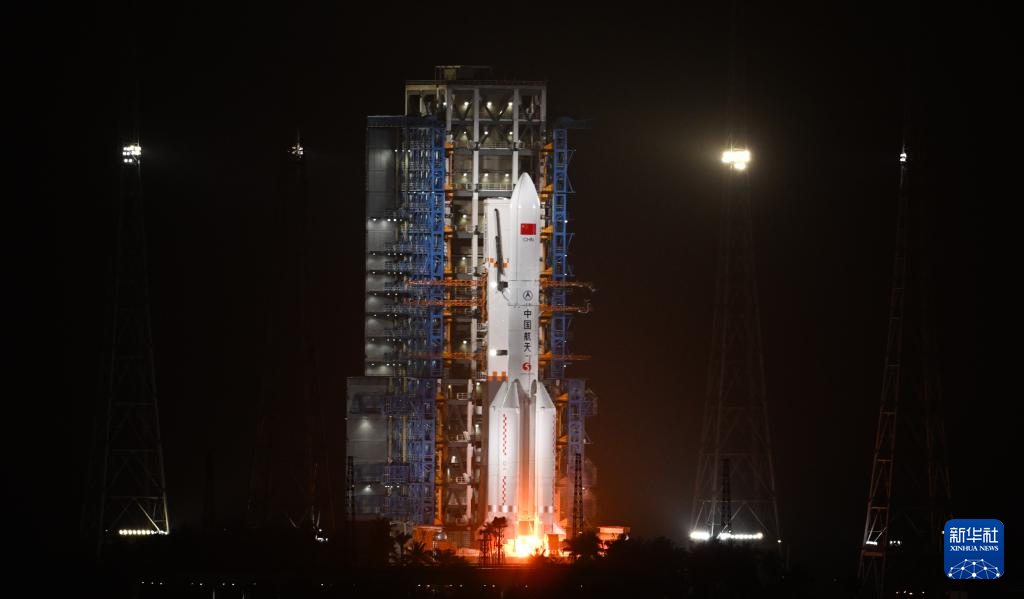
长征五号运载火箭

Search documents
东郊椰林的晨间交响
Xin Lang Cai Jing· 2026-01-17 07:28
Core Insights - The article highlights the successful launch of satellites from the Wenchang Space Launch Site in Hainan, showcasing China's advancements in commercial space exploration and satellite technology [1][2][3] Group 1: Launch Events - The Wenchang Space Launch Site is positioned near the East Coast Coconut Forest, providing a unique vantage point for observing rocket launches, including the recent successful launch of 16 low-orbit satellites [1][2] - The Long March 12 rocket was used for the satellite launch, marking the 82nd mission of the Shanghai Micro-Satellite Engineering Center and the 238th satellite launched by the center across various fields including communication and navigation [2] Group 2: Historical Context - The article reflects on the evolution of China's space program, contrasting past failures with current successes, emphasizing the resilience and dedication of the aerospace community [2][3] - It notes the significant progress made in the frequency of rocket launches, which were once considered distant dreams, now realized as a part of China's space exploration efforts [3] Group 3: Cultural Significance - The launch events are described as a blend of natural beauty and human achievement, symbolizing the intersection of nature and technology, and evoking a sense of pride and hope for the future [2][3] - The atmosphere during the launches is depicted as a harmonious symphony of sounds and sights, merging the tranquility of the coastal environment with the powerful roar of rocket launches [3]
行业点评报告:美军突袭委内瑞拉,商业航天持续催化
KAIYUAN SECURITIES· 2026-01-05 01:46
Investment Rating - The industry investment rating is "Positive" (maintained) [1] Core Views - The defense and military industry index increased by 9.24% over the past two weeks, outperforming the CSI 300 index, which rose by 1.35%, resulting in an excess return of 7.89% [5][14] - The current PE-TTM (excluding negative values) for the military industry is 78.44 times, which is higher than the 71.89 times recorded two weeks ago, indicating a relative high valuation [5][24] - The aerospace equipment sector has shown significant growth, with a 35.80% increase over the past two weeks, while the naval equipment sector has underperformed with only a 0.79% increase [16] Summary by Sections 1. Market Review - The military index ranked first among 31 industries, with a year-to-date increase of 34.30%, compared to a 17.66% increase in the CSI 300 index, resulting in a relative return of 16.64% [17][19] 2. Industry News - The geopolitical landscape has intensified, with significant military activities reported, including U.S. military operations in Venezuela and joint military exercises in the Taiwan Strait [6][28] - China's aerospace activities have been robust, with multiple successful rocket launches and supportive government policies aimed at enhancing the aerospace industry [7][30] 3. Stock Performance - Notable stock performances include China Satellite, which saw a 61.70% increase over the past two weeks, followed by Aerospace Development and Guanglian Aviation with increases of 48.03% and 47.55%, respectively [21][23] 4. Industry Valuation - The military industry's current PE-TTM of 78.44 times is positioned at the 75.62% percentile since early 2015, indicating a strong valuation outlook as the "14th Five-Year Plan" becomes clearer [24][26]



西昌卫星发射中心2025年发射任务圆满收官
Xin Lang Cai Jing· 2026-01-01 10:32
Core Insights - The successful completion of 31 launches in 2025 at the Wenchang and Xichang launch sites highlights China's advancements in space launch capabilities, achieving a 100% success rate for the year [1][2] Group 1: Launch Achievements - The Wenchang launch site has increased its annual launch frequency from 2 to 12 since its first mission in 2016, showcasing significant growth in China's space launch capabilities [2] - The Long March 7 rocket has consistently improved its reliability, with a reduction in testing cycles from approximately 40 days to around 20 days, leading to a 30% increase in launch reliability [2] Group 2: Technological Innovations - The Xichang Satellite Launch Center has expanded its testing and launch capabilities to include 17 types of rockets, overcoming technical challenges such as multi-rocket adaptability and automated data interpretation [3] - The introduction of intelligent monitoring systems has enhanced operational efficiency and launch reliability, allowing for real-time data analysis and decision-making support [3] Group 3: Historical Context and Future Outlook - The evolution of launch standards and practices at the Xichang site reflects a commitment to continuous improvement, transitioning from manual processes to advanced technological solutions [4][5] - The Xichang Satellite Launch Center is set to continue its role in significant national missions, including the Tianzhou and lunar exploration projects, indicating ongoing advancements in China's space exploration efforts [5]
美飞行器成功发射,搭载“轮椅使用者”进入太空;加速进化Booster K1完成首批量产交付丨智能制造日报
创业邦· 2025-12-22 03:11
Group 1 - XCMG's intelligent factory can customize over 1,200 types of cranes, with overseas orders increasing from 5% in 2020 to over 50% now, indicating a shift from traditional mass production to mass customization [2] - The company has developed a platform for manufacturing cranes over 1,000 tons, utilizing modular design and cloud collaboration to meet personalized market demands [2] - XCMG has achieved a 55% reduction in overall order delivery cycle through six online systems that centralize and visualize the entire process from order receipt to product delivery [2] Group 2 - Blue Origin's New Shepard spacecraft successfully launched six crew members into space, including the first wheelchair user, marking a significant milestone in space accessibility [2] - Accelerator Evolution's Booster K1 has completed its first batch of mass production deliveries, with nearly 1,000 units shipped globally, and over 40% of sales coming from international markets [2] - China successfully launched the Communication Technology Test Satellite No. 23 using the Long March 5 rocket, which is intended for multi-band, high-speed satellite communication technology verification [2]


商业航天概念反复走强 神剑股份等多股涨停
Xin Lang Cai Jing· 2025-12-22 01:44
Group 1 - The commercial aerospace sector is experiencing a strong resurgence, with companies like Shenjian Co. achieving three consecutive trading limit increases, and Guojijiangong achieving two consecutive trading limit increases [1] - Beidouxingtong reached the trading limit, while other companies such as Taigang Stainless Steel, Mengsheng Electronics, Chengdu Huamei, Shanghai Port Bay, and Huali Chuantong saw their stock prices rise over 5% [1] - A significant event reported by CCTV News indicates that on December 20, 2025, at 20:30, China will successfully launch the Communication Technology Test Satellite No. 23 using the Long March 5 rocket from the Wenchang Space Launch Site, marking a successful mission with the satellite entering its designated orbit [1]


“胖五”出征!发射成功!
Xin Lang Cai Jing· 2025-12-21 00:07
Core Viewpoint - The successful launch of the Long March 5 rocket and the deployment of the Communication Technology Test Satellite No. 23 marks a significant achievement in China's space capabilities, particularly in satellite communication technology validation [1] Group 1: Launch Details - The Long March 5 rocket was launched from the Wenchang Space Launch Site on December 20 at 20:30 [1] - The mission successfully placed the Communication Technology Test Satellite No. 23 into its designated orbit [1] Group 2: Satellite and Rocket Specifications - The Communication Technology Test Satellite No. 23 was developed by the China Aerospace Science and Technology Corporation's Fifth Academy and is intended for multi-band, high-speed satellite communication technology verification [1] - The Long March 5 rocket features a fairing with a diameter of 5.2 meters and a height of 18.5 meters, designed to better accommodate the development needs of large satellite platforms in China [1] - This configuration enhances the rocket's capability to execute diverse mission tasks [1]
我国在文昌成功发射通信技术试验卫星二十三号
Hai Nan Ri Bao· 2025-12-20 23:40
Core Points - The successful launch of the communication technology test satellite No. 23 took place on December 20, 2025, at 20:30 Beijing time from the Wenchang Space Launch Site using the Long March 5 rocket [1] - The satellite is primarily intended for the verification of multi-band, high-speed satellite communication technology [1] - This mission marks the 618th flight of the Long March series of launch vehicles [2]
中国成功发射通信技术试验卫星二十三号
Xin Lang Cai Jing· 2025-12-20 15:01
Core Viewpoint - China successfully launched the Communication Technology Test Satellite No. 23 using the Long March 5 rocket, marking a significant achievement in satellite communication technology validation [1][3]. Group 1: Launch Details - The launch took place at 20:30 Beijing time on December 20 at the Wenchang Space Launch Site [1]. - The Long March 5 rocket, developed by China Aerospace Science and Technology Corporation, is the most powerful model in the Long March series, with a core diameter of 5 meters and a total thrust exceeding 1,000 tons [3]. - This mission represents the 10th launch of the Long March 5 rocket and the 618th flight of the Long March series [3]. Group 2: Satellite Purpose - The Communication Technology Test Satellite No. 23 is primarily designed to conduct multi-band, high-speed satellite communication technology verification [1].
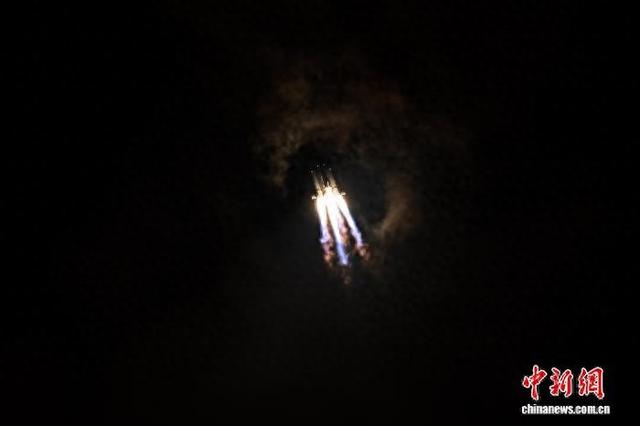
长征五号火箭成功发射通信技术试验卫星二十三号
Xin Lang Cai Jing· 2025-12-20 14:58
Core Viewpoint - The successful launch of the Long March 5 rocket marks a significant achievement in China's space exploration efforts, particularly in satellite communication technology validation [1][4]. Group 1: Launch Details - The Long March 5 rocket was launched on December 20 at 20:30 from the Wenchang Space Launch Site, successfully placing the Communication Technology Test Satellite No. 23 into its designated orbit [1]. - This launch represents the 618th mission of the Long March series of rockets, showcasing the ongoing capabilities and advancements in China's space launch technology [5]. Group 2: Satellite and Rocket Specifications - The Communication Technology Test Satellite No. 23 was developed by the China Aerospace Science and Technology Corporation's Fifth Academy, focusing on multi-band and high-speed satellite communication technology verification [4]. - The Long March 5 rocket, developed by the First Academy of the China Aerospace Science and Technology Corporation, features a two-and-a-half stage liquid launch vehicle design with a diameter of 5.2 meters and a height of 18.5 meters, enhancing its ability to meet the demands of large satellite platforms [4]. Group 3: Future Developments - The development team for the Long March 5 rocket will concentrate on high-density launches, optimizing the launch process, and advancing new rocket configurations and technology applications to better meet future launch requirements [4].
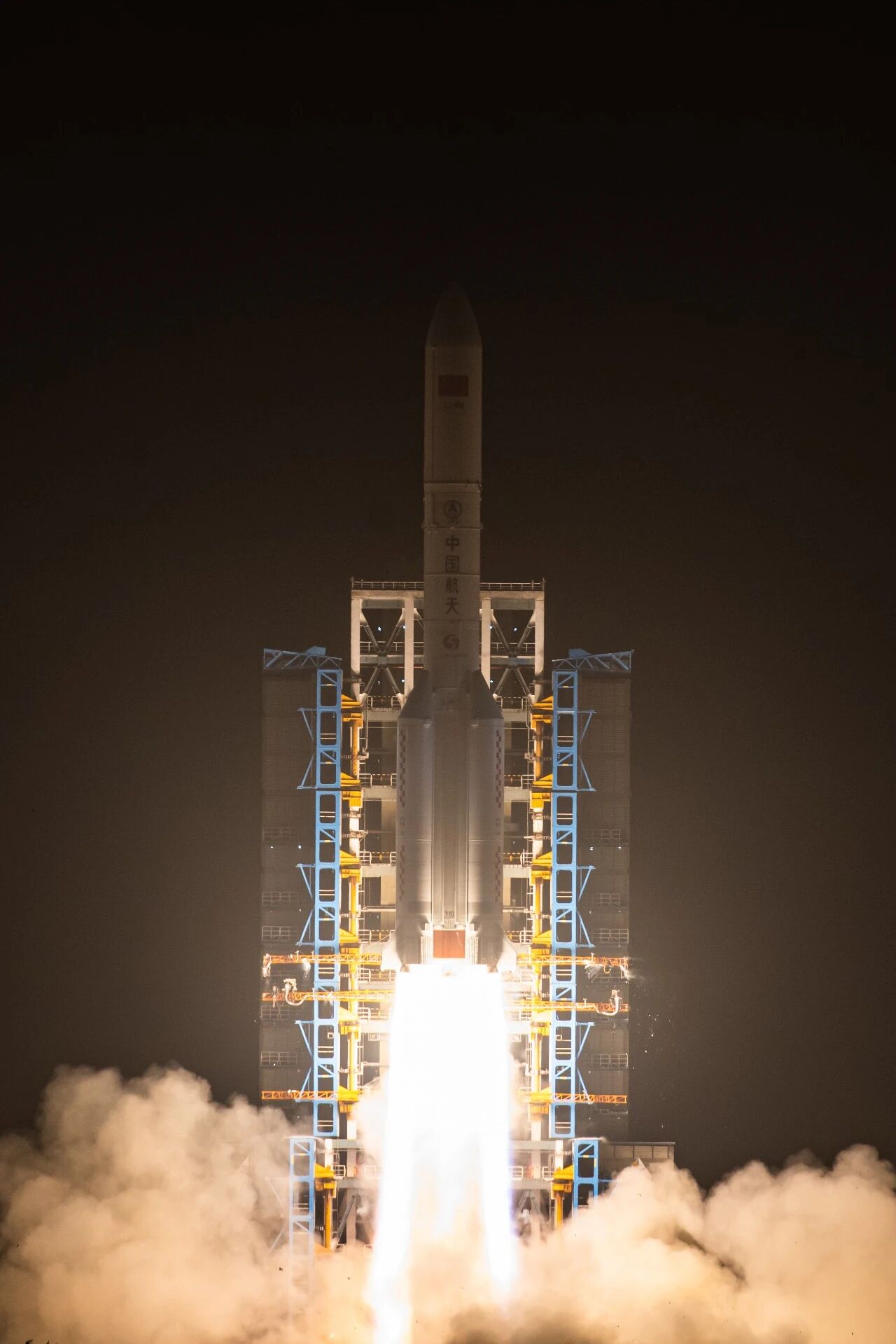
通信技术试验卫星二十三号成功发射
Ke Ji Ri Bao· 2025-12-20 14:40
Core Viewpoint - The successful launch of the Long March 5 rocket on December 20, 2025, marks a significant achievement for China's aerospace industry, demonstrating advancements in satellite communication technology and the capabilities of the Long March series rockets [1][3]. Group 1: Launch Details - The Long March 5 rocket was launched from the Wenchang Space Launch Site at 20:30 on December 20, 2025, successfully placing the Communication Technology Test Satellite No. 23 into its designated orbit [1]. - This launch represents the 618th flight of the Long March series of rockets, highlighting the extensive operational history and reliability of this launch vehicle [3]. Group 2: Satellite and Rocket Specifications - The Communication Technology Test Satellite No. 23 was developed by the Fifth Academy of China Aerospace Science and Technology Corporation, focusing on multi-band and high-speed satellite communication technology verification [3]. - The Long March 5 rocket features a fairing with a diameter of 5.2 meters and a height of 18.5 meters, designed to better accommodate the development needs of large satellite platforms and enhance the rocket's capability to perform diverse missions [3].