
隆基HPBC2.0组件

Search documents
隆基三防组件银川实证:行业首张证书背后的“极限测试”
Zhong Guo Neng Yuan Wang· 2025-12-01 08:17
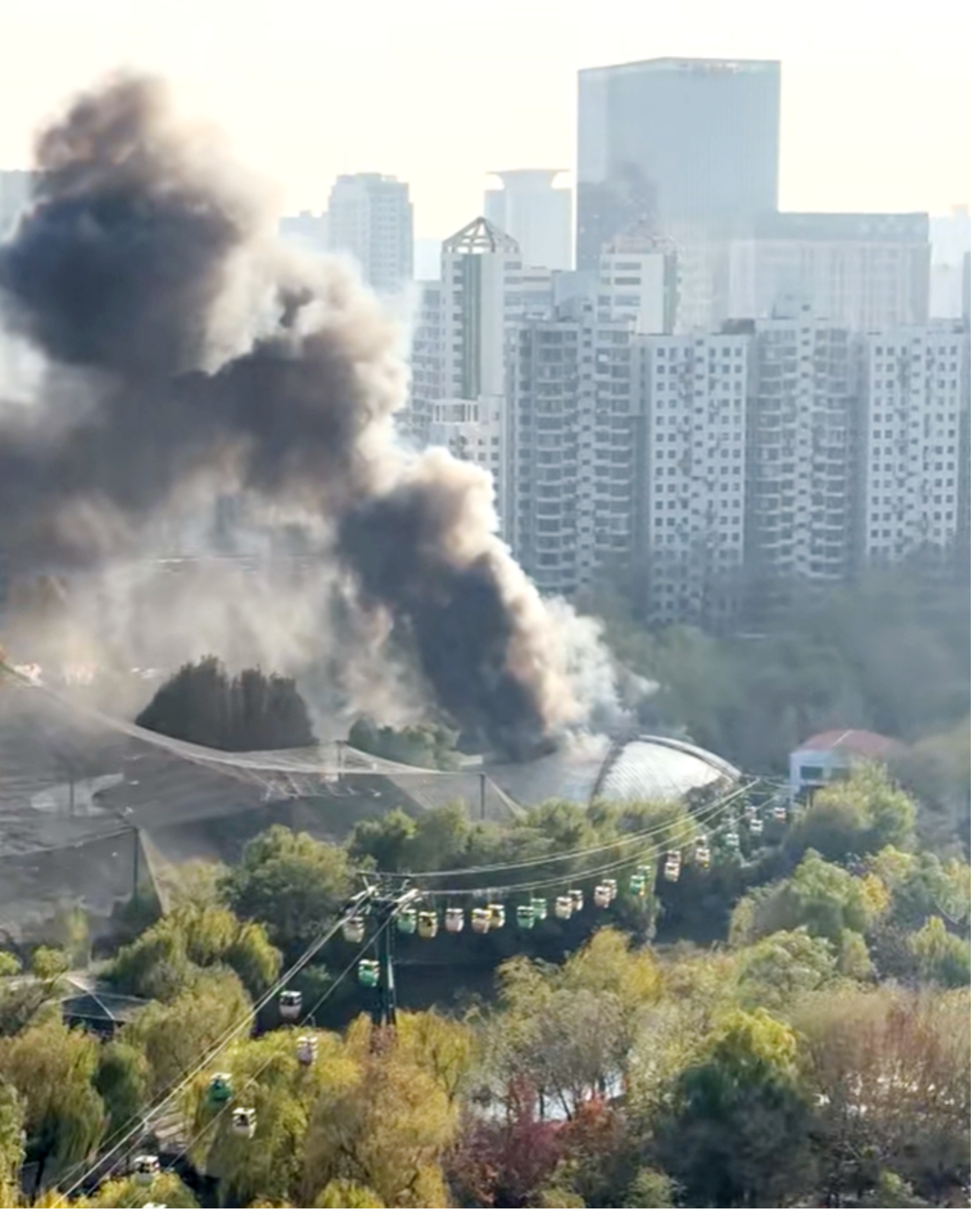
Core Viewpoint - The recent fire incidents linked to photovoltaic modules have raised significant concerns about their safety, prompting the industry to focus on the performance and reliability of these components in real-world conditions [1][3]. Group 1: Fire Safety and Component Testing - Multiple fire incidents in Jiangsu, Henan, and Zhejiang were traced back to photovoltaic modules, highlighting the urgent need for improved safety standards [1]. - A gathering of industry representatives took place at the CPVT testing center to evaluate the performance of Longi's newly certified "three-proof" modules under real-world conditions [3][6]. - The CPVT has established 12 outdoor testing bases across China to ensure that testing results accurately reflect the performance of components in various environmental scenarios [9]. Group 2: Performance Metrics of Three-Proof Components - Longi's three-proof components demonstrated a significant temperature difference compared to TOPCon components, with temperatures reaching 97.1°C for three-proof modules versus 169.1°C for TOPCon under the same conditions [13]. - The three-proof components showed a 6.3% increase in average power generation compared to BC components, indicating their superior efficiency [6]. - In scenarios with shading, three-proof components outperformed TOPCon modules, achieving a 50% increase in power generation under certain conditions [17][25]. Group 3: Market Response and Innovation - Despite a higher price point of 0.1 yuan per watt compared to mainstream products, the sales proportion of Longi's three-proof components has surged to over 70% in the distributed business segment, reflecting strong market demand [38]. - The successful testing and validation of three-proof components have established a new standard for safety and efficiency in the photovoltaic industry, moving beyond mere price competition [38].


装备制造行业观察:工程机械淡季回暖;高效率光伏电池技术加速迭代
Sou Hu Cai Jing· 2025-08-04 05:04
Group 1 - The equipment manufacturing industry is showing structural differentiation, with marginal improvements in the engineering machinery market during the traditional off-season, accelerated demand growth for high-efficiency components driven by photovoltaic battery technology iteration, and short-term pressure on automotive consumption but long-term potential remaining [1][2] - In July, the China Engineering Machinery Market Index (CMI) was 100.73, a year-on-year increase of 5.54% and a month-on-month decrease of 4.20%, indicating a marginal improvement trend despite being a traditional off-season [1] - Leading companies in the engineering machinery sector are demonstrating resilience through technological accumulation and scale effects, with core enterprises offsetting domestic market fluctuations via smart upgrades and overseas market expansion [1][2] Group 2 - The recent procurement by Huadian Group for photovoltaic components, totaling 20GW, emphasizes the demand for N-type high-efficiency components with a conversion efficiency of ≥23.8%, showcasing significant short-term improvement in high-efficiency battery technology [1] - BC (Back Contact) battery technology is becoming a core direction for cost reduction and efficiency enhancement in the industry, facing challenges such as high process complexity and equipment costs, but leading companies are gradually overcoming these technical bottlenecks [2] - The equipment manufacturing industry is undergoing a transformation driven by technology, with smart and green upgrades enhancing the added value of equipment in engineering machinery, while the photovoltaic sector is accelerating its escape from "involution" competition through high-efficiency battery technology iteration [2]