
隔夜指数掉期(OIS)

Search documents
失去最后一个AAA评级后 美国再现债市杀
Sou Hu Cai Jing· 2025-05-19 08:14
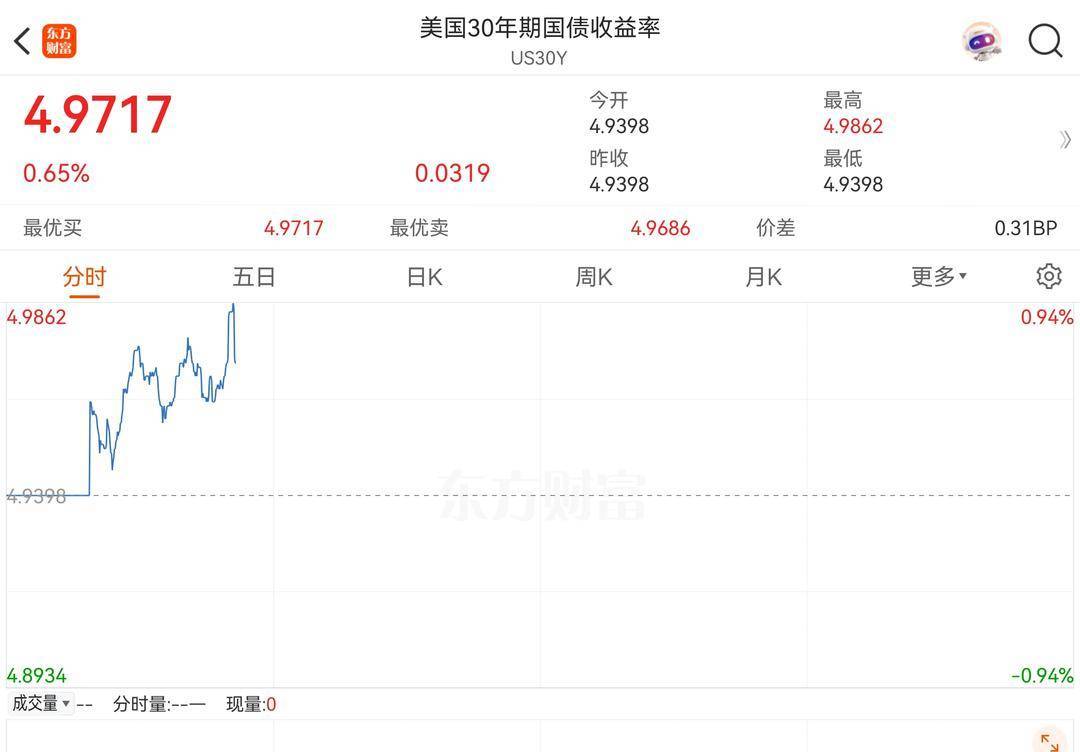
Group 1 - Moody's downgraded the U.S. credit rating from Aaa to Aa1, marking the first time all three major rating agencies have downgraded the U.S. [1] - The downgrade raises concerns about the U.S.'s status as the world's premier sovereign borrower, putting pressure on U.S. dollar assets [1][3] - Following the downgrade, U.S. stock futures, Treasury futures, and the dollar index weakened, with the 30-year Treasury yield approaching 5%, the highest since mid-2007 [1] Group 2 - The rise in bond yields, including a 10-year Treasury yield reaching 4.49%, increases the debt repayment burden for the U.S. government and threatens to weaken the real economy by raising loan rates [2][5] - Moody's indicated that the U.S. government's debt-to-interest payment ratio has been rising for over a decade, significantly higher than other sovereign nations with similar ratings [4] - The agency expects the fiscal deficit to widen due to growing welfare expenditures, with a deteriorating fiscal performance compared to other high-rated countries [5]

摩根大通:穆迪下调评级将推高美国利息成本
news flash· 2025-05-18 23:44
Core Viewpoint - Moody's downgrade of the U.S. rating is expected to increase interest costs in the long term, leading to a decrease in U.S. Treasury prices relative to the overnight index swap (OIS) for matching maturities [1] Group 1: Impact on Interest Rates - The downgrade by Moody's is anticipated to raise interest expenditures, which will affect the pricing of U.S. Treasuries [1] - The report indicates that under similar conditions, the downgrade is likely to narrow the 30-year swap spread by approximately 5 basis points [1] Group 2: Market Reactions - The current demand structure has undergone a significant change, and there is uncertainty in trade and monetary policy, leading to a bearish tilt in the short term [1] - The volatility resulting from this event is expected to be less severe than the fluctuations observed after the tariff announcement in early April, as investor positions are now more neutral [1] - U.S. Treasuries are showing a higher risk premium compared to other similarly rated developed market sovereign bonds, suggesting that the price decline may be smaller than indicated by the coefficients [1]
