
顽固性失眠麻醉治疗系统

Search documents
A股脑机接口概念风起:十日涨出千亿市值,多只个股坐上“过山车”
Bei Ke Cai Jing· 2026-01-16 11:29
Core Viewpoint - The brain-computer interface (BCI) sector in the A-share market has shown significant activity at the beginning of 2026, with a cumulative increase of 18.04% in the BCI theme index as of January 16, 2026, indicating a strong interest and potential for commercialization in this emerging industry [2][4]. Industry Overview - The BCI industry is projected to reach a market size of trillions, transitioning from laboratory research to commercial applications, driven by advancements in technology and supportive government policies [3]. - The Ministry of Industry and Information Technology and other departments have emphasized the importance of BCI in their strategic plans, including its inclusion in the "14th Five-Year Plan" for future industrial development [3]. Market Performance - As of January 16, 2026, the total market capitalization of 26 listed companies in the BCI sector has increased by approximately 108.7 billion yuan over ten trading days [8]. - Notable companies like Innovation Medical and Meihua Medical have experienced significant stock price fluctuations, reflecting the volatile nature of the market and investor sentiment towards BCI technologies [5][7]. Company Developments - Innovation Medical's subsidiary, Boling Brain Machine Technology, has launched products aimed at rehabilitation for stroke patients, although it reported operating losses of 6.6 million yuan and 8.66 million yuan in 2023 and 2024, respectively [6]. - Meihua Medical, a leader in cochlear implants, is actively collaborating with BCI clients to facilitate the transition from laboratory research to commercial production, highlighting the interconnectedness of BCI and existing medical technologies [7]. Strategic Collaborations - Companies like Yahui Long and Shenzhen Brain Machine Star Chain Technology have entered strategic partnerships to develop BCI-related products, aiming to enhance diagnostic and treatment capabilities in central nervous system diseases [9]. - Aipeng Medical is also expanding its business into BCI applications, focusing on pain management and sleep disorders, indicating a broader trend of diversification within the medical device sector [9]. Technical Insights - The core technological barriers in the BCI industry are concentrated in the upstream supply chain, including hardware components and surgical techniques, with significant potential for growth in domestic market penetration and localization [10].



爱朋医疗(300753) - 300753爱朋医疗投资者关系管理信息20260111
2026-01-11 15:10
Company Overview - Aipeng Medical focuses on medical devices, specializing in pain management and upper airway management, while also exploring brain-computer interface innovations [5] - The company has a strategic partnership with Ruishen'an Medical, a leading player in the neuroregulation field in China [5] Product Competitiveness - The "Multimodal ADHD Behavioral Training System" integrates data connectivity between in-hospital and home training environments, addressing both medication and behavioral training as primary treatment options [6] - The system aims to provide a comprehensive training solution, mitigating risks associated with traditional single behavioral training products [6] Clinical Applications - The Persistent Insomnia Anesthesia Treatment System has been implemented in hospitals, showing promising treatment outcomes and attracting interest from sleep and anesthesia specialists [7] - The company’s EEG collection products are essential components of the ADHD treatment system, with relevant pricing established in various provinces [9] Future Investments - Aipeng Medical plans to continue exploring brain-computer interface opportunities aligned with its strategic direction, focusing on sensor technology, signal processing, and clinical applications for mental health disorders [10] - The establishment of an AI and Brain-Computer Engineering Research Institute aims to drive innovation in pain management, anesthesia, and mental health diagnostics [10] Business Progress of Ruishen'an - Ruishen'an has successfully launched several products, including the implantable vagus nerve stimulator and the rechargeable spinal cord stimulator, generating revenue [11] - The first domestic implantation of a closed-loop neurostimulation system for Parkinson's disease is expected to occur by the end of 2025, marking a significant advancement in clinical practice [11]
脑机接口商业化进程提速将从“医疗试验工具”蜕变为“可普及产品”
Sou Hu Cai Jing· 2026-01-06 01:30
Group 1 - The brain-computer interface (BCI) sector is gaining significant attention, with a notable increase in stock prices for over 10 companies, including Sanbo Brain Hospital Management Group and Meihai Medical, with the sector rising by 13.24% as of January 5 [1] - Elon Musk's Neuralink plans to begin large-scale production in 2026, transitioning to a more streamlined and fully automated surgical process, indicating a shift towards commercialization in the BCI field [1] - The establishment of Gestalt Technology in China marks a new direction in BCI using ultrasound technology, highlighting the country's advancements in this area [1] Group 2 - The year 2025 is anticipated to be a pivotal year for BCI development in China, with multiple technological breakthroughs expected across invasive, semi-invasive, and non-invasive methods [2] - The first clinical trial of an invasive BCI in China is set to take place in June 2025, positioning the country as the second globally to enter this phase [2] - The domestic production of core BCI technologies is accelerating, with a clinical implantation of a domestically developed BCI chip scheduled for September 2025 [2] Group 3 - The primary application of BCI technology is in healthcare, but its potential is expanding into areas such as motor function rehabilitation and chronic pain management [3] - Recent policies from various regions in China are providing strong support for BCI development, focusing on innovation, project support, and application demonstration [3] - By 2027, significant breakthroughs in key BCI technologies are expected, along with the establishment of advanced technical, industrial, and standard systems [3] Group 4 - The BCI market in China is projected to reach 3.2 billion yuan in 2024, with a growth rate of 18.8%, and is expected to grow to 6.14 billion yuan by 2028, reflecting a compound annual growth rate of 17.7% from 2024 to 2028 [4] Group 5 - Companies in the BCI industry are focusing on key components and product applications to accelerate the transition from clinical validation to large-scale commercialization [6] - Meihai Medical is actively collaborating with BCI clients to facilitate efficient commercialization from laboratory development to mass production [6] - Nanjing Mailland Medical Technology expects to obtain its first BCI medical device registration certificate in Q1 2026, which will enable rapid application of this technology [6] Group 6 - BCI companies are encouraged to focus on essential medical needs and collaborate with research institutions to enhance the localization of core components [7] - Establishing collaborative platforms within the industry can help share testing resources and data, reducing R&D costs [7] - Companies should leverage insurance and local policy incentives to improve product cost-effectiveness while balancing R&D investments with commercialization efforts [7]
爱朋医疗20260105
2026-01-05 15:42
Summary of Aipeng Medical Conference Call Company Overview - **Company**: Aipeng Medical - **Industry**: Non-invasive brain-computer interface (BCI) technology Key Points Business Applications and Revenue - Aipeng Medical has multiple applications in the non-invasive BCI field, including: - Anesthesia depth monitoring device with approximately 10 million yuan in revenue [2][4] - Treatment system for refractory insomnia, already implemented in Shenzhen [2][8] - ADHD behavior management system, combining EEG technology and data platforms [2][5] - The anesthesia depth monitoring device market potential is significant, with a device market size nearing 1 billion yuan and consumables market exceeding 4 billion yuan [2][7] - The company aims to achieve revenue growth through partnerships with hospitals, targeting around 100 patients per hospital for the insomnia treatment system, potentially generating millions in revenue [2][12] Market Potential and Growth - The refractory insomnia treatment system targets approximately 6 million patients in China, with a market strategy involving collaboration with multiple hospitals [2][8] - The ADHD behavior management system addresses over 20 million affected children, with a commercial revenue forecast of up to 100 million yuan annually, contingent on treatment rates [2][9] Product Development and Innovations - Aipeng Medical is developing a semi-invasive epilepsy warning system that provides alerts 3-5 minutes in advance using flexible electrodes [2][6] - The company has a stake in Changzhou Ruishen'an, focusing on implanted neuro-regulation products, with plans to launch an upgraded DBS product by 2025 [2][11] - Future product development includes a semi-invasive epilepsy monitoring prototype and ongoing research projects in the BCI field [2][15][16] Competitive Landscape and Market Strategy - The pain management business has maintained a 23% market share despite competitive pressures, covering 2,800 hospitals [2][17] - The nasal care segment faces intense competition, prompting a shift to an OTO model and the development of new drug-device combination products [2][17] - The company is focusing on enhancing its competitive edge through strategic adjustments and product innovation [2][17] Financial Projections - For 2026, Aipeng Medical anticipates modest growth in pain management revenue and stable performance in nasal care, while BCI revenue is projected between 30-50 million yuan [2][18] - The company expects overall revenue growth, although BCI business profits may be lower due to high R&D investments [2][18] Team and Expertise - The BCI team comprises experts from various prestigious institutions, enhancing the company's research and development capabilities in sensor technology, neural algorithms, and embedded systems [2][19] Future Directions - Aipeng Medical plans to expand its BCI business, focusing on both non-invasive and invasive technologies, while accumulating core technical expertise [2][20]
马斯克官宣量产引爆脑机接口 A 股“玩家”能否弯道超车?
2 1 Shi Ji Jing Ji Bao Dao· 2026-01-05 06:55
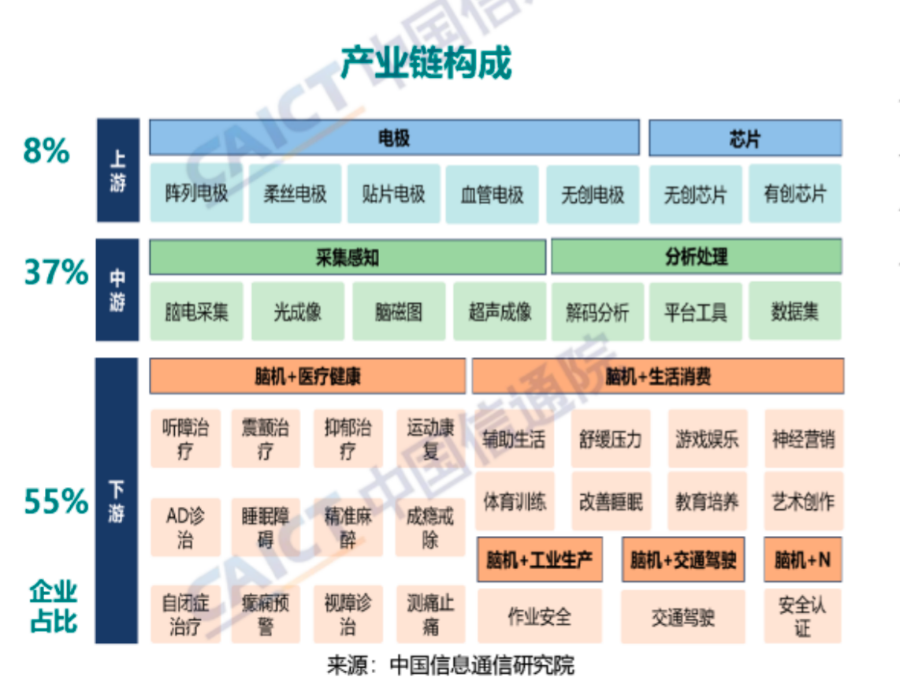
Core Viewpoint - The brain-computer interface (BCI) industry is experiencing rapid growth, driven by advancements in technology and supportive government policies, with significant developments expected by 2026 when large-scale production is set to begin [2][3]. Industry Developments - Neuralink plans to start mass production of BCI devices in 2026, utilizing nearly fully automated surgical processes [2]. - The BCI index in the A-share market rose by 9.37%, with over 20 stocks, including companies like Botao Bio and Sanbo Brain Science, hitting the daily limit [2]. - The National Healthcare Security Administration (NHSA) has issued guidelines for BCI rehabilitation charges, which has accelerated the industry's growth [2]. Policy Support - The 14th Five-Year Plan identifies BCI as one of six key future industries, with specific pricing projects established for both invasive and non-invasive BCI technologies [3]. - New regulations from the NHSA in September 2025 will facilitate the coding of innovative medical products, further promoting BCI clinical applications [3]. Technological Breakthroughs - China has made significant strides in invasive BCI technology, becoming the second country globally to enter clinical trials for invasive BCI systems [4]. - The "North Brain No. 1" GCP multi-center clinical trial, set to launch in October 2025, will be the first to implement a high-throughput, wireless, semi-invasive BCI system with over 100 channels [4]. Competitive Landscape - The BCI industry in China is competitive, with the potential to lead globally, as companies focus on serving downstream clients, including hospitals and patients [5]. - The BCI industry has established a complete supply chain, covering upstream materials and chips, midstream signal processing, and downstream applications in healthcare and consumer products [6]. Regulatory Focus - BCI products, especially invasive types, are classified as high-risk medical devices, necessitating strict regulatory oversight [8]. - Companies like Xiangyu Medical and Aipeng Medical are actively pursuing product registrations for various BCI applications, including rehabilitation and monitoring systems [8][9].




爱朋医疗:公司布局多模态ADHD行为训练系统
Zheng Quan Ri Bao· 2025-12-25 08:45
Core Viewpoint - The company has developed a multimodal ADHD behavior training system that connects data between in-hospital behavior training centers and at-home training scenarios, utilizing scientific EEG monitoring and multimodal intervention training to help children improve hyperactivity and attention deficit behaviors, enhancing focus [2] Group 1 - The company possesses a deep technical reserve in anesthesia depth monitoring, being one of the few in China to master anesthesia depth index monitoring, which is crucial for perioperative monitoring, diagnosis, and early warning applications [2] - The company has launched a stubborn insomnia anesthesia treatment system designed to meet clinical needs for stubborn insomnia, integrating both hardware and software to support clinical treatment through intelligent interaction between doctors and patients [2] - The company plans to advance clinical innovative applications in perioperative brain state monitoring, ADHD, sleep disorders, and epilepsy among other mental health conditions [2]
爱朋医疗(300753) - 300753爱朋医疗投资者关系管理信息20251224
2025-12-25 08:20
Group 1: Company Overview - Aipeng Medical focuses on medical devices, particularly in pain management and upper airway management, while also exploring brain-computer interface (BCI) innovations [3] - The company has a strategic partnership with Ruishen'an Medical, a leading player in the domestic neuroregulation field [3] Group 2: Product Registration and Classification - The company has obtained three Class III medical device registration certificates for its perioperative brain state monitoring product [6] - The multi-modal ADHD behavior training system includes two Class II medical device registration certificates for its hospital and home versions [6] Group 3: Pricing and Reimbursement - The non-invasive BCI adaptation fee is set at 966 RMB per session in regions like Hubei, Zhejiang, and Jiangsu [7] - New regulations from the National Medical Insurance Administration have established a "green channel" for innovative medical products, including BCIs, to expedite clinical practice and application [7] Group 4: Technology and Market Strategy - The company prioritizes the commercialization of non-invasive BCI technologies while considering the strategic integration of high-barrier invasive technologies [5] - The company’s product offerings include a comprehensive system for treating stubborn insomnia, which integrates diagnostic, treatment, and monitoring solutions [8][9] Group 5: Commercialization and Research Initiatives - The ADM series anesthesia depth monitoring products have been launched, but revenue remains modest [10] - Aipeng Medical has established an AI and BCI research institute to drive technological innovation and clinical application in pain management, anesthesia, and mental health [10]
爱朋医疗:公司布局了多模态ADHD行为训练系统
Zheng Quan Ri Bao Wang· 2025-12-19 15:45
Core Viewpoint - The company Aipeng Medical (300753) is focusing on the development of a multimodal ADHD behavior training system that connects data between in-hospital behavior training centers and at-home training scenarios, utilizing scientific EEG monitoring and multimodal intervention training to help children improve hyperactivity and attention deficit behaviors, thereby enhancing concentration [1] Group 1 - The company has developed a multimodal ADHD behavior training system that integrates data from both hospital and home environments [1] - The system employs scientific EEG monitoring and multimodal intervention training methods to assist children in improving hyperactivity and attention deficit behaviors [1] - The company possesses advanced technology in anesthesia depth monitoring, being one of the few in China to master anesthesia depth index monitoring [1] Group 2 - Aipeng Medical has launched a stubborn insomnia anesthesia treatment system designed to meet clinical needs for treating persistent insomnia, combining hardware and software solutions [1] - The system addresses the digital interaction needs between doctors and patients both in and out of the hospital, providing strong support for clinical treatment [1] - The company plans to advance clinical innovative applications in perioperative brain state monitoring, ADHD, sleep disorders, and epilepsy treatment [1]
爱朋医疗:公司布局非侵入式脑机接口产品ADHD行为治疗管理系统和顽固性失眠麻醉治疗系统
Zheng Quan Ri Bao· 2025-12-02 12:08
Group 1 - The company, Aipeng Medical, has developed non-invasive brain-computer interface products, specifically an ADHD behavior management system and a treatment system for refractory insomnia [2] - There are corresponding charging directories for ADHD behavior treatment and refractory insomnia treatment in hospitals [2] - Regions such as Hubei, Zhejiang, and Jiangsu have introduced medical service pricing projects related to brain-computer interfaces, which will accelerate the clinical practice and application of these technologies [2]

爱朋医疗(300753.SZ):公司布局了非侵入式脑机接口产品ADHD行为治疗管理系统和顽固性失眠麻醉治疗系统
Ge Long Hui· 2025-12-02 07:41
Core Viewpoint - The company, Aipeng Medical (300753.SZ), is focusing on non-invasive brain-computer interface products, specifically an ADHD behavior management system and a treatment system for refractory insomnia [1] Group 1: Product Development - The company has developed non-invasive brain-computer interface products aimed at managing ADHD behavior and treating refractory insomnia [1] - Both ADHD behavior management and refractory insomnia treatment have corresponding fee schedules in hospitals [1] Group 2: Policy and Market Environment - Regions such as Hubei, Zhejiang, and Jiangsu have introduced medical service pricing projects related to brain-computer interfaces [1] - Relevant policies are expected to accelerate the clinical practice and application of brain-computer interfaces [1]