
脑机接口经颅磁刺激仪

Search documents
麦澜德一非侵入式脑机接口产品取得医疗器械注册证
Xin Lang Cai Jing· 2026-01-09 06:25
Core Viewpoint - The approval of the medical device registration certificate for the Mindray brain-computer interface transcranial magnetic stimulation device marks a significant breakthrough in advanced medical technology for the company, indicating a substantial step towards the industrial application of non-invasive brain-computer interfaces and opening new avenues for future technological expansion and revenue growth [1] Group 1 - The Jiangsu Provincial Drug Administration has granted a medical device registration certificate to Mindray for its brain-computer interface transcranial magnetic stimulation device [1] - This achievement signifies an important milestone in the field of advanced medical technology for the company [1] - The development paves the way for the practical application of non-invasive brain-computer interfaces, enhancing the company's growth potential [1]

麦澜德取得江苏首张非侵入式脑机接口医疗器械注册证 引领高端医疗器械新赛道
Zhong Zheng Wang· 2026-01-09 06:02
Core Insights - The company, Mailland, has achieved a significant milestone by obtaining the medical device registration certificate for its non-invasive brain-computer interface transcranial magnetic stimulation device, becoming the first in Jiangsu Province to do so [1][2] - This achievement marks a substantial breakthrough in the field of advanced medical technology and indicates a practical step towards the industrial application of non-invasive brain-computer interfaces, opening new avenues for future technological expansion and revenue growth [1][3] Company Developments - Mailland has been actively transforming its business and iterating its technology, establishing a solid revenue base in niche medical device sectors such as pelvic floor rehabilitation and reproductive rehabilitation, while also clearly positioning itself in high-end medical technology, including brain-computer interfaces [2] - The company’s brain-computer interface product focuses on non-invasive multimodal technology, combining EEG and fNIRS signals to enhance clinical usability and signal analysis accuracy, with expectations to obtain its first medical device registration certificate by Q1 2026 [2] Industry Trends - The brain-computer interface technology is entering a critical phase of commercialization and clinical application, benefiting from national policy support, the establishment of industry standards, and continuous breakthroughs in core technologies, indicating a shift from research validation to large-scale market expansion [2] - The domestic market for brain-computer interfaces is rapidly growing, with multiple technological routes, including invasive, semi-invasive, and non-invasive methods, suggesting a future integration of medical, rehabilitation, and consumer applications [2]
脑机接口竞赛打响 多家公司预订2026里程碑
2 1 Shi Ji Jing Ji Bao Dao· 2026-01-07 23:08
Core Insights - The brain-computer interface (BCI) market is poised for significant growth, driven by advancements in technology and supportive policies, with a projected global market size reaching $40 billion by 2030 and $145 billion by 2040 in medical applications alone [3][4]. Industry Overview - BCI technology connects the brain with external devices for information exchange, categorized into three types: invasive, semi-invasive, and non-invasive, each with varying signal quality and safety [2]. - The medical sector is the primary application area for BCI technology, accounting for 56% of its applications, significantly improving the quality of life for patients with severe motor disabilities [3]. Market Dynamics - The A-share market has seen a surge in BCI-related stocks, with over 50 billion yuan flowing into the sector, indicating strong investor interest following announcements from Neuralink about large-scale production plans [1][5]. - Companies like Beiyikang, Sanbo Neurosurgery, and Aipeng Medical are actively involved in BCI development, with significant advancements in both invasive and non-invasive technologies [5][6]. Investment Landscape - Neuralink's recent funding round raised $650 million, valuing the company at $9 billion, highlighting the market's optimism for invasive BCI technologies [8]. - The BCI sector in China has experienced nearly 100 financing events in the past five years, with total funding exceeding 10 billion yuan, indicating robust investment activity [8]. Challenges and Considerations - Despite the optimistic outlook, the BCI industry faces challenges such as high development costs, lengthy clinical validation processes, and reliance on imported core components [9]. - The commercial viability of BCI products is still in its early stages, with a need for clearer pathways to market for both invasive and non-invasive products [9].
A股超50亿元涌入,脑机接口概念狂掀涨停潮
21世纪经济报道· 2026-01-07 05:40
Core Viewpoint - The article highlights the rapid growth and investment potential in the brain-computer interface (BCI) sector, driven by technological advancements and significant market interest, particularly following announcements from Neuralink regarding large-scale production and automation of BCI devices [1][4][14]. Market Performance - The A-share BCI concept sector experienced a surge, with over 5 billion yuan flowing into the market, and the BCI index showing a cumulative increase of over 14% in the first three trading days of the year [1][8][11]. - Notable stocks in the BCI sector include Meihao Medical, which saw a 19.81% increase, and Innovation Medical, which rose by 9.99% [2]. Industry Overview - BCI technology connects the brain with external devices for information exchange, categorized into three types: invasive, semi-invasive, and non-invasive, each with varying levels of signal quality and risk [4]. - The healthcare sector is identified as the primary application area for BCI technology, accounting for 56% of its applications, with projections estimating the global BCI medical application market to reach $40 billion by 2030 and $145 billion by 2040 [4][6]. Policy and Development - The Chinese government has included BCI in its "14th Five-Year Plan," with goals for core technology breakthroughs by 2027 and positioning the industry among the world's leaders by 2030 [5][6]. - In 2025, several companies, including Boryeong and Ladder Medical, completed significant implantation trials, marking China's entry into clinical trials for invasive BCI after the U.S. [6]. Company Developments - Companies like Beiyikang and Aipeng Medical are actively involved in BCI, with Aipeng focusing on non-invasive technologies and partnerships for rehabilitation systems [10][12]. - Other firms, such as Xiangyu Medical and Xinwei Medical, are developing various BCI products and are expected to see rapid revenue growth in the coming years [10][12]. Investment Landscape - The BCI sector has attracted significant investment, with nearly 100 financing events in the past five years totaling over 10 billion yuan, and a notable 30% year-on-year increase in financing activities in 2025 [14]. - Analysts suggest that the BCI industry is on the verge of commercial growth, supported by policy and technological advancements, while also cautioning about the challenges of clinical validation and high costs [14][15].


脑机接口概念持续火热,多家上市公司回应
Zhong Guo Ji Jin Bao· 2026-01-07 02:08
Core Insights - The brain-computer interface (BCI) sector is gaining significant attention, with multiple listed companies responding to the growing interest in this technology [1][4]. Company Responses - Companies such as Xiangyu Medical and Mailland have reported advancements in their BCI projects, with Xiangyu Medical aiming to enter over 1,000 top-tier hospitals in China and Mailland expecting to obtain its first BCI medical device registration certificate by Q1 2026 [5][6]. - Chengdu Huayi and Yingjixin have highlighted their roles in the BCI hardware segment, focusing on signal processing components essential for BCI performance [6][7]. Strategic Collaborations - Yijia is exploring the integration of BCI technology with embodied intelligence robotics, having signed a strategic cooperation agreement with Mailland to develop applications in smart healthcare [7]. - Yahui Long has announced a strategic partnership with Shenzhen Brain Chain Technology to enhance clinical applications and market expansion of BCI technologies [8]. Investment and Market Potential - Strong Brain Technology has recently secured approximately 2 billion yuan in funding, positioning itself as a major player in the BCI field, second only to Neuralink [8]. - The global BCI market is projected to reach approximately $12.4 billion by 2034, with a CAGR of 17% from 2025 to 2034, indicating substantial growth potential [9]. Industry Outlook - The BCI industry is expected to experience significant development opportunities driven by technological innovations, policy support, and capital investments, with promising prospects in healthcare and consumer markets [10].
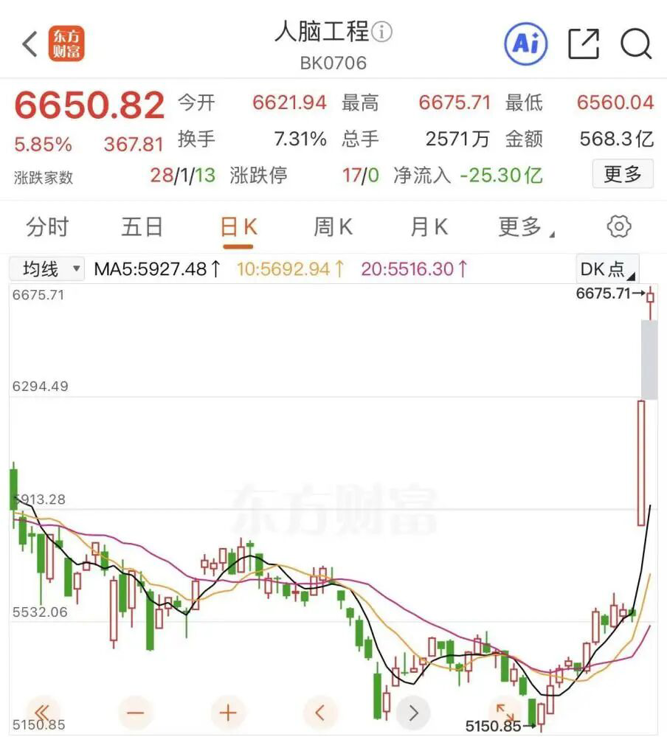
脑机接口彻底火了!多家A股回应
Zhong Guo Ji Jin Bao· 2026-01-07 00:40
Core Viewpoint - The brain-computer interface (BCI) concept continues to gain traction, with multiple listed companies responding positively to the trend, leading to significant stock price increases in the sector [1]. Company Responses - On January 6, several companies, including Weisi Medical, Sanbo Brain Science, Aipeng Medical, and others, saw their stocks hit the daily limit, with many achieving consecutive gains [3]. - Weisi Medical reported a 20.01% increase in stock price, indicating a strong market response to its developments in the neuro-rehabilitation field, expanding from single-device solutions to comprehensive "diagnosis-treatment-rehabilitation" offerings [4][5]. - Sanbo Brain Science highlighted the promising applications of BCI technology in clinical diagnosis and neuro-rehabilitation, also achieving a 20.01% stock price increase [7]. - Xiangyu Medical announced the establishment of a BCI laboratory and aims to develop a product system covering four major categories, also achieving a two-day stock increase [8]. - Aipeng Medical's stock rose by 20%, emphasizing the role of BCI as a bridge between the brain and external devices [9][10]. - Entropy Technology and Meihua Medical also reported significant stock increases, with the former focusing on BCI and vehicle-road collaboration technologies [11][12]. Industry Developments - Companies are actively engaging in the BCI sector, with Xiangyu Medical entering over 500 medical institutions and aiming for over a thousand top-tier hospitals nationwide, indicating a robust commercialization strategy [15]. - Mcland anticipates obtaining its first BCI medical device registration certificate by Q1 2026, which could accelerate the application of BCI technology in existing product lines [15]. - Chengdu Huayi and Yingjixin are focusing on the foundational hardware for BCI, with Chengdu Huayi developing high-precision ADCs and low-power FPGAs for signal processing [15][16]. - The integration of BCI with embodied intelligence is gaining attention, with companies exploring applications in smart healthcare and rehabilitation [17]. - Blue Si Technology announced its strategic investment in Qiang Brain Technology, which recently secured approximately 2 billion yuan in funding, marking it as the second-largest financing in the BCI field after Neuralink [18]. Market Outlook - The global BCI market is projected to reach approximately $12.4 billion by 2034, with a CAGR of 17% from 2025 to 2034, driven by technological advancements and increased capital investment [20]. - The transition of BCI from clinical validation to commercial scalability is expected to unlock significant market opportunities in healthcare and consumer sectors [20].




脑机接口彻底火了!多家A股回应
中国基金报· 2026-01-07 00:35
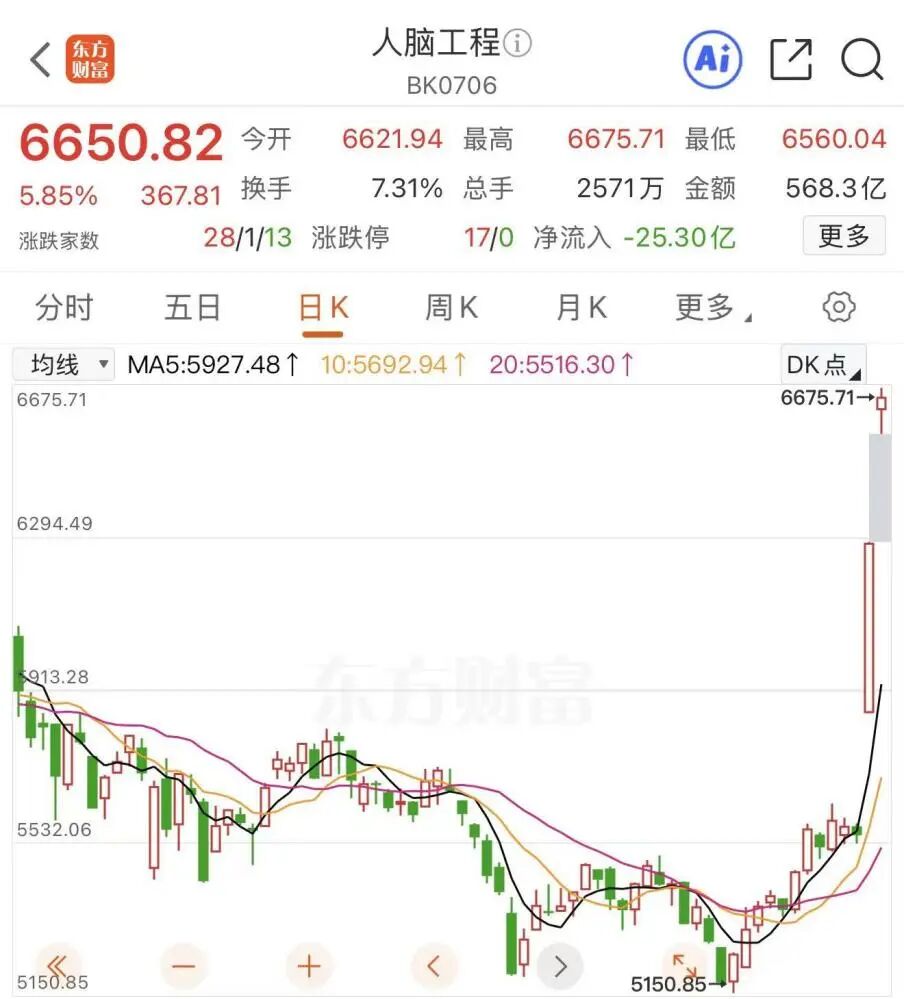
Core Viewpoint - The brain-computer interface (BCI) concept continues to gain traction, with multiple listed companies responding positively to the trend, leading to significant stock price increases in the sector [2][3]. Group 1: Stock Performance - On January 6, several companies in the BCI sector, including Weisi Medical, Sanbo Brain Science, and Aipeng Medical, saw their stocks hit the daily limit, with many achieving consecutive gains [3]. - Weisi Medical's stock rose by 20.01% to 69.70, while Sanbo Brain Science also increased by 20.01% to 84.94, indicating strong market interest [4][5]. Group 2: Company Developments - Weisi Medical is expanding its technology layout in the neuro-rehabilitation field from a single device to a comprehensive solution covering diagnosis, treatment, and rehabilitation [4]. - Sanbo Brain Science has established a BCI laboratory and is developing a product system that includes various applications in clinical diagnosis and neuro-rehabilitation [4]. - Aipeng Medical emphasizes the role of BCI as a bridge between the brain and external devices, highlighting its potential applications [5]. Group 3: Market Trends and Projections - The rehabilitation medical device sector is a key focus area, with companies like Xiangyu Medical aiming to enter over 1,000 top-tier hospitals in China, indicating a robust commercialization strategy [11]. - The global BCI market is projected to reach approximately $12.4 billion by 2034, with a CAGR of 17% from 2025 to 2034, reflecting significant growth potential [17]. Group 4: Collaborations and Innovations - Companies are exploring collaborations to integrate BCI technology with robotics, as seen in the partnership between Yijia and Maillande to develop brain-controlled robots [13]. - Blue Si Technology has become a strategic investor in Qiangnao Technology, indicating strong interest in the BCI hardware sector [14]. - Qiangnao Technology recently completed a financing round of approximately 2 billion, making it the second-largest financing in the BCI field after Neuralink [15].



脑机接口“人声鼎沸” 产业落地“步步为营”
Shang Hai Zheng Quan Bao· 2026-01-06 17:56
Core Viewpoint - The brain-computer interface (BCI) sector is experiencing significant growth driven by potential market demand, accelerated industrialization, and national strategic support, with expectations for further advancements by 2026 [1][2]. Market Performance - The BCI concept index surged, with a 9.95% increase on January 5, closing at 1937.43 points, followed by a 4.29% rise on January 6, reaching 2020.63 points, resulting in a cumulative increase of 14.67% over two days [2]. - On January 6, the trading volume in the BCI sector hit a record high of 376.32 billion yuan [2]. Company Developments - Multiple listed companies are actively pursuing BCI advancements, with announcements of strategic collaborations and product development plans for 2026 [3]. - Aihuilong signed a strategic cooperation framework with Shenzhen Brain Machine Starlink Technology to enhance diagnostic technologies for central nervous diseases [3]. - Mcland expects to obtain its first BCI medical device registration certificate in Q1 2026, integrating it into existing product lines [3]. - Xiangyu Medical plans to introduce dozens of new products this year to support various clinical needs [3]. Innovative Enterprises - Ladder Medical, the only domestic invasive BCI company in clinical validation, aims to establish a production base by mid-2026 for scalable and controllable production of core BCI components [4]. - The MEMS production base will facilitate high-throughput BCI product manufacturing for clinical applications [4]. Industry Challenges - Experts highlight that the scalability of invasive BCIs hinges on overcoming production and surgical reproducibility challenges [5]. - Key obstacles include enhancing the long-term safety and stability of invasive devices and improving the decoding accuracy for complex cognitive tasks [5]. - The industry must also address product approval timelines, commercialize applications, and cultivate interdisciplinary talent [5]. Technological Pathways - Continuous breakthroughs in hardware, such as high-density flexible electrodes and high-throughput chips, are noted, although the complexity of implantation procedures may delay widespread application [6]. - Non-invasive methods are seen as having advantages in safety and patient acceptance, with potential for expanded applications if key performance improvements are achieved [6].

脑机接口商业化进程提速将从“医疗试验工具”蜕变为“可普及产品”
Sou Hu Cai Jing· 2026-01-06 01:30
Group 1 - The brain-computer interface (BCI) sector is gaining significant attention, with a notable increase in stock prices for over 10 companies, including Sanbo Brain Hospital Management Group and Meihai Medical, with the sector rising by 13.24% as of January 5 [1] - Elon Musk's Neuralink plans to begin large-scale production in 2026, transitioning to a more streamlined and fully automated surgical process, indicating a shift towards commercialization in the BCI field [1] - The establishment of Gestalt Technology in China marks a new direction in BCI using ultrasound technology, highlighting the country's advancements in this area [1] Group 2 - The year 2025 is anticipated to be a pivotal year for BCI development in China, with multiple technological breakthroughs expected across invasive, semi-invasive, and non-invasive methods [2] - The first clinical trial of an invasive BCI in China is set to take place in June 2025, positioning the country as the second globally to enter this phase [2] - The domestic production of core BCI technologies is accelerating, with a clinical implantation of a domestically developed BCI chip scheduled for September 2025 [2] Group 3 - The primary application of BCI technology is in healthcare, but its potential is expanding into areas such as motor function rehabilitation and chronic pain management [3] - Recent policies from various regions in China are providing strong support for BCI development, focusing on innovation, project support, and application demonstration [3] - By 2027, significant breakthroughs in key BCI technologies are expected, along with the establishment of advanced technical, industrial, and standard systems [3] Group 4 - The BCI market in China is projected to reach 3.2 billion yuan in 2024, with a growth rate of 18.8%, and is expected to grow to 6.14 billion yuan by 2028, reflecting a compound annual growth rate of 17.7% from 2024 to 2028 [4] Group 5 - Companies in the BCI industry are focusing on key components and product applications to accelerate the transition from clinical validation to large-scale commercialization [6] - Meihai Medical is actively collaborating with BCI clients to facilitate efficient commercialization from laboratory development to mass production [6] - Nanjing Mailland Medical Technology expects to obtain its first BCI medical device registration certificate in Q1 2026, which will enable rapid application of this technology [6] Group 6 - BCI companies are encouraged to focus on essential medical needs and collaborate with research institutions to enhance the localization of core components [7] - Establishing collaborative platforms within the industry can help share testing resources and data, reducing R&D costs [7] - Companies should leverage insurance and local policy incentives to improve product cost-effectiveness while balancing R&D investments with commercialization efforts [7]
脑机接口商业化进程提速
Zheng Quan Ri Bao· 2026-01-06 00:59
Core Insights - The brain-computer interface (BCI) sector is gaining significant attention, with a notable increase in stock prices for over 10 companies, including Sanbo Brain Hospital Management Group and Shenzhen Meihua Medical Technology, with the sector rising by 13.24% as of January 5 [1] - Elon Musk's Neuralink plans to begin large-scale production in 2026, indicating a shift towards automated surgical processes, while a new company, Gestalt Technology, has been established in China to explore ultrasound technology in BCIs [1] - The BCI technology is expected to transition from clinical validation to commercialization by 2026, marking a significant evolution in the industry [1] Industry Developments - 2025 is anticipated to be a pivotal year for BCI development in China, with multiple technological breakthroughs across invasive, semi-invasive, and non-invasive methods [2] - The first invasive BCI clinical trial in China is set to take place in June 2025, positioning the country as the second globally to enter this phase [2] - The domestic production of core technologies is accelerating, with a clinical implantation of a domestically developed BCI chip expected in September 2025 [2] Application and Policy Support - The primary application of BCI technology is in healthcare, but it is expanding into areas such as motor function rehabilitation and chronic pain management [3] - Recent policies from various regions, including Shanghai and Beijing, are providing robust support for BCI innovation and commercialization, creating a comprehensive support system for funding, standards, and industry clustering [3] - The Ministry of Industry and Information Technology has set a goal for breakthroughs in key BCI technologies by 2027, aiming to establish an advanced technical and industrial system [3] Market Projections - The BCI market in China is projected to reach 3.2 billion yuan in 2024, with a growth rate of 18.8%, and is expected to grow to 6.14 billion yuan by 2028, reflecting a compound annual growth rate of 17.7% from 2024 to 2028 [4] Commercialization Efforts - Companies are focusing on key components and product applications to accelerate the transition from clinical validation to large-scale commercialization [6] - Meihua Medical is actively collaborating with BCI clients to facilitate efficient commercialization from laboratory development to mass production [6] - Nanjing Mailland Medical Technology anticipates obtaining its first BCI medical device registration certificate in Q1 2026, which will enable rapid application of the technology [6] Strategic Recommendations - BCI companies should focus on essential medical needs and collaborate with research institutions to enhance the localization of core components [7] - Establishing collaborative platforms within the industry can help share testing resources and reduce R&D costs [7] - Companies are encouraged to align with healthcare policies and improve product cost-effectiveness to balance R&D investments with commercialization timelines [7]