
新能源发展

Search documents
20260323A股风格及行业配置周报:周期波动上行,关注制造机会-20260324
Orient Securities· 2026-03-24 09:19
Group 1 - The report emphasizes the importance of manufacturing opportunities in the context of global energy security concerns, particularly highlighting China's competitive advantages in the new energy sector, including photovoltaic, wind power, and power transmission and distribution [6][19] - The escalation of Middle Eastern events has intensified global energy security anxieties, leading to a renewed focus on the diversification of energy supply through new energy sources, with significant growth potential for China's new energy industry in Europe and Asia [9][11] - The report identifies a potential rebound in coking coal prices due to supply constraints and rising demand, driven by geopolitical factors affecting coal imports and domestic supply dynamics [12][19] Group 2 - The trading sentiment in the market has cooled, with short-term emotions declining across large, mid, and small-cap stocks, although mid-term uncertainties for the CSI 500 index have slightly increased [21][26] - The report notes a divergence in industry trends, with a weakening trend in chemicals and a strong focus on opportunities in electric power equipment and agriculture, indicating a shift in market dynamics [24][26] - The agricultural sector is highlighted as having layout value due to rising prices in energy and chemical products, which are expected to push agricultural product prices upward, particularly for pork, rubber, sugar, corn, and oilseeds [15][19]
电新煤炭观点更新
2026-03-16 02:20
Summary of Key Points from Conference Call Records Industry Overview - **Energy Sector**: The records discuss the energy sector, particularly focusing on coal, lithium batteries, nuclear power, and the impact of geopolitical tensions on energy prices and supply chains. Core Insights and Arguments 1. **Geopolitical Risks**: The risk of blockade in the Hormuz Strait has heightened energy security concerns in the Asia-Pacific region, where countries like Japan, South Korea, and Taiwan rely heavily on natural gas (30%-50%) with low inventory levels (around 20%) [1][2][3]. 2. **Coal as a Substitute**: Australian coal is expected to become a key alternative due to the energy security pressures in the Asia-Pacific region, which may face more severe electricity shortages and rising energy prices [1][3]. 3. **Lithium Battery Industry Growth**: The lithium battery sector is entering a new growth cycle, with mainstream battery manufacturers expected to increase production by 10%-15% in Q2 2026. Leading companies like CATL are showing stable profitability [1][5]. 4. **Cost Pressures from Oil Prices**: Rising crude oil prices are driving up costs for negative electrode materials, with a lag in price transmission of 1-2 months. A potential shortage in separator and copper foil production is anticipated in H2 2026, leading to sustained price increases until 2027 [1][8]. 5. **Nuclear Power Revival**: The demand for natural uranium is expected to grow at a compound annual growth rate (CAGR) of 4.2% from 2024 to 2035, outpacing supply growth of 3.3%. The potential restart of nuclear power plants in the US, Japan, Germany, and Taiwan could add over 15GW of capacity [1][14][17]. 6. **Home Energy Storage**: The home energy storage sector is shifting from short-term production to long-term energy independence, with expected returns in Europe shortening to within 5 years. Policy subsidies in countries like the UK and Indonesia are likely to boost shipment expectations significantly [1][20][21]. Additional Important Insights 1. **Impact of Middle East Conflicts**: The ongoing conflicts in the Middle East are expected to have a threefold impact on the energy sector, primarily affecting oil prices, with potential daily supply disruptions exceeding 10 million barrels [2][4]. 2. **Investment Trends**: The energy crisis is reshaping investment strategies, with increased focus on nuclear power and renewable energy technologies. Historical patterns suggest that oil crises lead to significant investments in alternative energy sources [3][4][18]. 3. **Market Dynamics for Lithium Batteries**: The market's previous pessimism regarding the impact of rising lithium prices on demand is seen as overblown, with strong underlying demand from commercial vehicles and energy storage applications [5][6][9]. 4. **Supply Chain and Cost Transmission**: The lithium battery supply chain exhibits differentiated price transmission mechanisms, with the battery segment showing smoother cost pass-through compared to upstream materials [7][8]. 5. **Coal Market Dynamics**: Domestic coal prices in China have recently declined, with a notable price gap between domestic and imported coal, leading to a shift in procurement strategies among coastal power enterprises [11][12]. 6. **AI and Energy Development**: The development of AI power solutions in the US is expected to remain stable despite fluctuations in natural gas prices, with significant investments in energy infrastructure continuing [12][22]. This summary encapsulates the critical insights and trends discussed in the conference call records, highlighting the interconnectedness of geopolitical events, energy security, and market dynamics across various sectors.
代表委员声音︱2026能源发展:逐绿而行 向新发力 以智提质
国家能源局· 2026-03-09 10:14
Macro Strategy - The article emphasizes the need for a unified national energy planning system to avoid local blind spots and ensure effective project layout and dynamic adjustments [3] - It suggests improving market-driven pricing mechanisms to guide capital towards efficient sectors and avoid inefficient development practices [3] - A full lifecycle assessment mechanism is recommended to evaluate project value across multiple dimensions, ensuring alignment with economic and social development needs [3] New Energy Development - The focus is on achieving the 2035 new energy development goals by promoting a multi-energy approach and enhancing the resilience of power systems [4] - It aims for non-fossil energy consumption to increase by one percentage point annually, targeting 25% by 2030, while also improving energy efficiency [4] - The integration of AI technology is highlighted to enhance the power system's disturbance resistance [4] Power Grid - Recommendations include optimizing load calculation methods for integrated source-grid-load-storage systems and supporting direct green electricity trading [6] - The establishment of a national public service platform for hydrogen station management is proposed to enhance data sharing and operational efficiency [14] Coal Industry - The article advocates for the use of AI and big data to transform safety management in mining operations [9] - It suggests developing practical AI applications tailored to specific safety needs in coal mining, such as gas extraction and pressure prediction [10] Renewable Energy Collaboration - The article calls for the development of distributed renewable energy and the establishment of green electricity trading mechanisms [11] - It emphasizes the importance of integrating various renewable energy sources and promoting low-carbon development [12] Hydrogen Energy - The establishment of a national management body for hydrogen energy infrastructure is recommended to facilitate the development of hydrogen supply networks [15] - The article suggests creating a unified data platform for hydrogen stations to optimize supply chain management and enhance safety [14] Photovoltaics - The need for a patent pool in the photovoltaic industry is highlighted to support innovation and protect intellectual property [17] - It suggests setting application ratios for perovskite technology in large-scale solar projects to enhance competitiveness [18]


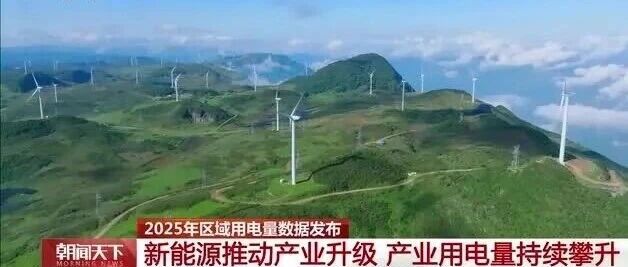
媒体报道︱2025年区域用电量数据 新能源发展推动产业升级
国家能源局· 2026-03-07 07:34
Key Points - The National Energy Administration released the regional electricity consumption data for 2025, indicating a significant impact of energy on industrial productivity layout due to deepening regional division of labor [2] - The rapid development of the new energy industry is driving profound adjustments in industrial regional layout, with accelerated construction of new energy projects in the western region [2] - By 2025, the electricity consumption of the electrical manufacturing, non-metallic, and non-ferrous industries in the western region will account for 21.9%, 39%, and 69.7% of their respective industry totals, representing increases of 13.6, 6, and 6.7 percentage points from 2020 [2] - The high-end equipment manufacturing industry in the central and western regions is developing rapidly, with electricity consumption expected to grow by 120% and 56% respectively by 2025, accounting for 17.9% and 14.3% of their industry totals, which is an increase of 2.4 and 4.2 percentage points from 2020 [2] - The central region is accelerating the development of the information industry and instrumentation sector, with electricity consumption projected to grow by 101.8% and 124.4% respectively by 2025, exceeding the national average by 32.4 and 94.6 percentage points, and accounting for 16.6% and 14.7% of their industry totals, which is an increase of 2.7 and 5.8 percentage points from 2020 [2]
欧洲2026电池战略,钠电将上主桌
高工锂电· 2026-02-28 12:29
Core Viewpoint - The article emphasizes the growing importance of sodium batteries in Europe's energy transition, especially following the bankruptcy of Northvolt, which exposed the vulnerabilities in the local lithium battery supply chain. Sodium batteries are seen as a strategic technology for enhancing the EU's industrial competitiveness and are expected to receive similar financial support as lithium batteries from the EU [4][9]. Group 1: European Sodium Battery Industry Development - The European sodium battery industry began earlier than in China, with notable companies like Faradion and Tiamat emerging in the market [5][6]. - Faradion, established in 2011, was acquired by Reliance New Energy Solar for £100 million in 2021 and is collaborating with Chinese company Yuhuang New Energy to build a 10GWh sodium-ion cell production line [5][8]. - Tiamat received investment from Stellantis in 2024 and is constructing a sodium-ion battery factory in France, aiming to produce second-generation products for electric vehicles [6][8]. - Altris completed a B1 funding round in 2024, raising 150 million Swedish Krona to produce low-voltage sodium-ion batteries for the automotive sector by 2026 [6][8]. - Moonwatt, founded in September 2024, raised $8.3 million in seed funding and plans to pilot its sodium battery project in Europe by 2026 [6][8]. Group 2: Market Dynamics and Trends - The European sodium battery market is characterized by a focus on battery production rather than material development, contrasting with China's current trend of prioritizing material advancements [7]. - The European market is expected to see sodium batteries leading the way in large-scale energy storage solutions, particularly in response to the region's increasing energy stability challenges [9][10]. - The high latitude of Europe makes sodium batteries an attractive option due to their performance in extreme temperatures, which is crucial for the region's energy needs [10]. Group 3: Chinese Sodium Battery Companies Targeting Europe - The surge in lithium prices in late 2022 marked the beginning of China's sodium battery commercialization, with significant investments and capacity planning emerging [11]. - In 2023, over 50 billion yuan was invested in sodium battery projects in China, with a planned capacity exceeding 120GWh [11]. - Despite a slowdown in financing, the focus is shifting towards material development, particularly in sodium battery cathode materials, to support future industry growth [11][12]. - Major Chinese battery manufacturers are expected to launch new sodium battery products in 2026, indicating a new phase of commercialization and market expansion [13]. Group 4: Competitive Advantages and Challenges - Sodium batteries have a lower carbon footprint certification compared to lithium batteries, with a recovery rate target of 50% for sodium batteries, significantly higher than that of lithium [14]. - Chinese sodium battery companies are successfully entering the European market, with significant partnerships and product launches planned for 2026 [15][16]. - However, potential trade barriers and competition from European entities pose challenges for Chinese companies, despite their technological lead in sodium battery patents [16]. Group 5: Future Outlook - The sodium battery sector in China is poised for significant growth, with diverse applications anticipated to emerge, positioning sodium batteries as a key player in the next generation of energy solutions [17].


视频|澳媒记者谈在华感受 中国“有志者事竟成”
Yang Shi Xin Wen Ke Hu Duan· 2026-02-26 06:27
Group 1 - The initial impression of the streets in China is that they are very quiet, despite being in a large city like Beijing with a population comparable to Australia [1][3] - There is a significant investment of energy, attention, and funds in wind energy, solar energy, batteries, and hydropower in China [1][3] - The Chinese government's approach is characterized by a determination to achieve goals quickly once they are established, indicating a history of successful projects and promising future developments [1][3]
新春走基层丨22人坚守戈壁“蓝色海洋” 点亮绿色能源之光
Xin Lang Cai Jing· 2026-02-20 12:23
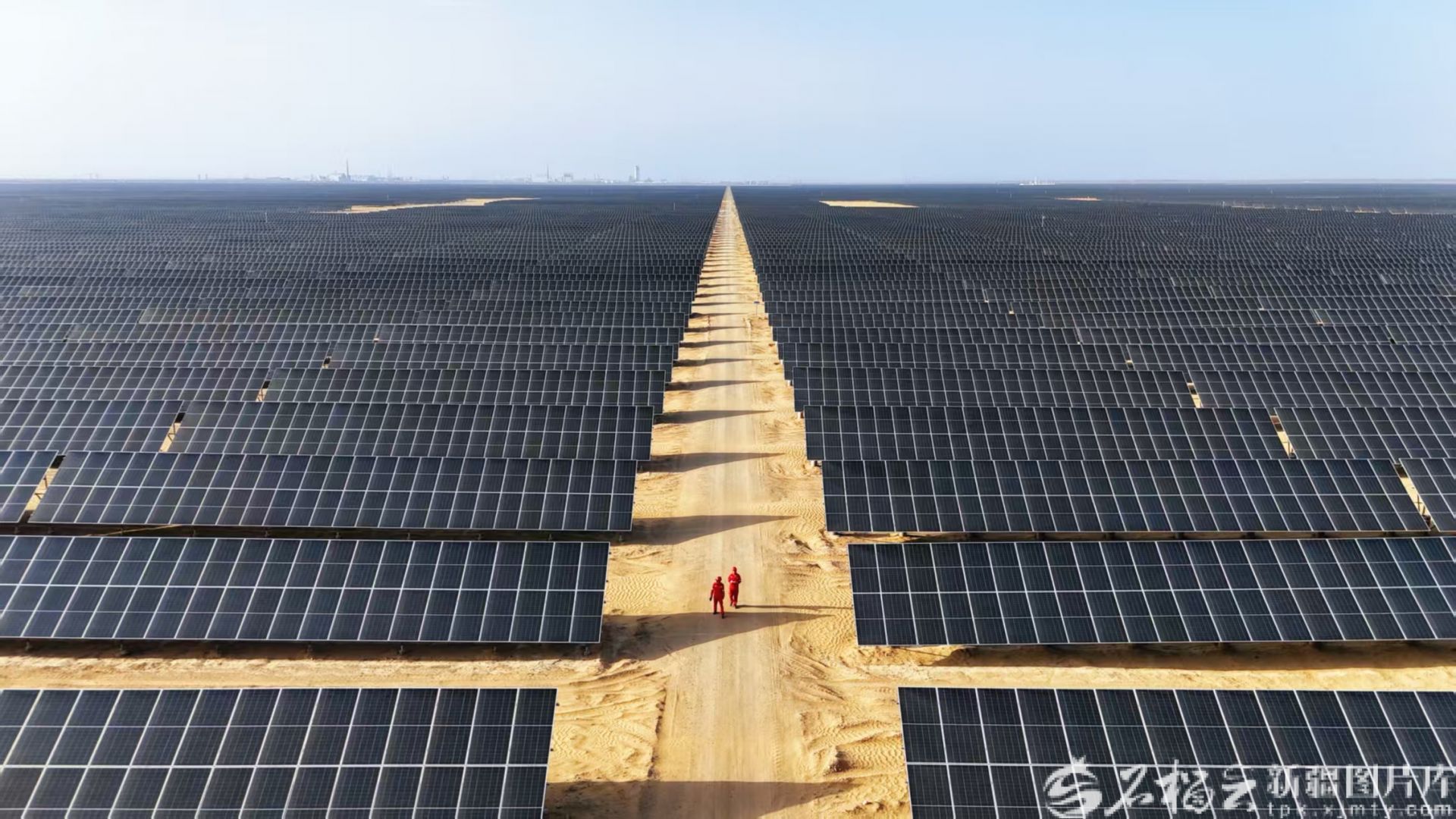
Core Viewpoint - The Tarim Oilfield's Shangkuxin High-tech Industrial Development Zone is successfully operating a 1.3 million kilowatt photovoltaic project, contributing to the generation of clean energy in the region [2][3]. Group 1: Project Overview - The photovoltaic project has been operational for over a year, generating a total of 826 million kilowatt-hours of electricity [3]. - The project is the largest single photovoltaic project operated by China National Petroleum Corporation (CNPC), covering an area of 4.6 kilometers by 4.9 kilometers and consisting of 260,000 solar panels, 4,273 inverters, and 397 box transformers [7][8]. - The project includes two 220 kV booster stations and a super-large energy storage station with a capacity of 130,000 kilowatts/260,000 kilowatt-hours [7]. Group 2: Operational Management - The operation and maintenance team consists of only 22 personnel, relying on both intelligent technology and dedicated manual inspections to ensure smooth operations [7]. - Daily inspections are conducted, with engineers checking critical parameters such as voltage, power, and energy storage status [3][5]. - The use of drones equipped with thermal imaging technology enhances inspection efficiency, allowing for the identification of potential issues that are not visible to the naked eye [7]. Group 3: Workforce and Training - The project emphasizes the importance of safety, with a focus on establishing a robust safety management system [5]. - The Tarim Oilfield is committed to expanding its renewable energy footprint, with plans to continue developing new projects during the 14th Five-Year Plan period [8]. - The company is actively recruiting talent through various initiatives, including campus recruitment and skill training, to build a strong foundation for its renewable energy sector [8].

国家能源局:新增超4.3亿千瓦,再创历史新高!
中国能源报· 2026-02-12 07:24
Core Insights - In 2025, China's newly installed capacity for wind and solar power exceeded 430 million kilowatts, setting a new historical record [1] - The total installed capacity of wind and solar power reached 1.84 billion kilowatts, accounting for 47.3% of the total, surpassing thermal power for the first time [1] - The power consumption "green content" continued to improve, with wind and solar power generation increasing by 25% year-on-year, contributing to nearly 40% of the total power generation [1] Summary by Sections New Installed Capacity - In 2025, the newly installed capacity for wind power was 120 million kilowatts, while solar power reached 318 million kilowatts, resulting in a year-on-year growth of 22.0% [1] Cumulative Installed Capacity - The cumulative installed capacity of wind and solar power has increased to 1.84 billion kilowatts, which is 3.4 times the capacity at the end of 2020 [1] Renewable Energy Contribution - The proportion of renewable energy in total power generation has increased by over 12 percentage points since the start of the 14th Five-Year Plan, achieving significant milestones towards carbon peak and neutrality goals by 2030 and 2035 respectively [1]

2025年中国风光发电新增装机再创历史新高
Zhong Guo Xin Wen Wang· 2026-02-12 05:30
Core Viewpoint - The National Energy Administration of China announced that by 2025, the country will add over 430 million kilowatts of wind and solar power capacity, marking a 22% year-on-year increase and setting a new historical record [1] Group 1: Renewable Energy Capacity Growth - By 2025, the cumulative installed capacity of wind and solar power will reach 1.84 billion kilowatts, accounting for 47.3% of the total, surpassing thermal power for the first time in history [1] - The electricity consumption from renewable sources is expected to increase, with wind and solar power generation growing by 25% year-on-year, contributing to nearly 40% of the total electricity generation [1] Group 2: Achievements and Future Goals - Since the 14th Five-Year Plan, the development speed of renewable energy, particularly wind and solar, has been unprecedented, with cumulative installed capacity reaching 3.4 times that of the end of 2020 [1] - The proportion of renewable energy in total electricity generation has increased by over 12 percentage points, fulfilling the targets set in the 14th Five-Year Plan and laying a solid foundation for achieving carbon peak by 2030 and carbon neutrality by 2035 [1]
国家能源局:2025年我国风电太阳能发电新增装机超4.3亿千瓦 再创历史新高
Xin Hua Cai Jing· 2026-02-12 03:20
Core Insights - In 2025, China's wind and solar power generation capacity is expected to exceed 430 million kilowatts, with wind power contributing 120 million kilowatts and solar power 318 million kilowatts, marking a year-on-year growth of 22.0% and setting a new historical record [1] - The cumulative installed capacity of wind and solar power will reach 1.84 billion kilowatts, accounting for 47.3% of the total, surpassing thermal power for the first time [1] - The "green content" of electricity consumption continues to improve, with wind and solar power generation expected to grow by 25% year-on-year, making up 22% of total generation, which significantly boosts the share of renewable energy to nearly 40% [1] Industry Development - Since the 14th Five-Year Plan, the development speed of new energy, represented by wind and solar power, has been unprecedented, with cumulative installed capacity reaching 3.4 times that of the end of 2020 [1] - The contribution of the energy transition is increasingly prominent, with the share of electricity from renewable sources rising by over 12 percentage points [1] - The successful completion of the 14th Five-Year Plan's targets lays a solid foundation for achieving carbon peak by 2030 and the self-contribution goals by 2035 [1]
