
马蹄金

Search documents
东西问·马年说马丨赵艺博:海昏侯墓中的“马蹄金”缘何而来?
Xin Lang Cai Jing· 2026-02-22 08:41
Core Viewpoint - The article discusses the significance of the "Horseshoe Gold" artifacts found in the tomb of Liu He, the grandson of Emperor Wu of Han, highlighting their cultural, historical, and artistic importance in the context of the Western Han Dynasty [3][4]. Group 1: Horseshoe Gold Artifacts - The "Horseshoe Gold" is a colloquial term for "Niao Ti Gold," characterized by its hollow center and concave bottom, resembling the foot of a heavenly horse, with 50 pieces discovered in Liu He's tomb, made of 99% pure gold and featuring intricate designs [4]. - The shape of the Horseshoe Gold is linked to the auspicious beliefs of the Western Han period, where the appearance of heavenly horses was considered a sign of good fortune, and these artifacts were not used as currency but were royal gifts to vassal kings [4]. Group 2: Role of Horses in Han Dynasty - In the Han Dynasty, horses were regarded as the "first among livestock" due to their essential roles in agriculture, transportation, and military, closely tied to the state's strength and expansion [6]. - The military demand for horses was significant, especially during Emperor Wu's reign, where cavalry became the main force in battles against the Xiongnu, leading to a systematic management of horse breeding and training by the state [6][7]. - Horses also played a crucial role in transportation and communication, forming the backbone of the extensive logistics network necessary for the vast Han Empire, including the famous Silk Road [7]. Group 3: Cultural Significance of Horses - Horses in the Han Dynasty transcended their practical uses, becoming symbols of military power, social status, and artistic expression, reflecting the era's martial spirit and reverence for strength [8]. - They were integral to significant rituals and ceremonies, often used in sacrificial offerings, which imbued them with a sacred status, symbolizing a connection between the earthly and the divine [9]. - The quality and quantity of horses were indicators of social status, with noble families using horses and carriages as symbols of wealth and power, while horses also featured prominently in literature and art, representing ideals of loyalty and ambition [9][11]. Group 4: Artifacts and Craftsmanship - The tomb of Liu He yielded over 4,000 pieces of chariot and horse equipment, primarily made of bronze, showcasing advanced craftsmanship techniques such as gilding and gold-silver inlay, reflecting the high artistic standards of the Han Dynasty [11]. - The use of these techniques indicates a sophisticated understanding of materials and aesthetics, merging functionality with visual appeal, and demonstrating the cultural significance of gold as a symbol of auspiciousness [11][13].


图知道|踏响蹄声!文物骏马驮福而来
Xin Lang Cai Jing· 2026-02-19 06:36
Group 1 - The article highlights the significance of ancient artifacts, particularly bronze horses, in showcasing the cultural heritage and craftsmanship of ancient China [4][14]. - The bronze horse chariot, known as the "crown of bronze," is noted for being the largest and most complex ancient vehicle discovered in Chinese archaeology, emphasizing its historical importance [4]. - The article mentions the return of the bronze horse head statue to the Old Summer Palace, marking a significant event in the repatriation of cultural relics [13]. Group 2 - The article describes various ancient horse artifacts, including a Tang Dynasty horse figurine known for its vivid colors and realistic design, which exemplifies the artistic achievements of that era [5]. - It discusses the craftsmanship involved in creating a gold artifact known as "horse hoof gold," which was made during the Han Dynasty and used as a reward for loyal subjects [7]. - The article also touches on the cultural exchange between the nomadic Khitan people and the Central Plains during the Tang Dynasty, as reflected in the design of certain artifacts [9].
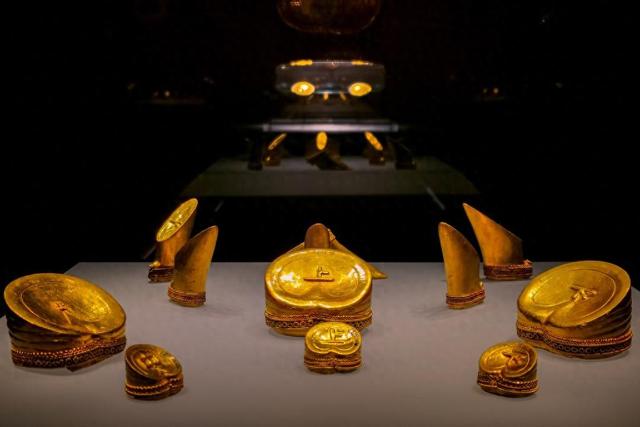
马年话马丨马蹄金的来历,你了解吗?
Xin Lang Cai Jing· 2026-02-12 14:21
Core Viewpoint - The article highlights the cultural significance and historical background of "Mati Jin" (Horse Hoof Gold), a special gold coin from the Han Dynasty, which is gaining popularity as a cultural symbol as the Year of the Horse approaches in 2026 [1][8]. Group 1: Historical Background - "Mati Jin" was specially minted by Emperor Wu of Han in the second year of the Tai Shi era as a "gold commemorative coin" [1]. - The term "Mati" refers to the excellent horses from the Western Regions, which were introduced to the Han Dynasty by Zhang Qian [1]. - The accurate name for "Mati Jin" is "Niao Ti Jin," which was a special reward for the emperor's favorites, and it was not available to others, including feudal lords [3]. Group 2: Artistry and Craftsmanship - The design of "Mati Jin" features a round bottom with a hollow center and slanted walls, showcasing intricate craftsmanship with inlays of materials like glass, jade, and egg white stone [3]. - The gold purity of the large "Mati Jin" is approximately 99%, while the small ones have a purity of about 98.6% [5]. - The craftsmanship reflects influences from Greek art, possibly transmitted through the Silk Road, indicating a blend of nomadic and foreign aesthetics [5]. Group 3: Cultural Impact and Modern Relevance - As the Year of the Horse approaches, "Mati Jin" themed cultural products have become popular among visitors, with nearly 20 new creative items launched, including fridge magnets and plush toys [5]. - The unique shape and exquisite craftsmanship of "Mati Jin" have made it a cultural emblem for the upcoming Year of the Horse [8].
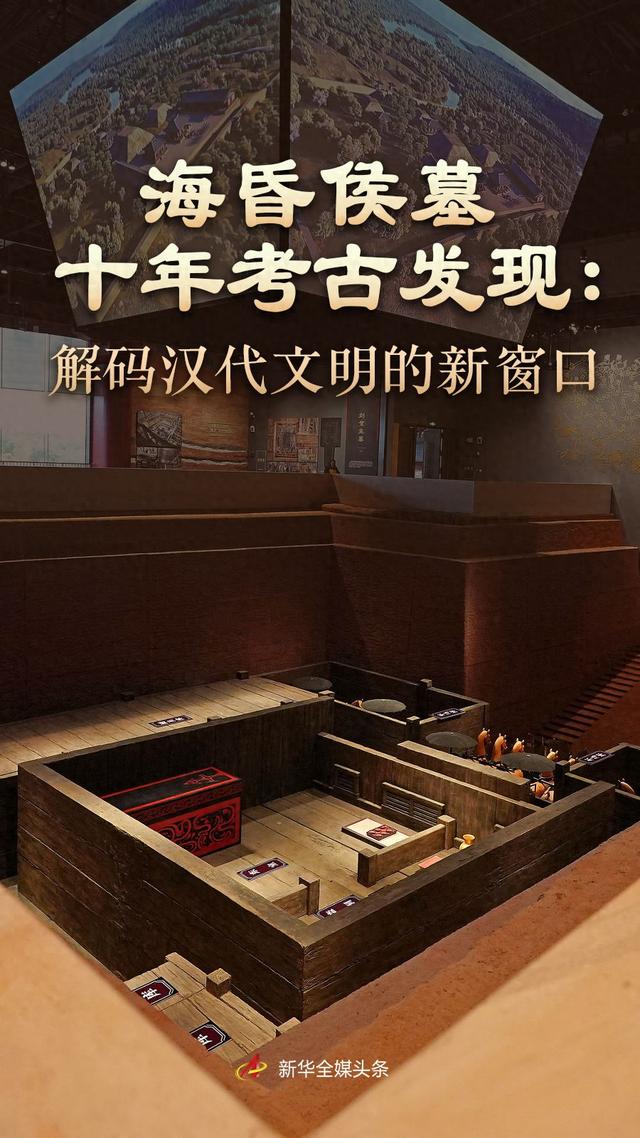
海昏侯墓十年考古发现:解码汉代文明的新窗口
Xin Lang Cai Jing· 2026-01-17 09:28
Core Viewpoint - The archaeological discoveries at the Haihunhou Tomb in Nanchang provide a new perspective on Han Dynasty civilization, revealing rich historical information and cultural artifacts that enhance understanding of this period in Chinese history [2][9]. Archaeological Discoveries - The Haihunhou Tomb, discovered in 2011, is part of a larger site that includes a well-preserved burial complex with a total area of 46,000 square meters, featuring two main tombs, seven accompanying tombs, and a complete sacrificial system [4]. - Over 10 tons of cash coins and more than 115 kilograms of gold artifacts were found, reflecting the economic strength of the Western Han Dynasty [4]. - The tomb contained a jade seal inscribed with "Liu He," identifying the tomb's occupant as Liu He, a grandson of Emperor Wu, who had a brief reign of 27 days [6][9]. Cultural Significance - The artifacts unearthed, including Confucian classics and personal notes, provide a more nuanced view of Liu He's life, contrasting with historical accounts that label him as indulgent [10][21]. - The discovery of the earliest known portrait of Confucius and other significant texts highlights the cultural and educational practices of the time, serving as tangible evidence of the transmission of Confucian thought [19][22]. Public Engagement and Impact - The "Haihunhou phenomenon" has emerged, indicating a successful public engagement with archaeology, transforming academic findings into cultural experiences accessible to the general public [22]. - The ongoing interest in the Haihunhou Tomb has led to record attendance at exhibitions, demonstrating the public's fascination with historical discoveries [22]. Technological Advancements in Archaeology - Innovative techniques such as high-spectral scanning have been employed in the excavation process, enhancing the preservation and understanding of artifacts [26]. - The integration of laboratory methods in field archaeology has set a precedent for future archaeological practices in China [26][28].
金兽镇天下:南窑庄窖藏发现的国宝|访古
Jing Ji Guan Cha Bao· 2025-07-09 00:32
Core Viewpoint - The article discusses the discovery of a significant archaeological treasure in Nanjing, specifically a golden beast and various ancient coins, which has sparked interest and debate regarding its historical context and significance [1][2][4]. Discovery of the Treasure - The treasure was accidentally unearthed by villagers in Xuyi County, Jiangsu, during spring plowing in February 1982, leading to the discovery of a golden beast and a copper pot filled with gold coins [2][4]. - The initial discovery attracted a large crowd, prompting local authorities to intervene and secure the artifacts for preservation [4][6]. Details of the Artifacts - The golden beast, weighing 9,100 grams with a gold content of 99%, is noted for its unique design resembling a leopard, which may have been intended to symbolize protection [12][16]. - The copper pot contained 9 gold cakes weighing 2,864 grams, 15 pieces of horse-hoof gold weighing 4,845 grams, and 11 pieces of the Chu state currency "Ying Ruan" weighing 3,260 grams, totaling over 20 kilograms of gold [4][8]. Historical Context and Significance - The artifacts are believed to date back to the late Qin to early Han dynasty, with ongoing debates about their exact historical context, particularly regarding the political turmoil of the time [17][21]. - The "Ying Ruan" coins are recognized as some of the earliest standardized gold currency in China, adding to the historical value of the find [14][15]. Institutional Response - The Nanjing Museum quickly mobilized to secure the artifacts, leveraging government support to transport them safely to the museum, where they are now considered national treasures [8][21].