骁龙8 Gen3

Search documents
手机AI愈发重要,可为何厂商不再宣传NPU算力
3 6 Ke· 2025-12-01 02:42
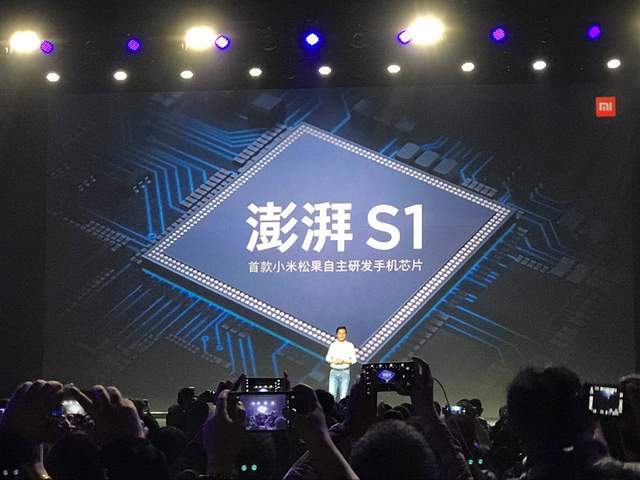
Group 1 - The smartphone industry is increasingly emphasizing "AI" as a key selling point, with major brands claiming to have developed their own AI models and performance optimization solutions for various applications [1][3] - Chip manufacturers are also showcasing improvements in NPU architecture and energy efficiency, often in conjunction with AI model demonstrations during new SoC launches [3][8] - Historically, manufacturers provided specific performance metrics for NPUs, allowing consumers to easily compare different brands and generations of SoCs [5][6] Group 2 - Qualcomm's Snapdragon series initially disclosed NPU performance metrics, with the Snapdragon 855 featuring 7 TOPs, and subsequent models showing significant increases up to 52 TOPs for the Snapdragon 8 Gen1 [10] - However, Qualcomm stopped disclosing NPU performance numbers after the Snapdragon 8 Gen1, indicating a potential slowdown in performance improvement, with the latest Snapdragon 8 Gen3 reportedly achieving 100 TOPs [10][12] - Other chip manufacturers may face even greater challenges in NPU performance, leading to a general trend of not disclosing NPU performance metrics across the industry [11] Group 3 - The slowdown in NPU performance improvement is attributed to rising semiconductor design costs and the need to allocate power to new CPU and GPU architectures, making it difficult to maintain previous performance doubling trends [15][17] - The nature of AI tasks has evolved from primarily computational vision to more complex content generation, requiring NPUs to adapt their design and focus on energy efficiency for prolonged use [20][21] - Current NPU designs are expected to continue improving, but the approach will differ from past strategies that relied solely on scaling and frequency increases [21][23] Group 4 - Companies are exploring ways to enhance NPU performance through software optimizations and collaborations with AI model developers, as seen in Samsung's partnership with Nota AI to improve the Exynos 2500's NPU performance [25]


从3399元跌至1866元,16GB+512GB+骁龙8Gen3,堪称“新卷王”
Xin Lang Cai Jing· 2025-06-22 18:23
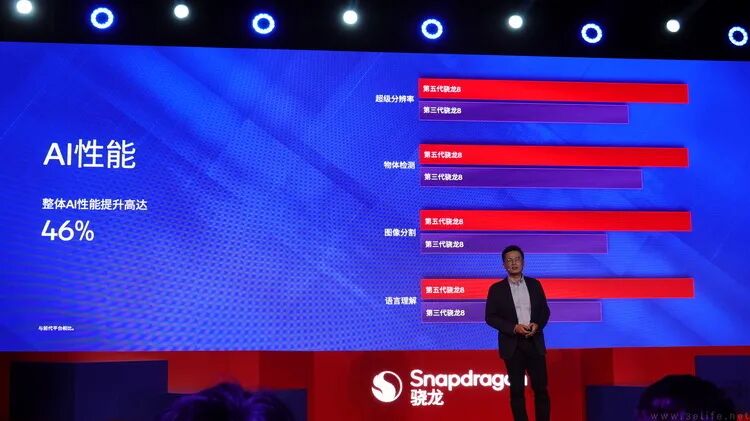
现在买手机,真是一个比"拼夕夕"还拼的年代。大家都在卷配置、卷价格、卷快充、卷影像、卷你钱 包。你刚觉得自己买的手机不错,转头发现别家又把价格打了个对折,配置还往上加了两个Buff。这时 候,如果你不是天天泡论坛或者被迫关注数码新闻,真可能错过一些"深藏不露"的狠角色。这次的主 角,就是这么一个被"埋没"的宝藏真我GT6。 如果你不是那种"数字+手机型号都能倒背如流"的人,可能对真我这个品牌了解不多。没关系,简单粗 暴一点,它是OPPO的"性价比马甲",定位和Redmi、iQOO差不多,但比它们还要再便宜一点、猛一 点、甚至冷门一点。你问为啥冷门?因为营销费都花在真材实料上了,不像某些品牌,请代言人不眨 眼,但手机却眨个不停。 先说屏幕,不是那种"看起来亮"但用久了眼睛发酸的屏幕,也不是啥中低端OLED,它上的是定制京东 方S1+柔性电竞屏,6000nit亮度+8T LTPO技术,这意味着你在大太阳下看抖音都不费劲,打游戏还不 会出现"卡卡卡"的掉帧现象。再来个护眼功能,2160Hz高频PWM调光,晚上关灯刷短视频也不怕眼睛 干成葡萄干。 处理器当然是大魔王级别的骁龙8 Gen3,性能强到不讲道理。配上114 ...
小米自研芯片杀疯了!雷军憋了10年的大招,直接对标苹果华为?
Sou Hu Cai Jing· 2025-05-23 01:23
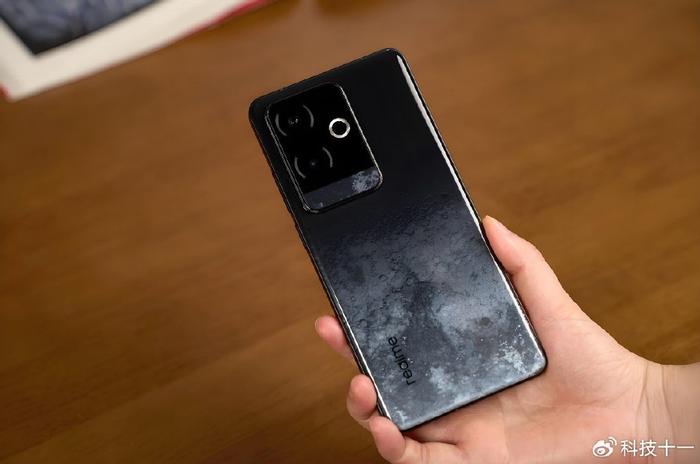
Core Insights - Xiaomi has announced the launch of its self-developed mobile chip "Xuanjie O1" during its 15th anniversary event, marking a significant milestone in its technology capabilities [1][14] - The chip positions Xiaomi as the fourth global and second domestic brand to master mobile SoC core technology, directly competing with Apple's A-series, Huawei's Kirin, and Samsung's Exynos [1][14] Development Journey - Xiaomi's chip development began in September 2014 with the establishment of Pinecone Electronics, initially perceived as a marketing attempt [4] - Despite early setbacks with the Surge S1 chip, Xiaomi invested 8 billion yuan in 2023 alone, totaling 30 billion yuan over ten years, leading to significant breakthroughs in chip technology [4] Technical Specifications - The Xuanjie O1 chip, designed by Qin Muyun, features a 4nm process from TSMC, with a performance score reaching 2 million, surpassing Snapdragon 8 Gen3 [6] - It includes a powerful architecture with one 3.2GHz super core, three 2.8GHz middle cores, and four efficiency cores, along with an advanced GPU supporting ray tracing technology [6][8] AI Capabilities - The chip integrates Xiaomi's self-developed NPU "Kunlun," capable of processing 15 trillion operations per second, significantly enhancing AI performance in photography [8] - The AI algorithms reportedly reduce noise in night photography to half the level of the iPhone 15 Pro [8] Market Positioning - The first device featuring the Xuanjie O1, the Xiaomi 15S Pro, is priced at 5,299 yuan, significantly lower than Huawei's Mate60 Pro, indicating Xiaomi's strategy to penetrate the mid-to-high-end market [8][14] - Xiaomi aims to make top-tier technology accessible to the general public, contrasting with the luxury positioning of competitors [8][14] Product Features - The Xiaomi 15S Pro boasts impressive specifications, including a 2K full-depth micro-curved screen, Leica triple-camera system, and a 6000mAh silicon-carbon battery [8] - The device also features UWB technology for seamless integration with Xiaomi's ecosystem, allowing for automatic unlocking of vehicles [14] Challenges Ahead - Industry experts have noted potential challenges, including limited initial chip production capacity and software compatibility issues, which Xiaomi is actively addressing [12][14] - The company is working on optimizing compatibility for popular games to ensure a smooth user experience [12]

时隔8年,雷军带着自研Soc芯片,又杀回来了
Sou Hu Cai Jing· 2025-05-16 02:27
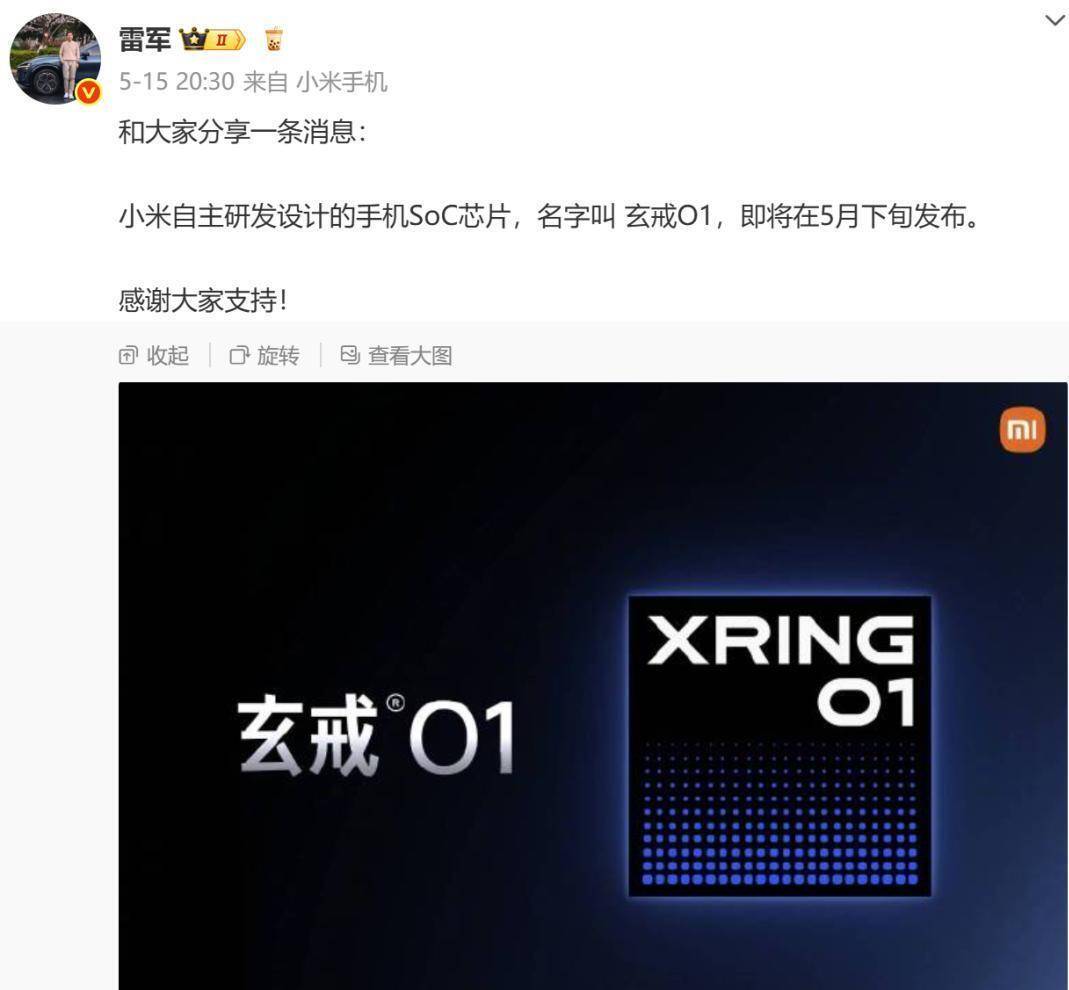
通过这颗芯片,估计不仅仅是小米,其它厂商,也终于明白,造芯真不是这么容易的,特别是Soc这样 芯片,要集成CPU、GPU、DSP、ISP、基带等等,堪称地狱难度级别的。 于是在这颗芯片之后,小米修改策略,不再去研发Soc这种系统级别芯片了,而是转向小芯片,比如 ISP、充电管理芯片、电源芯片这些,因为这些难度小,更容易见效果。 2017年,小米跟风华为,想在掌握核心科技,于是努力了一把,推出了第一颗自研芯片澎湃S1。 同时研发这些小芯片,也能够锻炼团队,积累经验,而对于Soc,小米一直对外宣称,还在继续。 不过说真的,想法是好的,但高估了自己的能力,低估了Soc的难度,于是这颗芯片工艺一般,表现更 不行,小米只用在自己的低档机上,且后来还被弃用了。 不过,也有人称,小米其实早就放弃了Soc的研发,毕竟买高通、联发科的芯片,容易多了,自己研 发,费力又费时,还不一定成功。 从2017年到2025年,可以说这颗芯片的研发,真的是历时八年。 据称这颗芯片,采用的是台积电第二代4nm制程,其性能能够对标骁龙8 Gen3。但重要的是NPU上表现 更出色,所以在AI运算与能效比上更具优势。 据称这颗芯片,将随着一款重磅机 ...