
高性能表面活性剂

Search documents
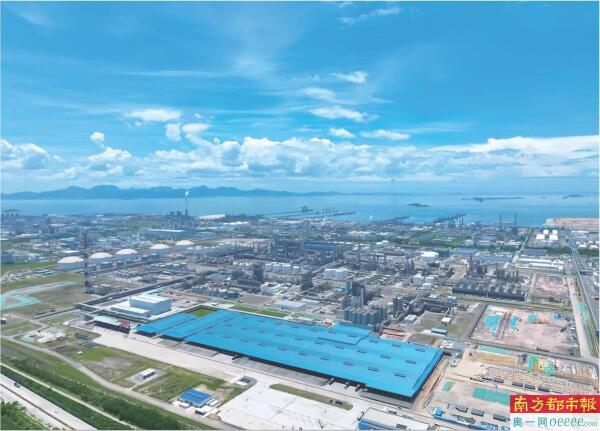
石化“双子星”辉映 万亿级集群崛起
Nan Fang Du Shi Bao· 2025-12-25 23:15
Core Insights - The Daya Bay Petrochemical Zone is rapidly developing, with 125 projects established, making it a leading integrated refining and chemical production area in China [3][7] - The Huizhou New Materials Industrial Park, located 10 kilometers north of Daya Bay, is leveraging raw materials from the petrochemical zone to develop high-end downstream industries, attracting nearly 50 projects [3][9] Project Development - The Daya Bay Petrochemical Zone is home to major projects, including the CNOOC Shell's third-phase ethylene project, which will have an annual capacity of 3.8 million tons, solidifying its position as the largest single ethylene plant in China [4][6] - The petrochemical zone has achieved significant production capacities: 22 million tons/year for refining, 3.8 million tons/year for ethylene, 2.5 million tons/year for aromatics, and 5 million tons/year for PTA, accounting for substantial market shares in Guangdong province [7] Supply Chain and Collaboration - The "隔墙供应" (wall-to-wall supply) model allows for efficient material supply between companies in the Daya Bay Petrochemical Zone, with over 90% of enterprises having direct supply relationships with major players like CNOOC Shell and Huizhou Petrochemical [5][6] - The circular interconnection rate within the petrochemical zone is 95%, with over 70% of basic chemical raw materials being converted on-site [5][6] Industry Growth and Future Plans - The Daya Bay Petrochemical Zone has attracted 13 Fortune 500 companies, including BASF and ExxonMobil, contributing to a robust industrial ecosystem [6][8] - By 2027, Huizhou aims to achieve an ethylene production capacity of 5.4 million tons and high-end polyolefins of 6.6 million tons, with a vision to become a world-class petrochemical hub by 2035 [10]

广东惠州获瑞士化工巨头科莱恩超10亿元产能扩建
Xin Lang Cai Jing· 2025-11-23 07:53
Core Insights - Clariant, a Swiss specialty chemicals giant, has launched two major expansion projects in Huizhou, Guangdong, with a total investment of 1.2 billion Swiss francs (approximately 10.6 billion RMB) [1] - The expansion includes a new high-performance surfactant project (investment of about 710 million RMB) and a second production line for high-performance halogen-free flame retardants (investment of about 350 million RMB) [1] - Clariant's cumulative investment in Huizhou has exceeded 2 billion RMB, highlighting the company's commitment to the region [1] Industry Overview - Huizhou's Daya Bay petrochemical zone has a refining capacity of 22 million tons per year and an ethylene production capacity of 3.8 million tons per year, making it one of the leading integrated refining and chemical production areas in China [2] - The industrial output value of the Daya Bay petrochemical park is projected to reach 267 billion RMB in 2024, representing a growth of 13.9%, with industrial added value increasing by 20.9% [2] - The petrochemical industry in Huizhou is focusing on high-value-added and high-tech chemical products, aiming to extend the industrial chain towards high-end chemicals and new chemical materials [4] Investment Drivers - The rapid growth of downstream market demand in the petrochemical sector is a key factor attracting foreign investment, with Clariant emphasizing the importance of local production to meet customer needs [5] - Approximately 50% of products supplied to the Chinese market are produced locally, with about 80% of required raw materials sourced from local suppliers [5] - Clariant aims to increase its market share in China from 10% to around 14% in the coming years through these new investments [5] Market Demand - The automotive industry, particularly in electric vehicles (EVs), is a major application area for flame retardants, with demand increasing due to higher voltage systems in EVs [6] - Guangdong is a key market for the EV industry, with plans to produce over 3 million EVs by 2025, accounting for more than 18% of total vehicle production [6] - Clariant's flame retardant business in the automotive sector has maintained a growth rate of 20% despite an overall slowdown in the automotive market [6] Emerging Technologies - The demand for high-performance, environmentally friendly flame retardants is expected to rise significantly across various sectors, including AI, low-altitude economy, and robotics [11] - New types of flame retardants are being developed to meet the stringent requirements of emerging industries, such as data centers and AI computing facilities [11] - Clariant is also focusing on localizing R&D efforts by recruiting talent in research and technical applications to support its expansion in China [12]

坚定看好中国市场——科莱恩高管谈在华投资和可持续发展
Zhong Guo Hua Gong Bao· 2025-11-14 02:39
Core Insights - Clariant's recent investment in China marks a significant step forward, with the inauguration of a high-performance surfactants and halogen-free flame retardants expansion project in Huizhou, Guangdong, showcasing the company's commitment to the Chinese market [1] Financial Performance - Clariant reported a notable increase in its EBITDA margin, rising from 16.4% in the same period last year to 18.0%, driven by performance improvement plans and effective pricing and cost management [2] - The company has achieved an average annual revenue growth of 4% since 2021, with EBITDA margins expected to reach 15.8% in FY2024, up from 13.9% in FY2023, and projected to further increase to 17%-18% in FY2025 [2] Sustainability Initiatives - The new production lines emphasize sustainable development, with a focus on upgrading pharmaceutical production capacity and enhancing capabilities in the electric mobility and electronics sectors [3] - Clariant aims to reduce direct and indirect emissions by 46% by 2030, up from a previous target of 40%, and increase supply chain emissions reduction targets from 14% to 28% [3] Strategic Importance of China - China is identified as a core strategic market for Clariant, with plans to increase the sales proportion from approximately 10% to 14% by 2027 [4] - The company emphasizes local innovation and supply chain resilience as key competitive advantages in the Chinese market, which is projected to account for over 40% of global chemical market share [5]
坚定看好中国市场——科莱恩高管谈在华投资和可持续发展
Zhong Guo Hua Gong Bao· 2025-11-14 02:31
Core Insights - Clariant's recent investment in China marks a significant step forward, with the inauguration of a high-performance surfactants and halogen-free flame retardants expansion project in Huizhou, Guangdong, showcasing the company's commitment to the Chinese market [1] Financial Performance - Clariant reported a notable increase in its EBITDA margin, rising from 16.4% in the previous year to 18.0% in the third quarter of fiscal year 2025, driven by performance improvement plans and effective pricing and cost management [2] - The company has achieved an average annual revenue growth of 4% since 2021, with EBITDA margins projected to reach 15.8% in fiscal year 2024 and further increase to 17%-18% in 2025, indicating strong growth over three consecutive years [2] Sustainability Initiatives - The new production lines focus on upgrading pharmaceutical capacity and enhancing the company's position as a leading supplier of active pharmaceutical ingredients (APIs) in China, emphasizing sustainability as a core theme in all innovations [3] - Clariant aims to reduce direct and indirect emissions by 46% by 2030, up from a previous target of 40%, and increase supply chain emissions reduction goals from 14% to 28% [3] Strategic Importance of China - China is identified as a core strategic market for Clariant, with the CEO highlighting the importance of local innovation and supply chain resilience in navigating the complex market environment [4] - The company plans to increase the proportion of sales from China from approximately 10% to 14% by 2027, with about 50% of products for the Chinese market currently produced locally and 80% of required raw materials sourced locally [4][5] - Clariant recognizes China as the largest chemical market globally, accounting for over 40% of the market share, and anticipates that more than half of global chemical production growth in the next five years will come from China [5]