高比能电池

Search documents
新型电池中试基地在大连揭牌
Xin Lang Cai Jing· 2026-02-24 23:26
Core Viewpoint - A new battery pilot test base has been established in Dalian, focusing on advanced battery technologies such as solid-state batteries and high-energy batteries, which is significant for the development of the new energy industry in the region [1] Group 1: Establishment and Focus - The new battery pilot test base is established under the National Key Laboratory of Energy Catalysis and Conversion, concentrating on solid-state batteries, wide-temperature batteries, and high-energy batteries [1] - The base aims to create a comprehensive R&D, verification, and pilot testing system covering the entire chain from material innovation to industrial incubation [1] Group 2: Strategic Importance - The establishment of the base is expected to support the construction of the Yinggeshi Science City and enhance the new energy industry ecosystem in Dalian, filling the gap in the Northeast region's new energy testing and experimental fields [1] - The base will focus on pilot verification and industrialization assessment of lithium/sodium-ion batteries and solid-state batteries to meet diverse demands in sectors such as new energy vehicles, energy storage, low-altitude economy, and aerospace [1] Group 3: Future Plans - The Dalian Institute of Chemical Physics plans to further provide new lithium battery technology solutions based on industry changes and demands over the next two to three years [1] - Initial small-scale development of new battery technologies began two years ago, indicating a proactive approach to innovation in the battery sector [1]
“新型电池中试基地”揭牌
Xin Lang Cai Jing· 2026-01-25 13:05
Core Viewpoint - The establishment of a new battery pilot base in Dalian aims to advance the development and industrialization of lithium/sodium-ion batteries and solid-state batteries, addressing diverse needs in sectors such as new energy vehicles, energy storage, low-altitude economy, and aerospace [1][2] Group 1: New Battery Pilot Base - The new battery pilot base will focus on pilot verification and industrialization assessment of lithium/sodium-ion batteries and solid-state batteries [1] - The base is closely linked to the National Key Laboratory of Energy Catalysis and Transformation, conducting full-chain research activities from original innovation to industrial application [1] - It aims to create a comprehensive R&D, verification, and pilot system covering materials, batteries, processes, and systems [1] Group 2: Strategic Importance - The pilot base is expected to play a significant role in supporting the construction of Yinggeshi Science City and improving the new energy industry ecosystem in Dalian [1] - It will fill the gap in the Northeast region's new energy testing and experimental fields [1] - The Dalian Chemical Physics Institute aims to position Dalian as an innovation hub for the new energy industry [2]
香港理工大学郑子剑:期望风投伙伴为“硬科技”落地赋能
2 1 Shi Ji Jing Ji Bao Dao· 2025-11-10 13:36
Core Viewpoint - The article emphasizes the importance of transforming "hard technology" projects from laboratory research into marketable products, particularly in the context of the Guangdong-Hong Kong-Macao Greater Bay Area's rapid innovation and technology development [1]. Group 1: Hard Technology Development - "Hard technology" startups are often led by university professors and researchers who possess advanced technology but generally lack market experience and operational capabilities [1][2]. - Ideal venture capital firms should assist these teams in building commercially viable organizations and connecting with industry chains and government resources to create a dual-driven model of "technology + market" [1][8]. Group 2: Government Support and Initiatives - The Hong Kong government has established various initiatives to support the commercialization of research outcomes, including the "Industry-Academia-Research 1+" program, which can provide up to HKD 100 million in funding for university startups [4][5]. - The government has also set up platforms like the Hong Kong Science Park to incubate startups and provide smaller-scale funding for projects [4][5]. Group 3: Research Achievements and Market Impact - Recent research achievements include flexible battery projects aimed at enhancing the flexibility of lithium batteries for wearable technology and robotics, and a composite fluid project that could make batteries lighter and more efficient, potentially increasing vehicle range and device usage time [3][4]. - Successful implementation of these projects could significantly impact various industries reliant on battery technology, leading to reduced electricity costs and battery prices for consumers [3]. Group 4: Talent and Resource Integration - There is a need for diverse talent to facilitate the commercialization of research, including not only researchers but also operational personnel who can navigate market dynamics [6]. - Hong Kong's universities have advantages in attracting research talent, but there is a shortage of operational talent in hard technology, which could be addressed by leveraging the engineering talent pool from mainland China [6]. Group 5: Venture Capital and Startup Support - Venture capital partners should not only provide funding but also support in talent acquisition and industry resource integration to help hard technology startups overcome challenges in commercialization [8]. - The article suggests that Hong Kong's venture capital ecosystem is still developing compared to mainland cities like Shenzhen and Beijing, indicating a need for enhanced collaboration and policy development to better support hard technology projects [8].

【投融资动态】合壹新能A++轮融资,投资方为合创资本
Sou Hu Cai Jing· 2025-11-04 11:38
Group 1 - The core viewpoint of the news is that Shenzhen He Yi New Energy Technology Co., Ltd. has completed an A++ round of financing, with the amount undisclosed, and the investment was participated by He Chuang Capital [1][2]. - He Yi New Energy aims to become a global leader in high-energy batteries, founded in 2019 by several experienced lithium battery experts, with core team members from ZTE, China Electronics Technology Group, and BAK Battery [2]. - The company has developed several core technologies related to high-energy batteries, including active materials for anodes and cathodes, solid-state electrolytes, packaging structures, and intelligent manufacturing, and has obtained over 50 patent authorizations [2]. Group 2 - He Yi New Energy has a research and development center in Tianjin and a manufacturing base in Heyuan, showcasing its commitment to innovation and production capabilities [2]. - The company has innovatively designed the chemical system, structure, and process of steel-shell button batteries based on the Hynepi technology platform, achieving mass production of π-type batteries, which are at the forefront of energy density and intelligent manufacturing globally [2].
2025中国成都天使投资生态大会在成都高新区举行
Sou Hu Cai Jing· 2025-10-17 15:27
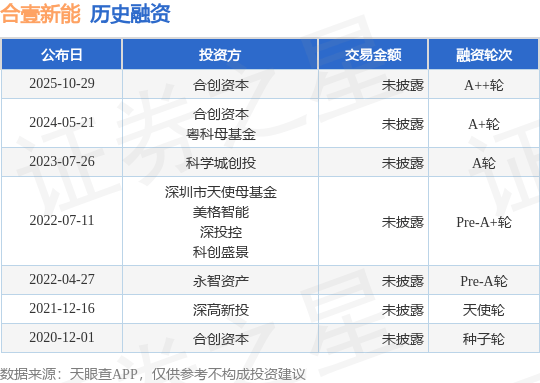
Core Insights - The 2025 China Chengdu Angel Investment Ecological Conference was held in Chengdu High-tech Zone, focusing on the theme of "Accelerating the Transformation of Pilot Results, Capital Achieving New Quality Future" [1] - The conference aimed to explore the critical role of the "Pilot + Fund" ecosystem in promoting the transformation of scientific and technological achievements [1] Group 1: Conference Overview - The conference was guided by various governmental departments and attracted over 300 participants from venture capital institutions, strategic platforms, research teams, and industry experts [3] - A total of 9 cooperative funds were signed with a collaboration scale of 7.4 billion yuan, along with 35 investment agreements for early-stage projects [3][4] - The early capital support system in Chengdu High-tech Zone has exceeded 20 billion yuan, supporting over 200 early-stage projects [3] Group 2: Investment Focus and Achievements - The angel mother fund has accumulated a cooperation scale exceeding 20 billion yuan, focusing on sectors such as new energy, new materials, third-generation semiconductors, artificial intelligence, and biomedicine [4][5] - The early capital system has successfully incubated companies like Chengdu Electric Light Technology and Junyi Digital, showcasing a growth of over 200 times from an initial fund of 80 million yuan [7] Group 3: Project Support and Future Plans - The early capital ecosystem has supported approximately 240 early-stage projects since its establishment in July 2024, with seed funds investing nearly 10 million yuan in 42 projects [9] - Chengdu High-tech Zone is developing a 5 billion yuan pilot venture capital fund to support pilot incubation services and infrastructure [12] - Future plans include leveraging industrial funds to accelerate the integration of innovation chains, industrial chains, and capital chains, aiming to establish Chengdu High-tech Zone as a hub for investment institutions and technological innovation [14]