高精度定位系统

Search documents
广哈通信:公司聚焦智能指挥调度,深植电力能源、国防军工等优势领域
Zheng Quan Ri Bao· 2026-01-06 13:40
Core Viewpoint - The company focuses on intelligent command and dispatch, strengthening its position in the power energy and defense industries while actively expanding into railways, emergency response, oil, and petrochemical sectors [2] Group 1: Industry Focus - The company aims to consolidate its industry advantages in power energy and defense while exploring new business opportunities in railways, emergency response, oil, and petrochemical sectors [2] - In the railway sector, the company has participated in the 5G-R line technical experiments for the National Railway Group and won bids for local railway dispatch projects, achieving large-scale application of its technological achievements [2] - The emergency response sector benefits from strong national policy support, with the company deepening market expansion and participating in major emergency drills and disaster communication support in Guangzhou [2] Group 2: Technological Advancements - The company has developed a digital safety control platform that has been included in the national list of recommended 5G application solution providers, enhancing its collaboration in the oil and petrochemical sectors [2] - The safety control system has made breakthroughs in oil business, while the high-precision positioning system has advanced in the coal and chemical industries [2]

从汽车智造到自动驾驶:广州开发区的智能网联突围之路
Xin Lang Cai Jing· 2025-12-12 08:56
Core Insights - Guangzhou's Huangpu District is accelerating the construction of a modern industrial system, focusing on strategic emerging industries and future industries, reflecting China's ambition to seize global technological leadership [1] - The district has become a hub for autonomous driving technology, with WeRide becoming the first company globally to receive a pure driverless license from Switzerland and achieving dual listing in Hong Kong and the US [1][3] Industry Development - The automotive industry is a pillar in Huangpu, with a historical foundation dating back to the 1990s when joint ventures were introduced, leading to a robust supply chain of key component manufacturers [3][4] - In 2025, the automotive sector in Huangpu is projected to sign 25 projects with an estimated total investment of approximately 6.196 billion yuan, generating an expected annual output value of about 14.96 billion yuan [4] - From January to October 2025, 80 automotive enterprises in the district achieved an output value of 106.76 billion yuan, with a year-on-year growth rate of 7%, leading the city [4] Technological Innovation - The shift from manufacturing to intelligent manufacturing in the automotive sector is driven by technological innovation, flexible production, and product iteration [5] - The "old-for-new" policy has significantly boosted sales, with automotive and parts retail enterprises achieving sales of approximately 41.02 billion yuan from January to October, a year-on-year increase of 66.3% [5] - Huangpu's automotive brands, such as XPeng and GAC Honda, are increasing their export volumes, with total automotive exports reaching 3.217 billion yuan from January to September, including 2.008 billion yuan in pure electric passenger vehicles, a year-on-year increase of 184% [5] Policy Support - Huangpu has established a supportive policy environment for autonomous driving, facilitating multiple "national firsts" in the sector, including the launch of China's first commercial Robotaxi service and the first fully driverless sanitation vehicle [8][9] - The establishment of the Intelligent Connected and New Energy Vehicle Industry Development Office has been pivotal in promoting the sector's growth and attracting new enterprises [9] Company Highlights - XPeng Motors has achieved significant milestones, producing its one-millionth vehicle in just 14 months, and plans to launch seven new models by 2026 [10][11] - The company operates a smart manufacturing facility that adheres to Industry 4.0 standards, integrating fully automated processes across various production stages [14] - The flexible production capabilities of companies like Mingluo Equipment have positioned them as key players in the automotive supply chain, serving major global automotive brands [16][18] Semiconductor and Sensor Development - Huangpu is nurturing semiconductor companies like Yuanchip Electronics, which has become a leading supplier of high-precision positioning products for various industries, including automotive [20][21] - The company has established partnerships with over 30 major automotive manufacturers, with projected revenues of 300 million yuan in 2024, expected to reach 700 million yuan this year [23]

新闻联播丨感知生态之变 能源转型和产业升级为高质量发展带来新动能
国家能源局· 2025-08-18 09:22
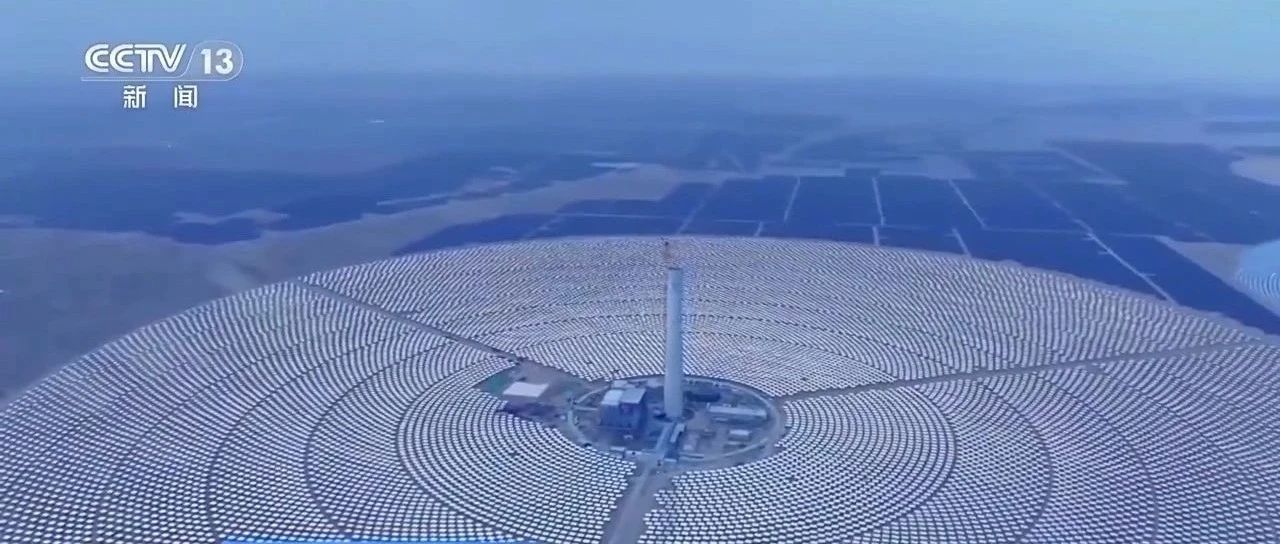
Core Viewpoint - The article emphasizes the importance of green productivity as a means to achieve high-quality development and address ecological issues, highlighting China's advancements in renewable energy and green production methods [2][6]. Group 1: Green Energy Development - Since the 18th National Congress, China has established the world's largest and most complete renewable energy industry chain, significantly supporting energy transition and industrial upgrading [2]. - The installed capacity of wind and solar power has increased 25 times since 2015, surpassing thermal power capacity for the first time in history in 2023 [6]. - China's share of global clean energy investment has risen from one-quarter to one-third over the past decade [6]. Group 2: Innovations in Transportation and Mining - The transportation of wind turbine blades has become more complex, with the length of blades increasing from over 40 meters to over 100 meters, necessitating advanced logistics and high-precision positioning systems [4]. - In Inner Mongolia, over 3,000 sensors are used for real-time monitoring in open-pit coal mines, leading to significant improvements in environmental conditions, including the introduction of electric unmanned mining trucks [9]. - There are nearly 5,000 green mines and over 6,000 green factories across China, contributing to more than one-fifth of the national manufacturing output [11]. Group 3: Impact on Infrastructure and Industry - By 2024, nearly all highways in China will be equipped with electric vehicle charging stations, a significant increase from 2015 when the first charging stations appeared on the Beijing-Shanghai Expressway [13]. - The number of electric vehicles has grown over 60 times since 2015, indicating a substantial shift towards sustainable transportation [13]. - China leads globally with nearly 80% of green ships and half of hydrogen fuel cells, with the green low-carbon industry generating over 11 trillion yuan in output value [13].