鱼缸

Search documents
观赏鱼“游”成新广货,他用23年把童年爱好做成全球生意
Nan Fang Du Shi Bao· 2026-02-04 09:40
Core Viewpoint - The article highlights the success story of Guangzhou Qingqing Natural Agriculture Development Co., Ltd., led by Lin Hao, who transformed his passion for ornamental fish into a thriving business that exports to multiple countries, showcasing the growth of the ornamental fish industry in China, particularly in Guangzhou [2][5][12]. Company Overview - Lin Hao founded Guangzhou Qingqing Natural Agriculture Development Co., Ltd., which operates a large-scale ornamental fish breeding base with 17,000 fish tanks and 3,100 fish ponds, covering over 220,000 square meters [10][21]. - The company specializes in breeding over 200 species of tropical ornamental fish, including unique varieties that are exported globally [10][12]. Industry Context - The ornamental fish industry in Guangdong has reached a production value of 3.907 billion yuan, accounting for 32.83% of the national total [12]. - Guangzhou has become a significant center for ornamental fish production and trade, benefiting from its favorable climate and historical trading traditions [5][12]. Market Expansion - The company has recently gained the ability to export directly, with its first batch of tropical ornamental fish successfully reaching Canada in October 2025, comprising over 8,000 fish of more than 50 species [14][21]. - The establishment of the Guangzhou (Nansha) Agricultural Open Cooperation Pilot Zone has further enhanced the company's prospects for international trade [12][14]. Cultural Significance - Ornamental fish hold cultural importance in Chinese tradition, symbolizing prosperity and good fortune, particularly during the Lunar New Year [16][15]. - The company aims to connect different cultures through the shared appreciation of ornamental fish, which are increasingly popular among younger consumers for their aesthetic appeal and ease of care [16][21].


Central Garden & Pet Company (NasdaqGS:CENT) 2025 Conference Transcript
2025-12-02 22:12
Summary of Central Garden & Pet Company Conference Call Company Overview - **Company**: Central Garden & Pet Company (NasdaqGS:CENT) - **Date**: December 02, 2025 Key Points Industry Insights - **Pet Industry Trends**: The pet industry is experiencing a transition back to long-term growth rates of 2%-4% after a COVID-related surge in pet adoptions. The company is optimistic about regaining household penetration by late 2026 or 2027 [6][7][8] - **Durables and Live Animals**: The softness in durables includes live animals, with a noted decline in demand post-COVID. However, the live animal business showed growth in Q4, indicating potential recovery [6][7] - **Cat Products**: There is an opportunity for growth in the cat product segment, which has been historically underserved. The company aims to increase its exposure in this category [10] Product Innovation and Strategy - **Focus on Innovation**: The company is shifting from a cost and cash focus to a growth agenda, emphasizing innovation and M&A to drive top-line growth [11][12] - **SKU Rationalization**: Continuous SKU rationalization is a priority, with a focus on private label partnerships to enhance retail relationships [13][31] - **Equine Products**: The equine segment is performing well due to effective branding and marketing strategies, including collaborations with influencers [15][17] Market Dynamics - **Aquatics Category**: The aquatics segment has been soft, attributed to a lack of innovation. The company is working on improving consumer success in this area through better product engineering and technology integration [23][24] - **Lawn & Garden Performance**: The Lawn & Garden segment has gained shelf space and market share, driven by strong execution and partnerships with retailers [26][28] Financial Outlook - **Cash Position**: The company has a strong cash balance of nearly $900 million, with plans to allocate it towards M&A in core categories, particularly pet consumables [37][39] - **Pricing Strategy**: The company plans to implement a 1% price increase to offset rising commodity costs and tariffs, indicating a challenging pricing environment [57][58] Consumer Behavior - **Private Label vs. Branded Products**: There has not been a significant shift towards private label products yet, but the company anticipates that consumer value sensitivity may lead to increased private label performance in the future [60] Operational Challenges - **Seasonality in Lawn & Garden**: The Lawn & Garden category has been slower to transition online compared to other categories, with only 10% of sales coming from online channels. The company expects gradual growth in this area [34][35] Strategic Considerations - **Potential for Diversification**: The company is open to exploring acquisitions outside its core categories if they present strong synergies and market potential [47][49] Cost Management - **Continuous Improvement**: The company emphasizes ongoing cost-saving initiatives and operational efficiencies, with a focus on integrating acquired businesses [52][53] Conclusion Central Garden & Pet Company is navigating a transitional phase in the pet and lawn & garden industries, focusing on innovation, strategic partnerships, and effective cost management to drive growth. The company remains optimistic about future opportunities, particularly in the pet segment, while also addressing challenges in pricing and market dynamics.

多维出海 规则共建 南沙构建农业服务贸易“国际协作生态圈”
2 1 Shi Ji Jing Ji Bao Dao· 2025-10-30 07:16
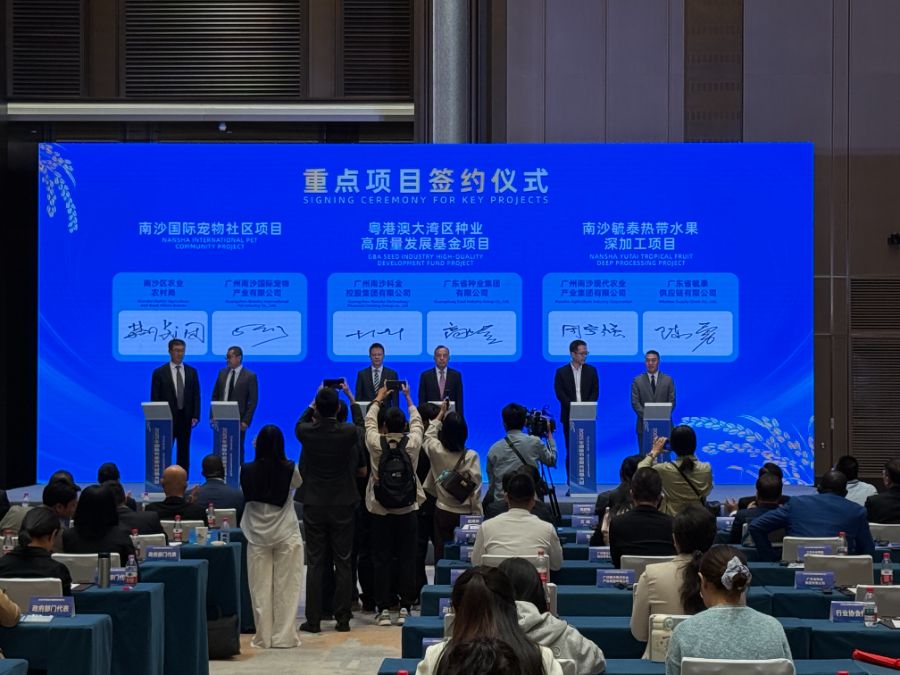
Core Viewpoint - The article highlights the transformation of agricultural service trade in Guangdong, particularly through the export of ornamental fish and related products, showcasing a shift from single product exports to a comprehensive industry chain approach [1][4][5]. Group 1: Agricultural Trade Developments - In 2024, Guangdong's agricultural product import and export total reached 348.36 billion yuan, maintaining the top position in the country for three consecutive years [2]. - From January to September 2024, the province's agricultural product import and export total was 263.24 billion yuan, a year-on-year increase of 2% [2]. - The export value to countries involved in the Belt and Road Initiative reached 138.42 billion yuan, up by 4.9% [2]. Group 2: Industry Chain Transformation - Guangdong's agricultural trade is evolving from "single product export" to a model that includes "products + technology + services," enabling a more integrated approach to international markets [3][4]. - Companies like XAG Technology are customizing overseas agricultural services based on local needs, exporting smart agriculture solutions to over 70 countries [3]. - Green Hen Technology plans to replicate successful domestic agricultural practices abroad, including sending technical teams to Fiji for tomato cultivation trials [3]. Group 3: Policy and Infrastructure Support - The South China Agricultural Open Cooperation Pilot Zone in Nansha is enhancing international cooperation and agricultural service trade, supported by favorable policies and geographical advantages [6][8]. - The Nansha region has established a diverse export matrix, including 120 pre-packaged food products and significant exports of eel and smart farming equipment to multiple countries [6][8]. Group 4: Key Projects and Initiatives - The recent conference facilitated 12 major project collaborations in areas such as seed industry research and agricultural product processing, with investments exceeding 1.2 billion yuan [8]. - The Guangdong-Hong Kong-Macao Greater Bay Area Seed Industry Development Fund, with a scale of 1 billion yuan, aims to establish an international seed technology innovation center [8]. - The Nansha International Pet Community project is set to create a comprehensive facility for animal healthcare and research, expected to open to the public by the end of the year [8].
黄益平:如何打破低价内卷?|宏观经济
清华金融评论· 2025-08-16 09:31
Core Viewpoint - The article emphasizes the importance of brand development in the digital economy, highlighting two main paths: enhancing product quality and providing emotional experiences to consumers [1]. Group 1: Consumer Spending and Economic Growth - A significant challenge for the Chinese economy is to expand consumption, increase its share in GDP, and enhance its contribution to economic growth. Currently, only about 56 yuan out of every 100 yuan of GDP is used for consumption, which is approximately 20 yuan less than the international average [3]. - The low consumption ratio not only affects the quality of life but may also lead to oversupply and excess capacity issues. Additionally, there is a phenomenon of consumption downgrade, where the quality of consumer goods is declining [3]. Group 2: Quality Indicators and Market Dynamics - There is currently no effective indicator to reflect the quality of consumer goods. The CPI index has remained around -0.1%, which may indicate quality issues, but price does not always correlate with quality due to market supply and demand complexities [4][9]. - The "lemon market" concept by Nobel laureate George Akerlof illustrates the consequences of information asymmetry, where buyers focus on price rather than quality due to the difficulty in obtaining quality information [5]. Group 3: Solutions to Information Asymmetry - To address the lemon market problem, it is crucial to provide consumers with more information about product quality. This approach is applicable not only to the second-hand car market but also to other consumer goods, especially in e-commerce [6]. - A recent study developed two indices and a ranking system to inform consumers about brand quality and purchasing power, aiming to enhance the understanding of product quality alongside price [6][10]. Group 4: Brand Index Findings - The online consumer brand index in China has been slowly rising, indicating that consumption downgrade is not a universal phenomenon. Different industries show significant disparities in brand index values, with sectors like 3C, furniture, and beauty products having higher brand recognition compared to women's clothing [10][12]. - The average brand index is higher in new first-tier and second-tier cities compared to first-tier cities like Beijing and Shanghai, suggesting regional differences in brand perception and consumer behavior [10][13]. Group 5: Consumer Behavior and Economic Implications - The study found that cities with a higher proportion of migrant workers tend to have a higher brand purchasing power index but a lower average brand index, indicating a complex relationship between labor demographics and consumer preferences [14][15]. - The research also highlights that cities with stable populations tend to have higher average brand indices, while those experiencing significant population outflows may struggle with brand recognition and consumer spending [15]. Group 6: Emerging Brands and Consumer Trends - The study identified several emerging brands that resonate with younger consumers, such as Pop Mart and products catering to pet care, indicating a shift in consumer preferences towards quality and experience rather than just price [16]. - The overall conclusion stresses the need to focus on product quality information rather than solely on price signals, as brand importance is particularly pronounced in the digital economy [16].