鲜食米饭

Search documents
鲜食农产品如何丰富餐桌
Ren Min Ri Bao· 2025-11-26 00:38
Core Viewpoint - Fresh agricultural products are becoming increasingly popular on consumer tables, with innovations in supply chains and production processes enhancing their value and appeal [1] Group 1: Fresh Agricultural Products Overview - Fresh corn is redefining traditional perceptions of corn as a staple grain, emerging as a popular fresh produce item [1] - Fresh agricultural products include minimally processed items that retain their original flavor and appearance, such as vacuum-packed sweet corn and fresh rice [1] Group 2: Supply Chain and Production Innovations - The northeastern region of China is the largest producer of fresh corn, with over 40% of the national planting area located in Heilongjiang, Jilin, and Inner Mongolia [2] - The fresh corn industry is characterized by new varieties and smart agricultural practices, including the use of specific strains like glutinous corn and sweet glutinous corn, and advanced planting techniques [2] - Southern China serves as an important off-season supply base for fresh corn, with plans for over 2 million acres of planting in Guangdong Province by 2024 [2] Group 3: Cold Chain and Preservation Techniques - Cold chain logistics are crucial for maintaining the quality of fresh corn, with technologies like pressure pre-cooling and temperature-controlled transportation reducing spoilage rates by approximately 15% [3] - Innovative processing techniques are being employed to create value-added products such as vacuum-packed corn and frozen corn kernels, enhancing shelf life and marketability [3] Group 4: Standardization and Local Experience - Companies like Yuanji Cloud Dumplings are leveraging freshness as a core competitive advantage, with rapid production and distribution systems ensuring high-quality offerings [4] - The integration of local agricultural experiences, such as vegetable banquets in rural areas, is attracting consumers and enhancing the appeal of fresh produce [5] Group 5: Technological Advancements and Market Trends - Technological innovations are expanding the shelf life of products like rice, allowing for long-term storage without compromising quality [6] - The rise of "fruit-like vegetables" reflects a shift in consumer preferences towards healthier and more diverse food options [6] Group 6: Future Outlook - The fresh agricultural product industry faces challenges in brand building and quality enhancement, particularly for niche products [6] - A comprehensive and controllable system from production to consumption is essential for enhancing the competitiveness of fresh agricultural products [7]

经济聚焦|鲜食农产品如何丰富餐桌
Ren Min Ri Bao· 2025-11-25 06:34
Core Insights - Fresh agricultural products, particularly fresh corn, are becoming increasingly popular on consumer tables, transforming traditional perceptions of corn as merely a grain crop [2][3] - The development of fresh agricultural products is characterized by improved supply chains, technological advancements, and a focus on consumer experience [4][7] Fresh Corn Industry - Northeast China is the largest production area for fresh corn, with Heilongjiang, Jilin, and Inner Mongolia accounting for over 40% of the national planting area [3] - Fresh corn varieties include sweet corn and waxy corn, with a focus on short growth periods and high nutritional value [2] - The planting area for fresh corn in Guangdong Province is expected to exceed 2 million acres in 2024, utilizing winter fallow fields for off-season production [3] Supply Chain and Preservation - A cold chain system is essential for maintaining the flavor of fresh corn, with techniques such as "differential pressure precooling" reducing temperature quickly to preserve quality [4] - Innovations in processing have led to products like vacuum-packed corn and frozen corn kernels, enhancing shelf life and product value [4] Standardization and Local Experience - Companies like Yuanji Cloud Dumplings emphasize freshness as a core competitive advantage, with dumplings made and sold within three hours [5][6] - Local agricultural experiences, such as vegetable banquets in Hebei, attract tourists and promote direct sales of fresh produce [6] Technological Innovations - Advances in food preservation technology allow products like "fresh rice" to have a shelf life of 9 to 12 months at room temperature, expanding market opportunities [7] - The introduction of new varieties, such as "fruit lotus," capitalizes on unique climatic advantages to gain market share [7] Consumer Trends and Future Outlook - The shift in consumer preferences from merely filling to enjoying diverse and healthy food experiences drives the growth of fresh agricultural products [8] - The industry faces challenges in brand building and quality enhancement for established products, while also needing to explore new markets for niche products [8]
市场空间不断拓展,产业链持续升级 鲜食农产品如何丰富餐桌(经济聚焦)
Ren Min Ri Bao· 2025-11-24 23:09
Core Insights - Fresh agricultural products, particularly fresh corn, are becoming increasingly popular on consumer tables, transforming traditional perceptions of corn as merely a grain crop [1][2] - The fresh corn industry is characterized by new varieties and smart agricultural practices, with a significant focus on enhancing flavor and extending shelf life through cold chain logistics and innovative processing techniques [3][4] Group 1: Fresh Agricultural Products Development - Fresh corn is defined as a type of corn that is harvested before the kernels fully mature, offering a new value proposition as a fresh vegetable [1][2] - The northeastern region of China, particularly Heilongjiang, Jilin, and Inner Mongolia, accounts for over 40% of the country's fresh corn planting area, with a focus on glutinous and sweet corn varieties [2] - In Guangdong, the planting area for fresh corn is expected to exceed 2 million acres in 2024, utilizing winter fallow fields for off-season cultivation [2] Group 2: Cold Chain and Preservation Techniques - The fresh corn supply chain is implementing a "preservation battle," emphasizing the importance of cold chain logistics to maintain flavor and extend shelf life [3] - Techniques such as "differential pressure pre-cooling" can reduce corn temperature to below 5 degrees Celsius within 2 hours, decreasing loss rates by approximately 15% [3] - Innovative processing methods are being adopted, such as vacuum packaging and frozen corn products, to enhance product value and shelf life [3] Group 3: Standardization and Local Experience - Companies like Yuanji Cloud Dumplings are leveraging standardization in production, with dumplings made and sold within three hours, showcasing a robust supply chain [4] - The agricultural cooperative in Sima Village offers a unique local dining experience with a variety of fresh vegetables, attracting tourists and generating significant sales [5] Group 4: Technological Innovations and Market Trends - Technological advancements are enabling products like shelf-stable rice that can last 9 to 12 months at room temperature, expanding the market for fresh agricultural products [6] - The introduction of new varieties, such as "fruit lotus," is capitalizing on unique climatic advantages to gain market share [6] - The shift in consumer preferences from merely filling up to seeking quality and diverse food experiences is driving the growth of fresh agricultural products [6][7]
鲜食农产品如何丰富餐桌(经济聚焦)
Ren Min Ri Bao· 2025-11-24 22:31
Core Insights - Fresh agricultural products, particularly fresh corn, are becoming increasingly popular on consumer tables, transforming traditional perceptions of crops like corn [2][3] - The industry is witnessing advancements in supply chain management, standardization, and technological innovations that enhance product quality and consumer experience [4][8] Group 1: Fresh Agricultural Products Overview - Fresh corn is categorized as a fresh agricultural product, which includes minimally processed items that retain their original flavor and appearance, such as vacuum-packed sweet corn and fresh rice [2] - The fresh corn industry is characterized by a focus on new varieties and smart agricultural practices, with major production areas in Northeast China accounting for over 40% of the national planting area [3] Group 2: Supply Chain and Preservation Techniques - A comprehensive cold chain system is essential for maintaining the flavor of fresh corn, with techniques like pressure pre-cooling and temperature-controlled transportation reducing spoilage by approximately 15% [4] - Innovations in processing have led to products like vacuum-packed corn and fresh corn juice, which enhance shelf life and add value to the products [4] Group 3: Standardization and Local Experience - Companies like Yuanji Cloud Dumplings emphasize freshness as a core competitive advantage, with a rapid production process that ensures products are sold within three hours of preparation [5] - Local agricultural cooperatives are creating unique dining experiences, such as vegetable banquets, which attract tourists and promote local produce [6] Group 4: Technological Innovations and Market Trends - Technological advancements are enabling products like shelf-stable rice that can last 9 to 12 months at room temperature, expanding the market for fresh agricultural products [7] - The rise of "fruit-like vegetables" reflects a shift in consumer preferences towards healthier and more diverse food options, indicating a growing market for fresh agricultural products [7][8] Group 5: Future Outlook - The fresh corn industry faces challenges in brand building and quality enhancement, while niche products like fresh silver ear mushrooms require strategies to attract younger consumers [8]
知名企业盯上了“鲜食米饭”
Mei Ri Shang Bao· 2025-05-08 22:31
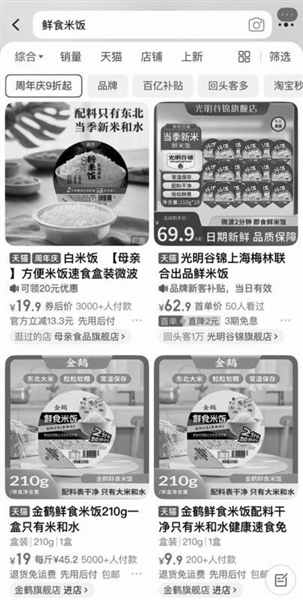
Industry Overview - The "fresh food rice" category is emerging in the market, characterized by its long shelf life and convenience, requiring only two minutes of microwave heating for consumption [2][3] - The market size of China's prepared rice industry reached 3.256 billion yuan in 2023, with a year-on-year growth of 7.99%, and is expected to grow to 4.666 billion yuan by 2030 [2] Product Characteristics - Fresh food rice, also known as convenient rice, originated in Japan and is primarily aimed at B2B channels such as traditional restaurants and transportation systems [3] - The production process involves sealing cooked rice in a sterile environment, ensuring long-term storage and circulation at room temperature [3] Market Players - Various brands are entering the fresh food rice market, including Hema, Dingdong Maicai, and Jinlongyu, as well as products from Nongfu Spring and Korean brand CJ [3][4] - Sales data indicates that brands like Jinque and Mother have monthly sales in the thousands on their flagship stores [3] Pricing and Consumer Insights - The price of fresh food rice varies significantly among brands, ranging from 3 yuan to over 10 yuan per box, with specific examples including Jinque's white rice priced at 9.9 yuan for 210g [4] - Consumer feedback highlights the convenience and affordability of fresh food rice, appealing particularly to busy individuals such as office workers and students [5] Market Potential - The prepared rice market shows significant growth potential due to the fast-paced lifestyle of consumers, although it remains a niche segment with limited local brand influence [5]