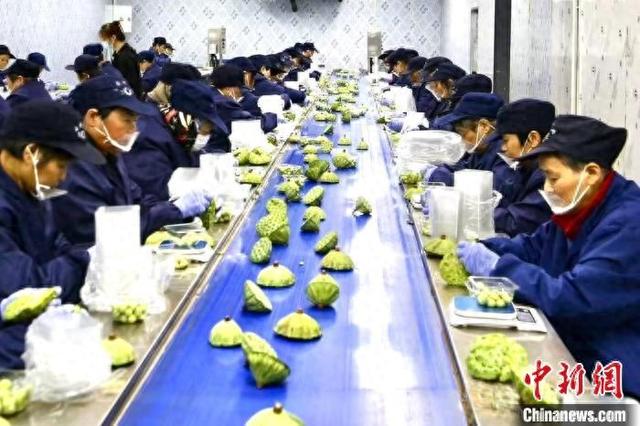
鲜食莲子

Search documents
鲜食农产品如何丰富餐桌
Ren Min Ri Bao· 2025-11-26 00:38
Core Viewpoint - Fresh agricultural products are becoming increasingly popular on consumer tables, with innovations in supply chains and production processes enhancing their value and appeal [1] Group 1: Fresh Agricultural Products Overview - Fresh corn is redefining traditional perceptions of corn as a staple grain, emerging as a popular fresh produce item [1] - Fresh agricultural products include minimally processed items that retain their original flavor and appearance, such as vacuum-packed sweet corn and fresh rice [1] Group 2: Supply Chain and Production Innovations - The northeastern region of China is the largest producer of fresh corn, with over 40% of the national planting area located in Heilongjiang, Jilin, and Inner Mongolia [2] - The fresh corn industry is characterized by new varieties and smart agricultural practices, including the use of specific strains like glutinous corn and sweet glutinous corn, and advanced planting techniques [2] - Southern China serves as an important off-season supply base for fresh corn, with plans for over 2 million acres of planting in Guangdong Province by 2024 [2] Group 3: Cold Chain and Preservation Techniques - Cold chain logistics are crucial for maintaining the quality of fresh corn, with technologies like pressure pre-cooling and temperature-controlled transportation reducing spoilage rates by approximately 15% [3] - Innovative processing techniques are being employed to create value-added products such as vacuum-packed corn and frozen corn kernels, enhancing shelf life and marketability [3] Group 4: Standardization and Local Experience - Companies like Yuanji Cloud Dumplings are leveraging freshness as a core competitive advantage, with rapid production and distribution systems ensuring high-quality offerings [4] - The integration of local agricultural experiences, such as vegetable banquets in rural areas, is attracting consumers and enhancing the appeal of fresh produce [5] Group 5: Technological Advancements and Market Trends - Technological innovations are expanding the shelf life of products like rice, allowing for long-term storage without compromising quality [6] - The rise of "fruit-like vegetables" reflects a shift in consumer preferences towards healthier and more diverse food options [6] Group 6: Future Outlook - The fresh agricultural product industry faces challenges in brand building and quality enhancement, particularly for niche products [6] - A comprehensive and controllable system from production to consumption is essential for enhancing the competitiveness of fresh agricultural products [7]

经济聚焦|鲜食农产品如何丰富餐桌
Ren Min Ri Bao· 2025-11-25 06:34
Core Insights - Fresh agricultural products, particularly fresh corn, are becoming increasingly popular on consumer tables, transforming traditional perceptions of corn as merely a grain crop [2][3] - The development of fresh agricultural products is characterized by improved supply chains, technological advancements, and a focus on consumer experience [4][7] Fresh Corn Industry - Northeast China is the largest production area for fresh corn, with Heilongjiang, Jilin, and Inner Mongolia accounting for over 40% of the national planting area [3] - Fresh corn varieties include sweet corn and waxy corn, with a focus on short growth periods and high nutritional value [2] - The planting area for fresh corn in Guangdong Province is expected to exceed 2 million acres in 2024, utilizing winter fallow fields for off-season production [3] Supply Chain and Preservation - A cold chain system is essential for maintaining the flavor of fresh corn, with techniques such as "differential pressure precooling" reducing temperature quickly to preserve quality [4] - Innovations in processing have led to products like vacuum-packed corn and frozen corn kernels, enhancing shelf life and product value [4] Standardization and Local Experience - Companies like Yuanji Cloud Dumplings emphasize freshness as a core competitive advantage, with dumplings made and sold within three hours [5][6] - Local agricultural experiences, such as vegetable banquets in Hebei, attract tourists and promote direct sales of fresh produce [6] Technological Innovations - Advances in food preservation technology allow products like "fresh rice" to have a shelf life of 9 to 12 months at room temperature, expanding market opportunities [7] - The introduction of new varieties, such as "fruit lotus," capitalizes on unique climatic advantages to gain market share [7] Consumer Trends and Future Outlook - The shift in consumer preferences from merely filling to enjoying diverse and healthy food experiences drives the growth of fresh agricultural products [8] - The industry faces challenges in brand building and quality enhancement for established products, while also needing to explore new markets for niche products [8]
市场空间不断拓展,产业链持续升级 鲜食农产品如何丰富餐桌(经济聚焦)
Ren Min Ri Bao· 2025-11-24 23:09
Core Insights - Fresh agricultural products, particularly fresh corn, are becoming increasingly popular on consumer tables, transforming traditional perceptions of corn as merely a grain crop [1][2] - The fresh corn industry is characterized by new varieties and smart agricultural practices, with a significant focus on enhancing flavor and extending shelf life through cold chain logistics and innovative processing techniques [3][4] Group 1: Fresh Agricultural Products Development - Fresh corn is defined as a type of corn that is harvested before the kernels fully mature, offering a new value proposition as a fresh vegetable [1][2] - The northeastern region of China, particularly Heilongjiang, Jilin, and Inner Mongolia, accounts for over 40% of the country's fresh corn planting area, with a focus on glutinous and sweet corn varieties [2] - In Guangdong, the planting area for fresh corn is expected to exceed 2 million acres in 2024, utilizing winter fallow fields for off-season cultivation [2] Group 2: Cold Chain and Preservation Techniques - The fresh corn supply chain is implementing a "preservation battle," emphasizing the importance of cold chain logistics to maintain flavor and extend shelf life [3] - Techniques such as "differential pressure pre-cooling" can reduce corn temperature to below 5 degrees Celsius within 2 hours, decreasing loss rates by approximately 15% [3] - Innovative processing methods are being adopted, such as vacuum packaging and frozen corn products, to enhance product value and shelf life [3] Group 3: Standardization and Local Experience - Companies like Yuanji Cloud Dumplings are leveraging standardization in production, with dumplings made and sold within three hours, showcasing a robust supply chain [4] - The agricultural cooperative in Sima Village offers a unique local dining experience with a variety of fresh vegetables, attracting tourists and generating significant sales [5] Group 4: Technological Innovations and Market Trends - Technological advancements are enabling products like shelf-stable rice that can last 9 to 12 months at room temperature, expanding the market for fresh agricultural products [6] - The introduction of new varieties, such as "fruit lotus," is capitalizing on unique climatic advantages to gain market share [6] - The shift in consumer preferences from merely filling up to seeking quality and diverse food experiences is driving the growth of fresh agricultural products [6][7]
鲜食农产品如何丰富餐桌(经济聚焦)
Ren Min Ri Bao· 2025-11-24 22:31
Core Insights - Fresh agricultural products, particularly fresh corn, are becoming increasingly popular on consumer tables, transforming traditional perceptions of crops like corn [2][3] - The industry is witnessing advancements in supply chain management, standardization, and technological innovations that enhance product quality and consumer experience [4][8] Group 1: Fresh Agricultural Products Overview - Fresh corn is categorized as a fresh agricultural product, which includes minimally processed items that retain their original flavor and appearance, such as vacuum-packed sweet corn and fresh rice [2] - The fresh corn industry is characterized by a focus on new varieties and smart agricultural practices, with major production areas in Northeast China accounting for over 40% of the national planting area [3] Group 2: Supply Chain and Preservation Techniques - A comprehensive cold chain system is essential for maintaining the flavor of fresh corn, with techniques like pressure pre-cooling and temperature-controlled transportation reducing spoilage by approximately 15% [4] - Innovations in processing have led to products like vacuum-packed corn and fresh corn juice, which enhance shelf life and add value to the products [4] Group 3: Standardization and Local Experience - Companies like Yuanji Cloud Dumplings emphasize freshness as a core competitive advantage, with a rapid production process that ensures products are sold within three hours of preparation [5] - Local agricultural cooperatives are creating unique dining experiences, such as vegetable banquets, which attract tourists and promote local produce [6] Group 4: Technological Innovations and Market Trends - Technological advancements are enabling products like shelf-stable rice that can last 9 to 12 months at room temperature, expanding the market for fresh agricultural products [7] - The rise of "fruit-like vegetables" reflects a shift in consumer preferences towards healthier and more diverse food options, indicating a growing market for fresh agricultural products [7][8] Group 5: Future Outlook - The fresh corn industry faces challenges in brand building and quality enhancement, while niche products like fresh silver ear mushrooms require strategies to attract younger consumers [8]
邮储银行金融活水润莲乡 广昌万亩白莲焕生机——从莲农致富到产业标杆的振兴路
Zheng Quan Ri Bao Zhi Sheng· 2025-09-21 14:40
Core Viewpoint - The development of the white lotus industry in Guangchang, Jiangxi, is significantly supported by Postal Savings Bank's financial services, which enhance the vitality and growth of the industry [1][5]. Group 1: Financial Support for Farmers - Postal Savings Bank provides tailored financial products, such as "re-employment guarantee loans," which have enabled farmers like Li Lianyong to expand their operations and improve their income from 80,000 yuan to over 400,000 yuan annually [2][3]. - The bank has issued a total of 360,000 yuan in loans to Li Lianyong over three years, allowing him to increase his planting area to 60 mu and invest in automated equipment [2][3]. Group 2: Industry Chain Extension - Jiangxi Yaolai Agricultural Products Co., Ltd. has developed a full-chain preservation system for fresh lotus, reducing transportation loss rates from 30% to below 5% with the help of Postal Savings Bank's financial support [3]. - The company has expanded its product line to include over ten items, such as fresh lotus seeds and lotus tea, thanks to a 200,000 yuan loan from the bank [3]. Group 3: Promoting Industry Upgrades - Zhichun Food Co., Ltd. has transformed its production capabilities with a 9 million yuan loan from Postal Savings Bank, allowing it to establish an intelligent production line for lotus-based beverages [4]. - The company has achieved a processing capacity of over 10,000 tons of white lotus annually, becoming a benchmark for the transformation and upgrading of the white lotus industry in Guangchang [4][5]. Group 4: Overall Impact on the Industry - Postal Savings Bank has provided nearly 200 million yuan in credit support to the white lotus industry, aligning its financial services with the growth cycle of the industry [5].

荷风送暖共富路:海归新农人的“奶奶侨助工坊”
Zhong Guo Xin Wen Wang· 2025-07-09 13:13
Group 1 - The core idea of the articles revolves around the innovative agricultural practices of Hong Zhihao, a returnee entrepreneur who focuses on the cultivation and commercialization of lotus seeds in Hangzhou, Zhejiang Province [1][2][7] - Hong Zhihao's journey began with a personal connection to lotus seeds, leading him to leave a banking career to pursue agriculture, particularly in fresh lotus seed production [1][2] - The initial challenges included finding suitable lotus seed varieties and addressing the delicate nature of the product, which requires prompt processing to maintain quality [1][2] Group 2 - Technological advancements play a crucial role in enhancing production efficiency, including the development of automatic harvesting equipment and innovative preservation techniques that extend the shelf life of lotus seeds [2] - The business model has achieved significant growth, with an average annual sales increase of 300% over the past four years, facilitated by leveraging overseas Chinese networks for market access [2][6] Group 3 - The establishment of the "Nai Nai Overseas Chinese Assistance Workshop" integrates the lotus seed industry with local elderly employment, providing simple job opportunities for seniors in the community [4][5] - The workshop has created around 200 job positions for elderly residents, resulting in an average annual income increase of over 10,000 yuan per person, while also contributing to the collective economy of the village [6][7] - The model has been recognized as an excellent practice case in Zhejiang Province and is being promoted to other regions, demonstrating its potential for rural revitalization [6][7]