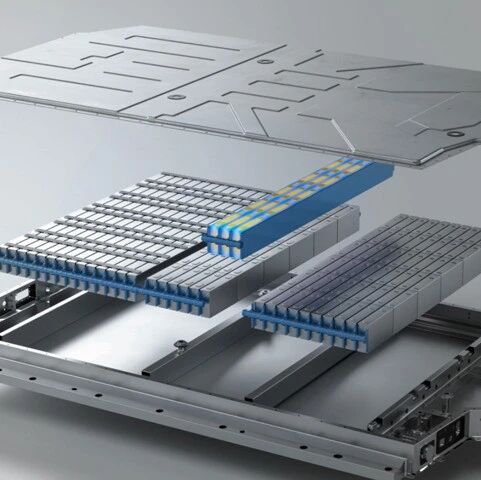
麒麟三元锂电池

Search documents
瑞银:500 元目标价背后:宁德时代如何征服全球电动车与储能市场?
鑫椤储能· 2026-02-09 03:50
Core Insights - UBS released a deep research report on CATL (300750.SZ) on February 6, 2026, reaffirming a "Buy" rating and raising the target price from 465 RMB to 500 RMB, highlighting CATL's leading cost control, scalable production, and technological iteration capabilities, which will allow it to maintain profitability during overseas expansion and benefit from the electrification of commercial vehicles and explosive demand for energy storage [1] Group 1: Key Arguments - CATL's cost control is globally leading, with the Shenxing 2.0 lithium iron phosphate battery costing as low as 55 USD/kWh, setting a new industry benchmark, while the Qilin ternary lithium battery costs 64 USD/kWh, and the high-nickel battery produced in Germany is at 87 USD/kWh, still lower than Tesla's 4680 battery [2][3] - The profitability of overseas factories remains resilient despite rising costs, with the Hungarian factory's battery costs being 10-15 USD/kWh higher than domestic production, but benefiting from a 56% price premium in the European market, leading to expected operational profit margins comparable to domestic factories [3] - CATL has effectively countered raw material cost fluctuations through price transmission and efficiency optimization, maintaining stable unit profitability, with net profit per kWh consistently between 106-119 RMB from 2020-2024 [5] Group 2: Growth Opportunities - CATL's growth opportunities have expanded beyond passenger vehicle electrification to multiple sectors, with the global EV penetration rate deepening and commercial vehicle electrification accelerating, particularly with the introduction of sodium battery solutions [6] - The demand for energy storage systems is expected to grow 2-3 times, driven by renewable energy consumption and backup power for data centers, with projected sales reaching 182 GWh by 2026 [6] - Emerging application scenarios such as construction machinery, electric ships, eVTOLs, and robotics are becoming new growth engines, with CATL maintaining a leading market share of 38.2% in the global EV battery market as of November 2025 [6] Group 3: Financial Forecast and Valuation - UBS has raised CATL's performance expectations for 2026-2027, forecasting sales of 829 GWh in 2026, with revenue of 587.698 billion RMB and net profit of 90.935 billion RMB, and further growth in 2027 [9] - The current stock price of CATL is 369.11 RMB, corresponding to a 2026 forecast PE of 18 times, which is below the average of 22 times for domestic battery manufacturers, indicating a clear valuation discount [10] - UBS's target price increase to 500 RMB is based on accelerated commercial vehicle electrification, effective cost management, and an upward adjustment of valuation multiples from 24 to 25 times 2026E PE [10]



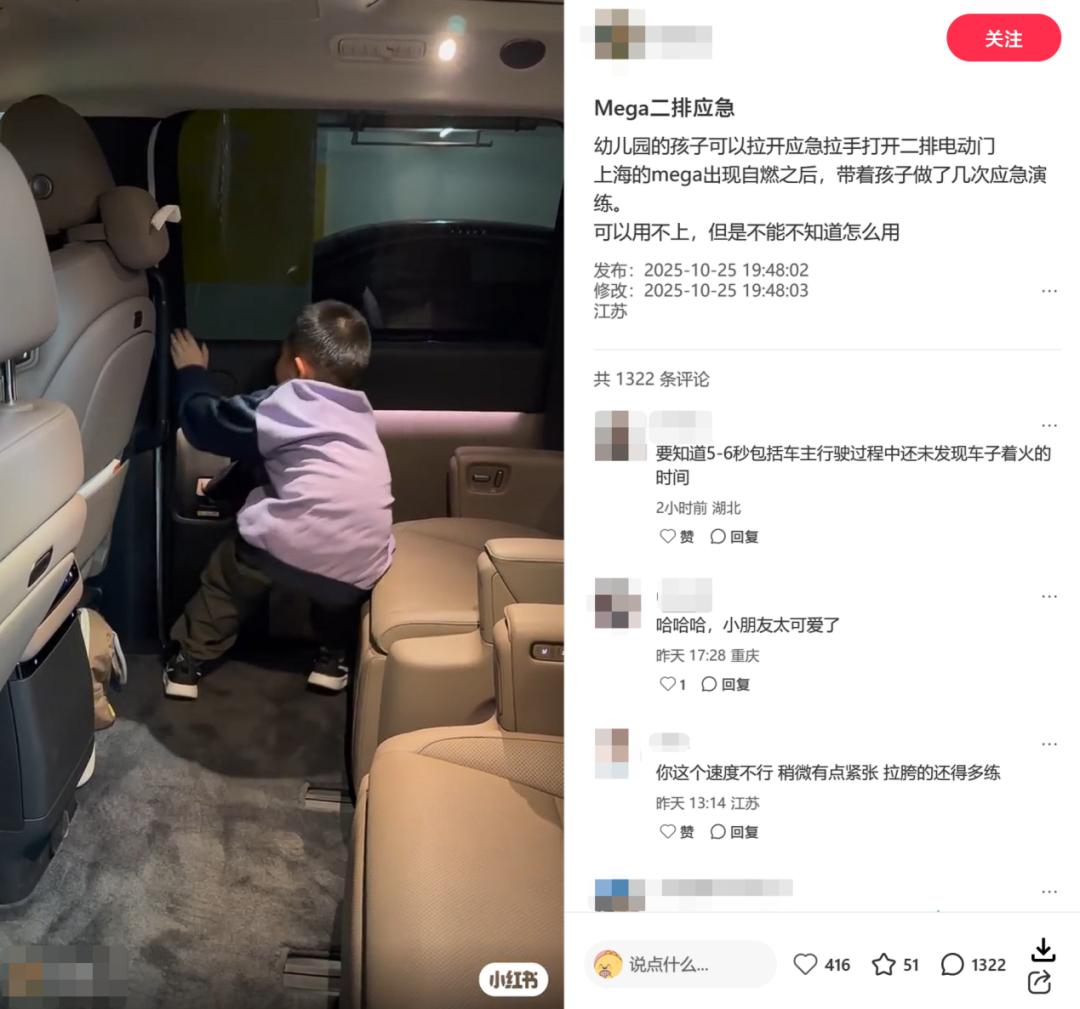
理想MEGA惊魂爆燃后,三元锂电池天塌了?
36氪· 2025-11-04 09:48
Core Viewpoint - The incident involving the Li Auto MEGA has reignited concerns about battery safety in the electric vehicle industry, particularly regarding the use of ternary lithium batteries versus lithium iron phosphate batteries [4][7][9]. Group 1: Incident Overview - The Li Auto MEGA, priced over 500,000 yuan and marketed for family safety, caught fire within 10 seconds without a severe collision, raising alarms in the new energy sector [4][5]. - Following the incident, Li Auto acknowledged a defect in the coolant of the MEGA 2024 model, which could lead to thermal runaway in extreme conditions [7][9]. Group 2: Battery Safety Debate - The MEGA incident has shifted focus from vehicle design issues to battery safety, with ternary lithium batteries, known for their high performance, now under scrutiny for their thermal stability [9][12]. - Research indicates that ternary lithium batteries can begin to decompose at around 200°C, leading to rapid thermal runaway, while lithium iron phosphate batteries require much higher temperatures (500-800°C) to decompose, making them inherently safer [12][13]. Group 3: Market Dynamics and Battery Choices - The shift in market dynamics since 2016 has favored ternary lithium batteries due to their higher energy density, which has made them the preferred choice for high-end electric vehicles [19][21]. - However, the rising costs of ternary lithium batteries and the increasing market share of lithium iron phosphate batteries, which have surpassed 70% in recent months, indicate a significant change in consumer preferences [21][28]. Group 4: Future of Battery Technologies - The future of battery technology may see a coexistence of both battery types, as high-end vehicles continue to demand the performance benefits of ternary lithium batteries, while cost-effective models may increasingly adopt lithium iron phosphate batteries [34][41]. - Innovations in battery technology, such as solid-state batteries, are expected to leverage the advantages of ternary lithium materials while addressing safety concerns, indicating a potential evolution in the industry [39][41].

理想MEGA惊魂爆燃后,三元锂电池天塌了?
3 6 Ke· 2025-11-03 06:06
Core Viewpoint - The incident involving the Ideal MEGA electric vehicle, which caught fire within 10 seconds, has sparked significant discussions about battery safety in the electric vehicle industry, particularly regarding the risks associated with high-performance lithium-ion batteries [1][2]. Group 1: Incident and Immediate Reactions - The Ideal MEGA fire incident has led to widespread concern among middle-class parents who purchased the vehicle, prompting discussions on "electric vehicle escape" for children [1]. - Following the incident, Ideal officially apologized and acknowledged a defect in the coolant of the MEGA 2024 model, which could lead to thermal runaway of the battery under extreme conditions [2]. Group 2: Battery Technology Debate - The incident has reignited the long-standing debate between the safety of lithium iron phosphate (LFP) batteries and the performance of ternary lithium batteries, with the former being seen as safer but less powerful [2][5]. - Ideal's MEGA uses the Kirin ternary lithium battery, which was previously marketed as having superior safety features, including a low failure rate and advanced battery management systems [3][5]. Group 3: Battery Characteristics and Safety - Ternary lithium batteries have lower thermal stability, with decomposition reactions potentially starting at around 200°C, while LFP batteries require much higher temperatures (500-800°C) to decompose, making LFP inherently safer [5]. - Experimental data shows that ternary lithium cells can reach peak temperatures of 400-600°C within 10 seconds during short-circuit tests, whereas LFP cells take about 2 minutes to reach 300°C, highlighting a critical safety difference [5]. Group 4: Market Dynamics and Battery Choices - The shift in the market dynamics began in 2016 when subsidies for electric vehicles were linked to battery energy density, favoring ternary lithium batteries, which led to a significant market share increase for them [8][10]. - However, by 2021, LFP batteries began to regain market share, surpassing 70% in 2023, driven by cost-effectiveness and the growing demand for affordable electric vehicles [10][11]. Group 5: Future of Battery Technologies - The future of battery technology may not be a straightforward choice between LFP and ternary lithium, as both have distinct advantages and are likely to coexist based on market demands [24]. - Ternary lithium batteries are seen as a key pathway to next-generation solid-state batteries, which promise improved safety and energy density, while also being suitable for high-performance applications like flying cars and robotics [22][24].