黄金类基金

Search documents
白银大跌35%、黄金下挫12%,原因何在,如何应对?
Sou Hu Cai Jing· 2026-01-31 03:26
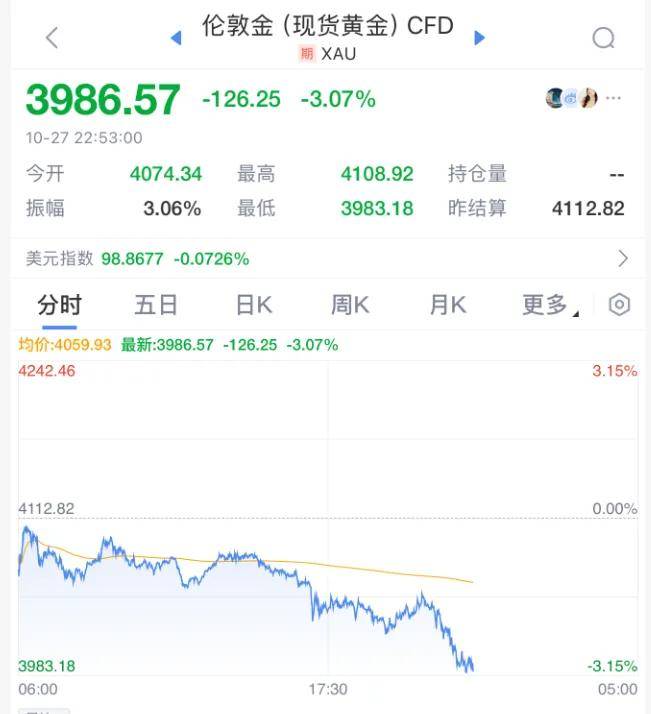
Core Insights - The recent significant drop in silver and gold prices has been unprecedented, with silver futures falling by 36% and gold by 12%, marking the largest single-day declines in history for both metals [1][3]. Price Movements - Silver futures experienced extreme volatility, with a high of $114 and a low of $74, resulting in a maximum drop of 35% [1]. - Gold futures also saw a drastic decline, with prices reaching a high of $5400 and a low of $4700, reflecting a 12% drop [1]. Market Reactions - The decline in precious metals is attributed to market reactions to the Federal Reserve's potential leadership changes, which are perceived as hawkish and may lead to tighter liquidity, negatively impacting precious metals [3]. - Despite predictions from various institutions suggesting gold could reach $6000 to $8500, there is skepticism about gold exceeding $5500, as it may surpass its intrinsic value [4]. Future Outlook - A rebound is anticipated following the significant drop, with a short-term price stabilization expected between $4500 and $4600 [6]. - Long-term confidence in gold remains, as concerns over U.S. debt and dollar credibility persist, indicating that a change in Federal Reserve leadership is unlikely to alter market perceptions significantly [6][7].

金价冲高回落,现在是上车的好时机吗?
Sou Hu Cai Jing· 2025-10-27 17:02
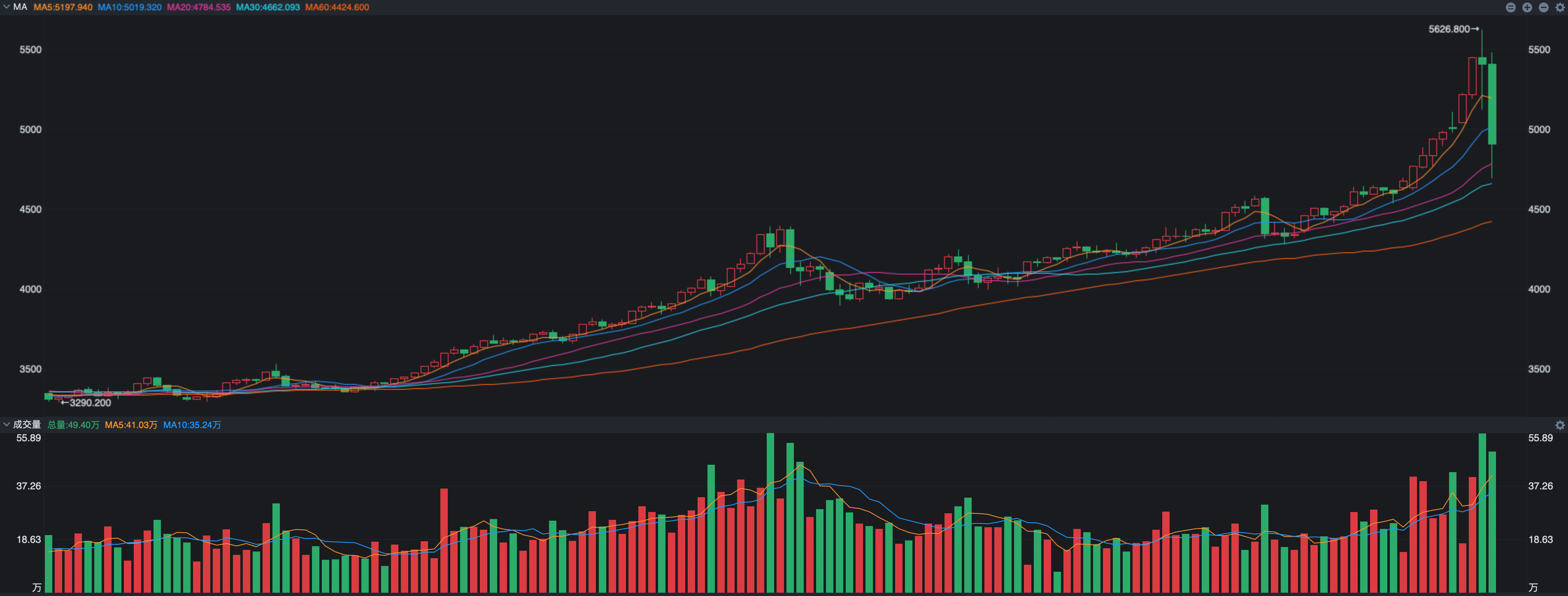
Core Viewpoint - Recent fluctuations in gold prices, including a drop of over 3% below $4000 and $3900, are driven by multiple factors, raising questions about the long-term investment logic of gold and how investors should position themselves [1][3]. Group 1: Factors Driving Gold Price Movements - Concerns over the U.S. dollar credit system have intensified, with the national debt exceeding $37 trillion, marking a historical peak in GDP ratio since World War II, and risks of government shutdown exacerbating market fears [3]. - Escalating trade tensions, particularly between the U.S. and China, have heightened risk aversion, increasing gold's appeal as a traditional safe-haven asset [3]. - Central banks globally are returning to a loose monetary policy, with a 90% probability of further rate cuts anticipated by the market following the Federal Reserve's recent actions [3]. Group 2: Market Sentiment and Technical Analysis - The gold market may have entered a high-level consolidation phase, with short-term sentiment indicators suggesting overheating, which could lead to increased volatility [5]. - Some short-term factors that supported previous price increases are reversing, such as easing U.S.-China tensions and stabilizing European political conditions, which may lead to significant price fluctuations in the future [7]. Group 3: Long-term Outlook and Institutional Predictions - Despite short-term volatility, the long-term logic for gold as a reserve asset remains intact, with 95% of surveyed central banks planning to increase their gold holdings in the next 12 months [7]. - Global gold ETFs saw a net inflow of 145.6 tons in September 2025, bringing total holdings to 3837.7 tons, indicating strong ongoing demand [7]. - Historical comparisons show that gold has experienced significant long-term price increases, suggesting potential for further appreciation in the current cycle [7]. Group 4: Investment Strategy Recommendations - Investors are advised to focus on strategic allocation rather than short-term speculation, with a recommendation to allocate approximately 15% of their portfolio to gold as a hedge against currency credit risks and geopolitical uncertainties [11]. - Gold-related funds are suggested as a preferred investment vehicle due to their liquidity and lower entry barriers, while physical gold and futures are recommended for more knowledgeable investors [11].