
避险情绪

Search documents
市场主流观点汇总-20260331
Guo Tou Qi Huo· 2026-03-31 13:07
Report Overview - The report aims to objectively reflect the research views of futures and securities companies on various commodity varieties, track hot varieties, analyze market investment sentiment, and summarize investment driving logic [1] Market Data Commodities - Methanol closed at 3296.00 with a weekly increase of 5.24%;焦煤 closed at 1219.00 with a 4.10% increase; PTA closed at 6876.00 with a 3.40% increase; copper closed at 95930.00 with a 1.26% increase; palm oil closed at 9768.00 with a 0.51% increase; rebar closed at 3124.00 with a 0.03% increase. Aluminum closed at 23935.00 with a -0.35% decrease; iron ore closed at 812.00 with a -0.43% decrease; corn closed at 2369.00 with a -0.75% decrease; silver closed at 17489.00 with a -0.77% decrease; glass closed at 1041.00 with a -1.23% decrease; ethylene glycol closed at 5279.00 with a -1.38% decrease; live pigs closed at 9965.00 with a -2.50% decrease; soybean meal closed at 2937.00 with a -3.04% decrease; gold closed at 998.66 with a -4.16% decrease; crude oil closed at 740.80 with a -4.24% decrease; PVC closed at 5615.00 with a -4.43% decrease; polysilicon closed at 35680.00 with a -5.52% decrease [2] A-shares - CSI 500 closed at 7737.61 with a -0.29% decrease; SSE 300 closed at 4502.57 with a -1.41% decrease; SSE 50 closed at 2837.31 with a -1.61% decrease [2] Overseas Stocks - FTSE 100 closed at 9967.35 with a -1.29% decrease; France CAC40 closed at 7701.95 with a 0.47% increase; Nikkei 225 closed at 53373.07 with a 0.49% increase; Hang Seng Index closed at 24951.88; S&P 500 closed at 6368.85 with a -2.12% decrease; Nasdaq Index closed at 20948.36 with a -3.23% decrease [2] Bonds - China's 5-year treasury bond yield was 1.56 with a 0.67bp increase; 10-year treasury bond yield was 1.82 with a 0.39bp increase; 2-year treasury bond yield was 1.31 with a -0.28bp decrease [2] Foreign Exchange - US Dollar Index closed at 100.17 with a 0.67% increase; US Dollar mid-price was 6.91 with a 0.35% increase; Euro to US Dollar was 1.15 with a -0.50% decrease [2] Commodity Views Macro-financial Sector Stock Index Futures - Strategy views: Among 7 institutions, 1 is bullish, 0 is bearish, and 6 expect a sideways trend. Bullish logic: 1-2 month industrial enterprise profits increased by 15.2% year-on-year, high-tech manufacturing profits grew by 58.7%, policies are releasing signals for stable growth, and stock index valuations are at a low historical level. Bearish logic: Uncertainty in the Middle East, rising Fed rate hike expectations, decreased trading volume, and potential weak terminal demand [3] Treasury Bond Futures - Strategy views: Among 7 institutions, 0 is bullish, 2 is bearish, and 5 expect a sideways trend. Bullish logic: Safe-haven sentiment supports bonds, loose liquidity, and policy support. Bearish logic: Strong economic resilience, rising inflation expectations, and reduced short-term rate cut expectations [3] Energy Sector Crude Oil - Strategy views: Among 7 institutions, 4 are bullish, 1 is bearish, and 2 expect a sideways trend. Bullish logic: Military confrontation between Iran and the US, disrupted shipping in the Strait of Hormuz, slow inventory reconstruction, and supply-demand imbalance. Bearish logic: Release of strategic reserves, increased Russian oil supply, OPEC+ production increase plan, and potential for a ceasefire [4] Agricultural Products Sector Soybean Meal - Strategy views: Among 7 institutions, 2 are bullish, 2 are bearish, and 3 expect a sideways trend. Bullish logic: High US soybean export inspections, rising fertilizer prices, slow Brazilian soybean arrivals, and increased feed demand. Bearish logic: Increasing soybean arrivals in April, faster Brazilian soybean harvest, expected increase in new-season soybean planting area, and long-term supply surplus [4] Non-ferrous Metals Sector Aluminum - Strategy views: Among 7 institutions, 5 are bullish, 0 is bearish, and 2 expect a sideways trend. Bullish logic: Attacks on aluminum plants in Bahrain and UAE, strong LME spot premium, rising domestic downstream processing enterprise operating rates, and a strong technical rebound. Bearish logic: Global inflation, potential recession trading, high domestic aluminum inventories, and low aluminum rod processing fees [5] Chemical Sector Methanol - Strategy views: Among 7 institutions, 6 are bullish, 0 is bearish, and 1 expects a sideways trend. Bullish logic: Decreased Iranian methanol plant operating rates, improved downstream enterprise profits, increased downstream olefin demand, and accelerated inventory reduction. Bearish logic: Uncertainty in the conflict and potential price corrections [5] Precious Metals Gold - Strategy views: Among 7 institutions, 1 is bullish, 1 is bearish, and 5 expect a sideways trend. Bullish logic: Geopolitical risks, high oil prices, and potential capital inflows. Bearish logic: Reduced market liquidity, unclear Fed rate cut path, strong US Dollar, and gold sales by some countries [6] Black Sector Coking Coal - Strategy views: Among 7 institutions, 2 are bullish, 0 is bearish, and 5 expect a sideways trend. Bullish logic: Rising energy prices, increased blast furnace operating rates, increased downstream inventory replenishment, and a favorable supply-demand pattern. Bearish logic: High domestic coking coal production, high Mongolian coal imports, and intense futures market competition [6]
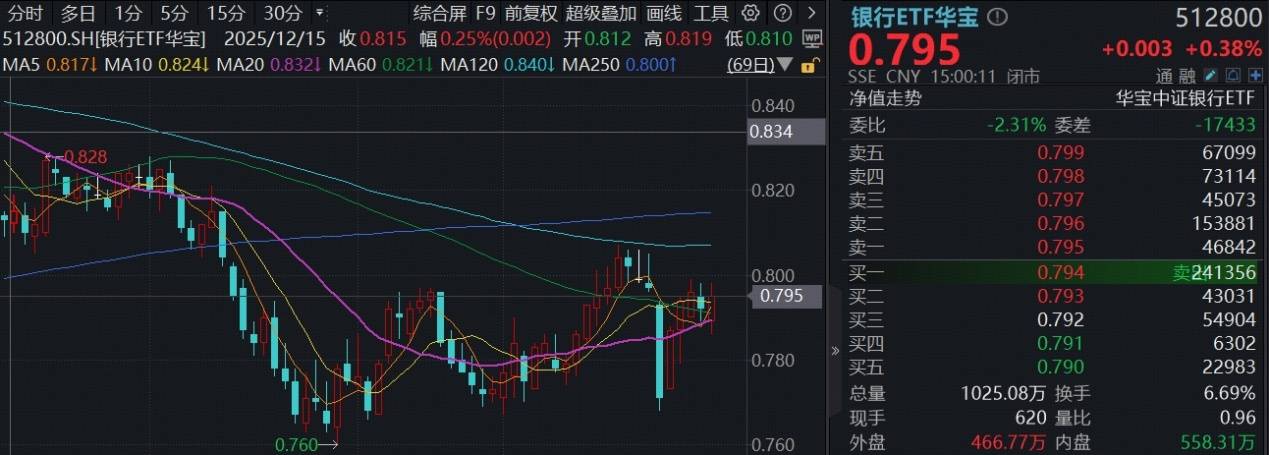
避险情绪升温,百亿银行ETF华宝(512800)向上突破,营收净利双增,工商银行涨超2%
Sou Hu Cai Jing· 2026-03-30 11:25
Core Viewpoint - The banking sector shows resilience amid geopolitical tensions, with a focus on high-dividend defensive assets attracting investor interest [3] Group 1: Market Performance - On March 30, the Shanghai Composite Index rose by 0.24% after initially dropping over 1%, while the ChiNext and Shenzhen Composite Indices fell [1] - The banking sector demonstrated defensive characteristics, with most individual stocks closing higher; Xiamen Bank led with a nearly 4% increase, and major banks like ICBC and Bank of China also saw gains [1] Group 2: Banking Sector Insights - Major state-owned banks, including ICBC, CCB, BOC, and PSBC, reported annual results showing steady asset growth and increases in both revenue and net profit [3] - Despite challenges such as narrowing net interest margins, bank management expressed optimism about stabilizing margins, which received positive market feedback [3] - According to CITIC Securities, the disclosed bank performance aligns with expectations, and future disclosures are likely to show minimal deviations from forecasts [3] Group 3: Investment Opportunities - With rising risk aversion, the banking sector is expected to benefit from increased allocation due to its defensive characteristics and potential for fundamental improvements [3] - The banking ETF (512800) has a significant scale of over 12 billion, making it the largest and most liquid among A-share banking ETFs, with an average daily trading volume exceeding 800 million since 2025 [4]





贵金属期货:金银分化,短期偏多
Ning Zheng Qi Huo· 2026-03-30 10:59
Report Industry Investment Rating - The report gives a short - term bullish rating on precious metal futures [1] Core Viewpoints - Due to the ongoing intense and stalemated conflict between the US, Israel, and Iran, along with large - scale protests in the US against the Trump administration, global stock markets have fallen significantly, and risk - aversion sentiment has re - heated. This has increased the short - term bullish momentum for gold, while the bullish momentum for silver has weakened, and it mainly follows gold passively. In the medium term, the precious metal market may still be in a wide - range oscillation pattern until the policy of the new Federal Reserve chairman becomes clearer [1] Directory Summaries 1. Market Review and Outlook - The US - Israel - Iran conflict remains intense and stalemated. Iran has increased its attacks on the US and Israel, and Tehran has been more frequently and severely bombed. There are large - scale protests against the Trump administration in the US, with over 900,000 people expected to participate in 3,100 protests across 50 states. Global stock markets have fallen, and risk - aversion sentiment has re - heated, increasing the short - term bullish momentum for gold [1] 2. Factors to Consider - The factors to consider include Middle - East geopolitical games, US economic data, and Federal Reserve policy expectations [2] 3. Futures Market Review - The report presents charts of gold and silver futures' internal and external prices, as well as the trading volume and open interest of Shanghai gold and silver futures, with data from Flush and Ningzheng Futures [3] 4. Interest Rates and Exchange Rates - The report shows charts of the US dollar index and gold price, and US interest rates and gold price, with data from Flush and Ningzheng Futures [7][9] 5. Macroeconomic Data - The report includes charts of US CPI inflation data, PCE inflation data, initial jobless claims, unemployment rate and new non - farm employment, PMI, retail and personal disposable income, new private housing starts, and new housing sales, with data from Flush and Ningzheng Futures [14][19][20] 6. Fund Holdings and Ratios - The report provides charts of silver and gold ETF total holdings, the holding ratios of gold and silver asset management institutions, and the gold - silver ratio and gold - copper ratio, with data from Flush and Ningzheng Futures [23][26][29]
研究所晨会观点精萃-20260330
Dong Hai Qi Huo· 2026-03-30 03:33
Report Summary 1. Industry Investment Ratings No industry investment ratings are provided in the report. 2. Core Views - The market is worried about the escalation of the tense situation between the US and Iran, leading to a continued decline in global risk appetite. In the short term, the domestic stock index oscillates weakly with increased volatility, and the domestic stock index market cools down again. - The overall economic and inflation situation in China from January to February is better than expected, but the overall goals and policy intensity in 2026 are lower than those in 2025. - Different asset classes have different trends: stocks oscillate weakly in the short term; bonds oscillate in the short term; black commodities oscillate weakly; non - ferrous metals oscillate weakly; energy and chemical products oscillate strongly; precious metals oscillate significantly and rebound in the short term [2][3]. 3. Summary by Categories 3.1 Macro - finance - Overseas: Iran claims to have closed the Strait of Hormuz, and other energy supply interruption news has hit risk sentiment. International oil prices have risen unilaterally, and the US dollar index and US bond yields have increased. - Domestic: The Chinese economy rebounded unexpectedly from January to February, exports far exceeded expectations, and inflation continued to recover. The overall economic and inflation situation is better than expected. The government work report sets the main expected development goals and fiscal and monetary policies for 2026, with overall goals and policy intensity lower than in 2025. - Asset trends: Stocks oscillate weakly and with increased volatility in the short term; bonds oscillate in the short term; black commodities oscillate weakly; non - ferrous metals oscillate weakly; energy and chemical products oscillate strongly; precious metals oscillate significantly and rebound in the short term. It is recommended to observe cautiously in the short term [2]. 3.2 Stock Index - Driven by sectors such as energy metals, biomedicine, and small metals, the domestic stock market rebounded. - The economic and inflation situation from January to February is better than expected, but the overall goals and policy intensity in 2026 are lower than in 2025. - The market trading logic focuses on Middle - East geopolitical risks. In the short term, the stock index oscillates weakly and with increased volatility due to the mixed geopolitical news. It is recommended to observe cautiously in the short term [3]. 3.3 Precious Metals - The precious metals market rose on Friday night. The Shanghai gold main contract closed at 1009.44 yuan/gram, up 1.73%; the Shanghai silver main contract closed at 17763 yuan/kg, up 3.12%. - Spot gold rose significantly in the US session, breaking through the $4550 mark, and finally closed up 2.58% at $4492.99/ounce; spot silver closed up 2.55% at $69.78/ounce. - Precious metals oscillate significantly and rebound in the short term. It is recommended to observe cautiously in the short term [4]. 3.4 Black Metals - **Steel**: The steel futures and spot markets continued to oscillate on Friday, and the trading volume was low. The escalation of the Middle - East situation over the weekend may further increase steel costs. The real demand has improved marginally, and the inventory decline has continued to expand. The apparent consumption of five major steel products has decreased slightly this week, but the hot - metal output has increased slightly. The steel market will follow the cost in the short term [7]. - **Iron Ore**: The spot price of iron ore dropped significantly on Friday, and the futures price oscillated at a high level, mainly affected by rumors of iron - ore negotiation setbacks. The demand for iron ore remains resilient, and the supply and demand misalignment problem is gradually being alleviated. The room for further price increase is limited, and attention should be paid to the risk of phased adjustment after the energy price weakens [7]. - **Silicon Manganese/Silicon Iron**: The spot prices of silicon iron and silicon manganese were flat on Friday, and the futures trends were divergent, with silicon manganese showing a stronger trend. The rebound in oil prices supports the alloy prices. The silicon - manganese market has stable supply, and the profit margin is acceptable. The silicon - iron market is waiting for the entry situation in April. It is recommended to view the futures prices of silicon iron and silicon manganese with an oscillating - strong mindset [8]. 3.5 Non - ferrous Metals and New Energy - **Copper**: The copper price dropped significantly, and downstream enterprises replenished their inventories at low prices, resulting in a significant decrease in social copper inventories. The supply of the copper market remains loose, and the downstream terminal demand is affected by the overdraft effect of last year. The core contradiction lies in the mining end, and the probability of extreme shortage is not high [9]. - **Aluminum**: The attack on the UAE Global Aluminum Company may affect electrolytic - aluminum production in the short term, providing some support for the aluminum price. The domestic aluminum - ingot social inventory is at a high level and is being depleted slowly due to high domestic supply [9]. - **Zinc**: The domestic zinc - ingot inventory continued to decline last week but is still at a high level in recent years. The zinc - ore processing fees in the south have rebounded, and the domestic smelting output remains relatively high. The overseas smelting output will increase in 2026. The demand is not optimistic [10][11]. - **Lead**: The imports of refined lead and crude lead in the first two months increased significantly. The domestic production of primary lead and secondary lead has increased seasonally. The demand is entering the off - season, and the social inventory of primary lead has decreased. The LME lead inventory is at a high level [11]. - **Nickel**: The Indonesian policy is unstable. The RKAB quota in 2026 has decreased significantly, and the MHP supply may decline. The nickel price has support at the bottom, but the upside space is limited by high inventories at home and abroad [12]. - **Tin**: The imports of tin ore from Myanmar have increased significantly, and the import sources are more diversified. The demand is mixed, with the semiconductor industry performing well but other industries underperforming. The tin price has rebounded due to the return of risk appetite and inventory depletion. Attention should be paid to the emotional fluctuations caused by the repeated Middle - East situation [13]. - **Lithium Carbonate**: The weekly production of lithium carbonate has increased, and the social inventory has decreased slightly. The supply and demand are both strong, and the inventory of smelters remains low. There is still no progress in the negotiation of the Zimbabwean export ban, and the lithium carbonate price has a large upward potential. It is recommended to lay out at low prices or hold long positions cautiously [14]. - **Industrial Silicon**: The weekly production has decreased slightly, and the social inventory is at a high level and stable. The supply and demand are weak, and the production capacity is in surplus. The price is close to the cost, and it is expected to oscillate strongly due to the increase in coking - coal prices [15]. - **Polysilicon**: The prices of silicon wafers and battery cells have continued to decline, and the inventory has increased slightly. The medium - and long - term policy is negative for the market, and the price is close to the full - cost range. Attention should be paid to the inventory depletion situation after April. It is recommended to hold short positions cautiously or take partial profits [16]. 3.6 Energy and Chemicals - **Crude Oil**: The US preparation for landing operations has kept the market's expectation of the Strait's safety low. The attack on the Russian terminal has restricted oil exports, and the oil price has exceeded $100. The oil price will remain strong in the short term [17]. - **Asphalt**: The oil - price support continues, the refinery production schedule in April is expected to decline significantly, and the seasonal demand will increase. The total inventory will be depleted, and the short - term price will follow the oil price and fluctuate significantly [17]. - **PX**: The price of naphtha is strong, and the PX price has rebounded. The PX will remain strong in the short term due to the decrease in upstream reforming operations and the increase in overseas demand for aromatic materials [17]. - **PTA**: The PTA price has increased following the decline of the reforming device, but the increase is limited by the negative feedback from the downstream. The core logic lies in the aromatic raw materials, and the PTA is likely to be strong [18]. - **Ethylene Glycol**: The overseas supply of ethylene glycol is expected to decrease significantly, and the price has remained strong. Attention should be paid to the negative feedback from the terminal [18]. - **Short - fiber**: The increase in the oil price has driven the polyester sector to strengthen. The finished - product inventory is low, and the production and sales have declined. The short - fiber will continue to oscillate strongly in the short term [19]. - **Methanol**: The import reduction due to the geopolitical conflict has led to a reduction in port inventory and an increase in inland demand. The methanol market has support, but attention should be paid to the marginal changes caused by geopolitical relaxation and downstream negative feedback [19]. - **PP**: The upstream supply has decreased, and the downstream demand has increased. The spot market is tight, and the price is expected to remain strong. The key variable is the navigation situation in the Strait of Hormuz [19]. - **LLDPE**: The upstream supply has continued to decrease, and the demand has been supported by the traditional peak season. The inventory has been depleted rapidly, and the polyethylene is expected to continue to operate strongly. Geopolitical factors are the key variables [19]. - **Urea**: The policy of ensuring supply and stabilizing prices continues to put pressure on the market, but the industrial demand provides support. The price will oscillate narrowly in the short term [20]. 3.7 Agricultural Products - **US Soybeans**: The US biodiesel policy has been finalized, and the policy benefits are exhausted. The uncertainty of Sino - US soybean trade has increased. The increase in the CBOT soybean price is limited by profit - taking [21]. - **Soybean and Rapeseed Meal**: The arrival of imported soybeans at oil mills has decreased seasonally, and the inventory has been depleted rapidly. The basis remains high. The supply of rapeseed meal is expected to increase, and the price will oscillate with the soybean meal [21]. - **Oils and Fats**: The crude - oil price is the main driving factor for international oils and fats. The vegetable - oil price has the potential to rise, but it is restricted by recession expectations and the expected high - yield. The domestic soybean - oil inventory is being depleted, and the price difference between soybean oil and palm oil may rebound. The supply of rapeseed oil may increase, and it will fluctuate with soybean oil and palm oil [22]. - **Corn**: The bargaining power of the trading end has increased, but the downstream demand is weak. The possible rice auction in early April may have a negative impact on the corn price [23]. - **Hogs**: The weight of hogs in stock is increasing, and farmers are reluctant to sell. The short - term spot price may continue to weaken, but the long - term expectation is improving. The futures market has risks in the near - term contracts and support in the far - term contracts [23].
【策略周报】中东战事扩大,后续如何布局?
华宝财富魔方· 2026-03-29 14:03
Key Points Summary Group 1: Important Events Review - Trump announced plans to visit China in mid-May, with ongoing communication between both parties [2] - Iranian Revolutionary Guard Navy Commander confirmed dead in an airstrike, leading to Iran's missile and drone attacks on U.S. military bases in Gulf countries [2] - Trump claimed productive dialogue with Iran and postponed military strikes on Iranian energy facilities by 10 days, citing Iran's allowance for oil tankers to pass through the Strait of Hormuz [2] - The U.S. proposed a 15-point ceasefire plan to Iran, demanding nuclear abandonment and cessation of proxy wars, while Iran responded with five conditions, including ending aggression and compensation for damages [2] - The U.S. Defense Department is developing a "final strike" military option against Iran, with increased troop deployments to the Middle East, including the arrival of the Marine Corps' 11th Expeditionary Unit [2] Group 2: Market Overview - The bond market strengthened due to rising risk aversion, with funds shifting from equity markets to bonds, and expectations of no tightening in domestic monetary policy amid ample liquidity [5] - A-share market experienced significant declines initially due to heightened tensions in the Middle East, followed by a rebound as Trump indicated negotiations with Iran, though market sentiment remained cautious amid conflicting signals [6] - Overseas markets, including Hong Kong and U.S. stocks, faced notable declines influenced by the fluctuating U.S.-Iran situation, creating a challenging environment for investors [7]

通胀扰动长债,短债相对稳定
Dong Zheng Qi Huo· 2026-03-29 01:12
1. Report Industry Investment Rating - The investment rating for government bonds is "Oscillation" [1] 2. Core View of the Report - Inflation disturbs long - term bonds, while short - term bonds are relatively stable. Short - term varieties are relatively stable, and long - term ones are still disturbed by rising inflation. Attention should be paid to the war situation [2][3][13] 3. Summary According to the Directory 3.1 One - Week Review and Views 3.1.1 This Week's Trend Review - From March 23 to March 29, government bond futures oscillated. Due to factors such as the war situation, oil price fluctuations, and market trading strategies, the bond market showed different trends on each trading day. As of March 27, the settlement prices of the 06 contracts of 2 - year, 5 - year, 10 - year, and 30 - year government bond futures were 102.506, 105.980, 108.225, and 111.180 yuan respectively, with changes of - 0.016, + 0.005, - 0.015, and + 0.550 yuan compared to the previous weekend [12] 3.1.2 Next Week's View - Inflation will continue to disturb long - term bonds, and short - term bonds are relatively stable. The war situation affects long - term bonds through risk - aversion sentiment and inflation. Long - term bonds are more concerned about inflation, while short - term bonds are more stable due to risk - aversion logic and balanced funds [13][14][15] 3.2 Weekly Observation of Interest - Bearing Bonds 3.2.1 Primary Market - This week, 102 interest - bearing bonds were issued, with a total issuance volume of 664.559 billion yuan and a net financing amount of 205.947 billion yuan. The total issuance and net financing of local government bonds were 308.559 billion yuan and 130.597 billion yuan respectively. The issuance of inter - bank certificates of deposit was 772.020 billion yuan, and the net financing was 73.820 billion yuan [19] 3.2.2 Secondary Market - Government bond yields declined. As of March 27, the yields of 2 - year, 5 - year, 10 - year, and 30 - year government bonds were 1.30%, 1.55%, 1.82%, and 2.35% respectively, with changes of - 0.94, - 1.24, - 1.26, and - 4.15 bp. The spreads of 10Y - 1Y, 10Y - 5Y, and 30Y - 10Y all narrowed [25] 3.3 Government Bond Futures 3.3.1 Price, Trading Volume, and Open Interest - Government bond futures oscillated. As of March 27, the settlement prices of the 06 contracts of 2 - year, 5 - year, 10 - year, and 30 - year government bond futures were 102.506, 105.980, 108.225, and 111.180 yuan respectively. The trading volumes of 2 - year, 5 - year, 10 - year, and 30 - year government bond futures were 37,700, 74,702, 76,319, and 86,864 lots respectively, with changes of - 1006, + 7090, - 2357, and + 3223 lots compared to last week. The open interests were 76,170, 193,635, 297,708, and 157,631 lots respectively, with changes of - 2215, + 3161, - 4469, and + 1722 lots compared to last week [34][39] 3.3.2 Basis and IRR - The basis of the T contract oscillated, and the positive arbitrage opportunity was not obvious. The bases of T, TF, and TS were not high, with limited motivation for significant widening or narrowing. The basis of TL fluctuated greatly. It is recommended to look for moments with a low basis to arrange short - hedging strategies [42] 3.3.3 Inter - Period and Inter - Variety Spreads - As of March 27, the inter - period spreads of the 06 - 09 contracts of 2 - year, 5 - year, 10 - year, and 30 - year government bond futures were - 0.006, + 0.190, + 0.025, and + 0.290 yuan respectively, with changes of + 0.004, + 0.010, - 0.020, and + 0.010 yuan compared to the previous weekend [47] 3.4 Weekly Observation of the Funding Situation - The central bank's open - market operations achieved a net injection of 231.9 billion yuan this week. As of March 27, R001, DR001, SHIBOR overnight, and SHIBOR 1 - week were 1.39%, 1.32%, 1.32%, and 1.43% respectively. The average daily trading volume of inter - bank pledged repurchase was 7.94 trillion yuan, 436.4 billion yuan less than last week [51][54] 3.5 Weekly Overseas Observation - The US dollar index strengthened, and the yield of 10 - year US Treasury bonds increased. As of March 27, the US dollar index rose 0.67% to 100.1745, and the yield of 10 - year US Treasury bonds was 4.44%, up 5 bp from the previous weekend. The Sino - US 10 - year Treasury bond yield spread was inverted by 262.1 bp [57] 3.6 Weekly Observation of High - Frequency Inflation Data - Industrial product prices generally rose this week, while agricultural product prices generally fell. As of March 27, the Nanhua Industrial Product Index, Metal Index, and Energy and Chemical Index were 4222.06, 7194.10, and 2062.70 points respectively. The prices of pork, 28 key vegetables, and 7 key fruits were 15.73, 4.77, and 7.72 yuan/kg respectively [58] 3.7 Summary and Outlook - Short - term varieties are relatively stable, and long - term ones are still disturbed by rising inflation. Attention should be paid to the war situation [60]
地缘扰动持续,?险偏好收紧
Zhong Xin Qi Huo· 2026-03-27 01:07
1. Report Industry Investment Rating - The outlook for stock index futures is "oscillating with a slight upward bias", for stock index options is "oscillating", and for treasury bond futures is "oscillating" [9][10] 2. Core View of the Report - Geopolitical risks continue to disrupt the market, leading to tightened risk - appetite. Stock index futures show a structural adjustment rather than a trend reversal. Stock index options' implied volatility has slightly rebounded, and the market is cautious. Treasury bond market sentiment has improved due to risk - aversion and loose liquidity, but there is still uncertainty [3][4][5] 3. Summary by Relevant Catalogs 3.1 Market Outlook 3.1.1 Stock Index Futures - Today's stock market oscillated downward, with the Shanghai Composite Index down 1.09%, the CSI 1000 down 1.44%, and the STAR 50 down 2.02%. Trading volume decreased by 240 billion yuan. Defensive sectors like energy and dividends strengthened, while high - beta sectors declined. It is currently a structural adjustment rather than a trend reversal. Short - term market is about style re - balancing. Wait for the right - side confirmation of capital indicators to lightly invest in IM [3][9] 3.1.2 Stock Index Options - The equity market had a volume - shrinking correction on Thursday. Implied volatility rebounded in the afternoon. Option market volume decreased, and the total trading volume fell below 10 billion yuan. Maintain the put - buying defense strategy and watch for out - of - the - money covered call opportunities [4][9] 3.1.3 Treasury Bond Futures - Treasury bond futures rose across the board yesterday. The central bank's net injection of 21.1 billion yuan in 7 - day reverse repurchase kept the liquidity stable. Geopolitical uncertainties led to risk - aversion, driving up long - term bond prices. Short - term bonds were supported by loose liquidity. The short - term is relatively stable, while the long - term may oscillate. Adopt oscillating trend strategy, and pay attention to short - selling hedging at low basis, ultra - long - term reverse arbitrage, and short - term steeper yield curve [5][10] 3.2 Derivatives Market Monitoring - The report mentions data monitoring for stock index futures, stock index options, and treasury bond futures, but no specific data content is provided in the given text [11][15][27]
悲观情绪缓解,基本金属震荡回升
Zhong Xin Qi Huo· 2026-03-27 00:38
1. Report Industry Investment Rating The report does not provide an overall industry investment rating. 2. Core View of the Report - The pessimistic sentiment in the base metal market has eased, and prices are expected to oscillate and recover. The supply side has potential support, and the demand side is gradually shifting to the traditional peak season, with consumption improving [1]. - Different metal varieties have different price trends and influencing factors, but generally show an oscillating trend. 3. Summary by Relevant Catalogs 3.1行情观点 3.1.1 Copper - **Current situation**: On March 26, the spot price of Shanghai 1 electrolytic copper was at a discount of -110 yuan/ton, with a month-on-month decrease of -15 yuan/ton; the TC of 25% copper concentrate was -67.2 dollars/dry ton, with a month-on-month decrease of -1.7 dollars/dry ton [6]. - **Main logic**: As the Middle East conflict eases, market risk aversion cools down, and copper prices stop falling and stabilize. The supply of copper ore is increasingly disturbed, the spot TC of copper concentrate is at a low level and still falling, and the supply of scrap copper is also tight. The supply of refined copper is expected to shrink, and overseas smelters have cut production. On the demand side, as the peak season approaches, the inventory of refined copper has started to decline [6]. - **Outlook**: The macro uncertainty exerts pressure on copper prices, but supply and demand are gradually improving. Copper prices are expected to show an oscillating trend [6]. 3.1.2 Alumina - **Current situation**: On March 26, the national weighted average price of alumina spot was 2788 yuan/ton, with a month-on-month increase of 0.3 yuan/ton; the alumina warehouse receipt was 415,268 tons, with a month-on-month increase of 3,599 tons [7]. - **Main logic**: The macro sentiment amplifies the market fluctuations. The operating capacity of alumina has little change, and the balance between upstream and downstream has improved, but there is still a slight surplus. The warehouse receipt level is increasing, and the spot price is rising slightly. The Middle East issue has affected the production of electrolytic aluminum, putting pressure on the demand for alumina, but the increase in freight and auxiliary material prices has also raised the cost support. In addition, the disturbance at the ore end has intensified the market's concern about resource stability, and the market price is running strongly in the short term [7]. - **Outlook**: The reduction of electrolytic aluminum production puts pressure on demand, but the policy of Guinea's ore provides support. Alumina is expected to maintain a wide - range oscillating trend [7]. 3.1.3 Aluminum - **Current situation**: On March 26, the average spot price of domestic electrolytic aluminum was 23,541 yuan/ton, with a month-on-month decrease of -250 yuan/ton; the spot discount was -110 yuan/ton, with a month-on-month increase of 15 yuan/ton; the inventory of aluminum ingots in the main domestic consumption areas was 1.371 million tons, with a month-on-month increase of 20,000 tons; the inventory of aluminum rods in the main domestic consumption areas was 339,500 tons, with a month-on-month decrease of 10,000 tons; the warehouse receipt of electrolytic aluminum on the Shanghai Futures Exchange was 404,742 tons, with a month-on-month decrease of 69 tons [8][9]. - **Main logic**: In the macro aspect, the US economic data shows structural differentiation, and the Middle East geopolitical conflict has strong uncertainty. On the supply side, the domestic production capacity remains stable, and the smelting profit is high; the Middle East conflict increases the supply disturbance of overseas aluminum, and the medium - term supply increase in Indonesia is still restricted by electricity and other factors. On the demand side, the weekly initial operating rate has slightly recovered, but the high price still restricts demand, and the spot remains at a discount. In terms of inventory, the weekly social inventory has decreased, and the proportion of molten aluminum is low. The support on the supply side has initially appeared [9]. - **Outlook**: In the short term, due to the repeated capital sentiment, aluminum prices are expected to maintain a high - level oscillation. In the medium term, the new domestic production capacity is limited, the overseas production is restricted by electricity and other rigid factors, the demand maintains a resilient growth, the supply - demand is expected to tighten, and the center of aluminum prices is expected to continue to rise [10]. 3.1.4 Aluminum Alloy - **Current situation**: On March 26, the price of ADC12 was 23,700 yuan/ton, with a month-on-month decrease of -100 yuan/ton; the average spot price of domestic electrolytic aluminum was 23,541 yuan/ton, with a month-on-month decrease of -250 yuan/ton [11]. - **Main logic**: On the cost side, the price of scrap aluminum follows the price of aluminum ingots, the supply is tight, and the cost support is strong. On the supply side, the operating rate remains low, and the tax return policy and tax transfer may still restrict supply in the medium term. On the demand side, the policy of replacing old cars with new ones continues, but the subsidy intensity has decreased. The high price restricts downstream demand in the short term, and the demand is mainly for rigid replenishment at low prices. In terms of inventory, the weekly social inventory has decreased. In general, the cost support still exists in the short term, and the supply - demand is stable. The price is expected to continue to oscillate strongly [11]. - **Outlook**: In the short term, the cost support is strong, and the price is expected to maintain an oscillating and strong trend. In the medium term, the cost support logic is strengthened, the supply side may have the risk of production reduction due to the cancellation of policies, the supply - demand maintains a tight balance, and the price is expected to maintain an oscillating and strong trend [11]. 3.1.5 Zinc - **Current situation**: On March 26, the discount of Shanghai 0 zinc to the main contract was -15 yuan/ton, Guangdong 0 zinc to the main contract was -20 yuan/ton, and Tianjin 0 zinc to the main contract was -60 yuan/ton; as of March 26, the total inventory of zinc ingots in six places was 214,400 tons, with a month-on-month decrease of -5,100 tons [11][12]. - **Main logic**: In the macro aspect, Trump released information that the military conflict between the US and Iran was easing, the macroeconomic expectation changed, and the pessimistic sentiment eased. On the supply side, the decline of zinc ore processing fees has slowed down, the smelter's profit has not improved significantly, but the import volume of zinc ore has increased marginally, and the output of zinc ingots has continued to rise. The previously locked - price zinc ingots have completed export, and the domestic supply pressure of zinc ingots has increased. On the demand side, the domestic consumption is gradually entering the peak season, but the new terminal orders are limited, and the overall demand expectation is average. In general, the short - term supply pressure of zinc ingots has increased, but there is still an expectation of inventory reduction during the consumption peak season, and zinc prices may oscillate and stabilize in the short term [12]. - **Outlook**: The domestic supply of zinc ingots has increased month - on - month. Although the downstream demand has entered the peak season, the terminal demand is weak, showing a pattern of weak supply and demand. The social inventory has not decreased for a long time. However, the military conflict between the US and Iran has affected the supply of zinc ingots and zinc concentrates, and the rising energy price has increased the pressure on European zinc smelters. At the same time, the export window of domestic zinc ingots has closed. Before the overseas smelters significantly increase production, the LME inventory is difficult to continuously accumulate. Currently, the processing fees of domestic zinc smelters are low, and the recent decline in zinc prices will further compress the smelter's profit and stimulate downstream procurement demand. Zinc prices are expected to show an oscillating trend [12]. 3.1.6 Lead - **Current situation**: On March 26, the price of waste electric vehicle batteries was 9,850 yuan/ton; the price of 1 lead ingots was 16,250 - 16,350 yuan/ton, with an average price of 16,300 yuan/ton, a month-on-month decrease of -25 yuan/ton, and the spot premium of Henan lead ingots was -65 yuan/ton, a month-on-month decrease of -25 yuan/ton; on March 23, the social inventory of lead ingots in the main domestic markets was 63,100 tons, a month-on-month decrease of -9,500 tons; the latest warehouse receipt of Shanghai lead was 52,867 tons, with no change month - on - month [13]. - **Main logic**: In the spot market, the spot discount has increased, the price difference between primary and recycled lead has slightly decreased, and the futures warehouse receipt has remained stable. On the supply side, the price of waste batteries has remained stable, the lead price has slightly decreased, the loss of recycled lead smelting is still large, the smelters have gradually resumed production, and the weekly output of lead ingots has increased. On the demand side, at the initial stage of the implementation of the new national standard for electric bicycles, consumers are more wait - and - see, and the orders for electric bicycles have slightly decreased. However, as it gradually enters the traditional consumption peak season, the operating rate of lead - acid battery enterprises will gradually recover [16]. - **Outlook**: The operating rates of primary and recycled lead smelters are still high, and the output of lead ingots remains high. After the Spring Festival, the operating rate of lead - acid battery enterprises has gradually recovered, but the terminal demand is still weak. However, the cost of waste batteries remains high. Lead prices are expected to show an oscillating trend [16]. 3.1.7 Nickel - **Current situation**: On March 26, the Shanghai nickel warehouse receipt was 57,593 tons, with a month-on-month decrease of -12 tons; the LME nickel inventory was 282,240 tons, with a month-on-month decrease of -216 tons; the price of high - nickel iron in the Chinese market was 1,080 - 1,100 yuan/nickel (including tax at the factory), which was the same as on the 25th; the Indonesian Minister of Finance said that if approved by the government, the windfall tax on nickel and coal may be implemented as early as April 1 [16]. - **Main logic**: On the supply side, the domestic production of electrolytic nickel decreased month - on - month in February, and the production of MIHP and ferronickel in Indonesia also decreased to some extent. The overall supply pressure of nickel has slightly decreased, but the overall visible inventory remains at a high level. The key is to focus on the realization of peak - season demand in the future. In terms of policy, according to the news from Mysteel, Indonesia has revised down the nickel ore quota for 2026, which has significantly adjusted the market's expectation of nickel balance. The changes in Indonesia's policy need to be continuously tracked [16]. - **Outlook**: The current fundamentals of nickel have not shown obvious marginal improvement. The overall supply - demand in February is still loose, and the LME inventory remains at a high level, which exerts certain pressure on prices. It is necessary to observe the realization strength of peak - season demand. At the same time, the revision of Indonesia's nickel ore quota has adjusted the market's expectation of nickel balance, which provides certain support for nickel prices. Nickel prices are expected to show an oscillating and strong trend, and the progress of relevant policies in Indonesia needs to be continuously concerned [16]. 3.1.8 Stainless Steel - **Current situation**: On March 26, the inventory of stainless steel futures warehouse receipts was 45,736 tons, with a month-on-month increase of 2,139 tons; the spot price of Foshan Hongwang 304 was at a premium of 110 yuan/ton to the main stainless steel contract; the price of high - nickel iron in the Chinese market was 1,080 - 1,100 yuan/nickel (including tax at the factory), which was the same as on the 25th [18]. - **Main logic**: The prices of raw materials remain stable, and there is still certain cost support for stainless steel. Due to the Spring Festival holiday in February, the production is expected to decrease significantly month - on - month, but the production in March is expected to increase both year - on - year and month - on - month. The terminal demand remains relatively cautious. The key is to focus on the realization of the peak season in the future. In terms of inventory, the current social inventory has slightly decreased, and the warehouse receipt is running at a low level [18]. - **Outlook**: Due to the Spring Festival holiday in February, the production is expected to decrease significantly month - on - month, but the production in March is expected to increase both year - on - year and month - on - month. The terminal demand is relatively cautious, and it is necessary to observe the realization strength of the peak season in the future. The current fundamentals exert certain pressure on prices. However, considering that the industrial chain profit has been suppressed for a long time and there is also support from the ore end, stainless steel is expected to show an oscillating and strong trend. The progress of relevant policies in Indonesia needs to be continuously concerned [18]. 3.1.9 Tin - **Current situation**: On March 26, the LME tin warehouse receipt inventory decreased by -25 tons to 8,780 tons; the Shanghai tin warehouse receipt inventory decreased by -387 tons to 7,757 tons; the Shanghai tin position decreased by -1,550 lots to 73,214 lots; the average price of Yangtze River Non - Ferrous 1 tin ingots was 352,900 yuan/ton, with a month-on-month decrease of -4,900 yuan/ton [19]. - **Main logic**: The supply problem of tin has been alleviated to some extent. Wa State is accelerating the resumption of production in high - grade tin mining areas in low - elevation areas, and the ore output in Wa State is expected to gradually increase. In Indonesia, according to the Indonesian Mining Association, the Indonesian Mineral and Coal General Administration has set the tin production target for 2026 at 65,860 tons, higher than the previously expected quota of 60,000 tons, and the supply expectation has become looser. The situation in the Democratic Republic of the Congo is still severe, and the supply risk remains high. In the future, although the supply problem of tin has been alleviated compared with before, the supply in the main producing areas is still fragile. On the demand side, the rapid development of AI has driven the high growth of the semiconductor industry, but the new global photovoltaic installed capacity may not increase this year, and the growth rate of new energy vehicle sales may decline. However, other traditional fields such as tin - plated sheets and tin chemicals remain basically stable. Considering the inventory reconstruction in the industrial chain, the demand for tin ingots is expected to continue to grow. Overall, the supply risk still exists, and with the resilience of downstream demand, the bottom support for tin prices still exists. However, in the short term, due to the weak macro sentiment and the expectation of supply recovery, the price will maintain an oscillating trend [19]. - **Outlook**: The supply risk is high, and the bottom support for tin prices still exists. However, there is no obvious driving force in the short term, and with the macro - level pressure, tin prices are expected to oscillate [20]. 3.2行情监测 - **Comprehensive Index**: The commodity index was 2,515.25, up 0.37%; the commodity 20 index was 2,811.87, up 0.44%; the industrial product index was 2,545.38, up 0.15% [147]. - **Plate Index**: The non - ferrous metal index on March 26 was 2,599.38, with a daily increase of 0.19%, a 5 - day increase of 0.86%, a 1 - month decrease of -4.40%, and a year - to - date decrease of -3.22% [149].
悲观情绪缓解,基本金属震荡止跌
Zhong Xin Qi Huo· 2026-03-26 01:01
1. Report Industry Investment Rating - Not provided in the given content 2. Core View of the Report - Pessimistic sentiment has eased, and base metals have stopped falling and are oscillating. The improvement in supply and demand is expected to support prices. In the short term, the information about the easing of the US - Iran military conflict has led to short - covering, which helps to improve the short - term panic sentiment. In the medium term, the risk of supply - side disturbances still supports prices, and actual demand and supply - demand are expected to continue to improve. Base metals are expected to show an oscillating trend [1]. 3. Summary by Directory 3.1行情观点 - **Copper**: With the easing of the Middle East conflict, market risk - aversion sentiment has cooled, and copper prices have stopped falling and stabilized. The supply of copper ore is in a tight pattern, and the supply - side contraction expectation of refined copper is further strengthened. Demand is entering the peak season, and copper supply - demand has improved marginally. Short - term copper prices are suppressed by high inventories and the rising US dollar index, and are expected to oscillate [6]. - **Alumina**: The macro - sentiment has magnified the market fluctuations. From the fundamental perspective, the operating capacity of alumina has little change, and the supply - demand balance has improved significantly but is still slightly in surplus. The demand for alumina is under pressure, but the cost is supported by rising freight and auxiliary material prices. Recently, there have been disturbances at the ore end, and the price is expected to oscillate strongly in the short term [6]. - **Aluminum**: The US economic data shows structural differentiation, and the Middle East geopolitical conflict has strong uncertainty. The domestic supply capacity is stable, and the smelting profit is high. The overseas supply is disturbed by the Middle East conflict, and the medium - term supply increase in Indonesia is restricted. The demand shows a slight recovery, and the inventory has decreased. In the short term, the aluminum price is expected to oscillate at a high level, and in the medium term, the price center is expected to rise [8][9]. - **Aluminum Alloy**: The cost is strongly supported, and the supply is restricted by policies. The demand is affected by high prices and subsidy reduction, and the inventory has decreased. In the short and medium terms, the price is expected to oscillate strongly [10]. - **Zinc**: The macro - pessimistic sentiment has eased. The supply pressure of zinc ingots has increased, but there is an expectation of inventory reduction in the peak consumption season. The overall supply - demand is weak, and the zinc price is expected to oscillate [11]. - **Lead**: The cost support is stable. The production of lead ingots is at a high level, the demand of lead - acid battery enterprises is gradually recovering, but the terminal demand is weak. The lead price is expected to oscillate [14]. - **Nickel**: The supply pressure has slightly decreased, but the inventory is still high. The Indonesian policy has adjusted the market's expectation of nickel balance. The nickel price is expected to oscillate strongly, and the implementation of Indonesian policies needs to be continuously monitored [14]. - **Stainless Steel**: The raw material price is stable, providing cost support. The production in March is expected to increase, and the terminal demand is cautious. The inventory has slightly decreased. The stainless - steel price is expected to oscillate strongly, and the Indonesian policies need to be continuously monitored [16]. - **Tin**: The supply problem has eased, but the supply in the main production areas is still fragile. The demand is expected to continue to grow. The tin price has bottom support but is suppressed by the macro - sentiment and supply recovery expectation in the short term, and is expected to oscillate [17][18]. 3.2行情监测 - **Copper**: Not provided in the given content - **Alumina**: Not provided in the given content - **Aluminum**: Not provided in the given content - **Aluminum Alloy**: Not provided in the given content - **Zinc**: Not provided in the given content - **Lead**: Not provided in the given content - **Nickel**: Not provided in the given content - **Stainless Steel**: Not provided in the given content - **Tin**: Not provided in the given content 3.3中信期货商品指数 - On March 25, 2026, the comprehensive index was 2505.87, down 0.37%; the commodity 20 index was 2799.49, up 0.16%; the industrial products index was 2541.47, down 1.12%. The non - ferrous metals index on March 25, 2026, was 2594.45, with a daily increase of 0.47%, a 5 - day decrease of 0.84%, a 1 - month decrease of 4.27%, and a year - to - date decrease of 3.41% [145][147].
国新国证期货早报-20260324
Guo Xin Guo Zheng Qi Huo· 2026-03-24 02:11
Report Overview - The report is the morning report of Guoxin Guozheng Futures on March 24, 2026, covering multiple futures varieties [1] Index Futures - On March 23, the three major A - share indexes weakened. The Shanghai Composite Index dropped 3.63% to 3813.28 points, the Shenzhen Component Index fell 3.76% to 13345.51 points, and the ChiNext Index declined 3.49% to 3235.22 points. The trading volume of the Shanghai, Shenzhen, and Beijing stock markets reached 2.45 trillion yuan, an increase of 145.4 billion yuan from the previous trading day [1] - The CSI 300 Index was weak on March 23, closing at 4418.00, a decrease of 149.02 compared to the previous day [2] Coke and Coking Coal - On March 23, the weighted index of coke oscillated stronger, closing at 1867.8, a rise of 117.3 compared to the previous day [2] - The weighted index of coking coal was strong on March 23, closing at 1323.6 yuan, a rise of 122.3 compared to the previous day [3] - Coke: Coking profit is average, and daily production slightly increases. Coke inventory changes little, and the purchasing willingness of traders slightly improves [4] - Coking coal: The customs clearance volume of Mongolian coal is 1461 vehicles. The resumption of work in coal mines is good, the weekly production level continues to rise slightly, the spot auction transactions within the week are good, and the transaction price has increased. The total inventory of coking coal has increased slightly, and the inventory at the production end has decreased slightly [4] - Policy: According to the "15th Five - Year Plan" outline, by 2030, China's comprehensive energy production capacity will reach 5.8 billion tons of standard coal. Coal will play a long - term role in ensuring energy security and economic stability [4] Zhengzhou Sugar - The Zhengzhou Sugar 2605 contract oscillated and rose slightly on March 23. Affected by the rise of US sugar on Friday and the increase in spot quotes in the morning, the futures price oscillated higher, and then oscillated lower due to the sharp decline in the stock market. At night, it oscillated lower due to the news of the talks between the US and Iran in Pakistan [5] - From January to February 2026, China's imports of syrup and white sugar premixed powder were 830,000 tons and 592,000 tons respectively, an increase of 75,000 tons and 266,000 tons year - on - year. The total import volume was 1.422 million tons, an increase of 341,000 tons or 31% year - on - year [7] Rubber - Due to the large short - term decline, the Shanghai Rubber oscillated and rose slightly on March 23. At night, it oscillated and rose slightly due to the news of the talks between the US and Iran in Pakistan [7] - In January 2026, the US imported 23.48 million tires, a year - on - year increase of 2.6% and a month - on - month increase of 2.5%. Among them, the import of passenger car tires increased 1.2% year - on - year to 14.03 million, a month - on - month decrease of 0.3%; the import of truck and bus tires decreased 4.1% year - on - year and 3.4% month - on - month to 4.72 million [7] Soybean Meal - In the international market on March 23, the CBOT soybean main contract closed at 1164.5 cents per bushel, a rise of 0.34%. As of the week of March 19, the US soybean export inspection was 1,101,730 tons, in line with market expectations. The export inspection volume to China was 664,967 tons, accounting for 60.36% of the total inspection volume. As of last Thursday, the Brazilian soybean harvest rate was 68%, behind 80% of the same period last year [7] - In the domestic market on March 23, the soybean meal main M2605 contract closed at 3007 yuan per ton, a decline of 0.73%. With the relaxation of the inspection of weeds and pests on imported Brazilian soybeans in China, it is expected that many soybeans stranded at ports will complete customs clearance one after another. After the soybean inventory of oil mills is replenished, the soybean meal production will remain high, and the tight supply situation of soybean meal will be alleviated [7] Live Pigs - On March 21, the live pig main contract LH2605 closed at 9980 yuan per ton, a decline of 2.35%. The slaughter plan of large - scale breeding enterprises in March increased significantly compared to the previous month, the slaughter rhythm accelerated significantly, the market supply was sufficient, and the sales were active. The supply of suitable - weight standard pigs was loose. On the demand side, it is in the seasonal off - season, the sales of downstream white - striped pork are weak, the operating rate of slaughtering enterprises is low, and the demand - side carrying capacity is insufficient, providing limited support for pig prices. Although frozen product segmentation warehousing and some secondary fattening have formed a certain bottom - support, it is difficult to reverse the pattern of strong supply and weak demand as a whole [7] Palm Oil - On March 23, benefiting from the rise of crude oil prices over the weekend, the palm oil on the Dalian Commodity Exchange oscillated stronger. The main contract P2605 closed with a large positive line with a lower shadow. The highest price was 9960, the lowest price was 9650, and the closing price was 9942, a rise of 2.31% compared to the previous trading day [8] - As of March 20, 2026 (the 12th week), the commercial inventory of palm oil in key regions across the country was 808,200 tons, a decrease of 33,800 tons or 4.01% compared to the previous week, and an increase of 419,900 tons or 108.14% compared to 388,300 tons of the same period last year [8] Shanghai Copper - The main contract of Shanghai Copper opened at 94,510, reached a high of 94,740, a low of 91,500, and closed at 92,100, with a settlement price of 92,870. The trading volume was 215,827 lots, and the open interest was 204,413 lots. Macro - suppression: The hawkish stance of the Federal Reserve and the strengthening of the US dollar suppress commodities. The fundamentals are weak: High smelting operation rate, increased imports, and rising bonded - area inventory; the demand in the "Golden March" is lower than expected, and the spot premium has narrowed. The spot price of Yangtze River Non - ferrous 1 copper is 93,190 yuan per ton, a decrease of 2,700 yuan per ton; the premium to CU2605 is 120 - 160 yuan per ton [8] Cotton - The main contract of Zhengzhou Cotton closed at 15,316 yuan per ton at night on March 23. The cotton inventory decreased by 16 lots compared to the previous trading day. Entering the peak season of "Golden March and Silver April", downstream textile enterprises purchase as they use [8] Iron Ore - On March 23, the main contract of iron ore 2605 oscillated and closed up, with a rise of 0.92% and a closing price of 819 yuan. The iron ore shipment increased month - on - month, the arrival volume decreased again, the port inventory continued to accumulate, the demand for molten iron from steel mills' resumption of production increased, and the short - term iron ore price was in an oscillating trend [8] Asphalt - On March 23, the main contract of asphalt 2606 oscillated and rose, with a rise of 4.27% and a closing price of 4661 yuan. Domestic refineries reduced production due to unstable raw material supply, the inventory increased slightly, the downstream demand has not started, the refinery's shipping volume decreased month - on - month, and it is in a situation of weak supply and demand. The short - term asphalt price may follow the oil price [8] Logs - The main contract of logs 2605 opened at 825 on March 23, with a low of 819, a high of 832, and a closing price of 822, with an increase of 702 lots in open interest. The spot price of 3.9 - meter medium - grade A radiata pine logs in Shandong was 770 yuan per cubic meter, unchanged from the previous day, and the spot price of 4 - meter medium - grade A radiata pine logs in Jiangsu was 780 yuan per cubic meter, unchanged from the previous day [8][9] Steel - On March 23, rb2605 closed at 3154 yuan per ton, and hc2605 closed at 3330 yuan per ton. The military strikes launched by the US and Israel against Iran on March 23 entered the 24th day, and the transportation interruption in the Strait of Hormuz continued, and high oil prices will last longer. On the one hand, the energy substitution effect is strengthened, the shipping cost rises, and the prices of black - series raw fuels are pushed up. On the other hand, the global inflation expectation heats up, the liquidity tightens, the risk - aversion sentiment spreads, and the global economic growth is impacted. In the short term, driven by high costs, steel prices may oscillate stronger [9] Alumina - On March 23, ao2605 closed at 3093 yuan per ton. On the supply side, the new production capacity is being put into operation at an accelerated pace. The 1.2 million - ton project of Guangxi Long'an Hetai will be put into trial production in April, and another new production capacity is expected to be put into operation at the end of March. Coupled with the high arrival volume of imported alumina from March to April (about 250,000 tons per month on average), the subsequent supply pressure is becoming increasingly prominent, which will effectively suppress the upward space of prices. On the demand side, the consumption improvement space is limited, and the spot trading atmosphere is average. Although the slight recovery of downstream consumption and the firmness of the spot provide a bottom support for alumina, the commissioning of new projects in many places and the increase in raw material arrivals have established the expectation of loose supply [10] Shanghai Aluminum - On March 23, al2605 closed at 23,555 yuan per ton. On the macro - level, the geopolitical situation in the Middle East continues to escalate. The US threatens to expand attacks on Iran's power generation facilities, and Iran responds firmly. The inflation risk caused by geopolitics intensifies, further leading to a collapse in demand and a shrinkage in investment. The market sentiment of trading recession remains. The precious metals and non - ferrous metal markets continue to decline. Attention should be paid to the adjustment of Guinea's bauxite export policy. On the supply side of the fundamentals, the operation is stable, the molten aluminum ratio has increased slightly, and the social inventory has decreased slightly. Attention should be paid to the arrival of the inventory inflection point. On the demand side, the receiving situation continues to improve. The absolute price has dropped to an ideal range, and downstream and terminal buyers increase their purchases at low prices, which continues to strengthen the support for the spot [10]